AULA ABERTA: VISITA GUIADA À EXPOSIÇÃO “WIDE-ANGLE VIEW NA ORDEM DOS ARQUITETOS – SECÇÃO REGIONAL NORTE - ESMAD


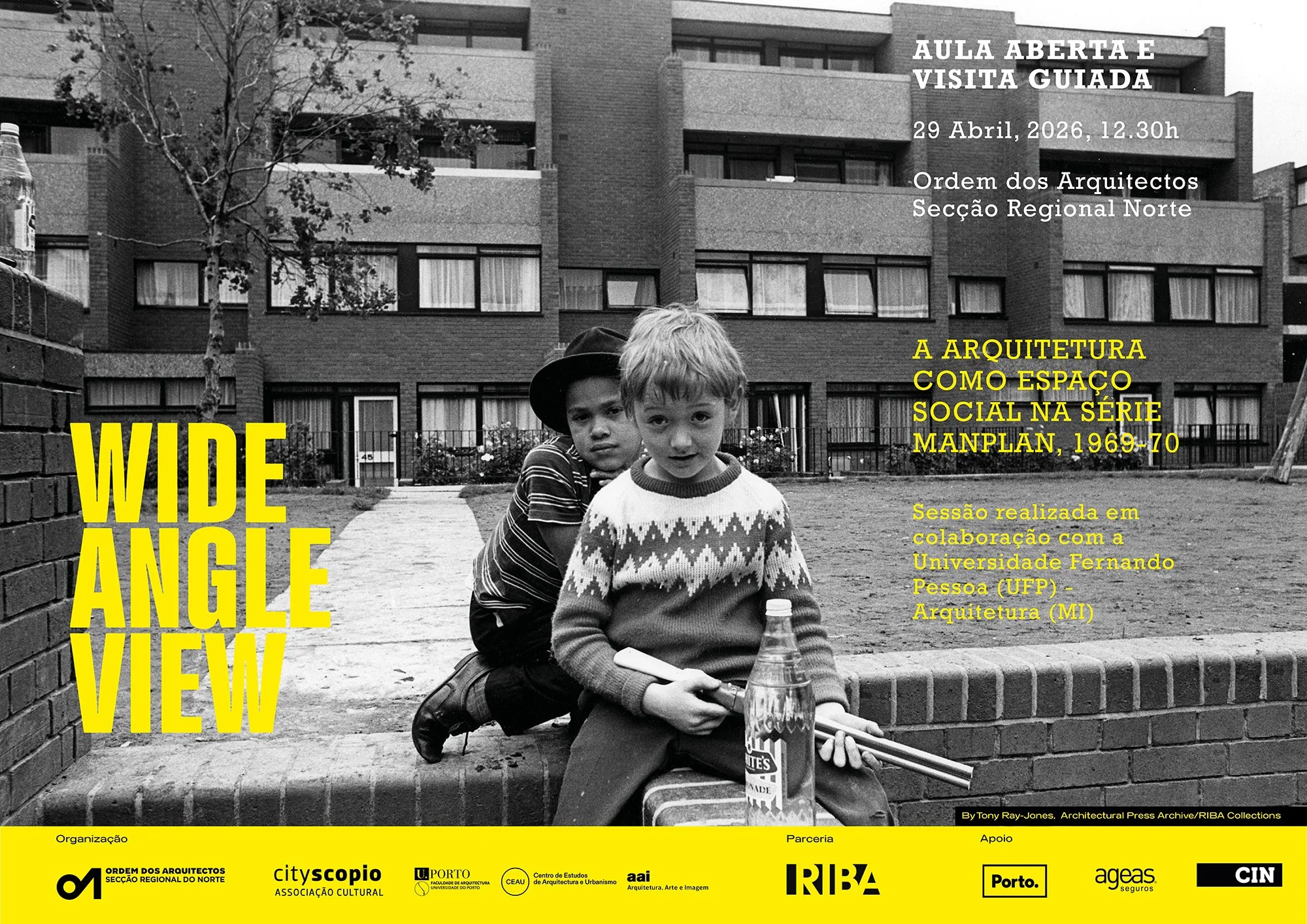
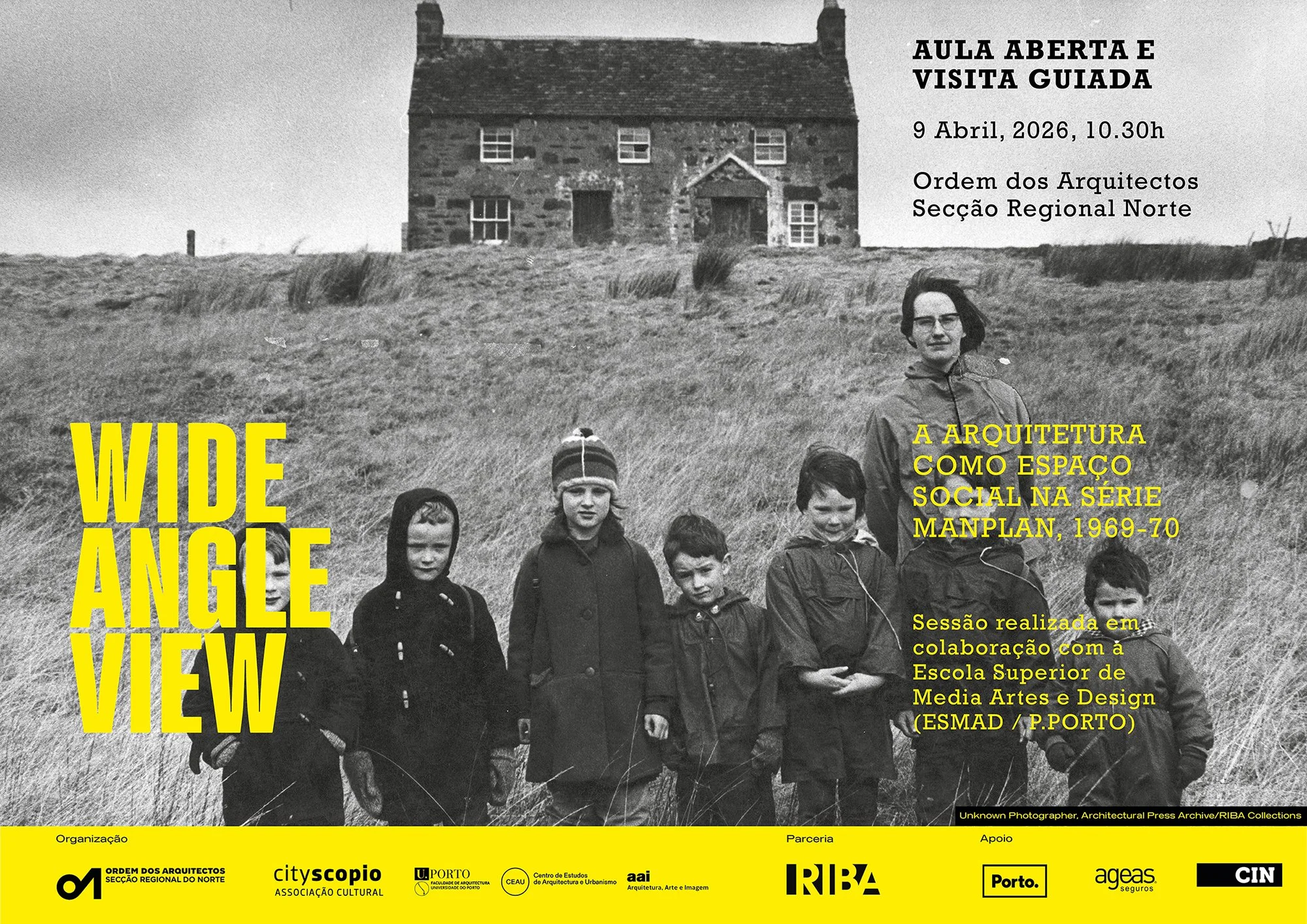
Aula aberta e visita guiada à exposição Wide-Angle View: A Arquitetura como Espaço Social na Série Manplan 1969–70

Ordem dos Arquitectos – Secção Regional Norte | 9 de ABRIL, 10h30

Sessão realizada em colaboração com A Escola Superior de Media Artes e Design (ESMAD / P.PORTO)

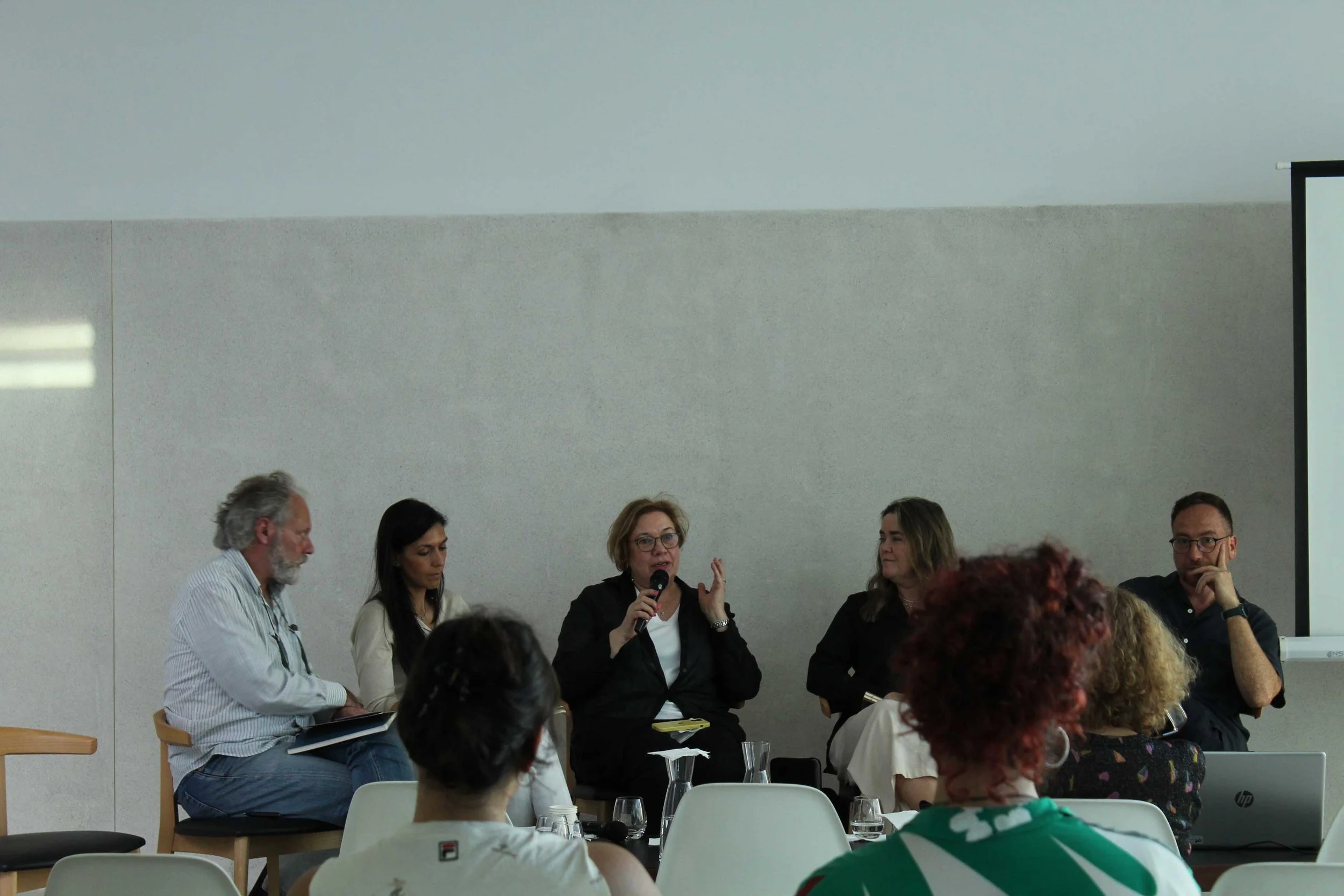
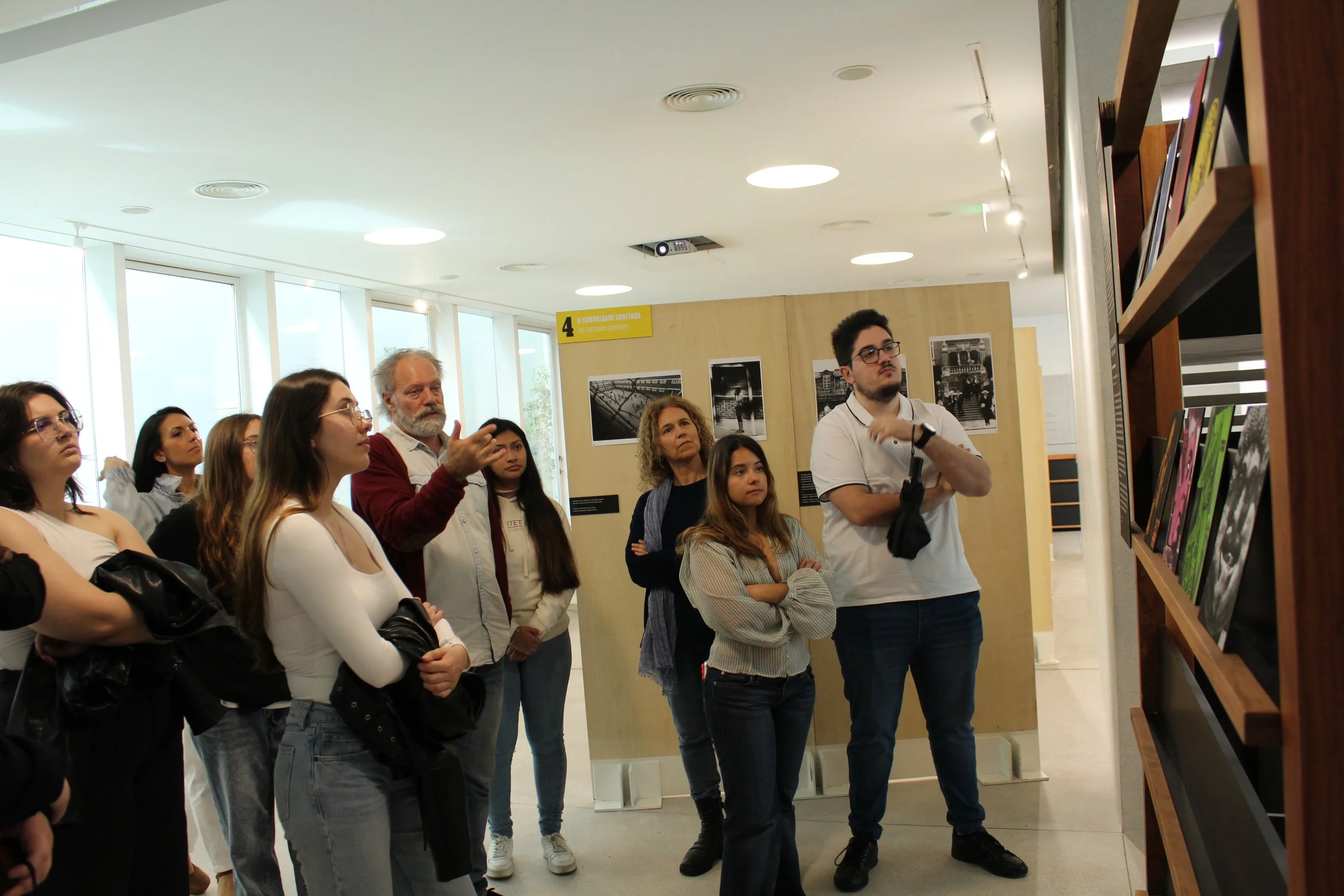
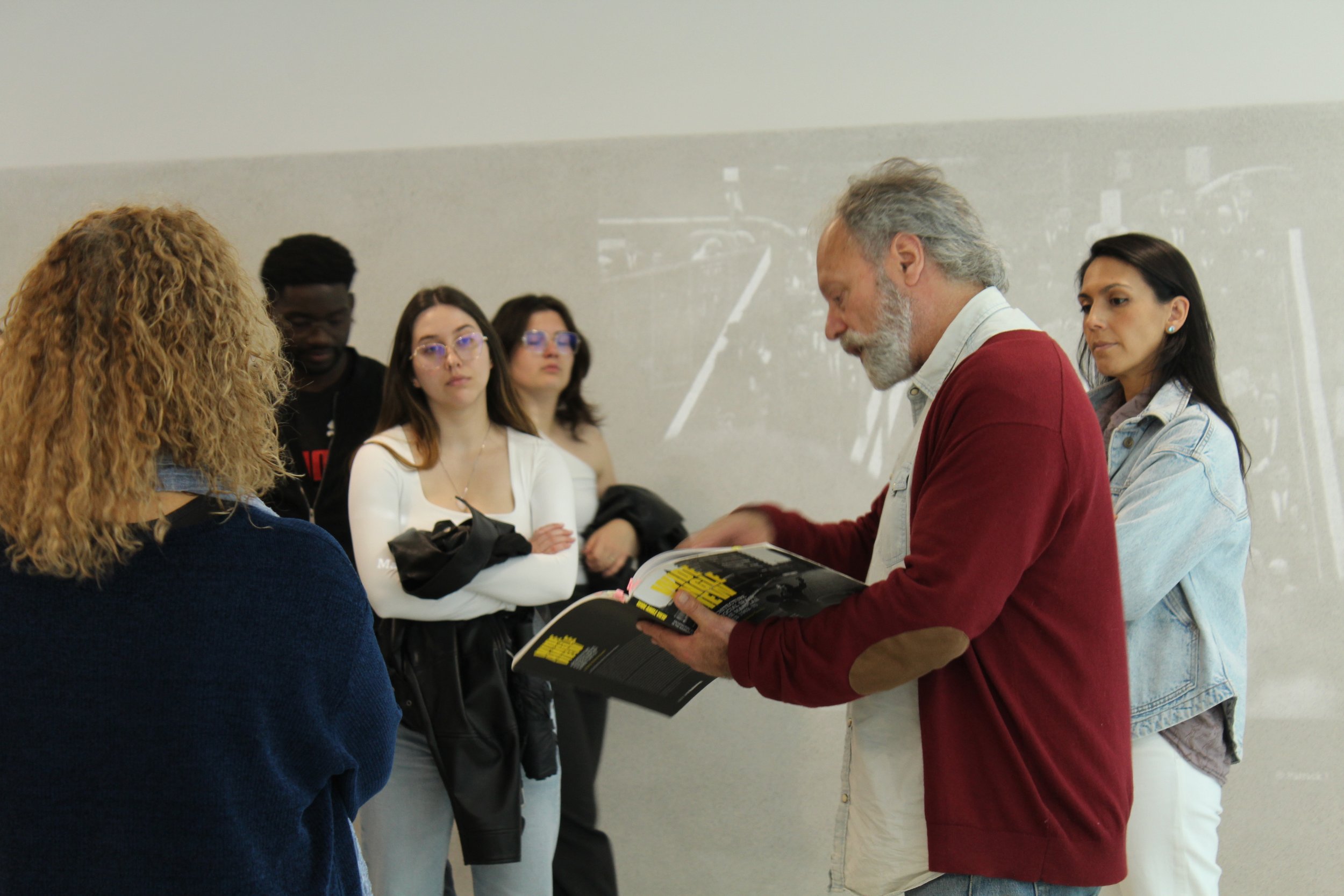
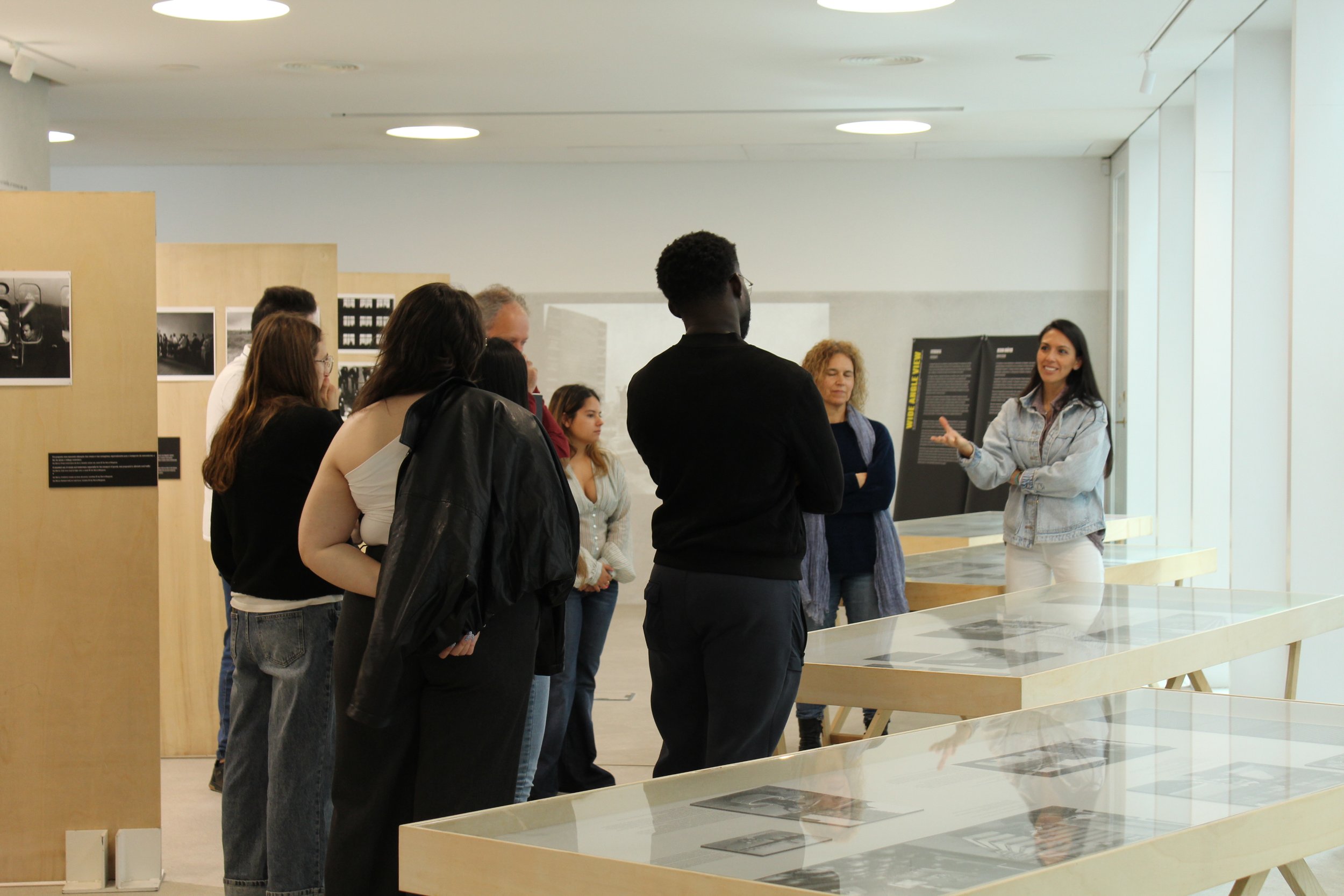
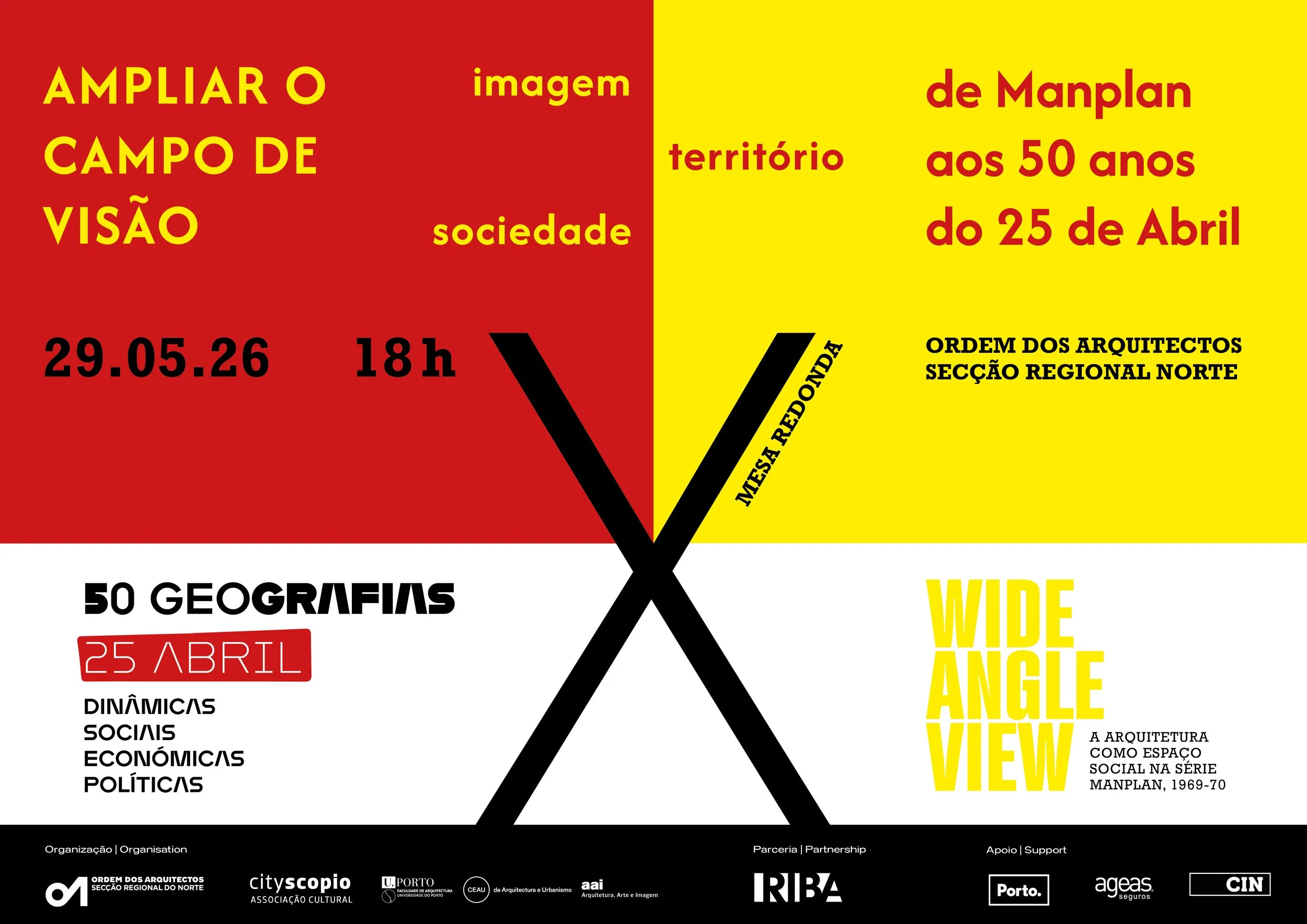
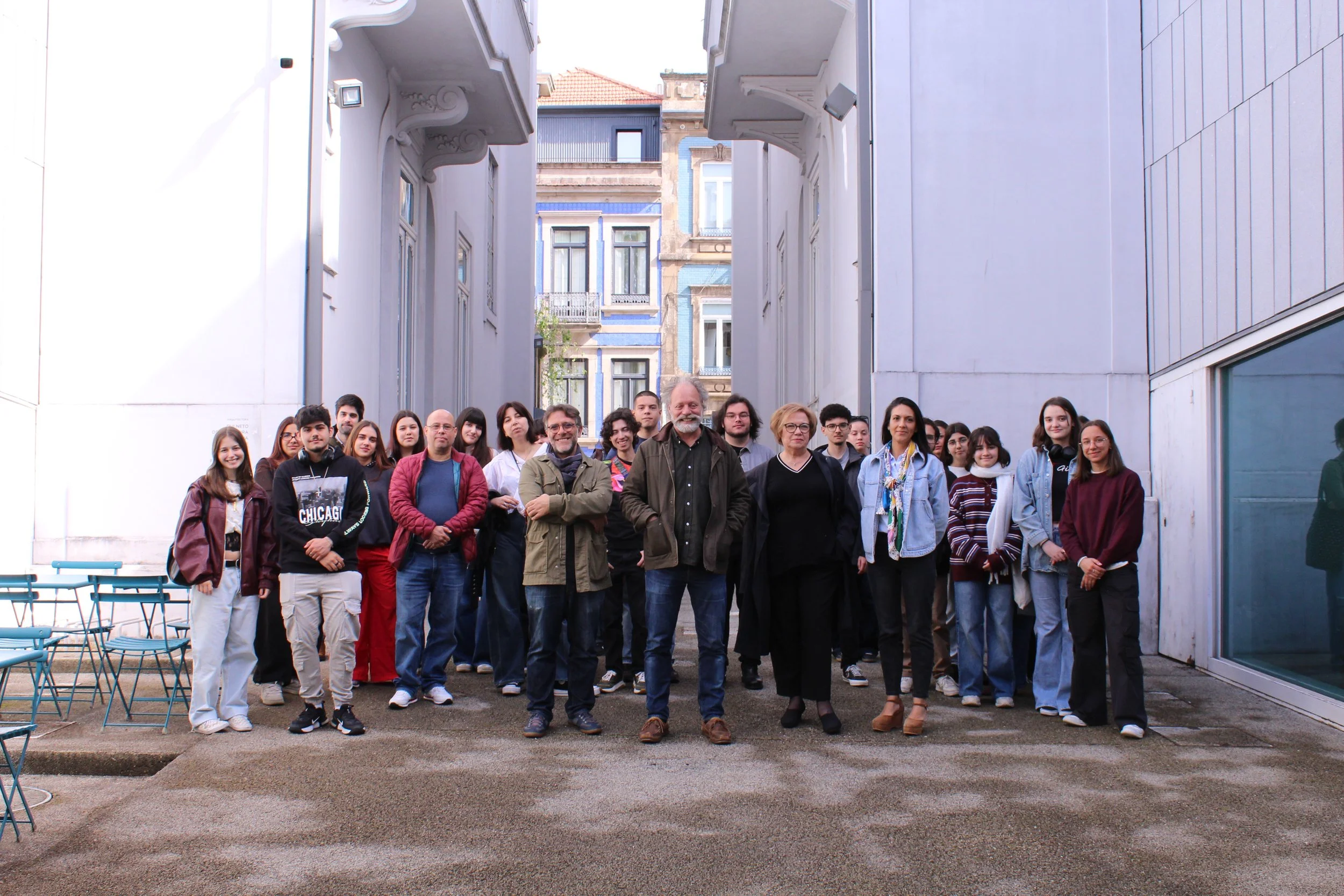
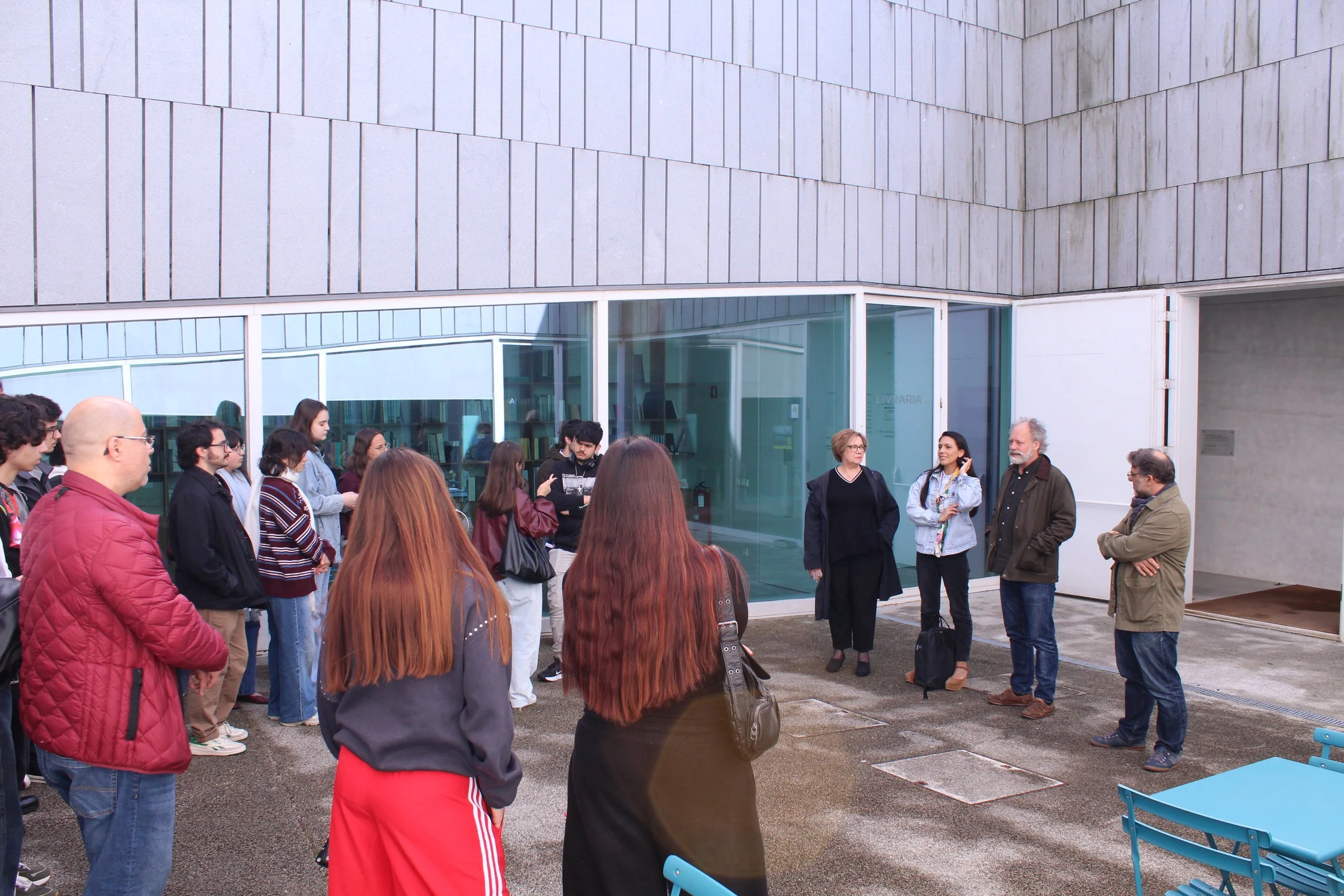
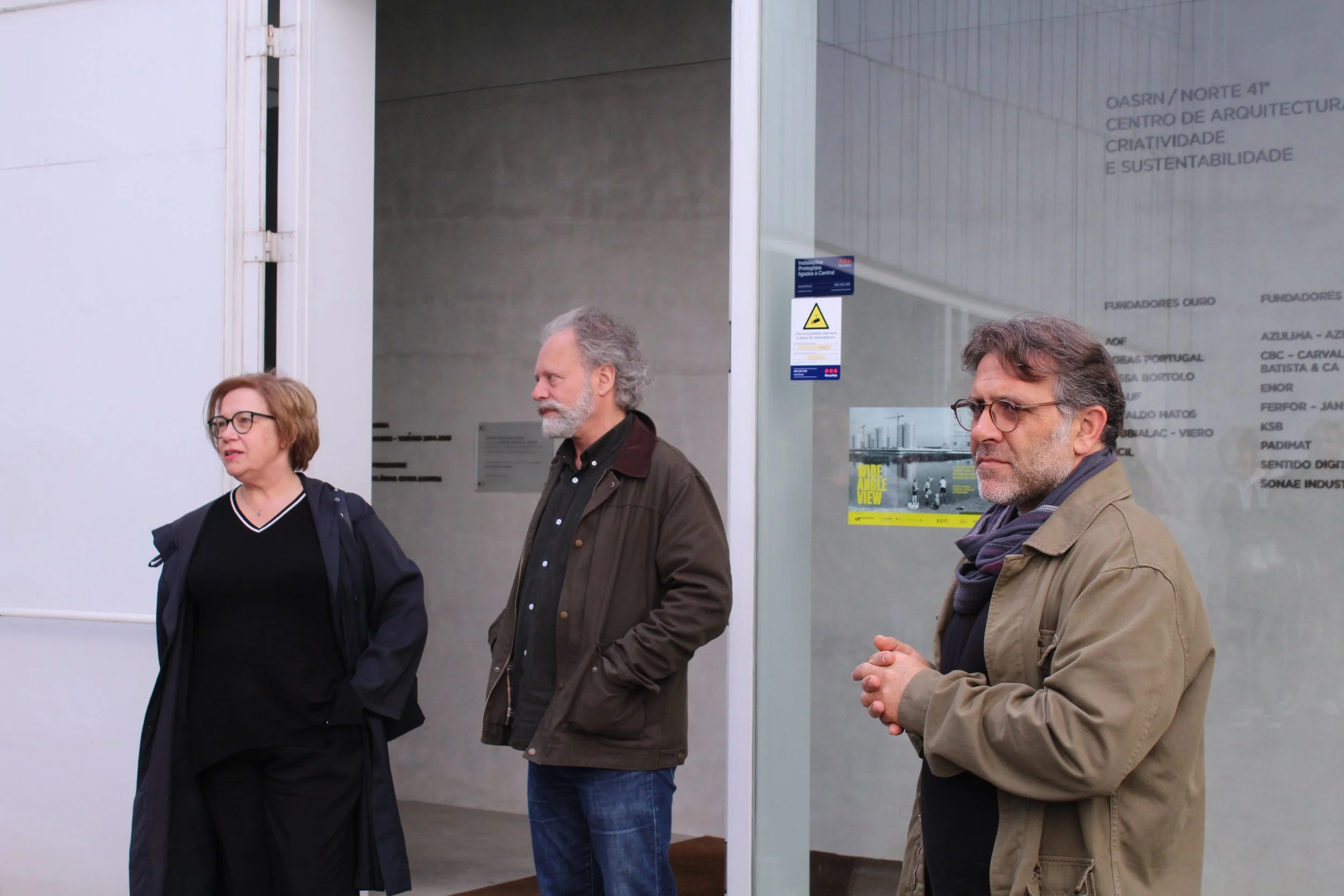
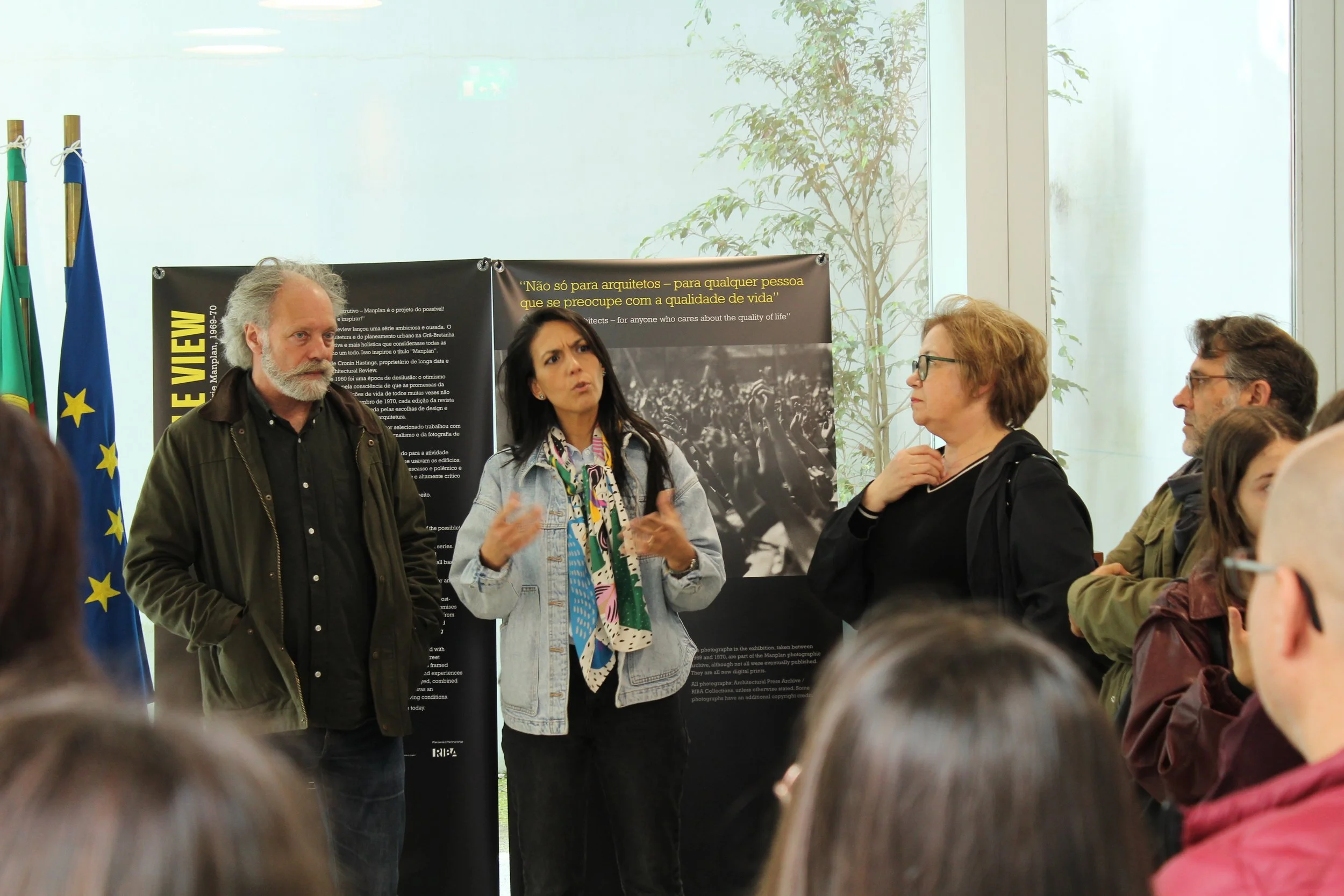
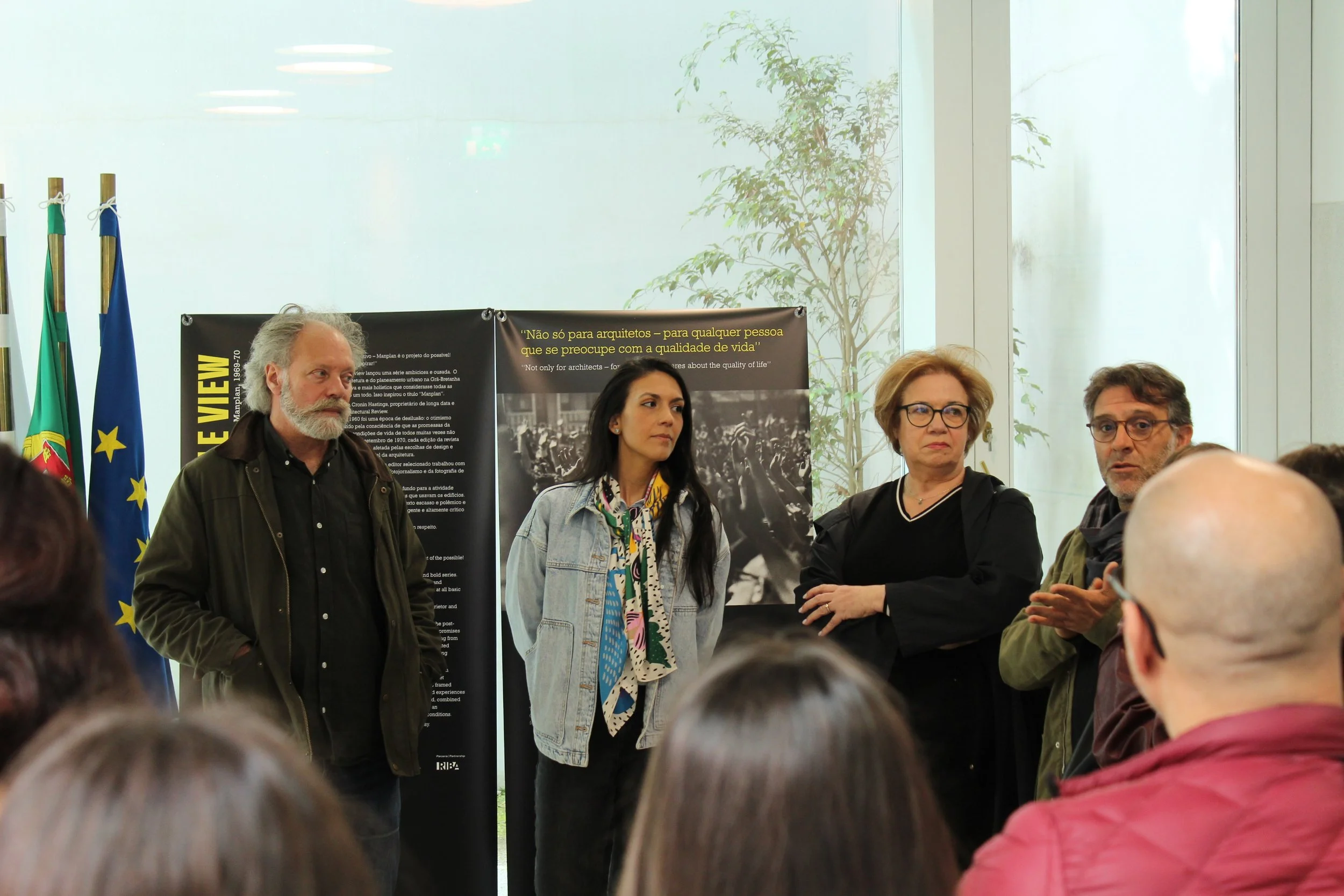
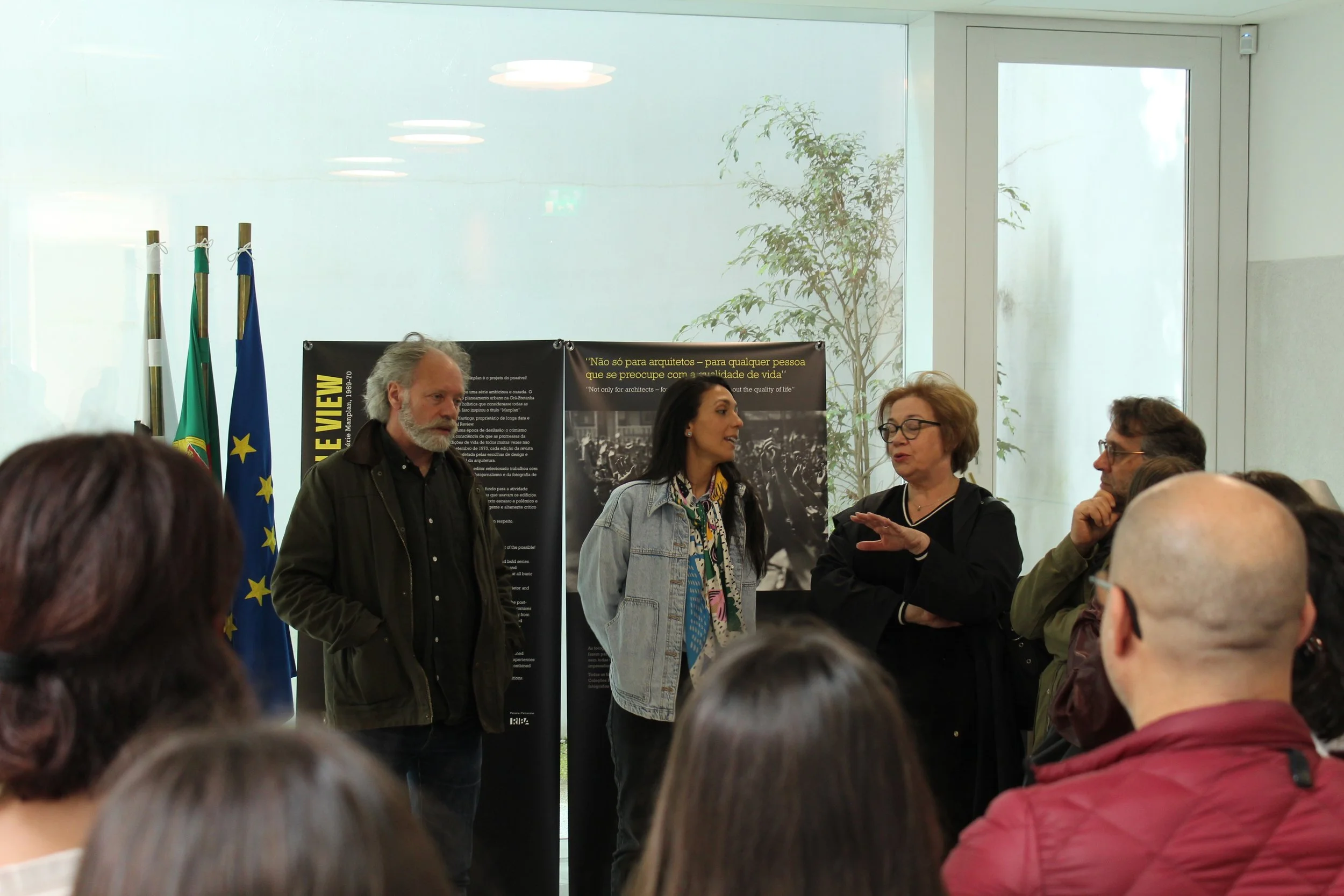
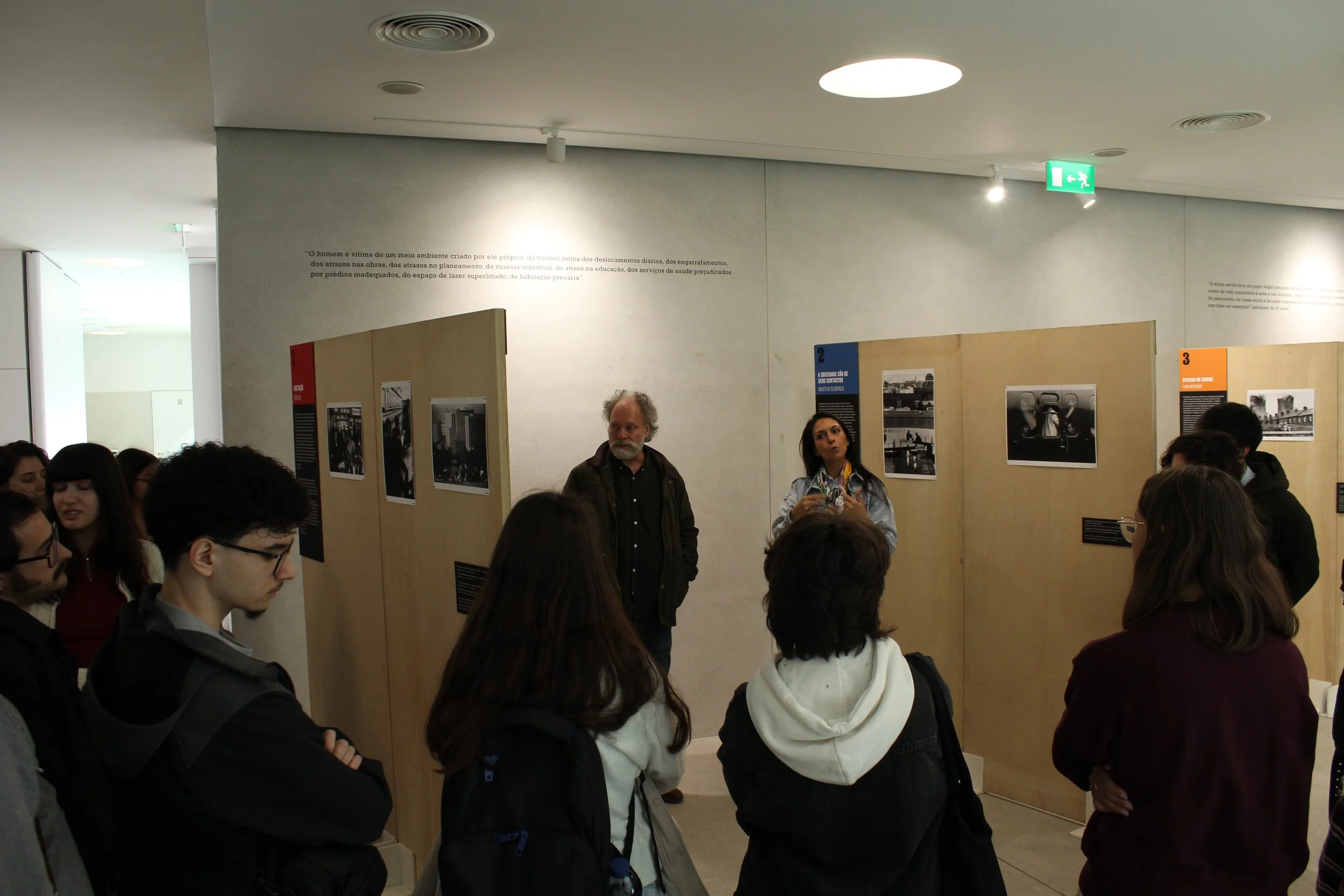
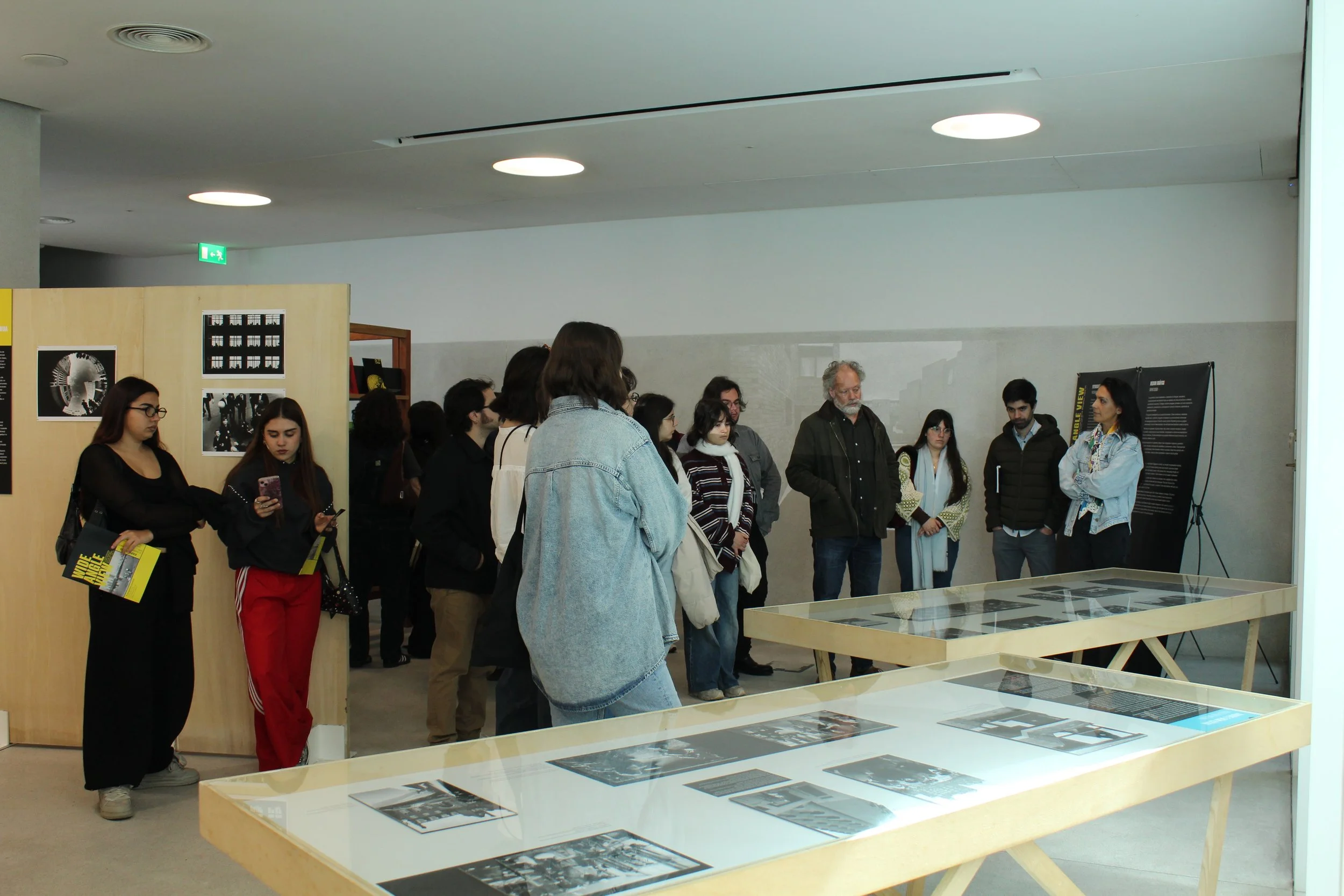
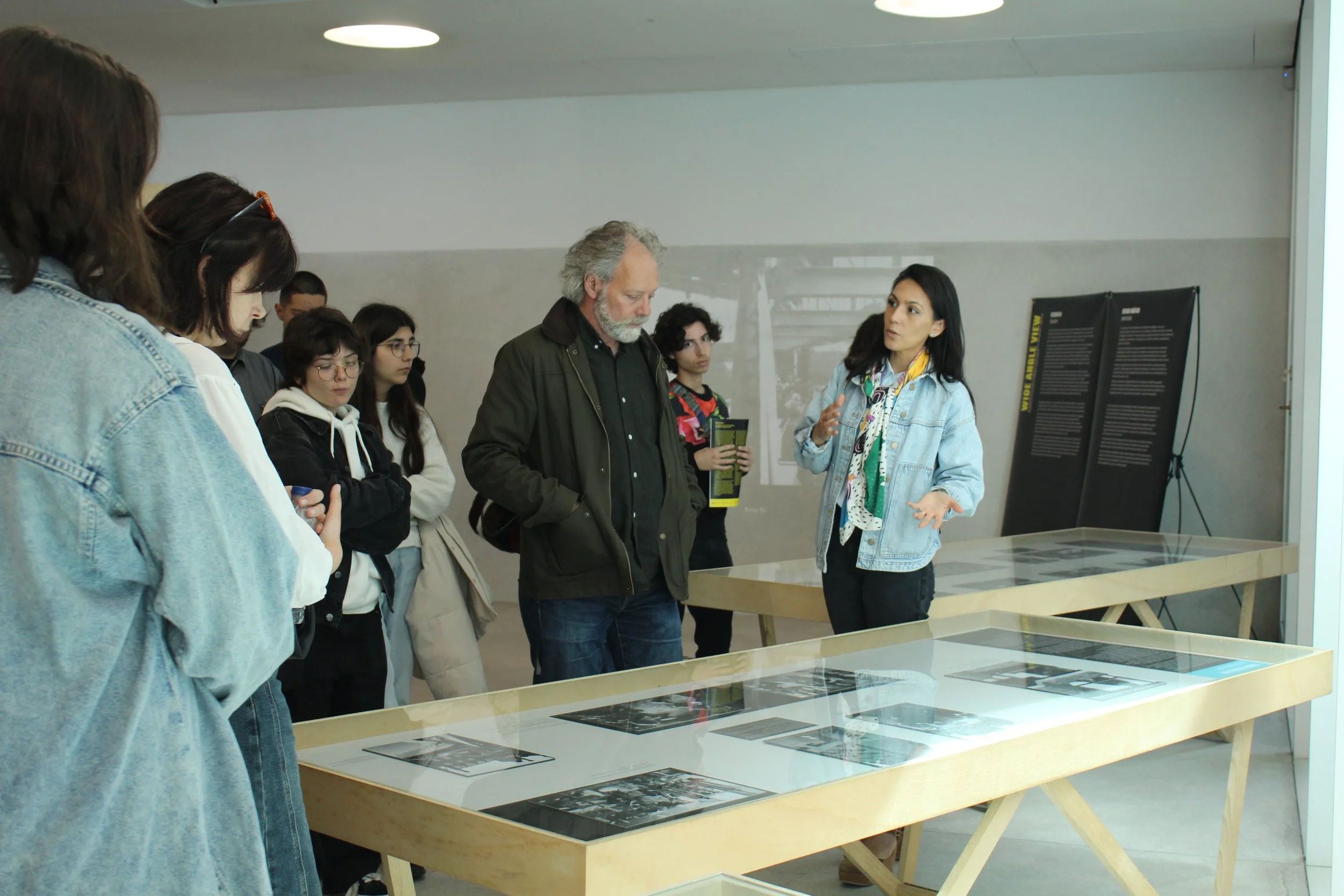
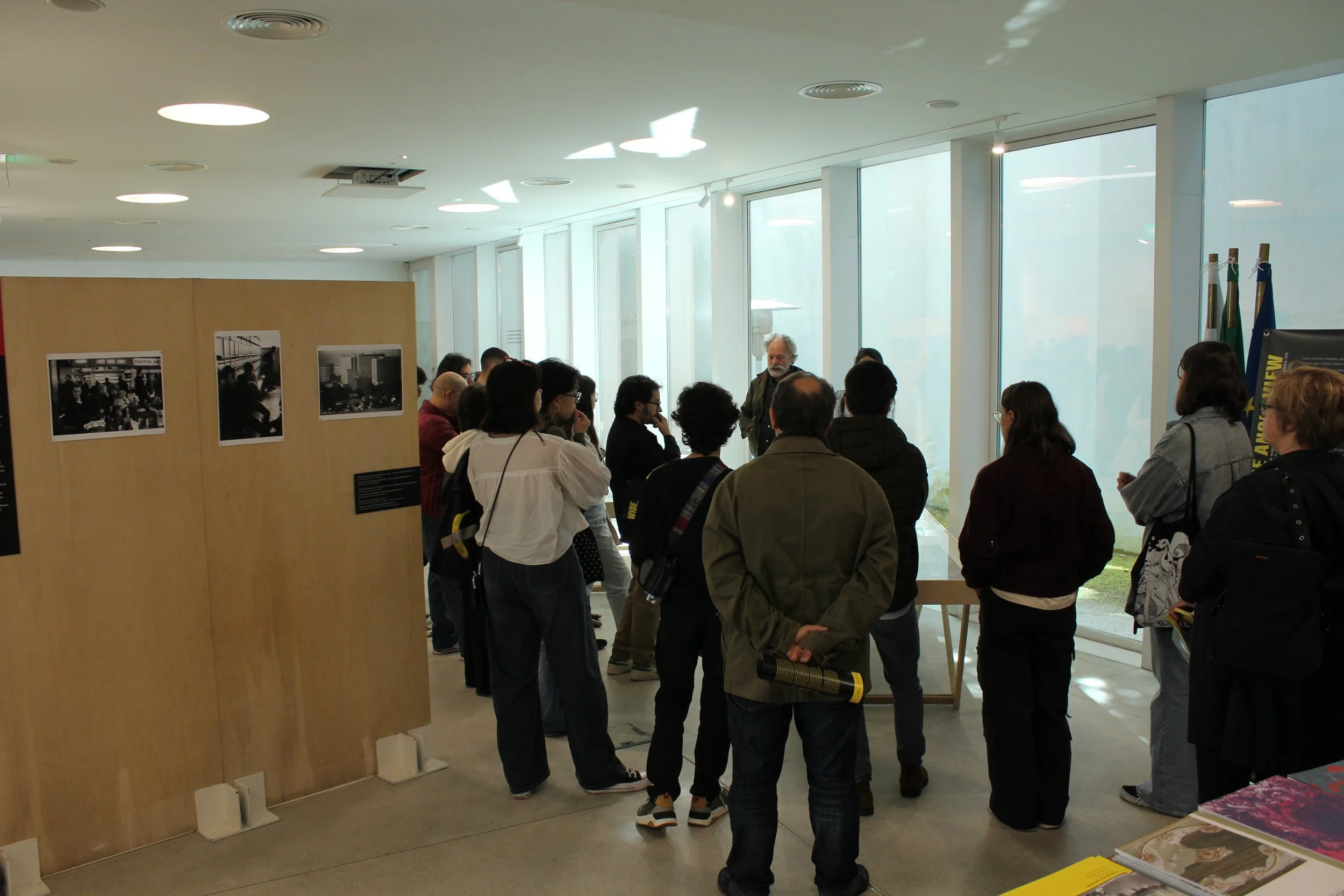
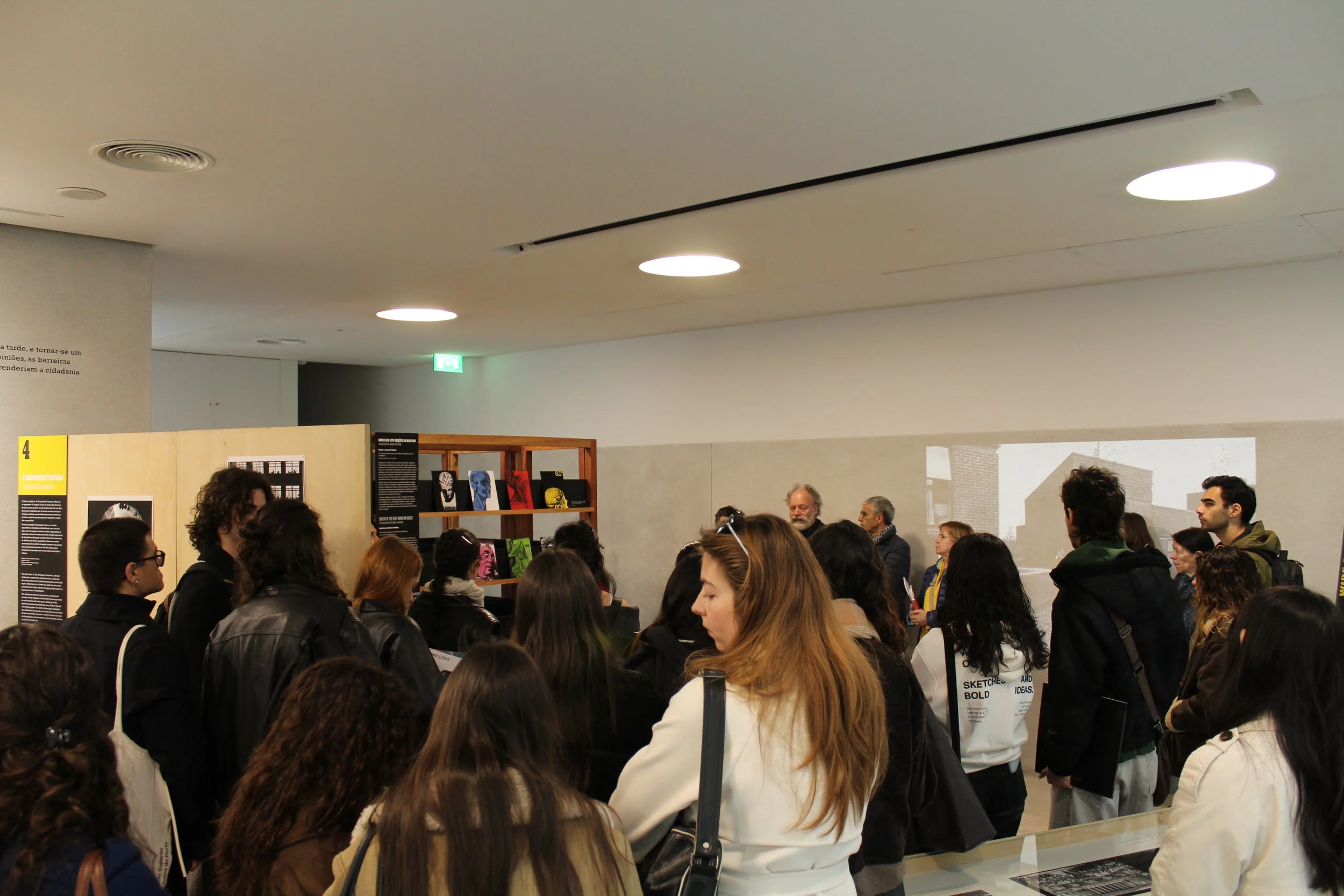
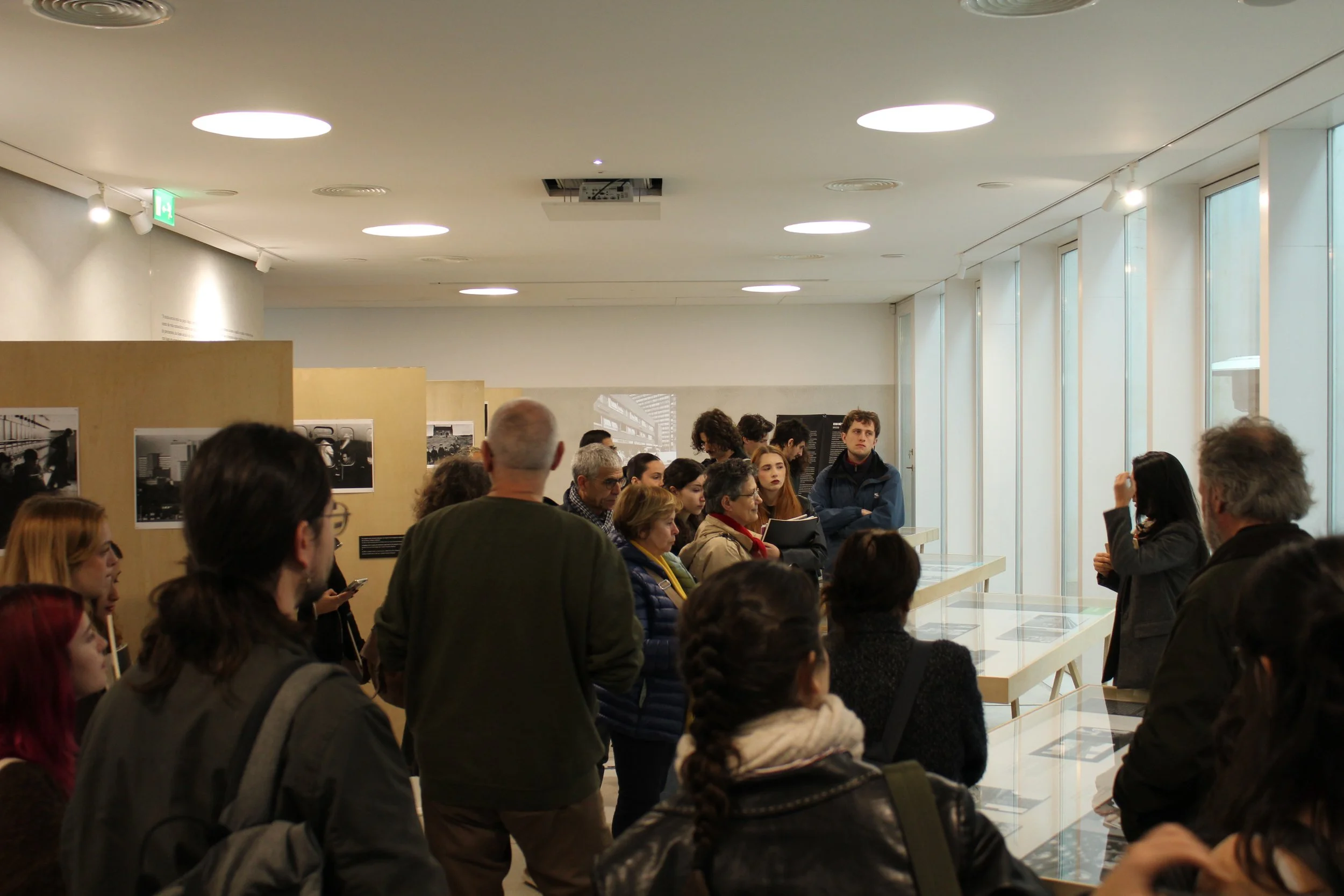
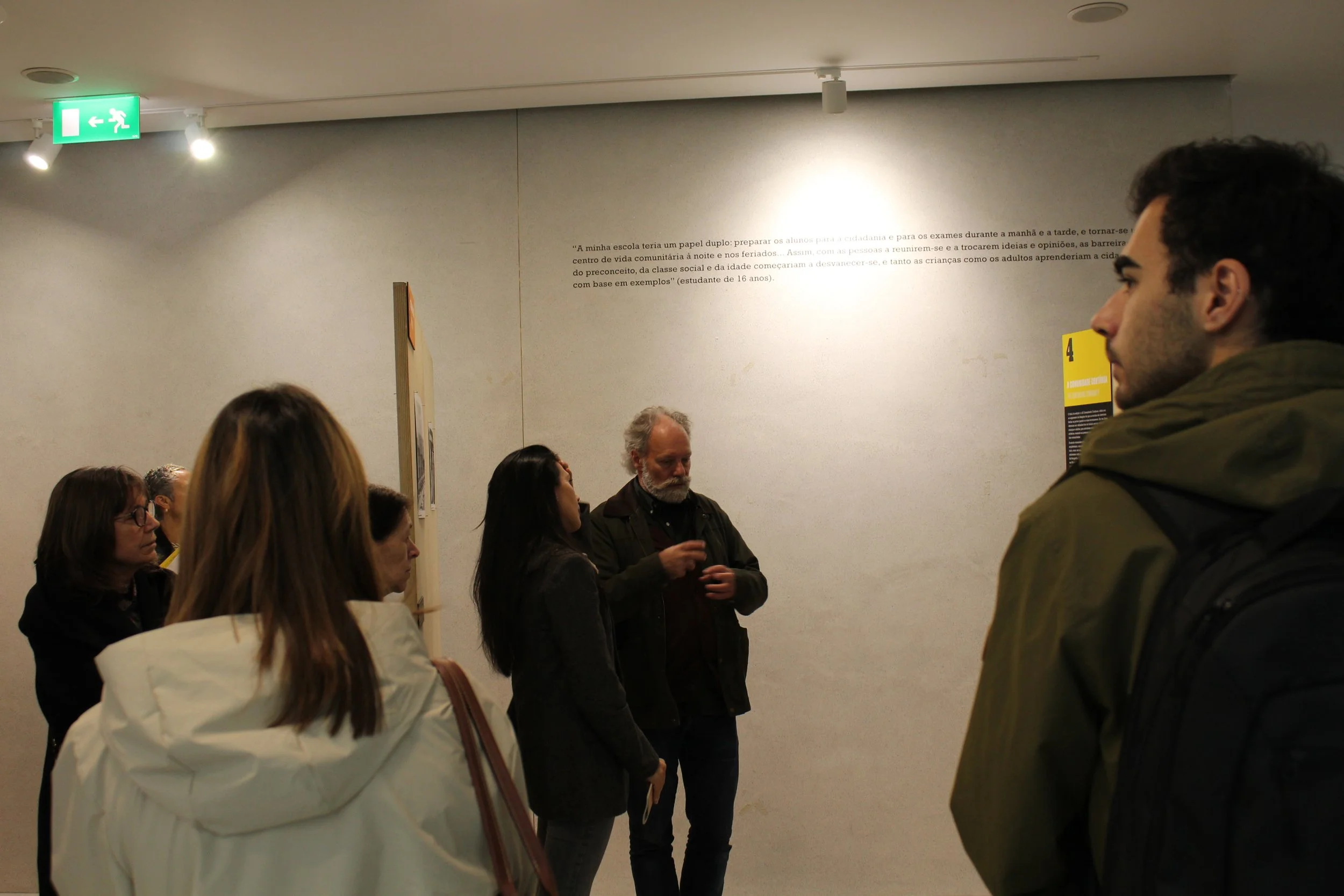
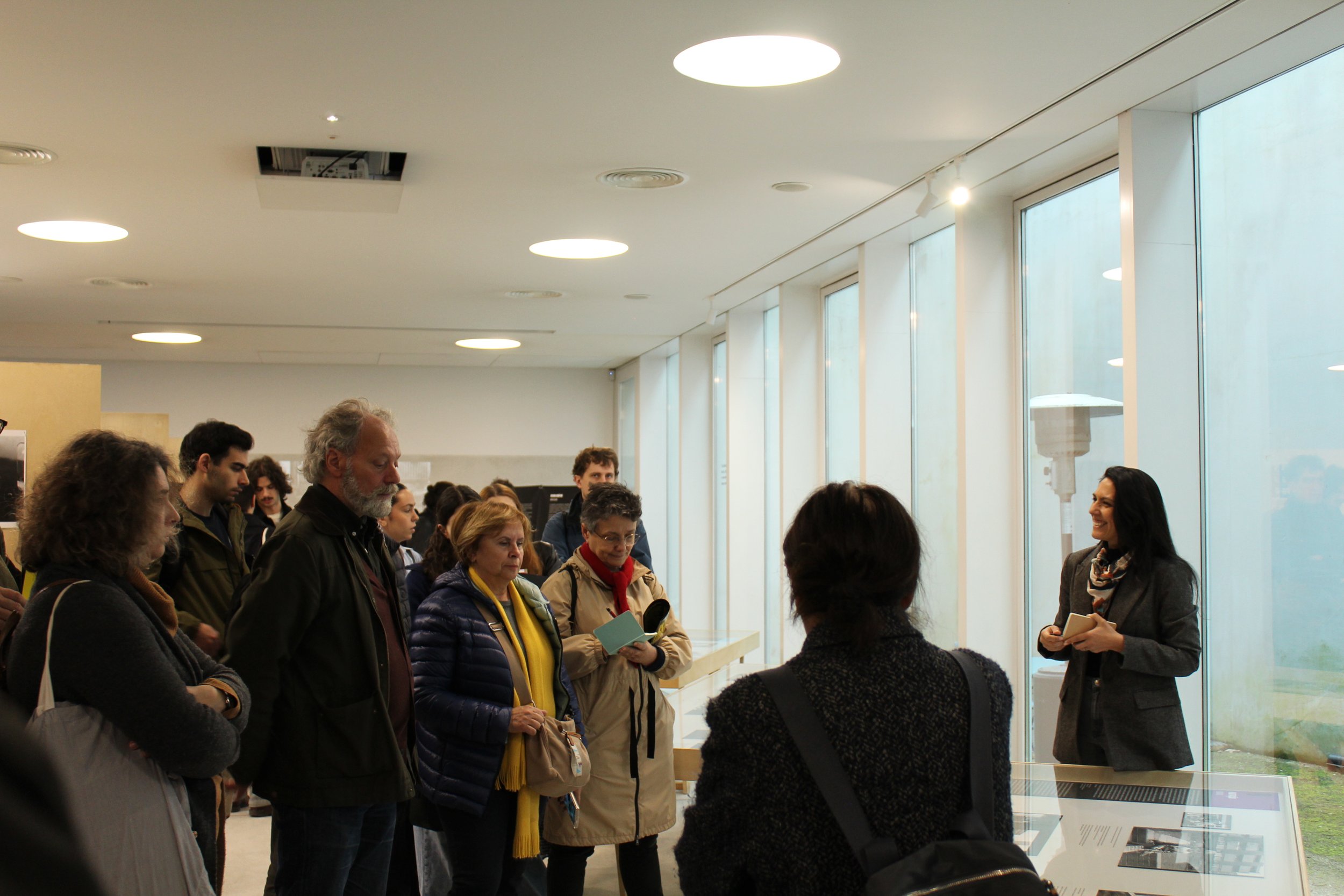
No dia 9 de abril, quinta-feira, pelas 10:30, realiza-se uma visita guiada / aula aberta à exposição “Wide-Angle View: A Arquitetura como Espaço Social na série Manplan 1969–70”, patente na Ordem dos Arquitetos – Secção Regional Norte (OASRN), com especial enfoque para os estudantes da Escola Superior de Media Artes e Design (ESMAD).

Esta iniciativa integra-se no programa de visitas guiadas / aulas abertas dirigido a toda a comunidade académica e ao público, sendo particularmente dirigida a estudantes, investigadores e profissionais interessados nas relações entre fotografia, arquitetura e cultura visual contemporânea.

A visita será conduzida por Pedro Leão Neto, investigador e docente da FAUP, associado ao grupo de investigação Arquitetura, Arte e Imagem (AAI) do CENP – Centro de Estudos Nuno Portas, e a investigadora Maria Neto grupo de investigação AAI / CENP e um membro da OASRN, que contribuirão com perspetivas complementares sobre imagem, território e arquitetura.

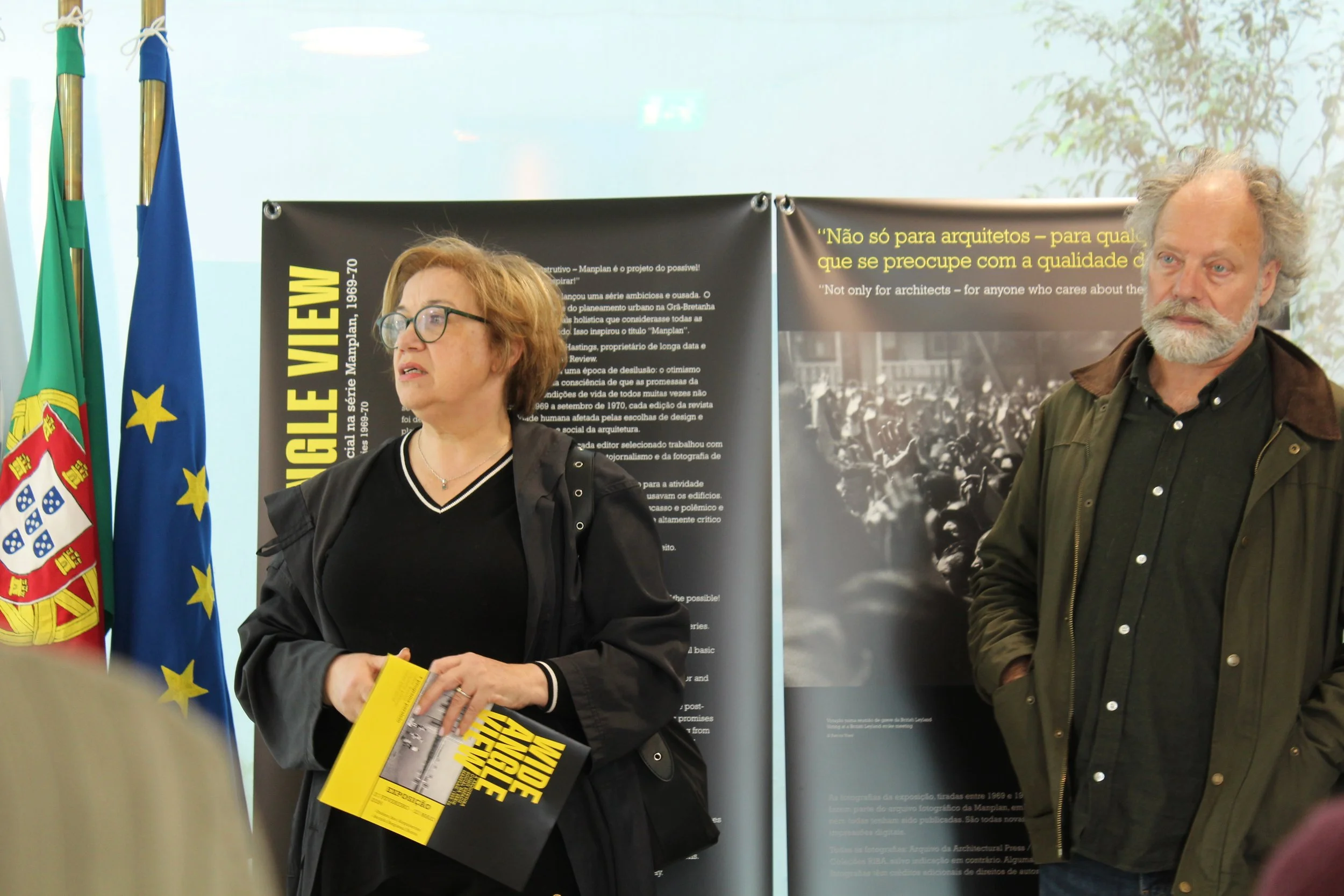
A visita contará com a presença de Olívia Marques da Silva, docente e investigadora da ESMAD e será acompanhado por Sérgio Rolando, docente responsável por diversas turmas de fotografia no 1º e 2+ ano da Licenciatura em Fotografia da ESMAD, bem como a participação de outros colegas docentes e envolve uma leitura crítica da exposição enquanto dispositivo de reflexão sobre as relações entre arquitetura, cidade, imagem e sociedade.

Através destas sessões pretende-se criar um espaço de exploração, debate e reflexão em torno de novas abordagens à fotografia de arquitetura e às representações visuais da cidade, sublinhando o papel da imagem — e em particular da fotografia — enquanto instrumento de investigação, interpretação crítica e comunicação do espaço construído.

Inspirada na série Manplan, publicada pela revista The Architectural Review entre 1969 e 1970, a exposição propõe uma leitura crítica da arquitetura enquanto espaço social vivido, deslocando o foco da disciplina do edifício enquanto objeto para as relações humanas, os contextos urbanos e as condições sociais que moldam a vida quotidiana.

Estas sessões públicas pretendem igualmente estimular o contacto direto dos estudantes com exposições e projetos curatoriais relevantes no campo da arquitetura e da fotografia, permitindo compreender os modos como a imagem participa na construção de discursos críticos sobre a cidade e o território.

A visita é aberta a toda a comunidade académica e ao público em geral, sendo particularmente dirigida a estudantes, investigadores e profissionais interessados nas relações entre fotografia, arquitetura e cultura visual contemporânea.

Programa da Exposição Wide-Angle View

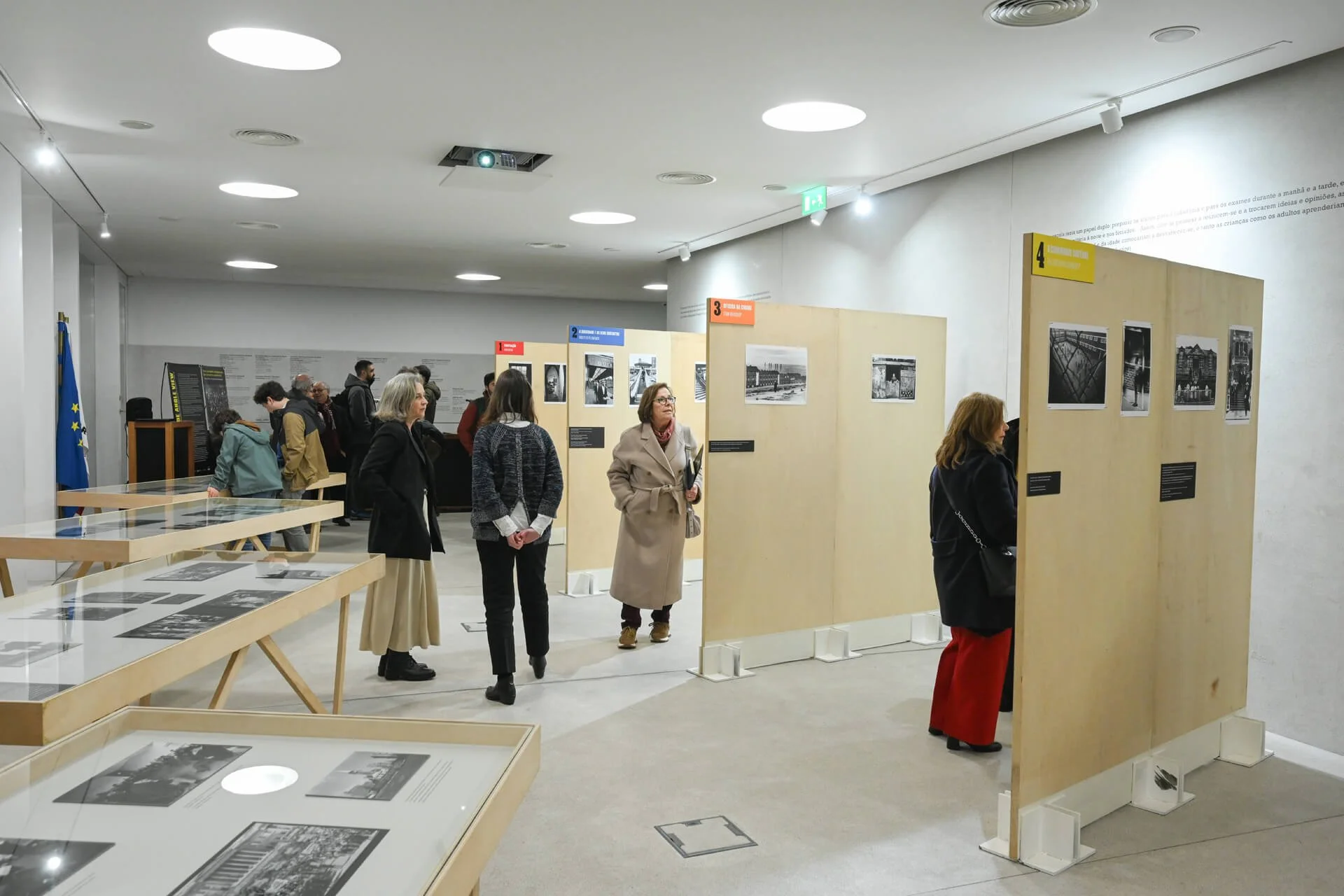
A exposição “Wide-Angle View: A Arquitetura como Espaço Social na série Manplan 1969–70” apresenta uma seleção de fotografias e materiais provenientes do arquivo da Architectural Press / RIBA Collections, revisitando a influente série publicada pela revista The Architectural Review no final da década de 1960.

Produzida num contexto de profundas transformações sociais e urbanas, Manplan marcou uma rutura na cultura editorial da arquitetura ao colocar as pessoas e os contextos sociais no centro da representação arquitetónica, abordando temas como habitação, saúde, trabalho, educação e lazer através de narrativas visuais inspiradas no fotojornalismo e na fotografia de rua.

A exposição resulta de uma parceria internacional entre o Royal Institute of British Architects (RIBA), a Ordem dos Arquitetos – Secção Regional Norte, a Associação Cultural Cityscopio (CCA) e o CENP/FAUP – Centro de Estudos Nuno Portas, através do grupo de investigação Arquitetura, Arte e Imagem (AAI) e do projeto editorial e científico Sophia Journal.

Mais do que uma exposição histórica, Wide-Angle View afirma-se como um dispositivo de reflexão contemporânea sobre as relações entre arquitetura e sociedade, particularmente relevante num contexto marcado pela crise da habitação, pelas transformações do espaço urbano e pelas desigualdades territoriais.

Durante o período em que estará patente na sede da Ordem dos Arquitetos – Secção Regional Norte, a exposição será acompanhada por um programa paralelo de visitas guiadas, conversas públicas e ações educativas, dirigido a estudantes, investigadores, arquitetos e ao público em geral.

Estas iniciativas procuram promover novas leituras críticas sobre a cidade contemporânea, sublinhando o papel da fotografia e da imagem enquanto instrumentos fundamentais de pensamento e investigação sobre o espaço arquitetónico e urbano.

MANIFESTO
Da Manplan à crise da habitação: ampliar o campo de visão

A arquitetura nunca foi neutra. Nunca foi apenas forma, técnica ou estilo. É um campo de forças onde se inscrevem conflitos sociais, escolhas políticas e visões do mundo. A série Manplan (1969–1970) tornou essa condição explícita num momento em que as promessas do modernismo entravam em crise e a realidade urbana expunha, de forma incontornável, as falhas de um projeto social incompleto. Cinquenta anos depois, essa lucidez crítica não perdeu atualidade — tornou-se urgente.

Hoje, perante uma crise global da habitação, a financeirização do território, a exclusão crescente e a fragmentação das cidades, importa recuperar e atualizar o gesto radical de Manplan: olhar a arquitetura a partir da vida, e não o inverso. Colocar as pessoas no centro da representação e do pensamento arquitetónico. Reconhecer que cada decisão espacial produz efeitos reais sobre corpos, relações, desigualdades e possibilidades de futuro. “Wide-Angle View: Architecture as social space in the Manplan series 1969–70” | SR-NRT uma mostra inédita em Portugal que revisita a influente série Manplan, afirma-se nesse território de continuidade crítica.

Não como uma exposição nostálgica, mas como um dispositivo de leitura do presente. O arquivo não é aqui um lugar fechado, mas um campo ativo de investigação, capaz de iluminar as tensões contemporâneas. As imagens de Manplan — cruas, próximas, incómodas — continuam a interpelar-nos porque revelam uma verdade persistente: a cidade é vivida antes de ser desenhada, e a habitação é um direito antes de ser um produto.

A lente grande-angular que dá título à exposição é mais do que um recurso técnico. É uma posição ética e política. Ampliar o campo de visão significa recusar leituras simplificadas da realidade urbana, rejeitar soluções rápidas para problemas estruturais e confrontar a disciplina com as consequências sociais do seu próprio fazer. Significa aceitar que a arquitetura participa ativamente na produção de desigualdade, mas também que pode — e deve — ser instrumento de reparação.

Entre a Manplan e o presente estende-se uma linha de continuidade: a compreensão da arquitetura como prática inevitavelmente política. A crise da habitação não é um acidente, mas o resultado de escolhas acumuladas — de modelos económicos, de legislação, de planeamento e de cultura disciplinar. Perante isso, não basta projetar mais edifícios; é necessário repensar os modos de habitar, os regimes de propriedade, as formas de cooperação e os imaginários urbanos que sustentam a cidade contemporânea.

Wide-Angle View convoca arquitetos, estudantes, investigadores e cidadãos a assumir uma posição. A olhar para o arquivo não como repertório formal, mas como memória crítica. A reconhecer na fotografia não apenas um meio de representação, mas uma forma de pensamento. A compreender que toda a imagem é uma tomada de posição — e que toda a arquitetura comunica, mesmo quando pretende silenciar os seus efeitos.

Este manifesto afirma que a relevância de Manplan reside precisamente na sua recusa da indiferença. Na sua capacidade de expor o desconforto, de tornar visíveis as falhas do sistema e de insistir que a qualidade de vida é uma questão coletiva. Hoje, como então, a arquitetura só faz sentido se for pensada a partir da vida concreta, das suas fragilidades e das suas urgências.

Ampliar o campo de visão é, por isso, um compromisso com o presente. Um convite à ação crítica. Uma exigência de responsabilidade disciplinar. Entre arquivo e atualidade, entre imagem e projeto, entre arquitetura e sociedade, “Wide-Angle View: Architecture as social space in the Manplan series 1969–70” | SR-NRT  afirma que não há futuro habitável sem um olhar atento, informado e profundamente humano sobre a cidade que construímos.

Pedro Leão Neto

Maria Neto

Mais informação em breve nos canais da SR-NRT, CNEP - FAUP e CCA.


Aula aberta e visita guiada à exposição “Wide-Angle View” mobilizam estudantes na Ordem dos Arquitetos


Aula aberta e visita guiada à exposição “Wide-Angle View” mobilizam estudantes na Ordem dos Arquitetos

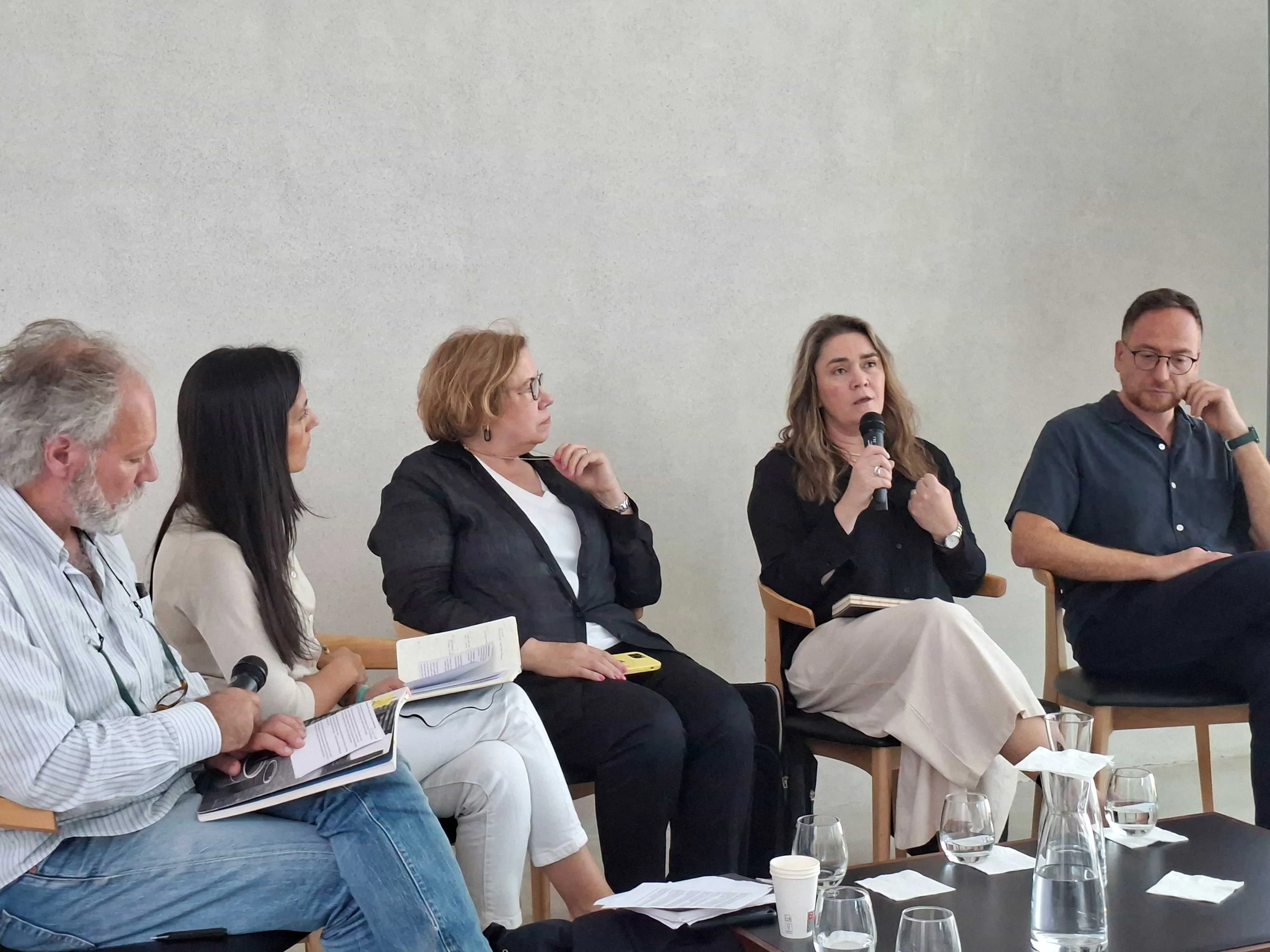
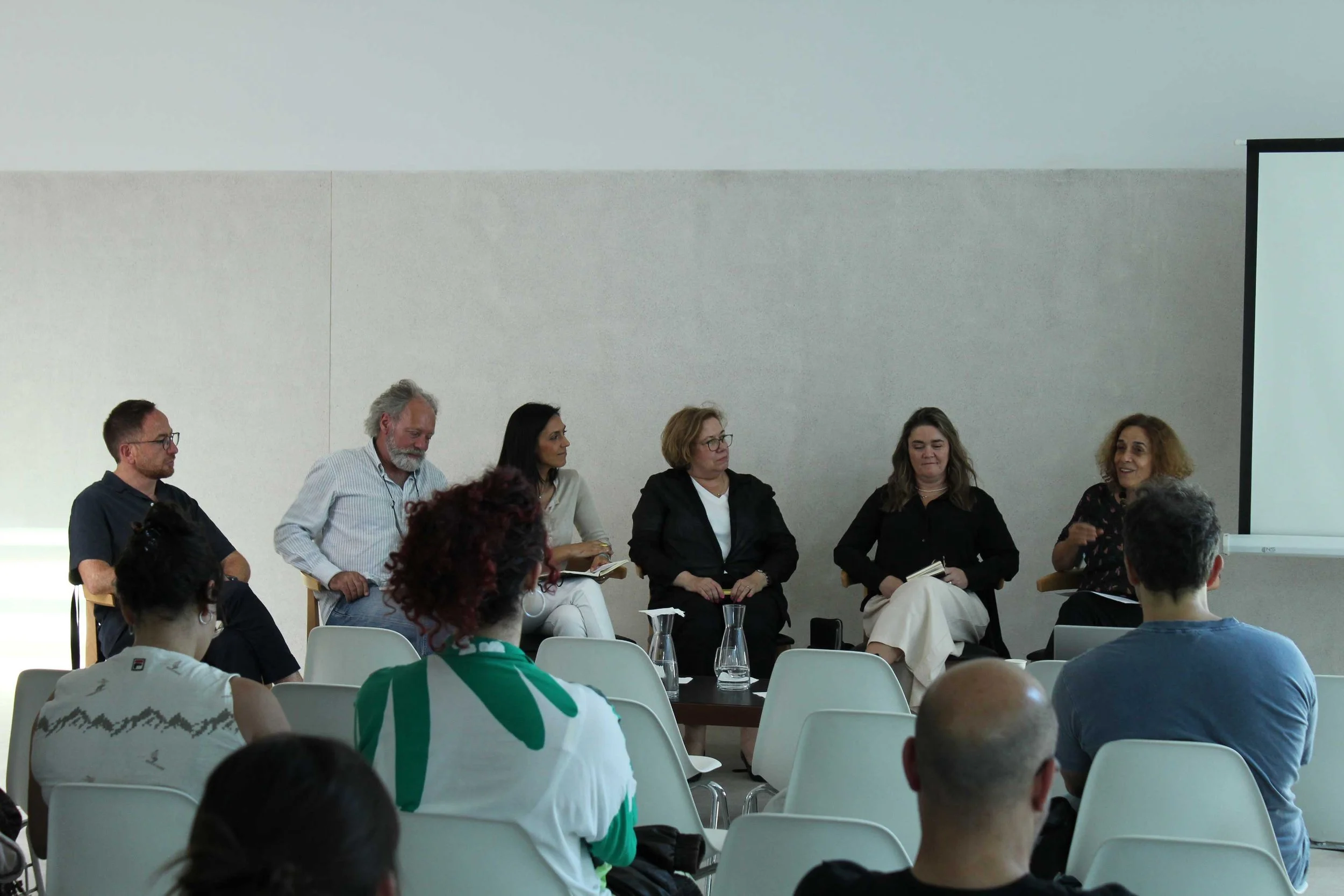
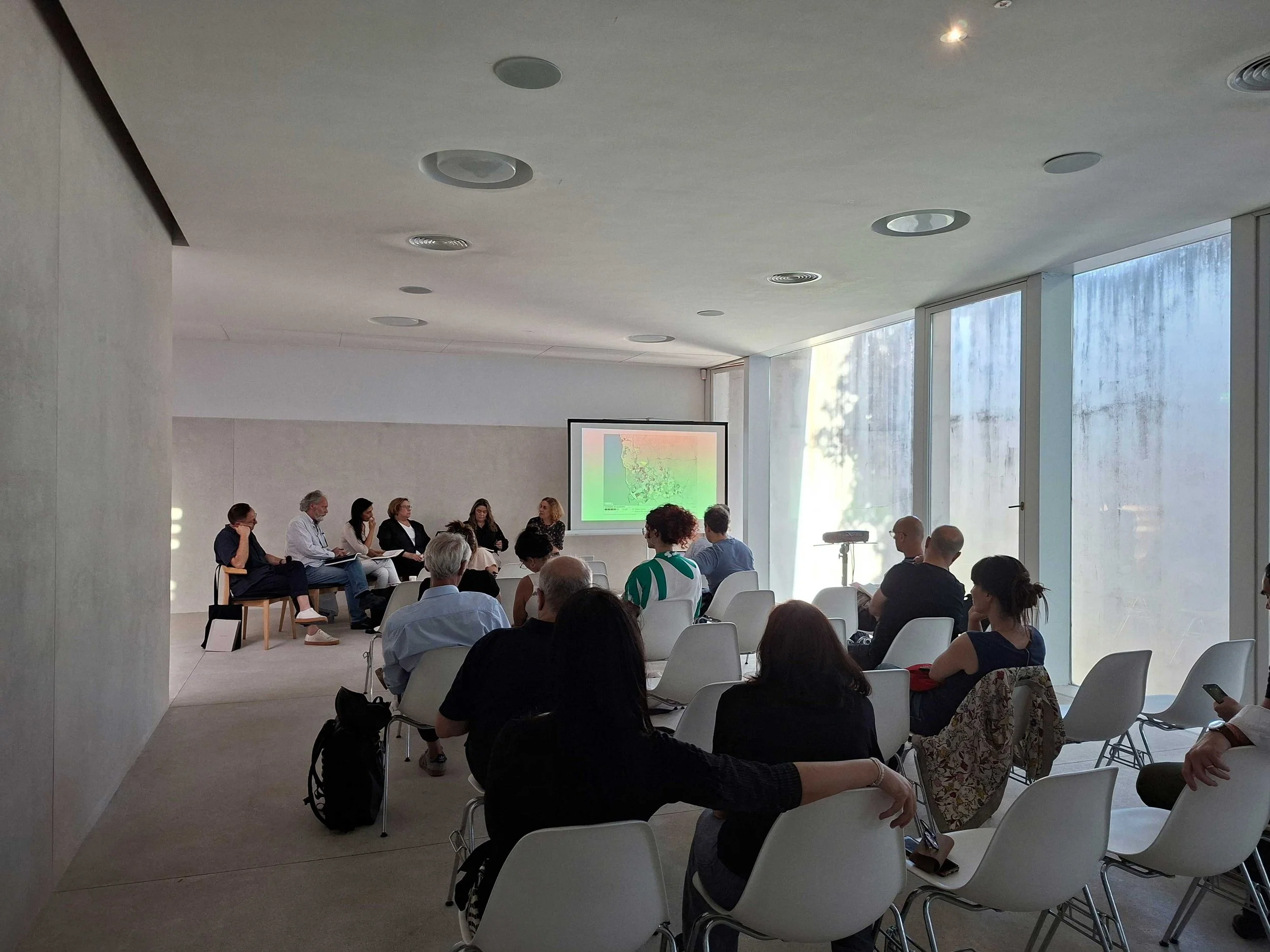
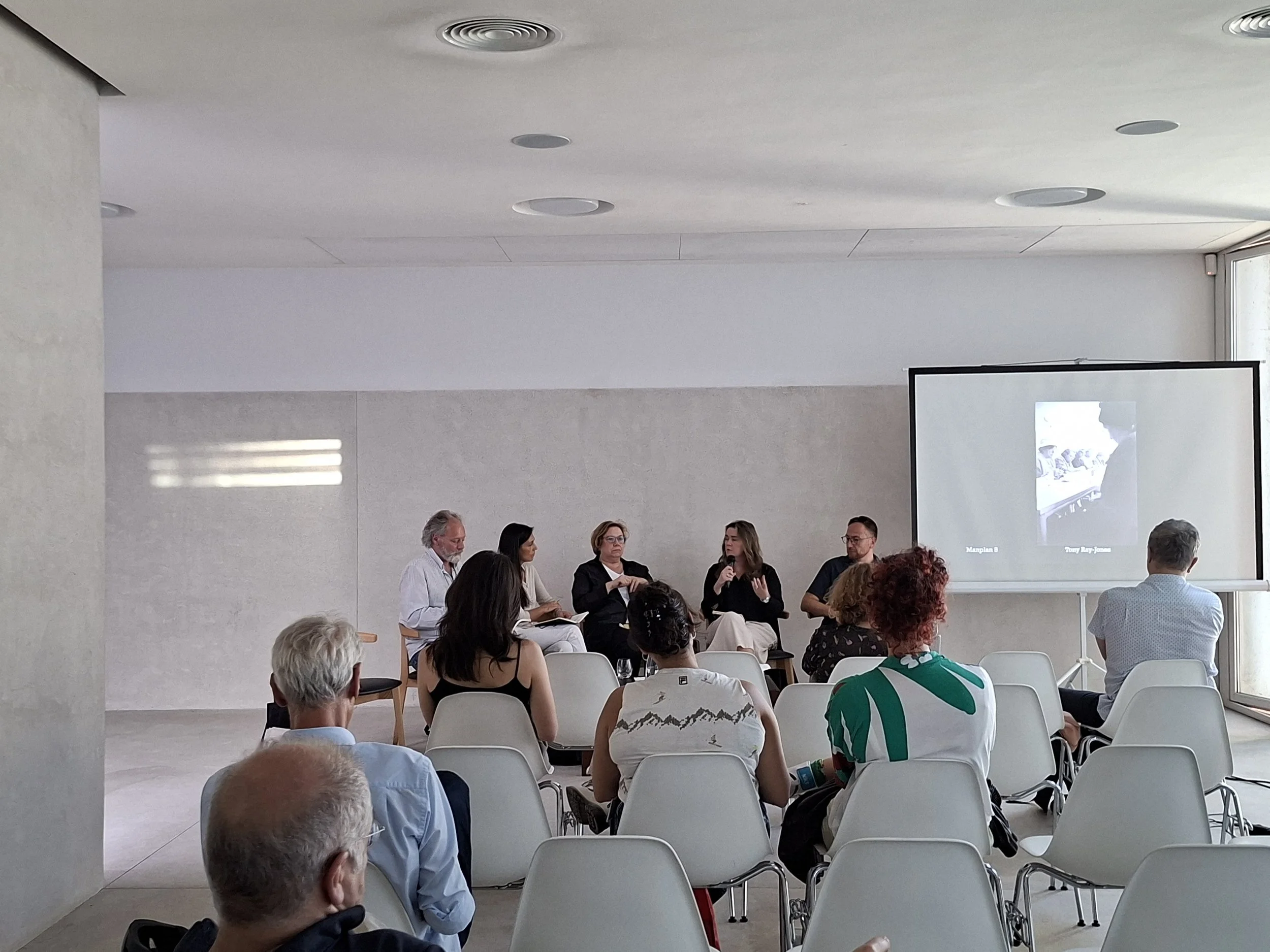
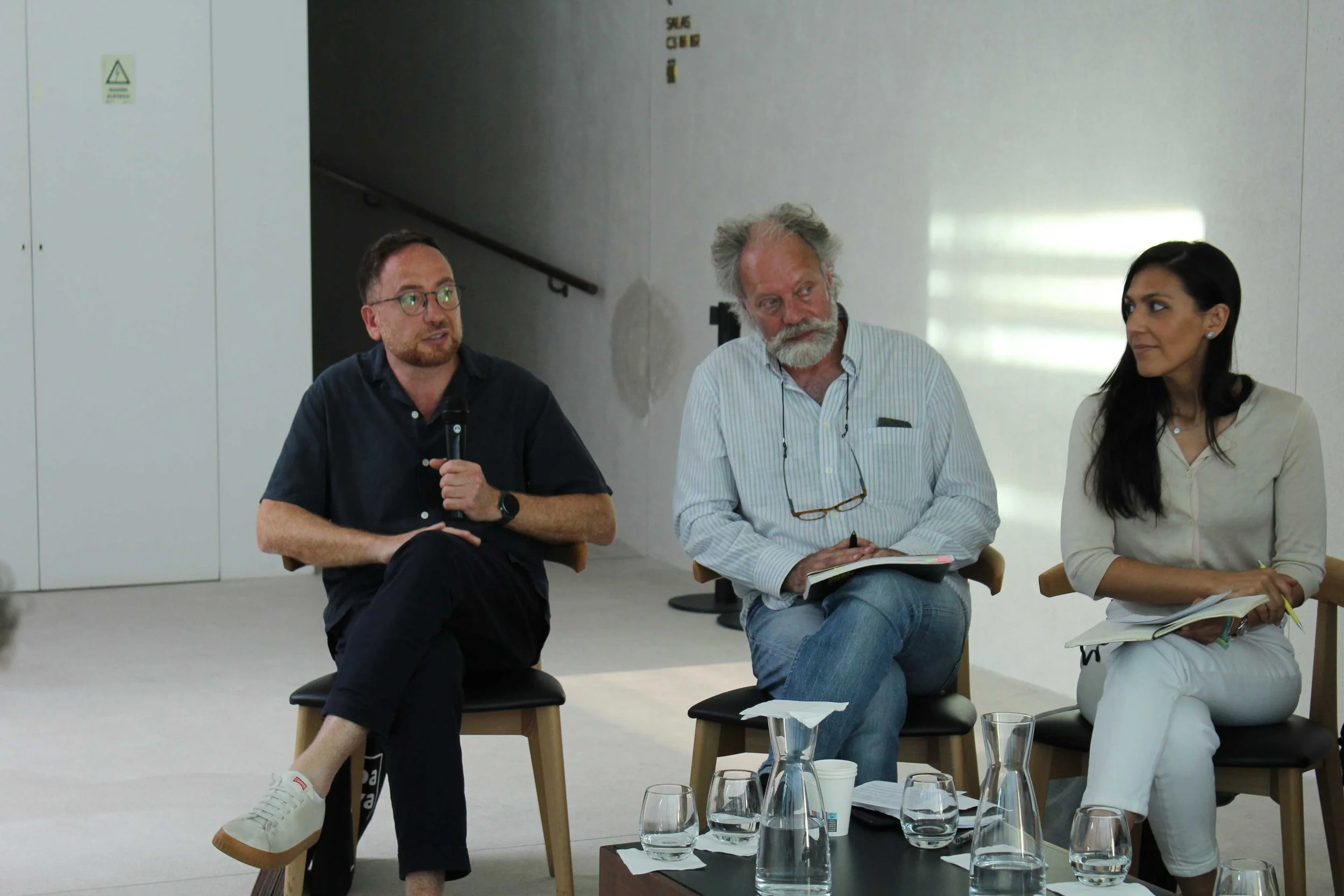
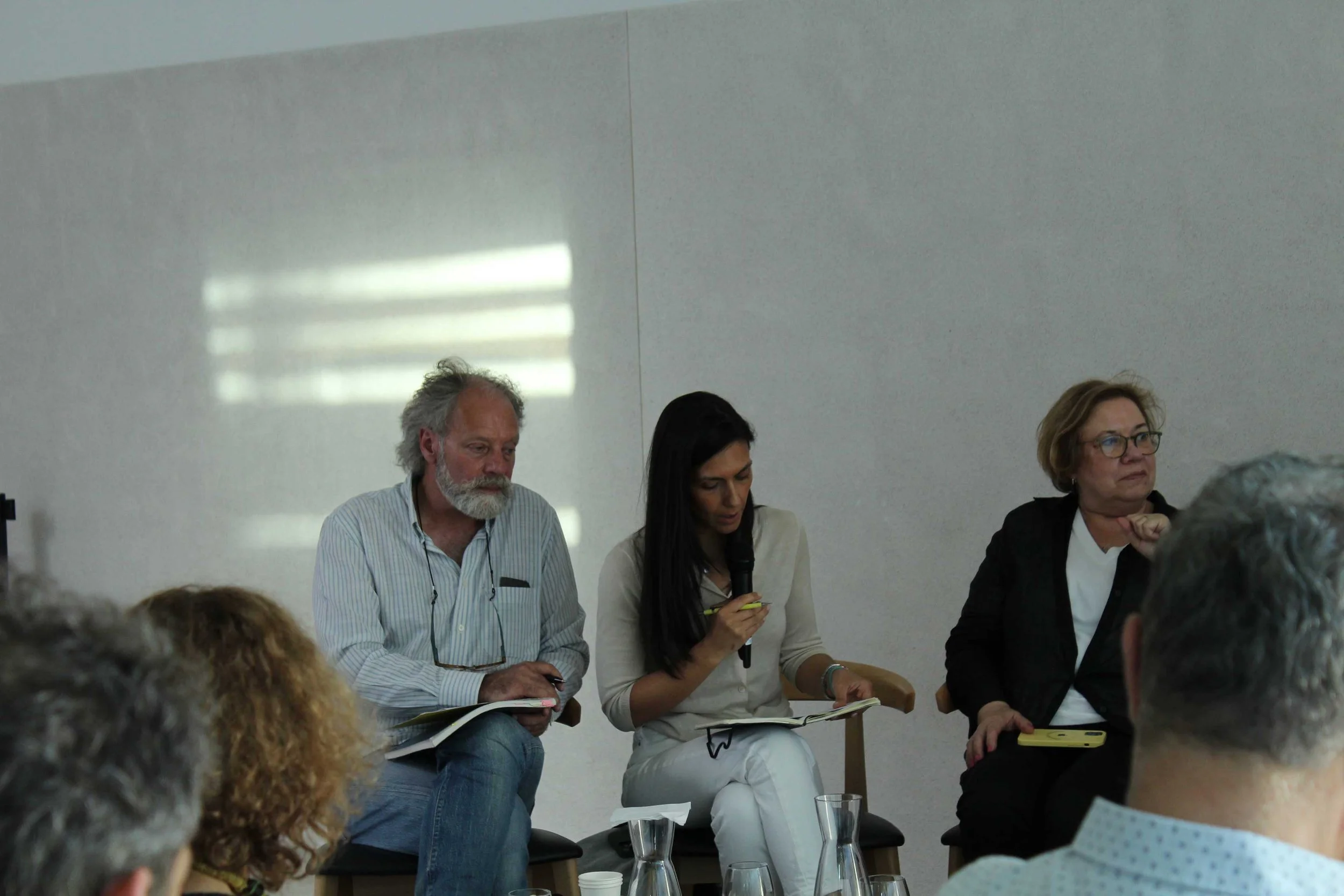
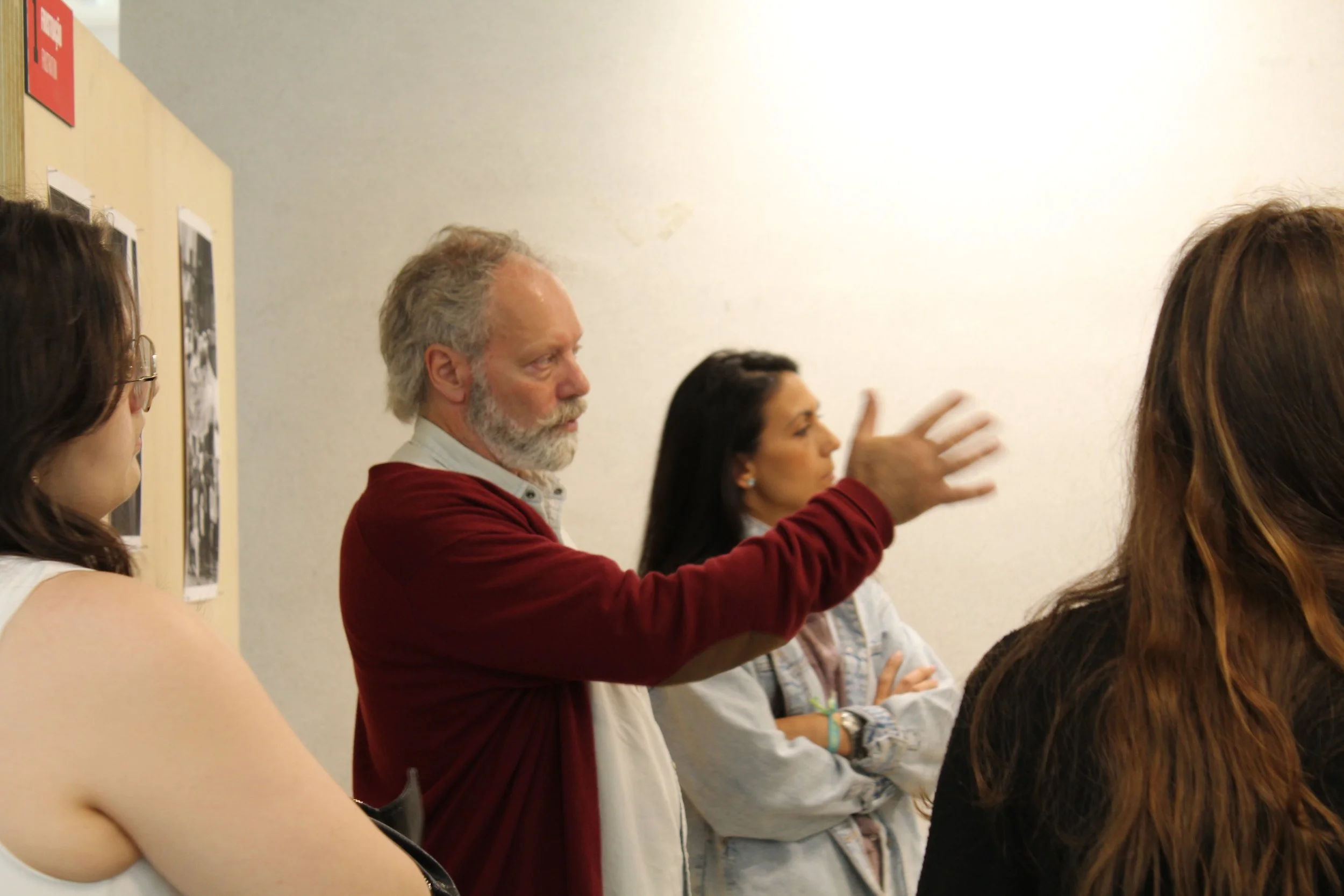
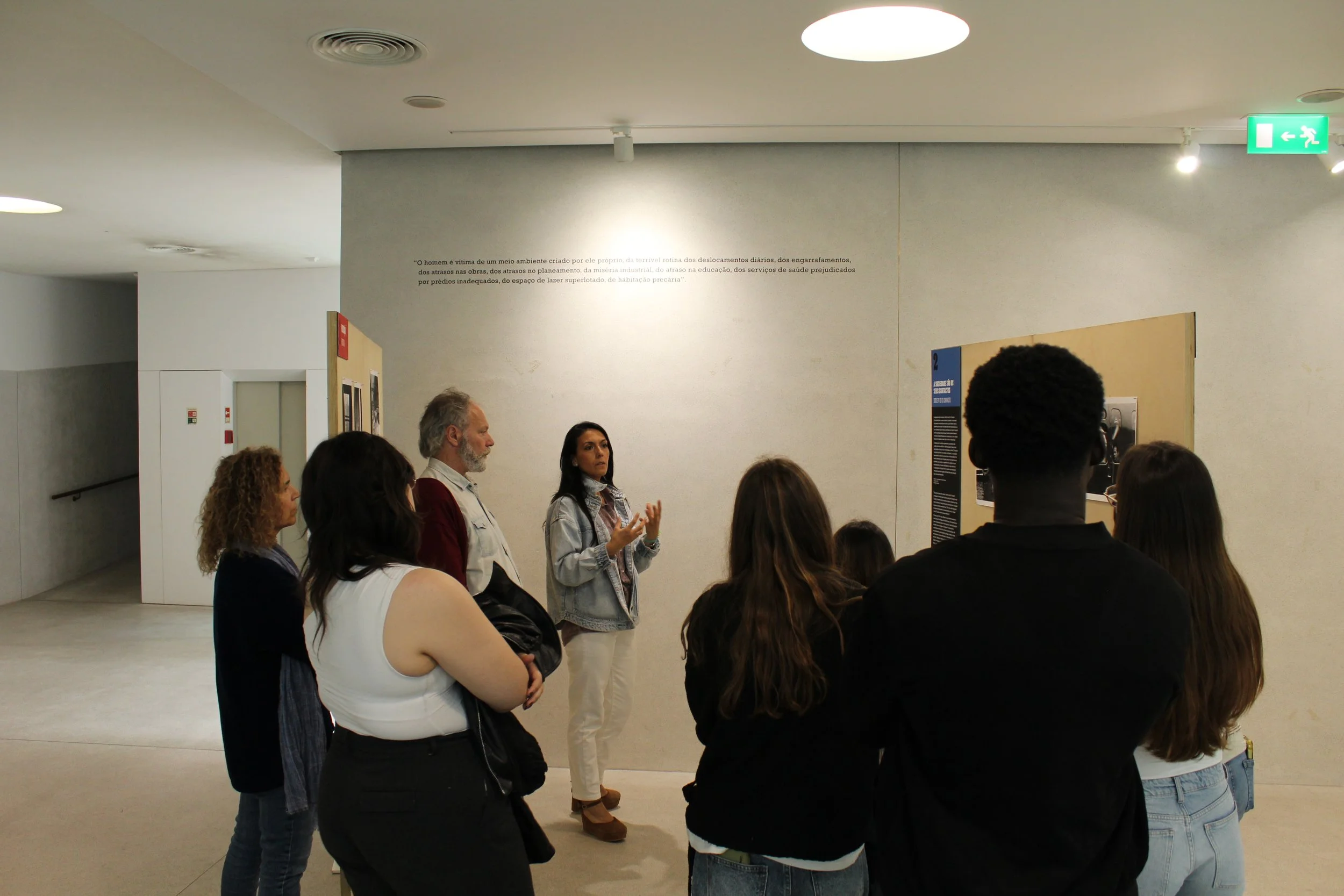
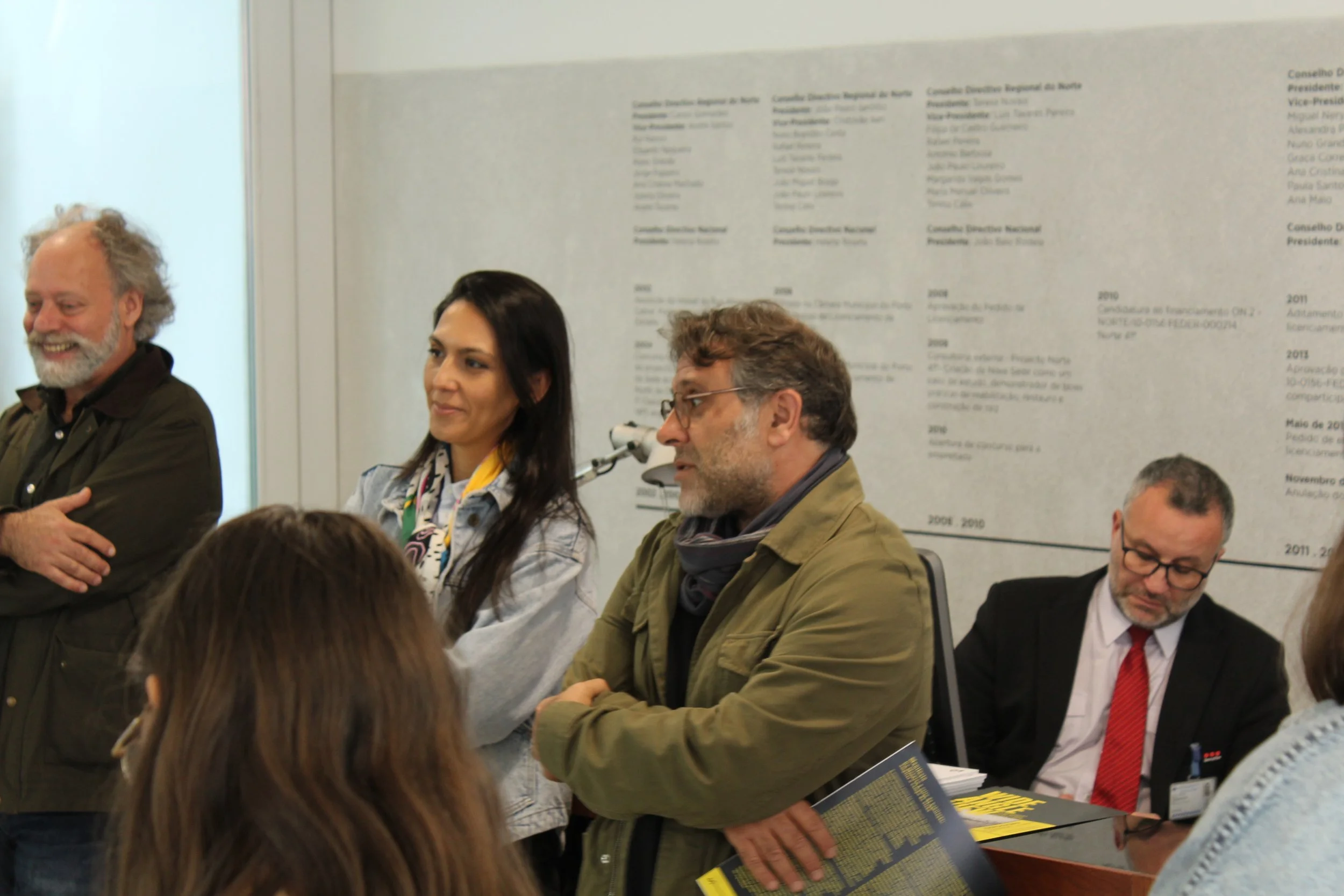
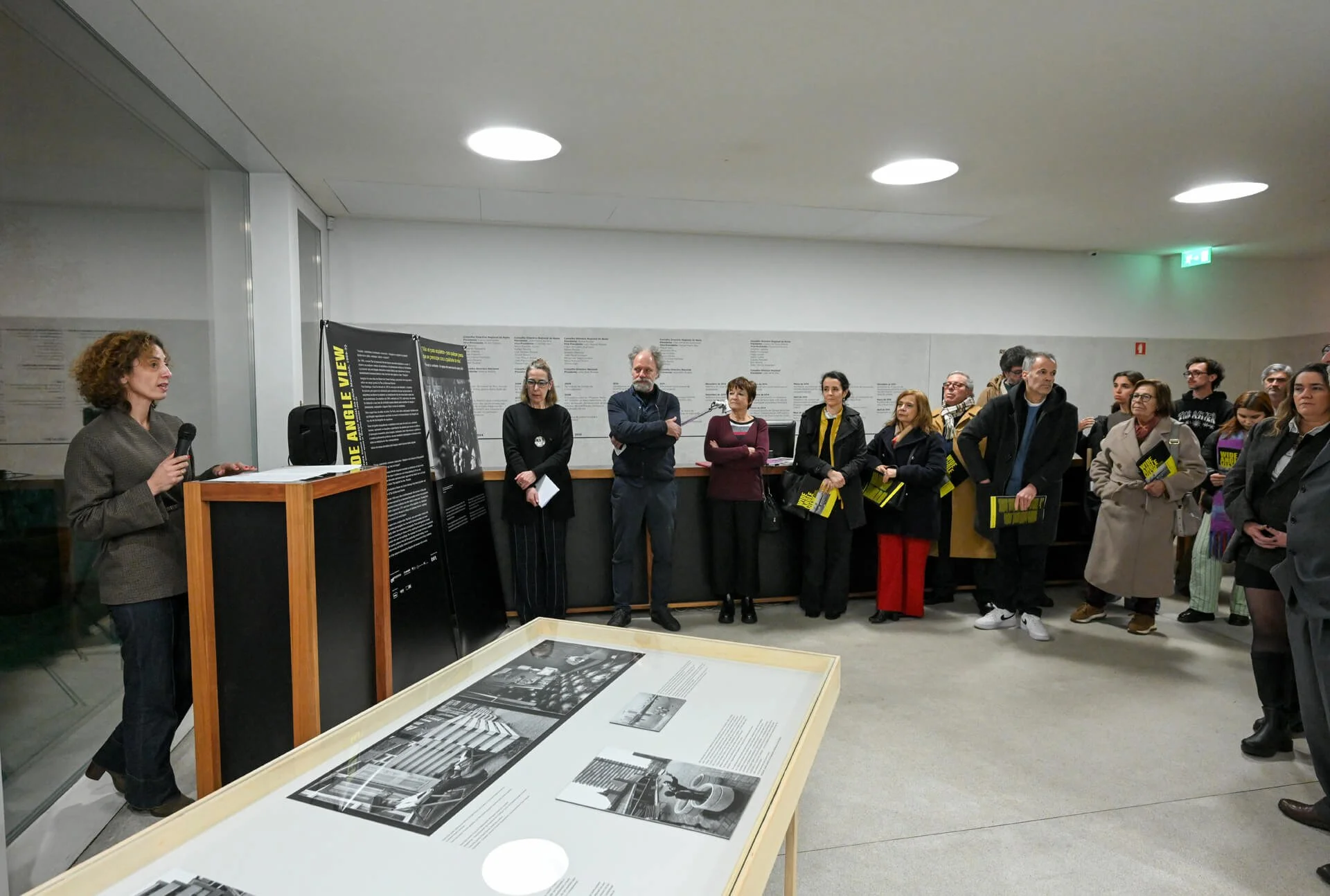
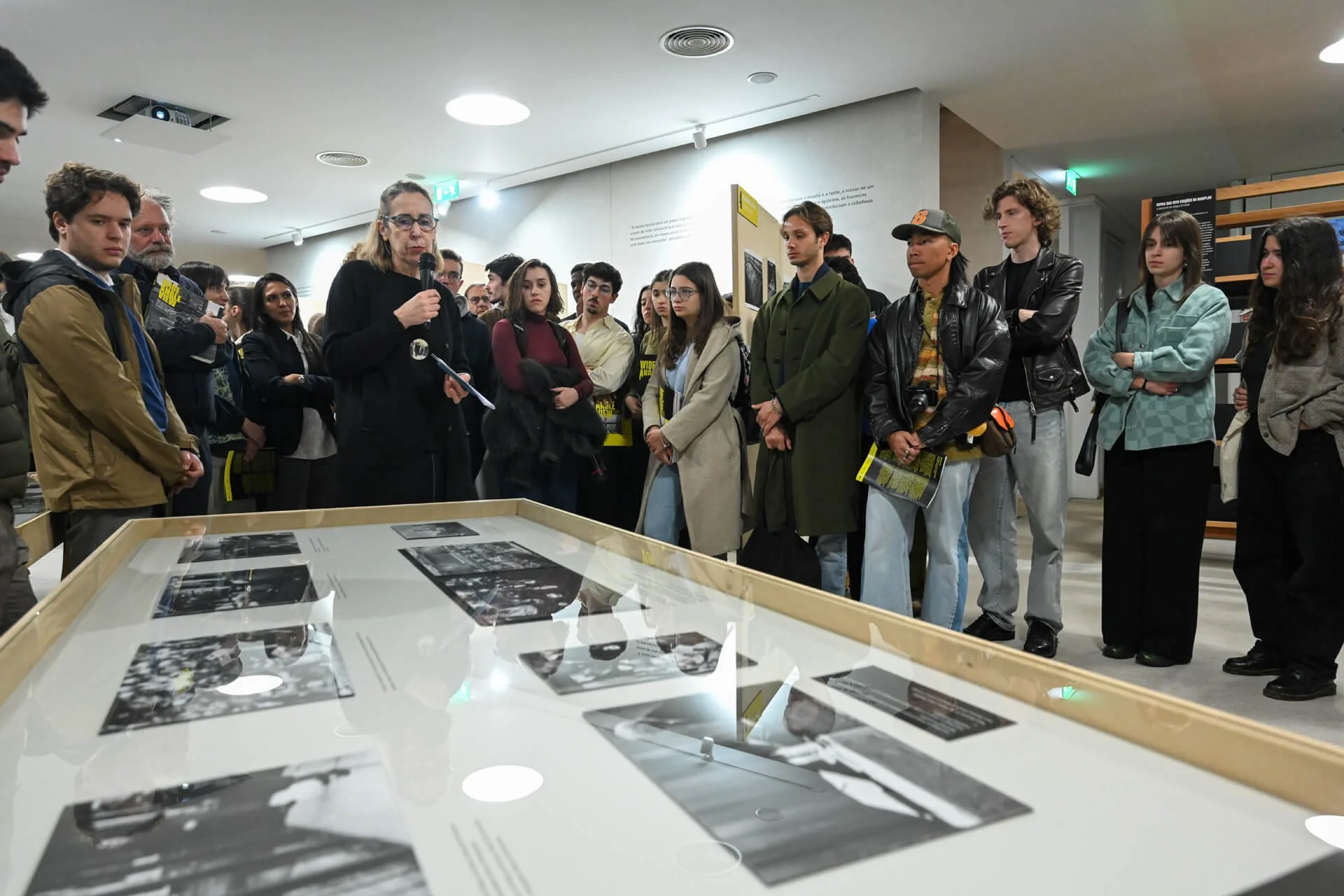
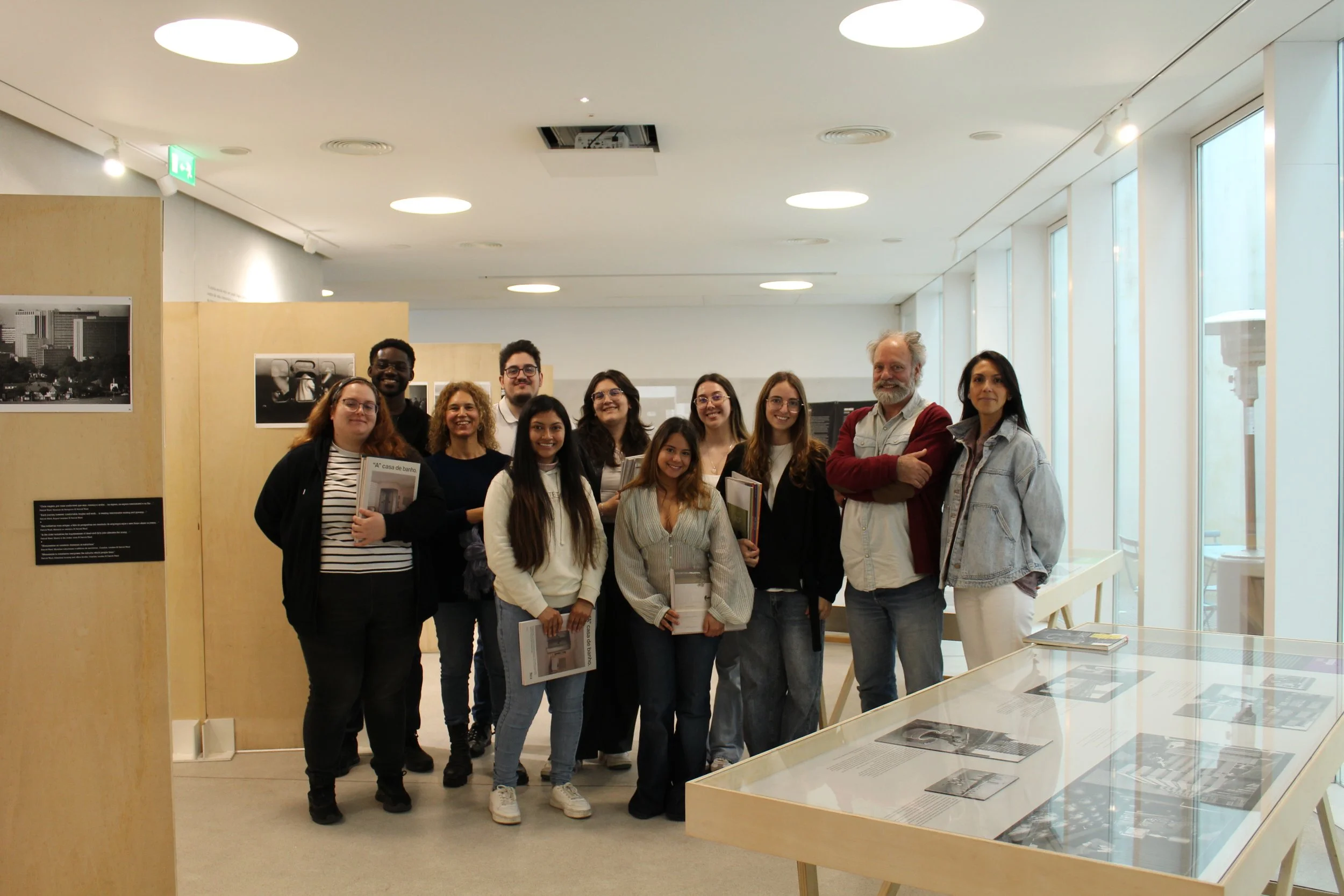
No passado dia 12 de março, a sede da Ordem dos Arquitetos – Secção Regional Norte acolheu uma aula aberta e visita guiada à exposição “Wide-Angle View: A Arquitetura como Espaço Social na série Manplan 1969–70”, numa iniciativa realizada em colaboração com o Departamento de Arquitetura da Escola Superior de Media Artes e Design (ESMAD / P.PORTO).

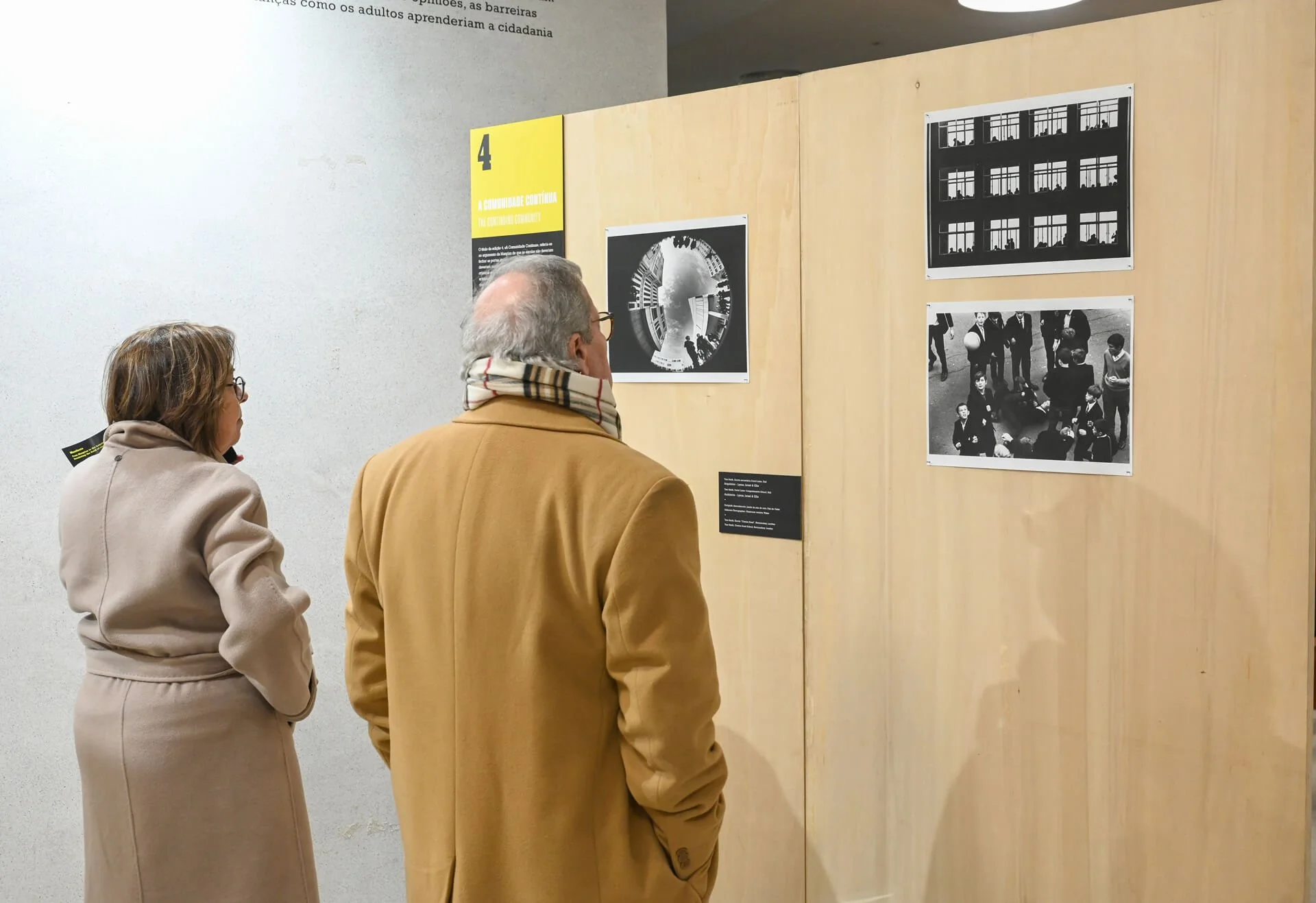
A sessão contou com uma forte adesão por parte de várias turmas do curso de Fotografia, evidenciando o interesse dos estudantes pelas relações entre arquitetura, imagem e sociedade. Ao longo da visita, tornou-se evidente o entusiasmo dos participantes, particularmente perante a forma clara e crítica como os diferentes temas da exposição foram apresentados, bem como pelo potencial da fotografia enquanto instrumento de interpretação e questionamento do espaço construído.

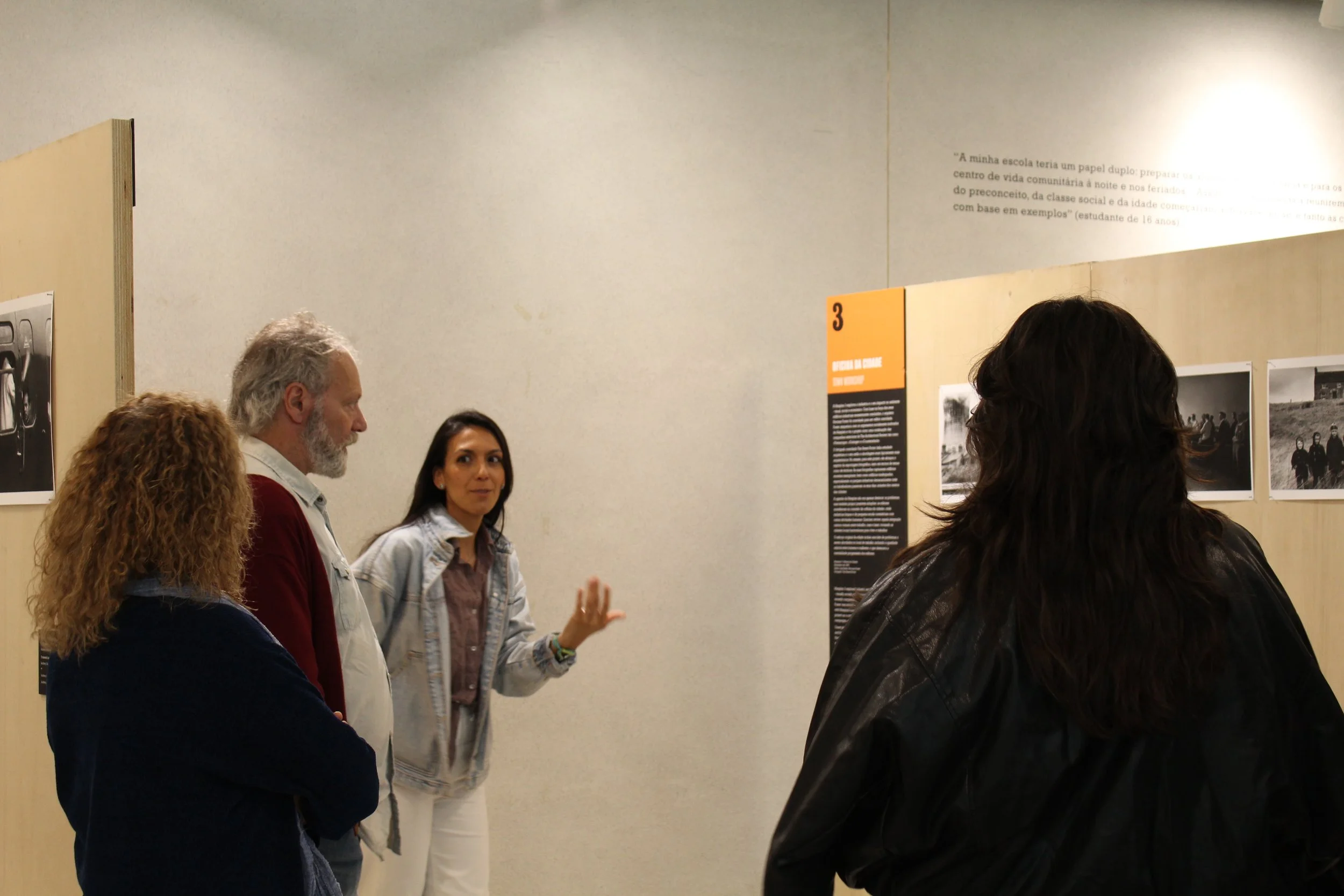
Conduzida por Pedro Leão Neto, docente e investigador da FAUP, e por Maria Neto, investigadora do grupo Arquitetura, Arte e Imagem (AAI) do CENP, a visita proporcionou uma leitura aprofundada da exposição, articulando dimensões históricas e contemporâneas. A presença de um representante da Ordem dos Arquitetos contribuiu igualmente para enriquecer o enquadramento institucional e disciplinar da mostra.

Ao longo do percurso expositivo, foram criados vários momentos de diálogo, incentivando a participação ativa dos estudantes. As questões colocadas revelaram uma reflexão crítica sobre a pertinência dos temas abordados — desde a habitação às dinâmicas sociais urbanas — e sobre a atualidade do projeto Manplan, cuja abordagem continua a ecoar nos desafios contemporâneos das cidades.

No final da sessão, o debate prolongou-se de forma espontânea, confirmando o interesse suscitado pela exposição e a sua capacidade de gerar discussão em torno do papel da arquitetura enquanto prática social e política. A iniciativa reforçou, assim, a importância de aproximar os estudantes de contextos expositivos e curatoriais, promovendo uma compreensão mais alargada e crítica da cultura arquitetónica e visual contemporânea..

Programa da Exposição Wide-Angle View

A exposição resulta de uma colaboração internacional liderada pelo RIBA, que foi responsável pela curadoria e pela apresentação das suas coleções, em estreita parceria com instituições sediadas no Porto, incluindo a Secção Regional Norte da Ordem dos Arquitetos, a Associação Cultural Cityscopio e o CENP/FAUP – Centro de Estudos Nuno Portas, através do grupo de investigação Arquitetura, Arte e Imagem (AAI) e do projeto Sophia Journal. Esta colaboração destaca o papel central do RIBA na promoção do diálogo internacional, ao mesmo tempo que fortalece as ligações com as instituições académicas e culturais locais, criando uma plataforma que liga a investigação, a prática curatorial e o envolvimento do público.

Originalmente produzida entre 1969 e 1970 pela revista The Architectural Review, a série Manplan é aqui revisitada através da perspetiva curatorial do RIBA, recorrendo à riqueza das suas coleções para reformular o material para o público contemporâneo. Ao privilegiar a fotografia como meio crítico e ao colocar as pessoas – em vez dos edifícios – no centro da narrativa, a exposição reflete o compromisso contínuo do RIBA em expandir o discurso arquitetónico e tornar as suas coleções acessíveis e relevantes para um público mais vasto através de parcerias internacionais como esta, no Porto.

A exposição apresenta assim uma seleção de fotografias e materiais provenientes do arquivo da Architectural Press / RIBA Collections, com origem na série publicada pela revista The Architectural Review produzida num contexto de profundas transformações sociais e urbanas. Manplan marcou uma rutura na cultura editorial da arquitetura ao colocar as pessoas e os contextos sociais no centro da representação arquitetónica, abordando temas como habitação, saúde, trabalho, educação e lazer através de narrativas visuais inspiradas no fotojornalismo e na fotografia de rua.

Mais do que uma exposição histórica, Wide-Angle View afirma-se como um dispositivo de reflexão contemporânea sobre as relações entre arquitetura e sociedade, particularmente relevante num contexto marcado pela crise da habitação, pelas transformações do espaço urbano e pelas desigualdades territoriais.

Durante o período em que estará patente na sede da Ordem dos Arquitetos – Secção Regional Norte, a exposição será acompanhada por um programa paralelo de visitas guiadas, conversas públicas e ações educativas, dirigido a estudantes, investigadores, arquitetos e ao público em geral.

Estas iniciativas procuram promover novas leituras críticas sobre a cidade contemporânea, sublinhando o papel da fotografia e da imagem enquanto instrumentos fundamentais de pensamento e investigação sobre o espaço arquitetónico e urbano.

MANIFESTO
Da Manplan à crise da habitação: ampliar o campo de visão

A arquitetura nunca foi neutra. Nunca foi apenas forma, técnica ou estilo. É um campo de forças onde se inscrevem conflitos sociais, escolhas políticas e visões do mundo. A série Manplan (1969–1970) tornou essa condição explícita num momento em que as promessas do modernismo entravam em crise e a realidade urbana expunha, de forma incontornável, as falhas de um projeto social incompleto. Cinquenta anos depois, essa lucidez crítica não perdeu atualidade — tornou-se urgente.

Hoje, perante uma crise global da habitação, a financeirização do território, a exclusão crescente e a fragmentação das cidades, importa recuperar e atualizar o gesto radical de Manplan: olhar a arquitetura a partir da vida, e não o inverso. Colocar as pessoas no centro da representação e do pensamento arquitetónico. Reconhecer que cada decisão espacial produz efeitos reais sobre corpos, relações, desigualdades e possibilidades de futuro. “Wide-Angle View: Architecture as social space in the Manplan series 1969–70” | SR-NRT uma mostra inédita em Portugal que revisita a influente série Manplan, afirma-se nesse território de continuidade crítica.

Não como uma exposição nostálgica, mas como um dispositivo de leitura do presente. O arquivo não é aqui um lugar fechado, mas um campo ativo de investigação, capaz de iluminar as tensões contemporâneas. As imagens de Manplan — cruas, próximas, incómodas — continuam a interpelar-nos porque revelam uma verdade persistente: a cidade é vivida antes de ser desenhada, e a habitação é um direito antes de ser um produto.

A lente grande-angular que dá título à exposição é mais do que um recurso técnico. É uma posição ética e política. Ampliar o campo de visão significa recusar leituras simplificadas da realidade urbana, rejeitar soluções rápidas para problemas estruturais e confrontar a disciplina com as consequências sociais do seu próprio fazer. Significa aceitar que a arquitetura participa ativamente na produção de desigualdade, mas também que pode — e deve — ser instrumento de reparação.

Entre a Manplan e o presente estende-se uma linha de continuidade: a compreensão da arquitetura como prática inevitavelmente política. A crise da habitação não é um acidente, mas o resultado de escolhas acumuladas — de modelos económicos, de legislação, de planeamento e de cultura disciplinar. Perante isso, não basta projetar mais edifícios; é necessário repensar os modos de habitar, os regimes de propriedade, as formas de cooperação e os imaginários urbanos que sustentam a cidade contemporânea.

Wide-Angle View convoca arquitetos, estudantes, investigadores e cidadãos a assumir uma posição. A olhar para o arquivo não como repertório formal, mas como memória crítica. A reconhecer na fotografia não apenas um meio de representação, mas uma forma de pensamento. A compreender que toda a imagem é uma tomada de posição — e que toda a arquitetura comunica, mesmo quando pretende silenciar os seus efeitos.

Este manifesto afirma que a relevância de Manplan reside precisamente na sua recusa da indiferença. Na sua capacidade de expor o desconforto, de tornar visíveis as falhas do sistema e de insistir que a qualidade de vida é uma questão coletiva. Hoje, como então, a arquitetura só faz sentido se for pensada a partir da vida concreta, das suas fragilidades e das suas urgências.

Ampliar o campo de visão é, por isso, um compromisso com o presente. Um convite à ação crítica. Uma exigência de responsabilidade disciplinar. Entre arquivo e atualidade, entre imagem e projeto, entre arquitetura e sociedade, “Wide-Angle View: Architecture as social space in the Manplan series 1969–70” | SR-NRT  afirma que não há futuro habitável sem um olhar atento, informado e profundamente humano sobre a cidade que construímos.

Pedro Leão Neto

Maria Neto

Mais informação em breve nos canais da SR-NRT, CNEP - FAUP e CCA.


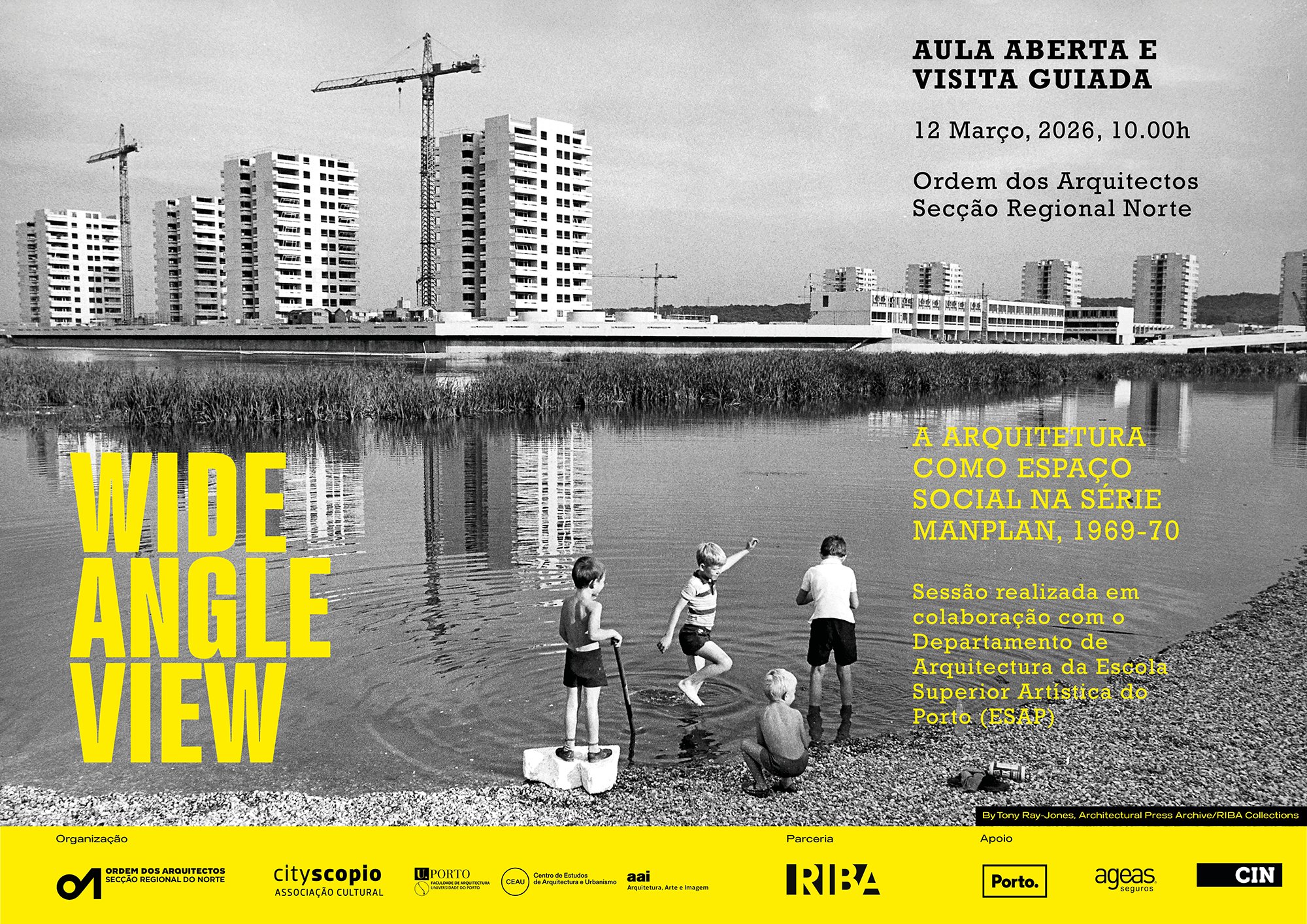
AULA ABERTA: VISITA GUIADA À EXPOSIÇÃO “WIDE-ANGLE VIEW NA ORDEM DOS ARQUITETOS – SECÇÃO REGIONAL NORTE


Aula aberta e visita guiada à exposição Wide-Angle View: A Arquitetura como Espaço Social na Série Manplan 1969–70

Ordem dos Arquitectos – Secção Regional Norte | 12 de março, 10h00

Sessão realizada em colaboração com o Departamento de Arquitectura (DARQ) da Escola Superior Artística do Porto (ESAP)

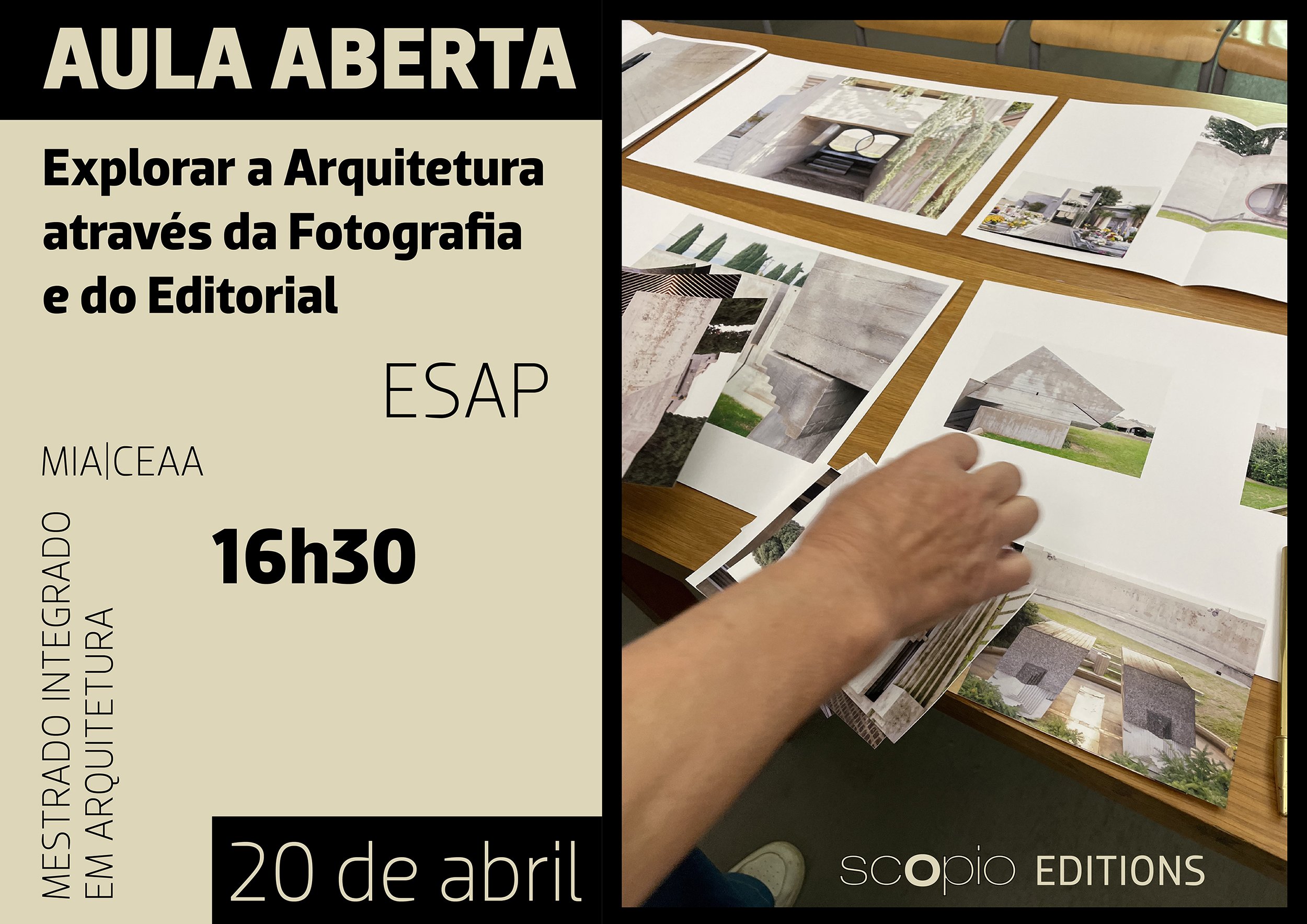
No dia 12 de março, quinta-feira, pelas 10:00, realiza-se uma visita guiada / aula aberta à exposição “Wide-Angle View: A Arquitetura como Espaço Social na série Manplan 1969–70”, patente na Ordem dos Arquitetos – Secção Regional Norte (OASRN), com especial enfoque para os estudantes do Departamento de Arquitectura (DARQ) da Escola Superior Artística do Porto (ESAP).

Esta iniciativa integra-se no programa de visitas guiadas / aulas abertas dirigido a toda a comunidade académica e ao público, sendo particularmente dirigida a estudantes, investigadores e profissionais interessados nas relações entre fotografia, arquitetura e cultura visual contemporânea.

A visita será conduzida por Pedro Leão Neto, investigador e docente da FAUP, associado ao grupo de investigação Arquitetura, Arte e Imagem (AAI) do CENP – Centro de Estudos Nuno Portas, sendo acompanhado por Alexandra TrevisanFátima Sales, Helena Maia e Henrique Muga docentes e investigadores do CEAA - Centro de Estudos Arnaldo Araújo (ESAP), e Franklin Morais docente do MIA (ESAP) e envolve uma leitura crítica da exposição enquanto dispositivo de reflexão sobre as relações entre arquitetura, cidade, imagem e sociedade.

Participam ainda a investigadora Maria Neto grupo de investigação AAI / CENP e um membro da OASRN, que contribuirão com perspetivas complementares sobre imagem, território e arquitetura.

Através destas sessões pretende-se criar um espaço de exploração, debate e reflexão em torno de novas abordagens à fotografia de arquitetura e às representações visuais da cidade, sublinhando o papel da imagem — e em particular da fotografia — enquanto instrumento de investigação, interpretação crítica e comunicação do espaço construído.

A exposição resulta de uma colaboração internacional liderada pelo RIBA, que foi responsável pela curadoria e pela apresentação das suas coleções, em estreita parceria com instituições sediadas no Porto, incluindo a Secção Regional Norte da Ordem dos Arquitetos, a Associação Cultural Cityscopio e o CENP/FAUP – Centro de Estudos Nuno Portas, através do grupo de investigação Arquitetura, Arte e Imagem (AAI) e do projeto Sophia Journal. Esta colaboração destaca o papel central do RIBA na promoção do diálogo internacional, ao mesmo tempo que fortalece as ligações com as instituições académicas e culturais locais, criando uma plataforma que liga a investigação, a prática curatorial e o envolvimento do público.

Originalmente produzida entre 1969 e 1970 pela revista The Architectural Review, a série Manplan é aqui revisitada através da perspetiva curatorial do RIBA, recorrendo à riqueza das suas coleções para reformular o material para o público contemporâneo. Ao privilegiar a fotografia como meio crítico e ao colocar as pessoas – em vez dos edifícios – no centro da narrativa, a exposição reflete o compromisso contínuo do RIBA em expandir o discurso arquitetónico e tornar as suas coleções acessíveis e relevantes para um público mais vasto através de parcerias internacionais como esta, no Porto.

Estas sessões públicas pretendem igualmente estimular o contacto direto dos estudantes com exposições e projetos curatoriais relevantes no campo da arquitetura e da fotografia, permitindo compreender os modos como a imagem participa na construção de discursos críticos sobre a cidade e o território.

A visita é aberta a toda a comunidade académica e ao público em geral, sendo particularmente dirigida a estudantes, investigadores e profissionais interessados nas relações entre fotografia, arquitetura e cultura visual contemporânea.

Programa da Exposição Wide-Angle View

A exposição “Wide-Angle View: A Arquitetura como Espaço Social na série Manplan 1969–70” apresenta uma seleção de fotografias e materiais provenientes do arquivo da Architectural Press / RIBA Collections, revisitando a influente série publicada pela revista The Architectural Review no final da década de 1960.

Produzida num contexto de profundas transformações sociais e urbanas, Manplan marcou uma rutura na cultura editorial da arquitetura ao colocar as pessoas e os contextos sociais no centro da representação arquitetónica, abordando temas como habitação, saúde, trabalho, educação e lazer através de narrativas visuais inspiradas no fotojornalismo e na fotografia de rua.

A exposição resulta de uma parceria internacional entre o Royal Institute of British Architects (RIBA), a Ordem dos Arquitetos – Secção Regional Norte, a Associação Cultural Cityscopio (CCA) e o CENP/FAUP – Centro de Estudos Nuno Portas, através do grupo de investigação Arquitetura, Arte e Imagem (AAI) e do projeto editorial e científico Sophia Journal.

Mais do que uma exposição histórica, Wide-Angle View afirma-se como um dispositivo de reflexão contemporânea sobre as relações entre arquitetura e sociedade, particularmente relevante num contexto marcado pela crise da habitação, pelas transformações do espaço urbano e pelas desigualdades territoriais.

Durante o período em que estará patente na sede da Ordem dos Arquitetos – Secção Regional Norte, a exposição será acompanhada por um programa paralelo de visitas guiadas, conversas públicas e ações educativas, dirigido a estudantes, investigadores, arquitetos e ao público em geral.

Estas iniciativas procuram promover novas leituras críticas sobre a cidade contemporânea, sublinhando o papel da fotografia e da imagem enquanto instrumentos fundamentais de pensamento e investigação sobre o espaço arquitetónico e urbano.

MANIFESTO
Da Manplan à crise da habitação: ampliar o campo de visão

A arquitetura nunca foi neutra. Nunca foi apenas forma, técnica ou estilo. É um campo de forças onde se inscrevem conflitos sociais, escolhas políticas e visões do mundo. A série Manplan (1969–1970) tornou essa condição explícita num momento em que as promessas do modernismo entravam em crise e a realidade urbana expunha, de forma incontornável, as falhas de um projeto social incompleto. Cinquenta anos depois, essa lucidez crítica não perdeu atualidade — tornou-se urgente.

Hoje, perante uma crise global da habitação, a financeirização do território, a exclusão crescente e a fragmentação das cidades, importa recuperar e atualizar o gesto radical de Manplan: olhar a arquitetura a partir da vida, e não o inverso. Colocar as pessoas no centro da representação e do pensamento arquitetónico. Reconhecer que cada decisão espacial produz efeitos reais sobre corpos, relações, desigualdades e possibilidades de futuro. “Wide-Angle View: Architecture as social space in the Manplan series 1969–70” | SR-NRT uma mostra inédita em Portugal que revisita a influente série Manplan, afirma-se nesse território de continuidade crítica.

Não como uma exposição nostálgica, mas como um dispositivo de leitura do presente. O arquivo não é aqui um lugar fechado, mas um campo ativo de investigação, capaz de iluminar as tensões contemporâneas. As imagens de Manplan — cruas, próximas, incómodas — continuam a interpelar-nos porque revelam uma verdade persistente: a cidade é vivida antes de ser desenhada, e a habitação é um direito antes de ser um produto.

A lente grande-angular que dá título à exposição é mais do que um recurso técnico. É uma posição ética e política. Ampliar o campo de visão significa recusar leituras simplificadas da realidade urbana, rejeitar soluções rápidas para problemas estruturais e confrontar a disciplina com as consequências sociais do seu próprio fazer. Significa aceitar que a arquitetura participa ativamente na produção de desigualdade, mas também que pode — e deve — ser instrumento de reparação.

Entre a Manplan e o presente estende-se uma linha de continuidade: a compreensão da arquitetura como prática inevitavelmente política. A crise da habitação não é um acidente, mas o resultado de escolhas acumuladas — de modelos económicos, de legislação, de planeamento e de cultura disciplinar. Perante isso, não basta projetar mais edifícios; é necessário repensar os modos de habitar, os regimes de propriedade, as formas de cooperação e os imaginários urbanos que sustentam a cidade contemporânea.

Wide-Angle View convoca arquitetos, estudantes, investigadores e cidadãos a assumir uma posição. A olhar para o arquivo não como repertório formal, mas como memória crítica. A reconhecer na fotografia não apenas um meio de representação, mas uma forma de pensamento. A compreender que toda a imagem é uma tomada de posição — e que toda a arquitetura comunica, mesmo quando pretende silenciar os seus efeitos.

Este manifesto afirma que a relevância de Manplan reside precisamente na sua recusa da indiferença. Na sua capacidade de expor o desconforto, de tornar visíveis as falhas do sistema e de insistir que a qualidade de vida é uma questão coletiva. Hoje, como então, a arquitetura só faz sentido se for pensada a partir da vida concreta, das suas fragilidades e das suas urgências.

Ampliar o campo de visão é, por isso, um compromisso com o presente. Um convite à ação crítica. Uma exigência de responsabilidade disciplinar. Entre arquivo e atualidade, entre imagem e projeto, entre arquitetura e sociedade, “Wide-Angle View: Architecture as social space in the Manplan series 1969–70” | SR-NRT  afirma que não há futuro habitável sem um olhar atento, informado e profundamente humano sobre a cidade que construímos.

Pedro Leão Neto

Maria Neto

Mais informação em breve nos canais da SR-NRT, CNEP - FAUP e CCA.


Opening of the exhibition “Wide-Angle View: Architecture as Social Space in the Manplan Series 1969–70” brings together architects, researchers and students at the Order of Architects


Fotografia ©Egídio Santos/ SR-NRT


Opening of the exhibition “Wide-Angle View

Architecture as Social Space in the Manplan Series 1969–70” brings together architects, researchers and students at the Order of Architects

PT/ENG

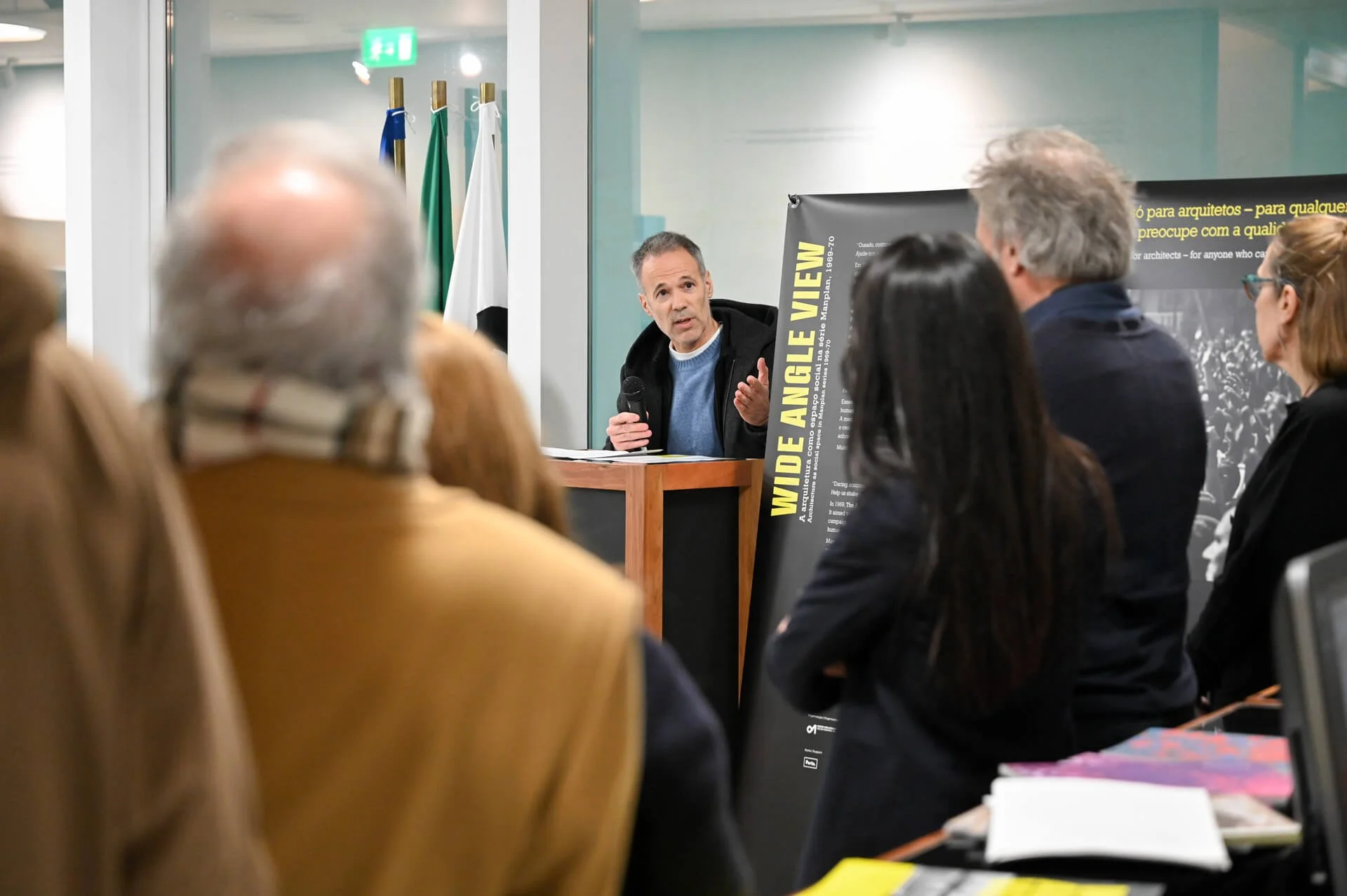
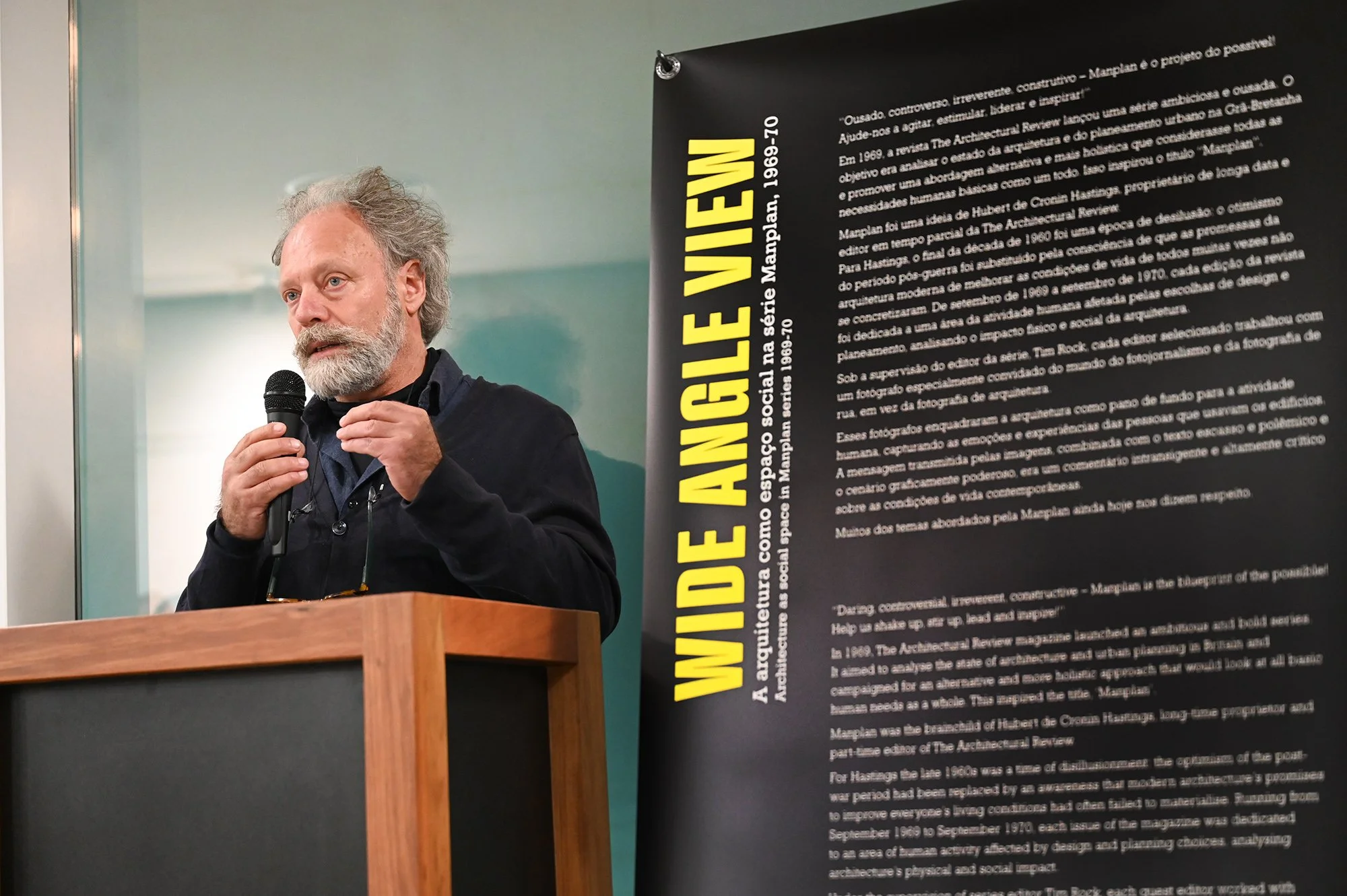
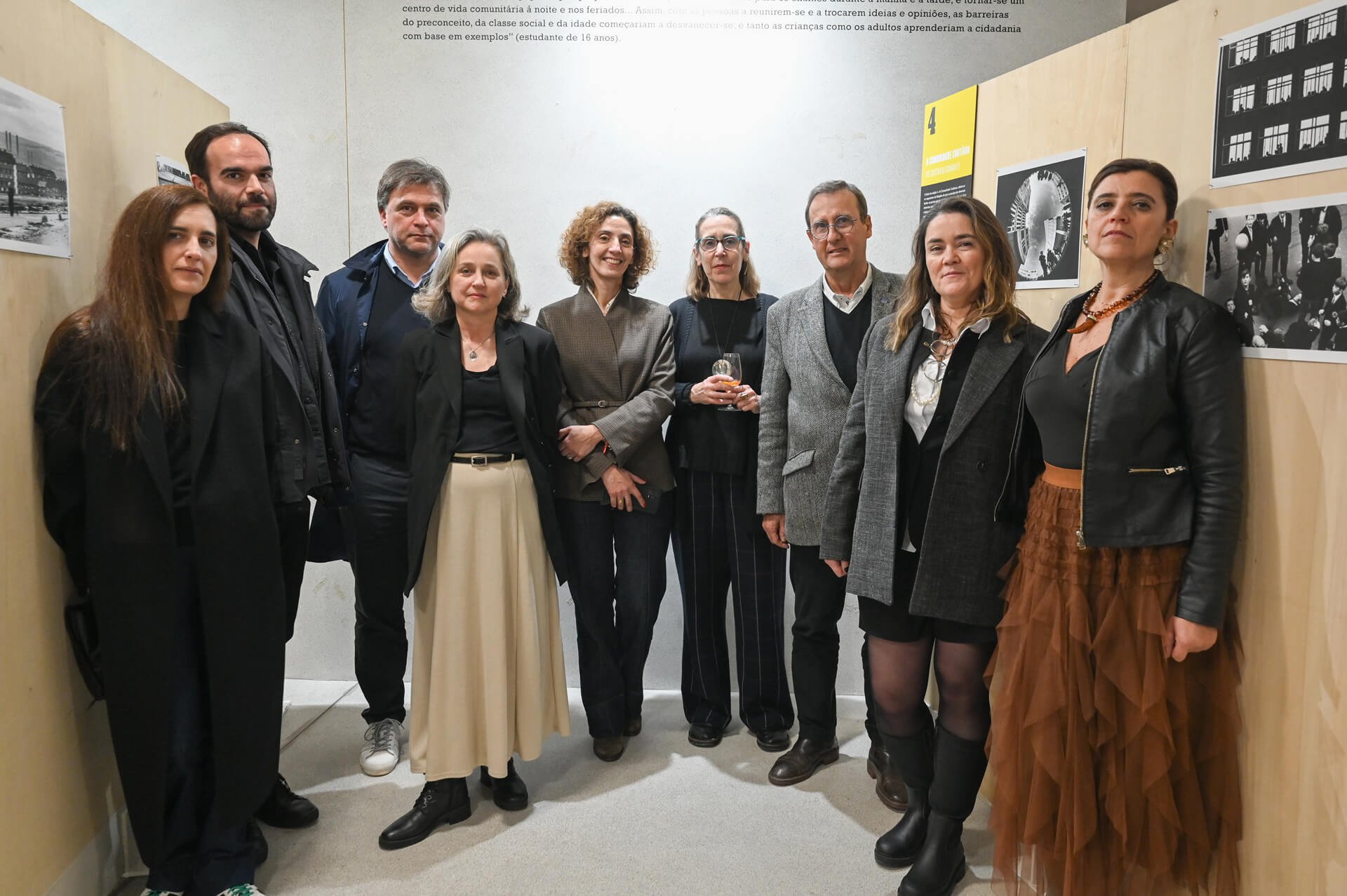
The opening of the exhibition Wide-Angle View: Architecture as Social Space in the Manplan Series 1969–70, which took place on February 27th at the headquarters of the Northern Regional Section of the Order of Architects (OASRN), brought together a large and diverse audience, confirming the interest that the initiative has been generating in the academic, professional and cultural community.

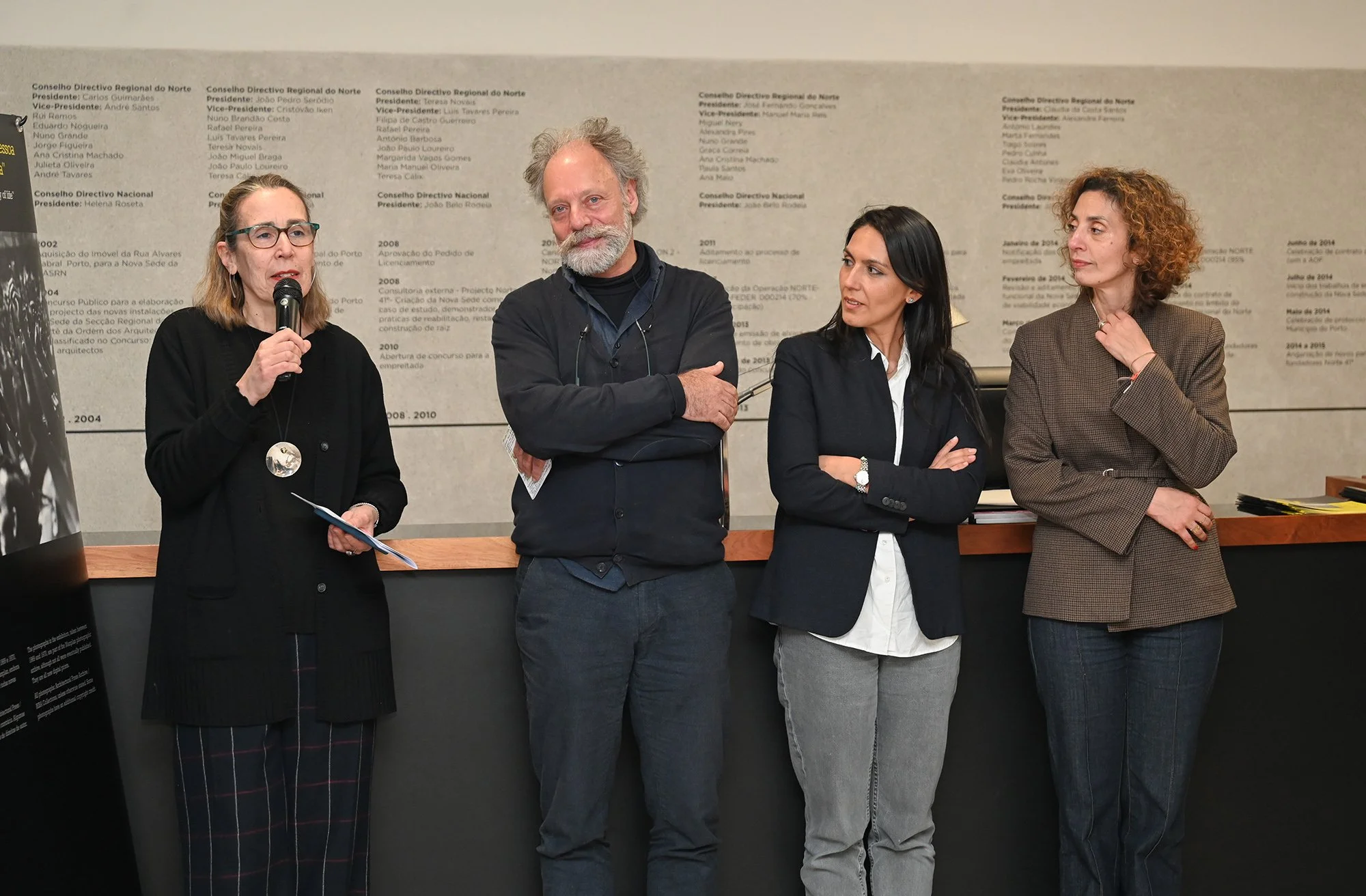
Among architects, researchers, institutional partners and the general public, the strong presence of students stood out. They followed attentively the different moments of the opening session and, in particular, the guided tour led by Valeria Carullo, Curator of Photography at the Royal Institute of British Architects (RIBA) and responsible for the exhibition’s curatorial framework. This moment became one of the highlights of the inauguration, generating a dynamic and engaged dialogue with students, who actively participated by raising questions and discussing the critical issues explored in the Manplan series, while gaining direct insight into RIBA’s curatorial approach and collections.

The exhibition results from an international collaboration led by RIBA, which curated the exhibition and brought forward its collections, in close partnership with Porto-based institutions, including the Northern Regional Section of the Order of Architects, the Cityscopio Cultural Association, and CENP/FAUP — Nuno Portas Center for Studies, through the Architecture, Art and Image (AAI) research group and the Sophia Journal project. This collaboration highlights the central role of RIBA in fostering international dialogue, while strengthening connections with local academic and cultural institutions, creating a platform that bridges research, curatorial practice and public engagement.

Originally produced between 1969 and 1970 by The Architectural Review, the Manplan series is here revisited through RIBA’s curatorial lens, drawing on the richness of its collections to reframe the material for contemporary audiences. By foregrounding photography as a critical medium and placing people — rather than buildings — at the centre of the narrative, the exhibition reflects RIBA’s ongoing commitment to expanding architectural discourse and making its collections accessible and relevant to wider audiences through international partnerships such as this one in Porto.

In this sense, the concept of wide-angle view emerges not only as a technical resource of photography, but as a critical device and an ethical stance towards architecture. Broadening the field of vision means recognizing that each spatial decision has concrete consequences for ways of living, quality of life, and the future possibilities of cities. In a context marked by a profound housing crisis and increasing processes of urban fragmentation, this critical perspective proves particularly relevant—and urgent.

The exhibition also takes on special significance in the context of architectural education and, in particular, in the role of photography in the curricula of architecture schools, as is the case at the Faculty of Architecture of the University of Porto (FAUP). More than a simple recording instrument, photography is understood here as a tool for thought, capable of analyzing, questioning, and reinterpreting visible realities. The image thus becomes a space for investigation that crosses disciplinary boundaries and allows us to understand—and potentially transform—reality.

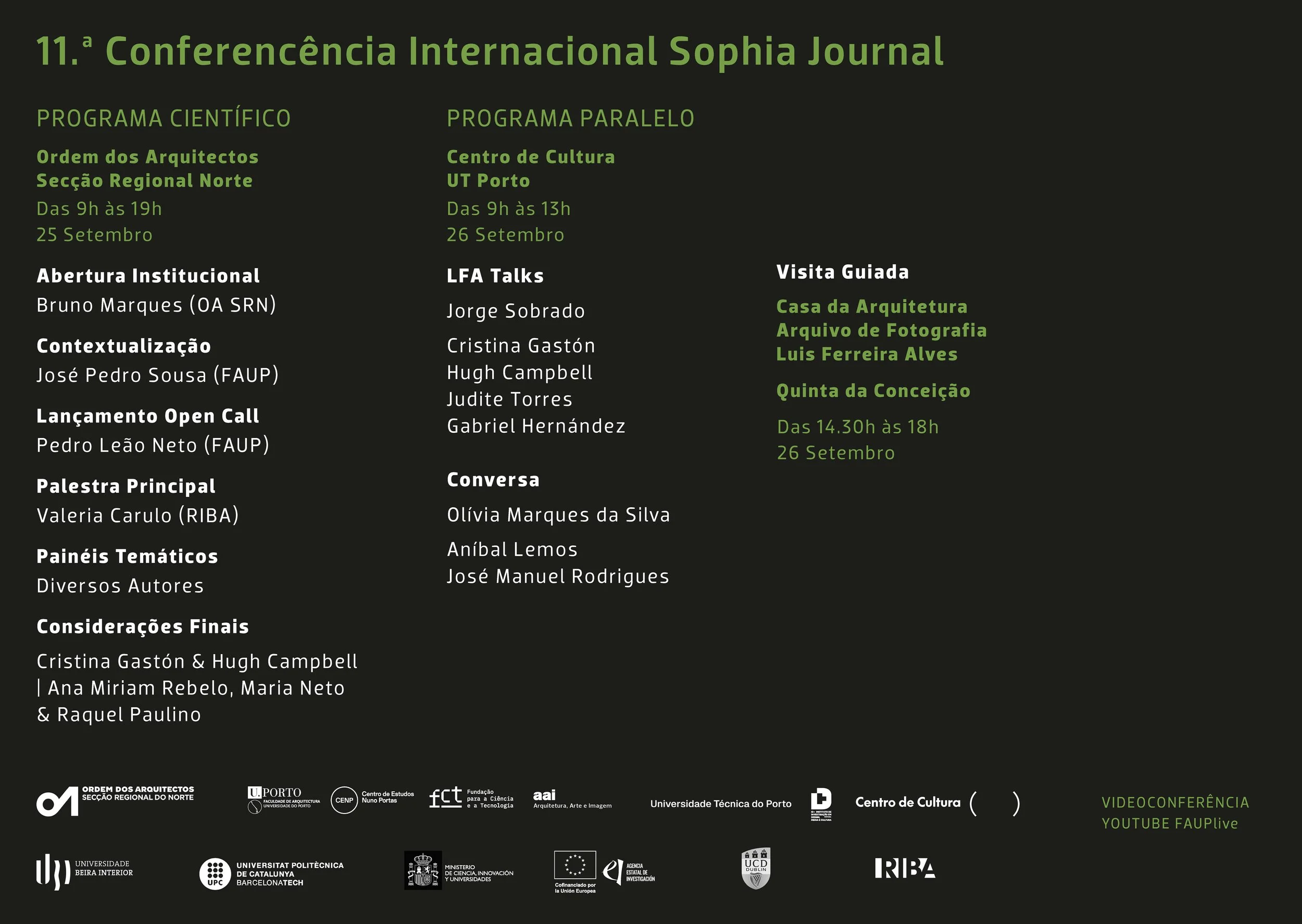
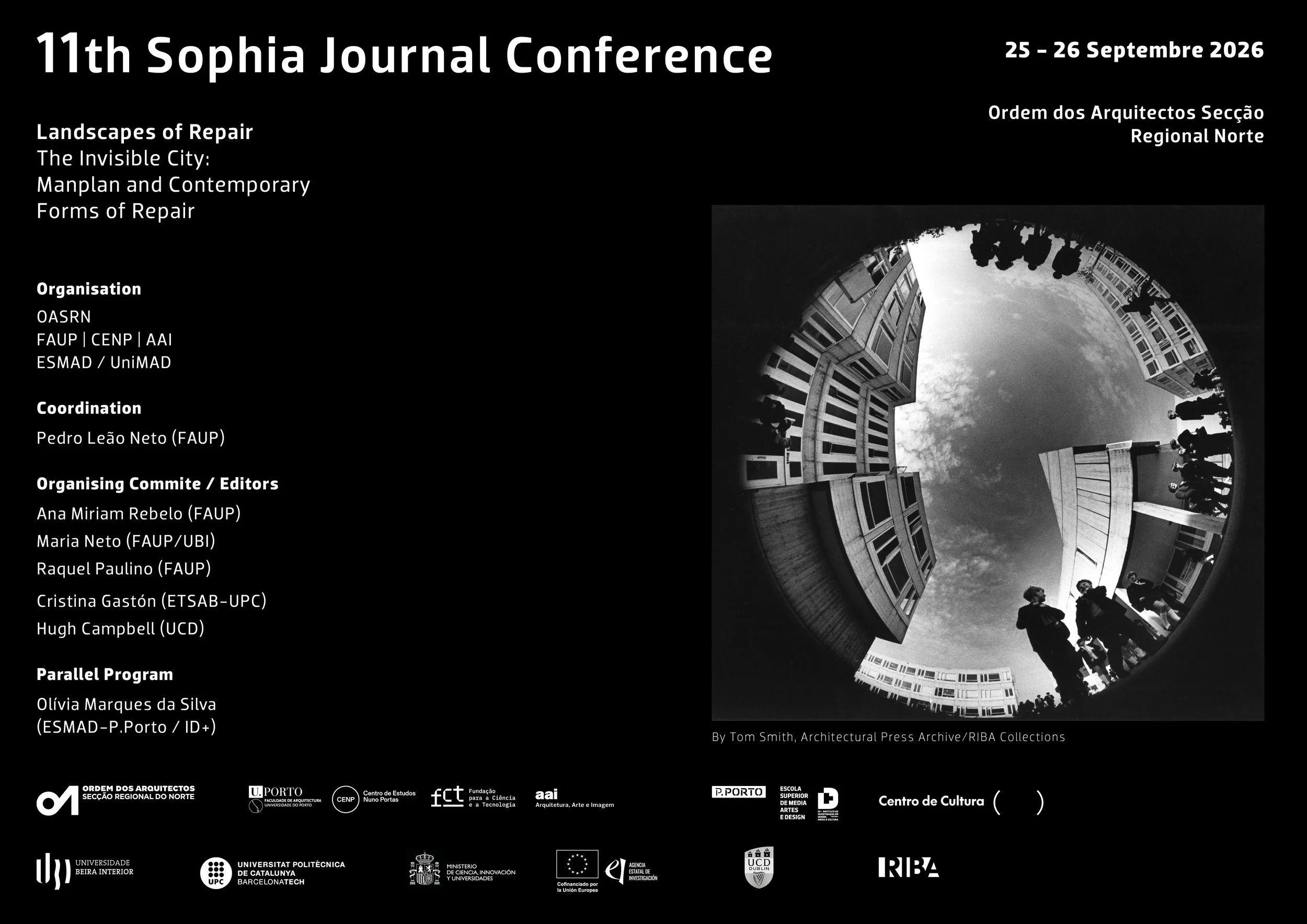
More than an exercise in historical revisitation, Wide-Angle View proposes itself as an active device for interpreting the present. In this sense, it also establishes a direct dialogue with the open call and international conference of the Sophia Journal, scheduled for September of this year, dedicated to the theme “Landscapes of Repair | The Invisible City: Manplan and Contemporary Forms of Repair,” deepening the critical issues raised by the exhibition.

The exhibition will remain on display at the headquarters of the Association of Architects – Northern Regional Section until May, accompanied by a parallel program that will include new guided tours, debates, and roundtables dedicated to the different themes raised by the exhibition. These initiatives will seek to extend the reflection begun at the opening and broaden the debate on the role of architecture, image, and the city in contemporary society.

MANIFESTO

From Manplan to the housing crisis: broadening the field of vision

Architecture has never been neutral. It has never been merely form, technique, or style. It is a field of forces where social conflicts, political choices, and worldviews are inscribed. The Manplan series (1969–1970) made this condition explicit at a time when the promises of modernism were in crisis and urban reality was inevitably exposing the flaws of an incomplete social project. Fifty years later, this critical lucidity has not lost its relevance—it has become urgent.

Today, faced with a global housing crisis, the financialization of territory, increasing exclusion, and the fragmentation of cities, it is important to recover and update Manplan's radical gesture: to look at architecture from the perspective of life, and not the other way around. To place people at the center of architectural representation and thought. To recognize that every spatial decision produces real effects on bodies, relationships, inequalities, and possibilities for the future. “Wide-Angle View: Architecture as social space in the Manplan series 1969–70” SR-NRT, a groundbreaking exhibition in Portugal that revisits the influential Manplan series, asserts itself within this territory of critical continuity.

Not as a nostalgic exhibition, but as a device for interpreting the present. The archive here is not a closed space, but an active field of investigation, capable of illuminating contemporary tensions. Manplan's images—raw, intimate, unsettling—continue to challenge us because they reveal a persistent truth: the city is lived before it is designed, and housing is a right before it is a product.

The wide-angle lens that gives the exhibition its title is more than a technical resource. It is an ethical and political stance. Expanding the field of vision means rejecting simplistic readings of urban reality, rejecting quick fixes for structural problems, and confronting the discipline with the social consequences of its own actions. It means accepting that architecture actively participates in the production of inequality, but also that it can—and should—be an instrument of reparation.

Between Manplan and the present lies a line of continuity: the understanding of architecture as an inevitably political practice. The housing crisis is not an accident, but the result of accumulated choices—economic models, legislation, planning, and disciplinary culture. Given this, it is not enough to design more buildings; it is necessary to rethink ways of living, property regimes, forms of cooperation, and the urban imaginaries that sustain the contemporary city.

Wide-Angle View calls upon architects, students, researchers, and citizens to take a stand. To look at the archive not as a formal repertoire, but as critical memory. To recognize in photography not only a means of representation, but a form of thought. To understand that every image is a stance—and that all architecture communicates, even when it intends to silence its effects.

This manifesto affirms that Manplan's relevance lies precisely in his refusal of indifference. In his ability to expose discomfort, to make visible the flaws of the system, and to insist that quality of life is a collective issue. Today, as then, architecture only makes sense if it is conceived from concrete life, its fragilities, and its urgencies.

Expanding one's field of vision is, therefore, a commitment to the present. An invitation to critical action. A demand for disciplinary responsibility. Between archive and present, between image and project, between architecture and society, “Wide-Angle View: Architecture as social space in the Manplan series 1969–70” | SR-NRT argues that there is no habitable future without an attentive, informed, and profoundly human look at the city we build.

Pedro Leão Neto

Maria Neto

More information coming soon on the SR-NRT, CNEP - FAUP and CCA channels.


Exposição “Wide-Angle View: Architecture as social space in the Manplan series 1969–70” inaugura na Secção Regional Norte da Ordem dos Arquitetos (Copy)


Fotografia ©Egídio Santos/ SR-NRT


Inauguração da exposição “Wide-Angle View

A Arquitetura como Espaço Social na Série Manplan 1969–70” reúne arquitetos, investigadores e estudantes na Ordem dos Arquitectos

PT/ENG

A inauguração da exposição Wide-Angle View: A Arquitetura como Espaço Social na Série Manplan 1969–70, que teve lugar no passado dia 27 de fevereiro, na sede da Secção Regional Norte da Ordem dos Arquitectos (OASRN), reuniu um público numeroso e diversificado, confirmando o interesse que a iniciativa tem vindo a suscitar junto da comunidade académica, profissional e cultural.

Entre arquitetos, investigadores, parceiros institucionais e público em geral, destacou-se particularmente a forte presença de estudantes, que acompanharam com grande atenção os diferentes momentos da sessão de abertura e, sobretudo, a visita guiada realizada pela curadora de fotografia do Royal Institute of British Architects (RIBA), Valeria Carullo. A visita revelou-se um dos momentos altos da inauguração, tendo gerado um diálogo vivo com os estudantes, que participaram de forma ativa, colocando diversas questões e debatendo as problemáticas levantadas pela série Manplan.

Entre arquitetos, investigadores, parceiros institucionais e público em geral, destacou-se a forte presença de estudantes. Acompanharam atentamente os diferentes momentos da sessão de abertura e, em particular, a visita guiada conduzida por Valeria Carullo, curadora de fotografia do Royal Institute of British Architects (RIBA) e responsável pela curadoria da exposição. Este momento tornou-se um dos pontos altos da inauguração, gerando um diálogo dinâmico e participativo com os estudantes, que se envolveram ativamente, levantando questões e debatendo os temas críticos explorados na série Manplan, ao mesmo tempo que obtinham uma visão direta da abordagem curatorial e das coleções do RIBA.

A exposição resulta de uma colaboração internacional liderada pelo RIBA, que foi responsável pela curadoria e pela apresentação das suas coleções, em estreita parceria com instituições sediadas no Porto, incluindo a Secção Regional Norte da Ordem dos Arquitetos, a Associação Cultural Cityscopio e o CENP/FAUP – Centro de Estudos Nuno Portas, através do grupo de investigação Arquitetura, Arte e Imagem (AAI) e do projeto Sophia Journal. Esta colaboração destaca o papel central do RIBA na promoção do diálogo internacional, ao mesmo tempo que fortalece as ligações com as instituições académicas e culturais locais, criando uma plataforma que liga a investigação, a prática curatorial e o envolvimento do público.

Originalmente produzida entre 1969 e 1970 pela revista The Architectural Review, a série Manplan é aqui revisitada através da perspetiva curatorial do RIBA, recorrendo à riqueza das suas coleções para reformular o material para o público contemporâneo. Ao privilegiar a fotografia como meio crítico e ao colocar as pessoas – em vez dos edifícios – no centro da narrativa, a exposição reflete o compromisso contínuo do RIBA em expandir o discurso arquitetónico e tornar as suas coleções acessíveis e relevantes para um público mais vasto através de parcerias internacionais como esta, no Porto.

A exposição assume igualmente um significado especial no contexto do ensino da arquitetura e, em particular, no papel da fotografia nos currículos das escolas de arquitetura, como acontece na Faculdade de Arquitetura da Universidade do Porto (FAUP). Mais do que um simples instrumento de registo, a fotografia é aqui entendida como uma ferramenta de pensamento, capaz de analisar, questionar e reinterpretar as realidades visíveis. A imagem torna-se, assim, um espaço de investigação que atravessa fronteiras disciplinares e permite compreender — e potencialmente transformar — a realidade.

Mais do que um exercício de revisitação histórica, Wide-Angle View propõe-se como um dispositivo ativo de leitura do presente. Nesse sentido, estabelece também um diálogo direto com a chamada aberta e a conferência internacional do Sophia Journal, prevista para setembro deste ano, dedicada ao tema “Paisagens de Reparação | A Cidade Invisível: Manplan e Formas Contemporâneas de Reparação”, aprofundando as questões críticas levantadas pela exposição.

A mostra permanecerá patente na sede da Ordem dos Arquitectos – Secção Regional Norte até maio, sendo acompanhada por um programa paralelo que incluirá novas visitas guiadas, debates e mesas-redondas dedicadas às diferentes temáticas levantadas pela exposição. Estas iniciativas procurarão prolongar a reflexão iniciada na inauguração e ampliar o debate sobre o papel da arquitetura, da imagem e da cidade na sociedade contemporânea.

MANIFESTO
Da Manplan à crise da habitação: ampliar o campo de visão

A arquitetura nunca foi neutra. Nunca foi apenas forma, técnica ou estilo. É um campo de forças onde se inscrevem conflitos sociais, escolhas políticas e visões do mundo. A série Manplan (1969–1970) tornou essa condição explícita num momento em que as promessas do modernismo entravam em crise e a realidade urbana expunha, de forma incontornável, as falhas de um projeto social incompleto. Cinquenta anos depois, essa lucidez crítica não perdeu atualidade — tornou-se urgente.

Hoje, perante uma crise global da habitação, a financeirização do território, a exclusão crescente e a fragmentação das cidades, importa recuperar e atualizar o gesto radical de Manplan: olhar a arquitetura a partir da vida, e não o inverso. Colocar as pessoas no centro da representação e do pensamento arquitetónico. Reconhecer que cada decisão espacial produz efeitos reais sobre corpos, relações, desigualdades e possibilidades de futuro. “Wide-Angle View: Architecture as social space in the Manplan series 1969–70” | SR-NRT uma mostra inédita em Portugal que revisita a influente série Manplan, afirma-se nesse território de continuidade crítica.

Não como uma exposição nostálgica, mas como um dispositivo de leitura do presente. O arquivo não é aqui um lugar fechado, mas um campo ativo de investigação, capaz de iluminar as tensões contemporâneas. As imagens de Manplan — cruas, próximas, incómodas — continuam a interpelar-nos porque revelam uma verdade persistente: a cidade é vivida antes de ser desenhada, e a habitação é um direito antes de ser um produto.

A lente grande-angular que dá título à exposição é mais do que um recurso técnico. É uma posição ética e política. Ampliar o campo de visão significa recusar leituras simplificadas da realidade urbana, rejeitar soluções rápidas para problemas estruturais e confrontar a disciplina com as consequências sociais do seu próprio fazer. Significa aceitar que a arquitetura participa ativamente na produção de desigualdade, mas também que pode — e deve — ser instrumento de reparação.

Entre a Manplan e o presente estende-se uma linha de continuidade: a compreensão da arquitetura como prática inevitavelmente política. A crise da habitação não é um acidente, mas o resultado de escolhas acumuladas — de modelos económicos, de legislação, de planeamento e de cultura disciplinar. Perante isso, não basta projetar mais edifícios; é necessário repensar os modos de habitar, os regimes de propriedade, as formas de cooperação e os imaginários urbanos que sustentam a cidade contemporânea.

Wide-Angle View convoca arquitetos, estudantes, investigadores e cidadãos a assumir uma posição. A olhar para o arquivo não como repertório formal, mas como memória crítica. A reconhecer na fotografia não apenas um meio de representação, mas uma forma de pensamento. A compreender que toda a imagem é uma tomada de posição — e que toda a arquitetura comunica, mesmo quando pretende silenciar os seus efeitos.

Este manifesto afirma que a relevância de Manplan reside precisamente na sua recusa da indiferença. Na sua capacidade de expor o desconforto, de tornar visíveis as falhas do sistema e de insistir que a qualidade de vida é uma questão coletiva. Hoje, como então, a arquitetura só faz sentido se for pensada a partir da vida concreta, das suas fragilidades e das suas urgências.

Ampliar o campo de visão é, por isso, um compromisso com o presente. Um convite à ação crítica. Uma exigência de responsabilidade disciplinar. Entre arquivo e atualidade, entre imagem e projeto, entre arquitetura e sociedade, “Wide-Angle View: Architecture as social space in the Manplan series 1969–70” | SR-NRT  afirma que não há futuro habitável sem um olhar atento, informado e profundamente humano sobre a cidade que construímos.

Pedro Leão Neto

Maria Neto

Mais informação em breve nos canais da SR-NRT, CNEP - FAUP e CCA.


Plans for the 2026 Conference-a-Thon Join the Conversation


Women in Photography: 2026 Conference-a-Thon

Join the Conversation

Celebrating International Women’s Day 2026

A 24-Hour Conference-a-Thon

To mark International Women’s Day on 8 March 2026, and building on the success of our 2025 conference-a-thon, we invited scholars, practitioners and enthusiasts to submit abstracts for participation in a free, online, global 24-hour symposium celebrating the contributions of women to the medium of photography — from its public announcement in 1839 to the present day.

This distinctive free event will feature 72 speakers and aims to showcase the diverse and far-reaching work of women and female-identifying photographers, as well as researchers, curators and practitioners engaging with photography. Participants will represent countries, continents, cultures and time zones across the globe — all without the financial or environmental costs of travel or registration fees.

A full schedule is available under the “2026 Conference Schedule” tab at the top or bottom of this page. Please note that all times are listed in UTC+0. We recommend using this time zone converter (which automatically adjusts for Daylight Saving Time in the United States):
https://www.timeanddate.com/worldclock/meeting.html

To attend, please register here:
https://tamu.zoom.us/webinar/register/WN_ypAanQ2uQQurrTxMOjW60A

Join us in celebrating the vibrant, transformative and globally significant work of women in photography.

Women in Photography: A 24-Hour Conference-a-Thon

Celebrating International Women’s Day 2026

Co-Convenors:
Dr Kris Belden-Adams, Associate Professor of Art History, Texas A&M University
Dr Rose Teanby, Fellow of the Royal Photographic Society, UK

Key Dates

  • Deadline for submission of presentation videos: 15 February 2026

  • Conference-a-thon: 8 March 2026

To revisit the 2025 Conference-a-Thon, please see:

https://egrove.olemiss.edu/womenofphotography/2025/


Exhibition “Wide-Angle View: Architecture as social space in the Manplan series 1969–70” opens at the Northern Regional Section of the Order of Architects


Wide-Angle View: ARCHITECTURE AS SOCIAL SPACE IN THE MANPLAN SERIES 1969–70

Opening of the Exhibition at the Association of Architects, Northern Regional Section, on February 27th at 6:30 PM

Guided tour by Valeria Carullo (photography curator at the Royal Institute of British Architects - RIBA)

PT/ENG

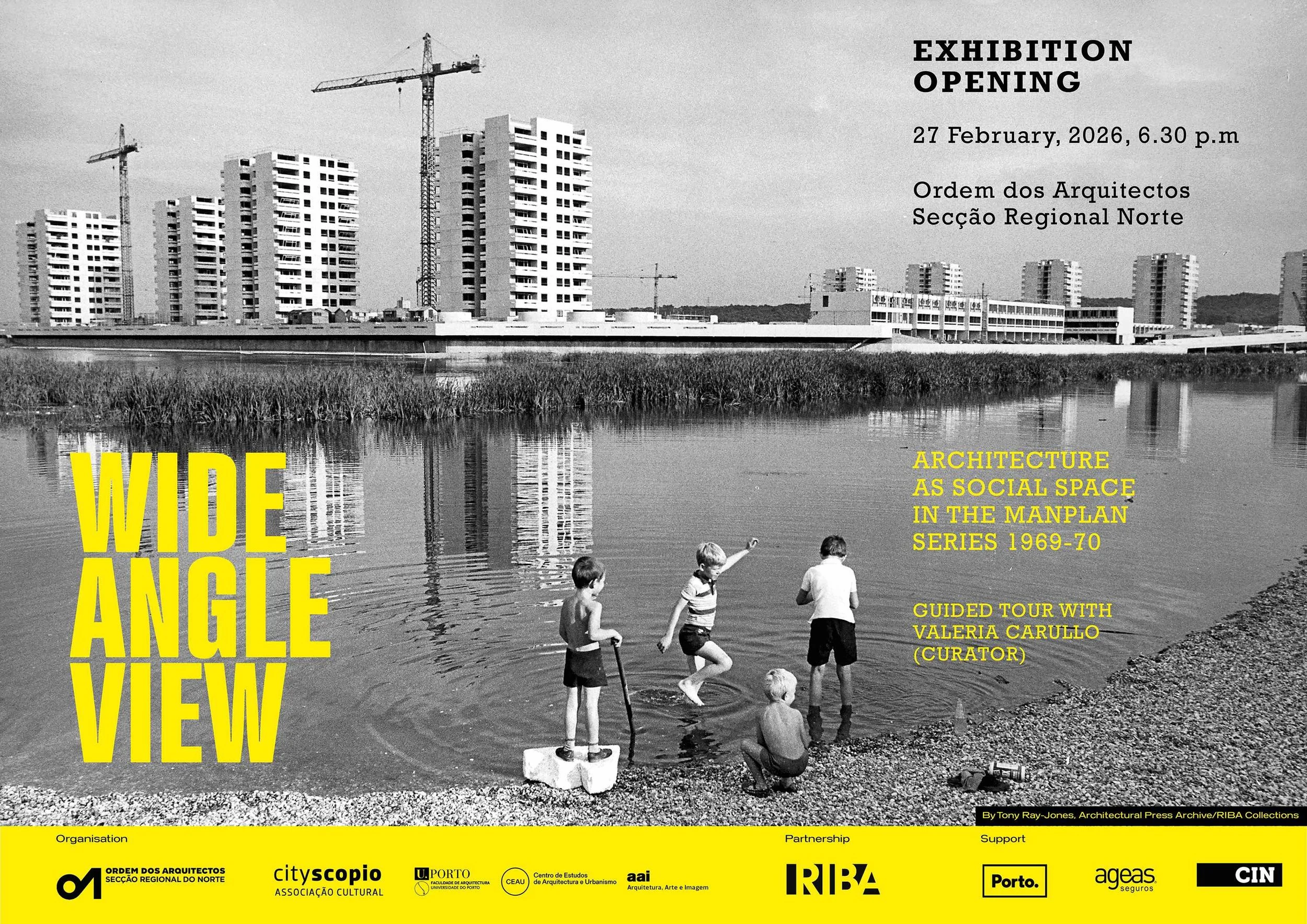
The Northern Regional Section of the Order of Architects will host, on February 27, 2025, at 6:30 PM, a groundbreaking exhibition in Portugal that revisits the Manplan series of photographs published by The Architectural Review in 1969–1970, which profoundly influenced how architecture, planning, and society came to be visually represented.

The result of an international partnership between the Royal Institute of British Architects (RIBA), the Northern Regional Section of the Order of Architects (SR-NRT), the Cityscopio Cultural Association (CCA), and CENP/FAUP – Nuno Portas Center for Studies, through the Architecture, Art and Image (AAI) research group and the Sophia Journal editorial and scientific project, the exhibition proposes a critical reading of how architecture, the city, and daily life were—and continue to be—represented and conceived.

Produced in a context of crisis surrounding post-war promises, the Manplan series marked a profound rupture in the editorial culture of architecture by shifting the focus from the building as an object to architecture as a lived social space. Through sequential visual narratives, inspired by photojournalism and street photography, Manplan addressed fundamental themes such as housing, health, work, education, and leisure, placing people and their contexts at the center of architectural reflection.

The exhibition Wide-Angle View presents a selection of photographs and original materials from the Architectural Press / RIBA Collections archive, digitally printed for this show, including images that have not all been published. The title refers to the use of the wide-angle lens as a technical and conceptual device, symbolizing a way of looking that broadens the field of vision and brings the observer closer to the social reality of the city.

More than a historical exhibition, Wide-Angle View asserts itself as a device for contemporary reflection, particularly relevant at a time marked by the housing crisis, the commodification of urban space, and social inequalities. By establishing bridges between Manplan's critical legacy and current research developed within FAUP and the Sophia Journal, the exhibition highlights the role of photography and image as instruments of critical thinking and disciplinary questioning.

The opening will include institutional interventions, followed by a guided tour by curator Valeria Carullo, photography curator at the Royal Institute of British Architects (RIBA), and the presentation of a future international conference associated with the Sophia Journal project. The exhibition will be on display at the headquarters of the Association of Architects of the Northern Regional Section until May 2026, accompanied by a parallel program of guided tours, public talks, and educational activities aimed at architects, students, researchers, and the general public.

By hosting Wide-Angle View, the Association of Architects of the Northern Regional Section reaffirms its role as an active space for critical reflection and dialogue between architecture, image, and society, highlighting the relevance and urgency of the thinking inaugurated by Manplan.

Exhibition Program

Partners | Organization

  • SR-NRT – Order of Architects of the Northern Regional Section

  • RIBA – Royal Institute of British Architects

  • Cityscopio Cultural Association (CCA)

  • CENP–FAUP — Nuno Portas Studies Center, through the AAI research group, and Sophia Journal

Inauguration Program

February 27, 2025 — SR-NRT Headquarters

6:30 PM — Opening

Session Interventions:

- Andreia Oliveira, President of the Northern Regional Council of the Association of Architects

- Avelino Oliveira, President of the National Board of Directors of the Order of Architects

- José Pedro Sousa, Faculty of Architecture of the University of Porto

- Pedro Leão Neto, Cityscopio Cultural Association

7:00 PM — Guided Tour

By Valeria Carullo, photography curator of RIBA

Permanent and Parallel Activities

From March to May 2026, the SR-NRT will host:

  • guided tours Themes

  • Conversations with researchers and curators

  • Educational activities

Target audience

Students, professionals, and the general public interested in: Architecture, photography, urbanism, visual arts, city history, cultural studies, and urban policies.

Free admission.

More information coming soon on the SR-NRT, CNEP - FAUP, and CCA channels.

MANIFESTO

From Manplan to the housing crisis: broadening the field of vision

Architecture has never been neutral. It has never been merely form, technique, or style. It is a field of forces where social conflicts, political choices, and worldviews are inscribed. The Manplan series (1969–1970) made this condition explicit at a time when the promises of modernism were in crisis and urban reality was inevitably exposing the flaws of an incomplete social project. Fifty years later, this critical lucidity has not lost its relevance—it has become urgent.

Today, faced with a global housing crisis, the financialization of territory, increasing exclusion, and the fragmentation of cities, it is important to recover and update Manplan's radical gesture: to look at architecture from the perspective of life, and not the other way around. To place people at the center of architectural representation and thought. To recognize that every spatial decision produces real effects on bodies, relationships, inequalities, and possibilities for the future. “Wide-Angle View: Architecture as social space in the Manplan series 1969–70” SR-NRT, a groundbreaking exhibition in Portugal that revisits the influential Manplan series, asserts itself within this territory of critical continuity.

Not as a nostalgic exhibition, but as a device for interpreting the present. The archive here is not a closed space, but an active field of investigation, capable of illuminating contemporary tensions. Manplan's images—raw, intimate, unsettling—continue to challenge us because they reveal a persistent truth: the city is lived before it is designed, and housing is a right before it is a product.

The wide-angle lens that gives the exhibition its title is more than a technical resource. It is an ethical and political stance. Expanding the field of vision means rejecting simplistic readings of urban reality, rejecting quick fixes for structural problems, and confronting the discipline with the social consequences of its own actions. It means accepting that architecture actively participates in the production of inequality, but also that it can—and should—be an instrument of reparation.

Between Manplan and the present lies a line of continuity: the understanding of architecture as an inevitably political practice. The housing crisis is not an accident, but the result of accumulated choices—economic models, legislation, planning, and disciplinary culture. Given this, it is not enough to design more buildings; it is necessary to rethink ways of living, property regimes, forms of cooperation, and the urban imaginaries that sustain the contemporary city.

Wide-Angle View calls upon architects, students, researchers, and citizens to take a stand. To look at the archive not as a formal repertoire, but as critical memory. To recognize in photography not only a means of representation, but a form of thought. To understand that every image is a stance—and that all architecture communicates, even when it intends to silence its effects.

This manifesto affirms that Manplan's relevance lies precisely in his refusal of indifference. In his ability to expose discomfort, to make visible the flaws of the system, and to insist that quality of life is a collective issue. Today, as then, architecture only makes sense if it is conceived from concrete life, its fragilities, and its urgencies.

Expanding one's field of vision is, therefore, a commitment to the present. An invitation to critical action. A demand for disciplinary responsibility. Between archive and present, between image and project, between architecture and society, “Wide-Angle View: Architecture as social space in the Manplan series 1969–70” | SR-NRT argues that there is no habitable future without an attentive, informed, and profoundly human look at the city we build.

Pedro Leão Neto

Maria Neto

More information coming soon on the SR-NRT, CNEP - FAUP and CCA channels.


Exposição “Wide-Angle View: Architecture as social space in the Manplan series 1969–70” inaugura na Secção Regional Norte da Ordem dos Arquitetos


Wide-Angle View: A ARQUITETURA COMO ESPAÇO SOCIAL NA SÉRIE MANPLAN 1969–70

Inauguração DA EXPOSIÇÃO na Ordem dos Arquitetos Secção Regional Norte NO DIA 27 de fevereiro, pelas 18h30

VISITA GUIADA por Valeria Carullo (curadora de fotografia no Royal Institute of British Architects - RIBA)

PT/ENG

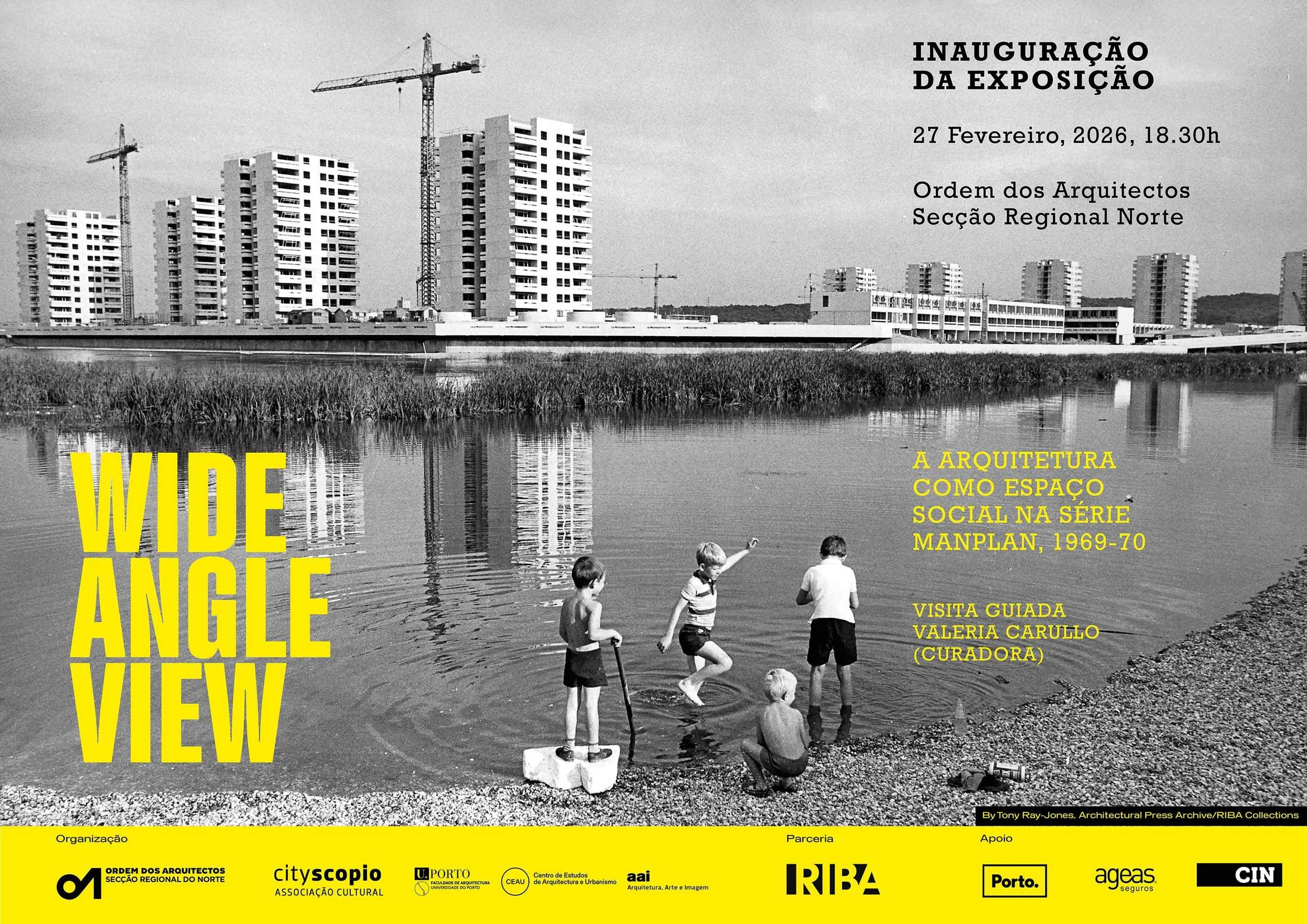
A Secção Regional do Norte da Ordem dos Arquitectos acolhe, no próximo dia 27 de fevereiro de 2025, pelas 18h30, uma mostra inédita em Portugal, que revisita a série de fotografias “Manplan” publicada pelo periódico The Architectural Review em 1969–1970, e que marcou profundamente a forma como arquitetura, planeamento e sociedade passaram a ser representados visualmente.

Resultado de uma parceria internacional entre o Royal Institute of British Architects (RIBA), a Secção Regional do Norte da Ordem dos Arquitetos (SR-NRT), a Associação Cultural Cityscopio (CCA) e o CENP/FAUP – Centro de Estudos Nuno Portas, através do grupo de investigação Arquitetura, Arte e Imagem (AAI) e do projeto editorial e científico Sophia Journal, a exposição propõe uma leitura crítica sobre a forma como a arquitetura, a cidade e a vida quotidiana foram — e continuam a ser — representadas e pensadas.

Produzida num contexto de crise das promessas do pós-guerra, a série Manplan marcou uma rutura profunda na cultura editorial da arquitetura ao deslocar o foco do edifício enquanto objeto para a arquitetura enquanto espaço social vivido. Através de narrativas visuais sequenciais, inspiradas no fotojornalismo e na fotografia de rua, Manplan abordou temas fundamentais como a habitação, a saúde, o trabalho, a educação ou o lazer, colocando as pessoas e os seus contextos no centro da reflexão arquitetónica.

A exposição Wide-Angle View apresenta uma seleção de fotografias e materiais originais provenientes do arquivo da Architectural Press / RIBA Collections, impressos digitalmente para esta mostra, incluindo imagens que nem todas chegaram a ser publicadas. O título remete para a utilização da lente grande-angular enquanto dispositivo técnico e conceptual, simbolizando uma forma de olhar que amplia o campo de visão e aproxima o observador da realidade social da cidade.

Mais do que uma exposição histórica, Wide-Angle View afirma-se como um dispositivo de reflexão contemporânea, particularmente relevante num momento marcado pela crise da habitação, pela mercantilização do espaço urbano e pelas desigualdades sociais. Ao estabelecer pontes entre o legado crítico da Manplan e as investigações atuais desenvolvidas no âmbito da FAUP e de Sophia Journal, a mostra sublinha o papel da fotografia e da imagem como instrumentos de pensamento crítico e de questionamento disciplinar.

A inauguração contará com intervenções institucionais, seguidas de uma visita guiada pela curadora Valeria Carullo, curadora de fotografia no Royal Institute of British Architects (RIBA), e da apresentação de uma futura conferência internacional associada ao projeto Sophia Journal. A exposição estará patente na sede da Ordem dos Arquitetos da Secção Regional Norte até maio de 2026, sendo acompanhada por um programa paralelo de visitas guiadas, conversas públicas e ações educativas, dirigido a arquitetos, estudantes, investigadores e ao público em geral.

Ao acolher Wide-Angle View, a Ordem dos Arquitetos da Secção Regional Norte reafirma o seu papel enquanto espaço ativo de reflexão crítica e de diálogo entre arquitetura, imagem e sociedade, sublinhando a atualidade e a urgência do pensamento inaugurado pela Manplan.

Programa da Exposição

Parceiros | Organização

  • SR-NRT – Ordem dos Arquitetos da Secção Regional Norte

  • RIBA – Royal Institute of British Architects

  • Cityscopio Associação Cultural (CCA)

  • CENP–FAUP — Centro de Estudos Nuno Portas, através do grupo de investigação AAI, e Sophia Journal

Programa da inauguração

27 de fevereiro de 2025 — Sede da SR-NRT

18h30 — Sessão de abertura
Intervenções:
- Andreia Oliveira, Presidente do Conselho Diretivo Regional Norte da Ordem dos Arquitectos

- Avelino Oliveira, Presidente do Conselho Diretivo Nacional da Ordem dos Arquitectos

– José Pedro Sousa, Faculdade de Arquitetura da Universidade do Porto
– Pedro Leão Neto, Associação Cultural Cityscopio

19h00 — Visita guiada
Por Valeria Carullo, curadora de fotografia no RIBA

Permanência e atividades paralelas

De março a maio de 2026, a SR-NRT acolherá:

  • visitas guiadas temáticas

  • conversas com investigadores e curadores

  • atividades educativas

Público-alvo

Estudantes, profissionais e público interessado em:
Arquitetura, fotografia, urbanismo, artes visuais, história da cidade, estudos culturais e políticas urbanas.

Entrada livre.
Mais informações em breve nos canais da SR-NRT, CNEP - FAUP e CCA.

MANIFESTO
Da Manplan à crise da habitação: ampliar o campo de visão

A arquitetura nunca foi neutra. Nunca foi apenas forma, técnica ou estilo. É um campo de forças onde se inscrevem conflitos sociais, escolhas políticas e visões do mundo. A série Manplan (1969–1970) tornou essa condição explícita num momento em que as promessas do modernismo entravam em crise e a realidade urbana expunha, de forma incontornável, as falhas de um projeto social incompleto. Cinquenta anos depois, essa lucidez crítica não perdeu atualidade — tornou-se urgente.

Hoje, perante uma crise global da habitação, a financeirização do território, a exclusão crescente e a fragmentação das cidades, importa recuperar e atualizar o gesto radical de Manplan: olhar a arquitetura a partir da vida, e não o inverso. Colocar as pessoas no centro da representação e do pensamento arquitetónico. Reconhecer que cada decisão espacial produz efeitos reais sobre corpos, relações, desigualdades e possibilidades de futuro. “Wide-Angle View: Architecture as social space in the Manplan series 1969–70” | SR-NRT uma mostra inédita em Portugal que revisita a influente série Manplan, afirma-se nesse território de continuidade crítica.

Não como uma exposição nostálgica, mas como um dispositivo de leitura do presente. O arquivo não é aqui um lugar fechado, mas um campo ativo de investigação, capaz de iluminar as tensões contemporâneas. As imagens de Manplan — cruas, próximas, incómodas — continuam a interpelar-nos porque revelam uma verdade persistente: a cidade é vivida antes de ser desenhada, e a habitação é um direito antes de ser um produto.

A lente grande-angular que dá título à exposição é mais do que um recurso técnico. É uma posição ética e política. Ampliar o campo de visão significa recusar leituras simplificadas da realidade urbana, rejeitar soluções rápidas para problemas estruturais e confrontar a disciplina com as consequências sociais do seu próprio fazer. Significa aceitar que a arquitetura participa ativamente na produção de desigualdade, mas também que pode — e deve — ser instrumento de reparação.

Entre a Manplan e o presente estende-se uma linha de continuidade: a compreensão da arquitetura como prática inevitavelmente política. A crise da habitação não é um acidente, mas o resultado de escolhas acumuladas — de modelos económicos, de legislação, de planeamento e de cultura disciplinar. Perante isso, não basta projetar mais edifícios; é necessário repensar os modos de habitar, os regimes de propriedade, as formas de cooperação e os imaginários urbanos que sustentam a cidade contemporânea.

Wide-Angle View convoca arquitetos, estudantes, investigadores e cidadãos a assumir uma posição. A olhar para o arquivo não como repertório formal, mas como memória crítica. A reconhecer na fotografia não apenas um meio de representação, mas uma forma de pensamento. A compreender que toda a imagem é uma tomada de posição — e que toda a arquitetura comunica, mesmo quando pretende silenciar os seus efeitos.

Este manifesto afirma que a relevância de Manplan reside precisamente na sua recusa da indiferença. Na sua capacidade de expor o desconforto, de tornar visíveis as falhas do sistema e de insistir que a qualidade de vida é uma questão coletiva. Hoje, como então, a arquitetura só faz sentido se for pensada a partir da vida concreta, das suas fragilidades e das suas urgências.

Ampliar o campo de visão é, por isso, um compromisso com o presente. Um convite à ação crítica. Uma exigência de responsabilidade disciplinar. Entre arquivo e atualidade, entre imagem e projeto, entre arquitetura e sociedade, “Wide-Angle View: Architecture as social space in the Manplan series 1969–70” | SR-NRT  afirma que não há futuro habitável sem um olhar atento, informado e profundamente humano sobre a cidade que construímos.

Pedro Leão Neto

Maria Neto

Mais informação em breve nos canais da SR-NRT, CNEP - FAUP e CCA.


Chamada - Paisagens de Reparação - A Cidade Invisível: Manplan e Formas Contemporâneas de Reparação


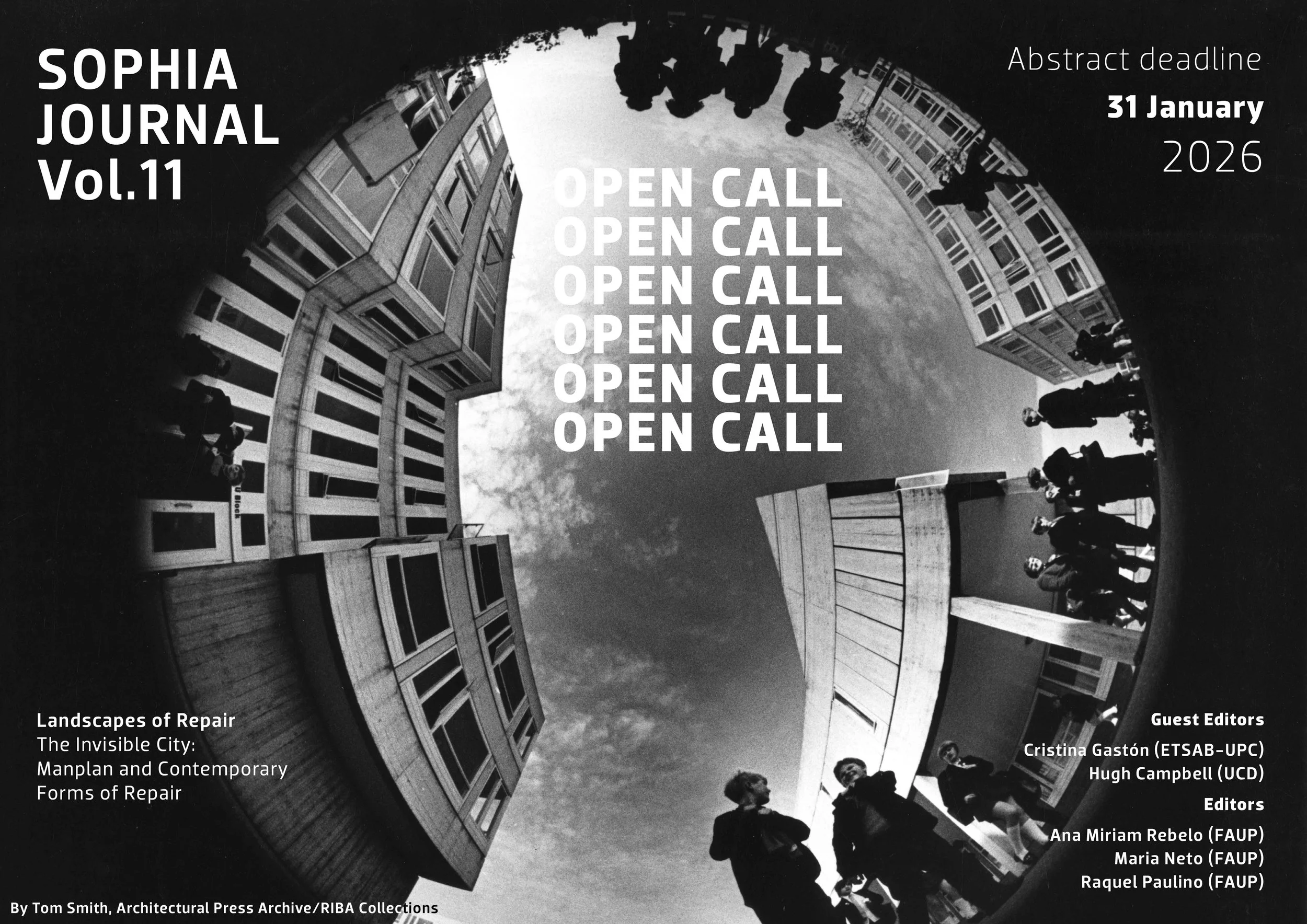
CHAMADA PARA SUBMISSÕES SOPHIA Journal Vol. 11

Paisagens de Reparação - A Cidade Invisível: Manplan e Formas Contemporâneas de Reparação

Prazo limite: 31 JANEIRO de 2026 

Editores Convidados: Cristina Gastón (ETSAB-UPC), Hugh Campbell (UCD)

Editores: Ana Miriam Rebelo (FAUP), Maria Neto (FAUP), Raquel Paulino (FAUP)

PT/ENG

Prazo limite: 31 de janeiro de 2026
Os autores seleccionados serão notificados até 28 de fevereiro de 2026
Prazo de entrega dos manuscritos (Conferência): 1 de Maio de 2026 
Conferência Internacional (dtbc): 26 junho 2026

Prazo de entrega dos manuscritos (Revista): 1 de outubro de 2026 
Data de publicação (tbc): até dezembro de 2026

Quarto ciclo temático, Paisagens de Reparação

Sophia Journal está a receber submissões para o seu quarto ciclo temático, Paisagens de Reparação, que incentiva uma abordagem humanista à transformação urbana que transcenda considerações puramente económicas. Ao explorar os impactantes campos da fotografia, do cinema e de diversas práticas visuais, procuramos destacar os seus significativos contributos para o discurso em torno da produção arquitetónica e espacial. O nosso objetivo é chamar a atenção para a necessidade urgente de reparar o nosso planeta fragmentado. Ao fazê-lo, procuramos abordar e conectar a multiplicidade de desafios que as cidades e territórios contemporâneos de todo o mundo enfrentam. Estes meios visuais não só documentam, como também se envolvem criticamente com as diversas e complexas questões do nosso tempo, oferecendo perspetivas únicas sobre as crises urbanas e ambientais. Através desta lente, esperamos fomentar uma compreensão mais profunda e inspirar formas reparadoras de coexistência.

Estrutura da Cidade Invisível: Manplan e Formas Contemporâneas de Reparação

Mais de cinquenta anos após o lançamento da série Manplan pela Architectural Review (1969-70), muitas das questões que levantou continuam a ser extremamente relevantes. Criada num período de profunda desilusão com os fracassos da modernidade arquitetónica do pós-guerra, a Manplan tinha como objetivo expor o fosso entre as intenções do projeto e a realidade vivida. Ela desafiou os arquitetos, os planeadores e o público a confrontar as consequências sociais e políticas da tomada de decisões espaciais desta forma. O seu programa era ousado, controverso, construtivo e enraizado na crença de que a arquitetura deve ser responsável perante as necessidades humanas básicas. A fotografia e as práticas visuais podem atuar como ferramentas poderosas para revelar falhas sistémicas, desigualdades e possibilidades de mudança.

Na sua estratégia visual radicalmente centrada no ser humano, a Manplan abandonou as convenções da fotografia arquitetónica imaculada, substituindo-as por imagens granuladas e imersivas extraídas do fotojornalismo. Estas fotografias não se centraram apenas nos edifícios, mas nas pessoas e na forma como habitavam e viviam nos espaços urbanos, tornando-as os principais sujeitos das imagens.

A série fotográfica Manplan revelou um forte sentido de proximidade com a cidade. Uma necessidade de tornar visível o que antes parecia invisível, comunicando a desconexão entre os ideais de planeamento e as condições de vida, e destacando as consequências sociais da negligência urbana. Muitas destas preocupações ressoam fortemente hoje, numa época marcada pela crise climática, pela precariedade social, pela deterioração das infraestruturas e por uma tecnosfera acelerada que pesa sobre as cidades tanto a nível material como simbólico.

Manplan e as Paisagens da Reparação

Dentro do ciclo mais amplo das Paisagens da Reparação, a Sophia Journal Vol. 11 No. 1 baseia-se neste legado, perguntando:

Como podem as práticas visuais e espaciais confrontar mais uma vez as pressões invisíveis que moldam as cidades contemporâneas e como podem contribuir para actos de reparação — materiais, sociais, ecológicos — capazes de aliviar o seu peso?

Tal como a série de 1969-70 captou a Grã-Bretanha num momento de fragilidade social e de transição política, questionamos como é que as práticas visuais contemporâneas podem revelar as fracturas, os fardos e as possibilidades que definem a “cidade invisível” do Antropoceno.

Com a tecnosfera agora estimada em aproximadamente 30 biliões de toneladas — uma massa agregada que rivaliza com a biosfera — os ambientes urbanos estão sobrecarregados não só por betão, aço e emissões de carbono, mas também por intensidades menos visíveis: inércia administrativa, exaustão social, perda ecológica e formas afetivas de deslocação. A reparação, neste contexto, torna-se uma tarefa ética e imaginativa, que exige novas formas de testemunho, atenção e representação.

Call for Papers e Ensaios Visuais

Nesta chamada para artigos e ensaios visuais para o Sophia Journal Vol. 11 No. 1, convidamos submissões que revisitem, expandam ou desafiem o espírito crítico do Manplan, explorando como as práticas visuais e espaciais — particularmente através da lente da fotografia, do cinema e da arquitetura — podem atuar como instrumentos de cuidado, exposição e reparação. Os contributos podem examinar territórios instáveis, revisitar criticamente arquivos urbanos ou propor ações que procurem reparar as cicatrizes impercetíveis das cidades e paisagens contemporâneas.

Os tópicos incluem, mas não se limitam a:

• Revisitando Manplan: releituras contemporâneas da série e a sua relevância para os problemas urbanos atuais

• Visualizar a cidade invisível: estratégias fotográficas e fílmicas para tornar visíveis formas de negligência social, ecológica ou infraestrutural

• Paisagens do cuidado: práticas de manutenção, reparação, coabitação e supervisão socioecológica

• A política da representação: como a produção de imagens molda a compreensão pública das injustiças urbanas e as possibilidades de mudança

• Peso e leveza urbanos: respostas aos fardos materiais e imateriais da tecnosfera

• Coabitação humana e mais-que-humana: narrativas visuais de interdependência, vulnerabilidade e espaços e interações de resiliência

• Arquiteturas espectrais: captar as atmosferas, ausências e ruínas da vida urbana contemporânea

• Reparação especulativa: propostas criativas que confrontam as disfunções contemporâneas e perspetivam um futuro alternativo

• Narrativas visuais e espaciais: perspetivando a reparação ecológica e social em contextos urbanos e rurais

• Estruturas críticas: narrativas visuais críticas que abordam diversos problemas em diferentes culturas e disciplinas
 

Sobre Sophia Journal

Sophia Journal é uma revista académica de acesso aberto com arbitragem científica, publicada pelo Centro de Estudos em Arquitectura e Urbanismo (CEAU) - Grupo de investigação Arquitectura, Arte e Imagem (AAI) da Faculdade de Arquitectura da Universidade do Porto (FAUP), em colaboração com a associação Cityscopio e a sua chancela  editorial scopio Editions.
Criada em 2016, a Sophia Journal publica artigos teóricos e ensaios visuais que investigam e pensam criticamente as intersecções entre a imagem e a arquitectura. Entendemos ambos os termos em sentido lato: a imagem da fotografia, pintura, desenho, cinema, video, televisão, novos media; a arquitectura enquanto paisagem, território, cidade, espacialidade e ambiente construído.

Para qualquer dúvida:

Contactar os Editores através de info.sophiajournal@arq.up.pt
 

OPEN CALL - Landscapes of Repair - The Invisible City: Manplan and Contemporary Forms of Repair


OPEN CALL SOPHIA JOURNAL VOL. 11

Landscapes of Repair - The Invisible City: Manplan and Contemporary Forms of Repair

Abstract deadline: 31 JANUARY 2026

Guest Editors: Cristina Gastón (ETSAB-UPC), Hugh Campbell (UCD)

Editors: Ana Miriam Rebelo (FAUP), Maria Neto (FAUP), Raquel Paulino (FAUP)

PT/ENG

Abstract deadline: 31 January 2026

Selected authors will be notified by the 28 of February 2026
Manuscript deadline (Conference): 1 May 2026

Conference (dtbc): 26 June 2026

Manuscript deadline (Journal): 1 October 2026
Publication date (tbc): by December 2026

Fourth thematic cycle, Landscapes of Repair
Sophia Journal is currently accepting submissions for its fourth thematic cycle, Landscapes of Repair, encouraging a humanist approach to urban transformation that transcends purely economic considerations. By exploring the impactful realms of photography, film, and various visual practices, we aim to highlight their significant contributions to the discourse surrounding architectural and spatial production. Our goal is to draw urgent attention to the necessity of repairing our fractured planet. In doing so, we seek to address and connect the multitude of challenges that contemporary cities and territories across the world are facing. These visual mediums not only document but also critically engage with the diverse and complex issues of our time, offering unique perspectives on urban and environmental crises. Through this lens, we hope to foster deeper understanding and inspire reparative forms of coexistence.

Framework of The Invisible City: Manplan and Contemporary Forms of Repair

More than fifty years after The Architectural Review launched the Manplan series (1969–70), many of the questions it posed remain urgently relevant. Created during a time of profound disillusionment with the failures of post-war architectural modernity, Manplan aimed to expose the gap between design intentions and lived reality. It challenged architects, planners, and the public to confront the social and political consequences of spatial decision-making in this way. Its programme was daring, controversial, constructive and rooted in the belief that architecture must be accountable to basic human needs. Photography and visual practices can act as potent tools for revealing systemic failures, inequalities, and possibilities for change.

In its radically human-centred visual strategy, Manplan abandoned the conventions of pristine architectural photography, replacing them with grainy, immersive images drawn from photojournalism. These photographs did not just focus on the buildings, but on the people and how they inhabited and lived in city spaces, making them the main subjects of the pictures.

The Manplan photography series revealed a powerful sense of proximity to the city. A necessity to make visible what had seemed invisible before, communicating the disconnection between planning ideals and lived conditions, and highlighting the social consequences of urban neglect. Many of these worries echo powerfully today, in a moment marked by climate crisis, social precarity, infrastructural decay, and an accelerating technosphere that weighs upon cities both materially and symbolically.

Manplan and the Landscapes of Repair

Within the broader Landscapes of Repair cycle, Sophia Journal Vol. 11 No. 1 builds on this legacy by asking:
How can visual and spatial practices once again confront the invisible pressures shaping contemporary cities, and how might they contribute to acts of repair—material, social, ecological—capable of lightening their weight?

Just as the 1969–70 series captured Britain at a moment of social fragility and political transition, we ask how contemporary visual practices can reveal the fractures, burdens, and possibilities that define the “invisible city” of the Anthropocene.

With the technosphere now estimated at approximately 30 trillion tonnes—an aggregate mass that rivals the biosphere—urban environments are weighed down not only by concrete, steel, and carbon emissions but also by less visible intensities: administrative inertia, social exhaustion, ecological loss, and affective forms of displacement. Repair, in this context, becomes an ethical and imaginative task, one that calls for new forms of witnessing, attention, and representation.

Call for Papers and Visual Essays

In this call for papers and visual essays for Sophia Journal Vol. 11 No. 1, we invite submissions that revisit, expand, or challenge the critical spirit of Manplan by exploring how visual and spatial practices - particularly through the lenses of photography, film, and architecture - can act as instruments of care, exposure, and repair. Contributions may examine unstable territories, critically revisit urban archives, or propose actions that seek to repair the imperceptible scars of contemporary cities and landscapes.

Topics include, but are not limited to:

  • Revisiting Manplan: contemporary re-readings of the series and its relevance to contemporary city problems

  • Visualising the invisible city: photographic and filmic strategies for making visible social, ecological, or infrastructural forms of neglect

  • Landscapes of care: practices of maintenance, repair, cohabitation, and socio-ecological oversight

  • The politics of representation: how image-making shapes public understanding of urban unfairnesses and possibilities for change

  • Urban weight and urban lightness: responses to the material and immaterial burdens of the technosphere

  • Human and more-than-human cohabitation: visual narratives of interdependence, vulnerability, and resilience spaces and interactions

  • Spectral architectures: capturing the atmospheres, absences and ruins of contemporary urban life

  • Speculative repair: creative proposals that confront contemporary dysfunctions and envision an alternative future

  • Visual and spatial narratives: envisioning ecological and social repair in urban and rural contexts

  • Critical frameworks: critical visual narratives addressing diverse problems across cultures and disciplines

We welcome submissions from scholars, artists, architects, practitioners, activists, and transdisciplinary researchers who explore these questions through theoretical essays, visual essays, documentary projects, experimental formats, or hybrid research practices.

Towards a Reparative Visual Praxis

By revisiting Manplan's ethos—its attention to lived reality, its refusal of aesthetic sanitisation, and its commitment to social critique—this issue seeks to explore how contemporary visual practices can once again operate as catalysts for public reflection and collective responsibility. In an era when cities grow heavier—materially, symbolically, and ecologically—we ask how image-making can help lighten them: by exposing the unseen, attending to the overlooked, and participating in acts of repair.

We look forward to receiving contributions that illuminate, interrogate, or reimagine the landscapes of care shaping today's and tomorrow's cities.

About Sophia Journal

We are an academic, peer-reviewed journal, published by the Centre for Studies in Architecture and Urbanism (CEAU) / research group Architecture, Art and Image (AAI) at the Faculty of Architecture, University of Porto, Portugal. Created in 2016, Sophia Journal publishes theoretical articles and visual essays that investigate and think critically the intersections between the image and architecture. We understand both terms in a wide sense: the image of photography, painting, drawing, cinema, video, T.V., new media; and architecture as landscape, territory, city, spatiality, built environment.

For any queries:

Please contact our Editors at info.sophiajournal@arq.up.pt
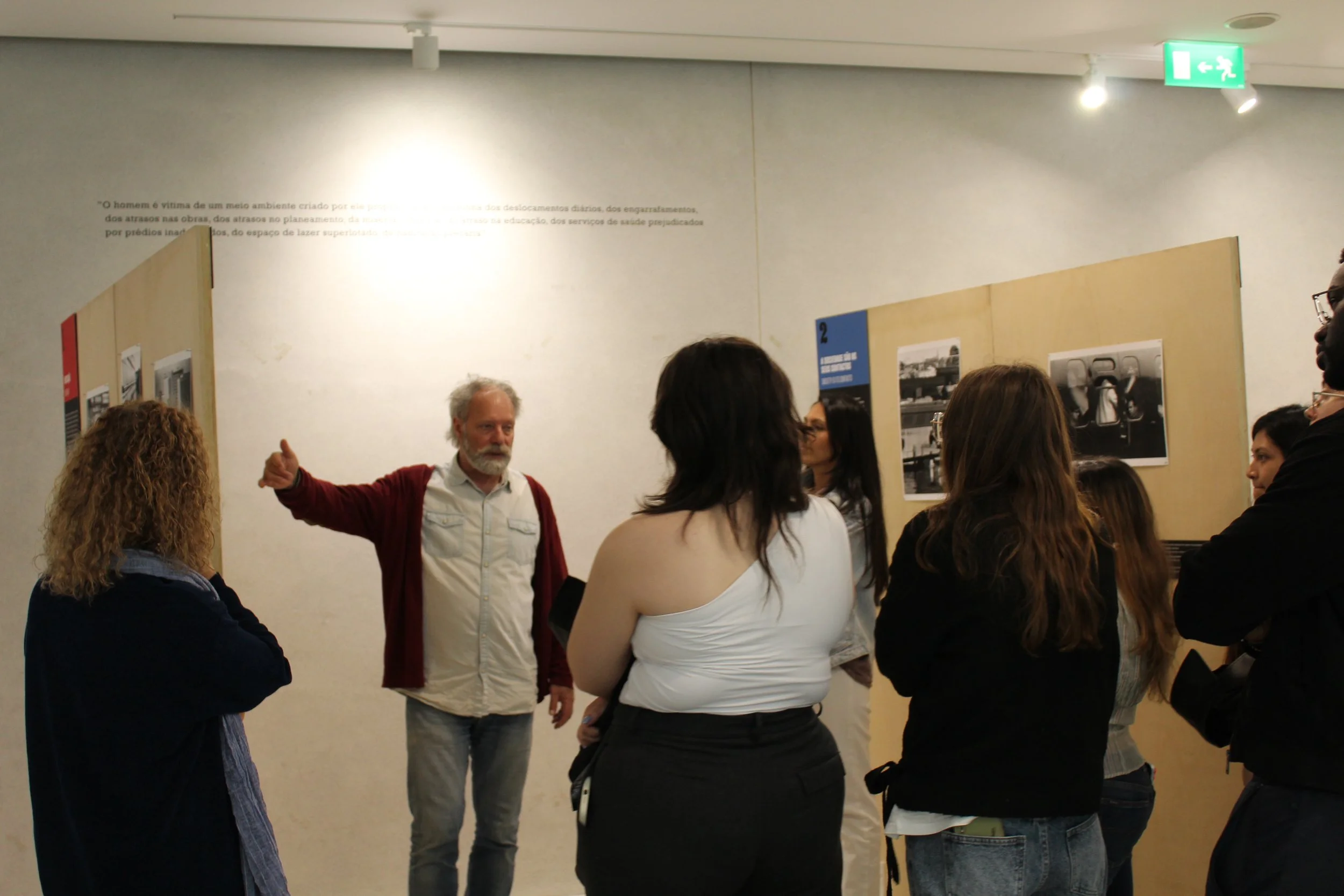
 

This Is the Beginning Not the End


This Is the Beginning Not the End

BY ANGELO BONETTI


Every day we proceed in our lives, in a suffocating routine,

with no awareness that any action has a purpose,

unfolding between exaggerated rationalism and repetitive actions,

prone to the alienation of being.

A silent restlessness annihilates our days.

Where is the error?

Hallucinated lies fill the illusions of the everyday, we are defeated,

we rely on fate.

The day ends, the night begins again.

We do not accept our limitations just as we take no pleasure in accepting ourselves,
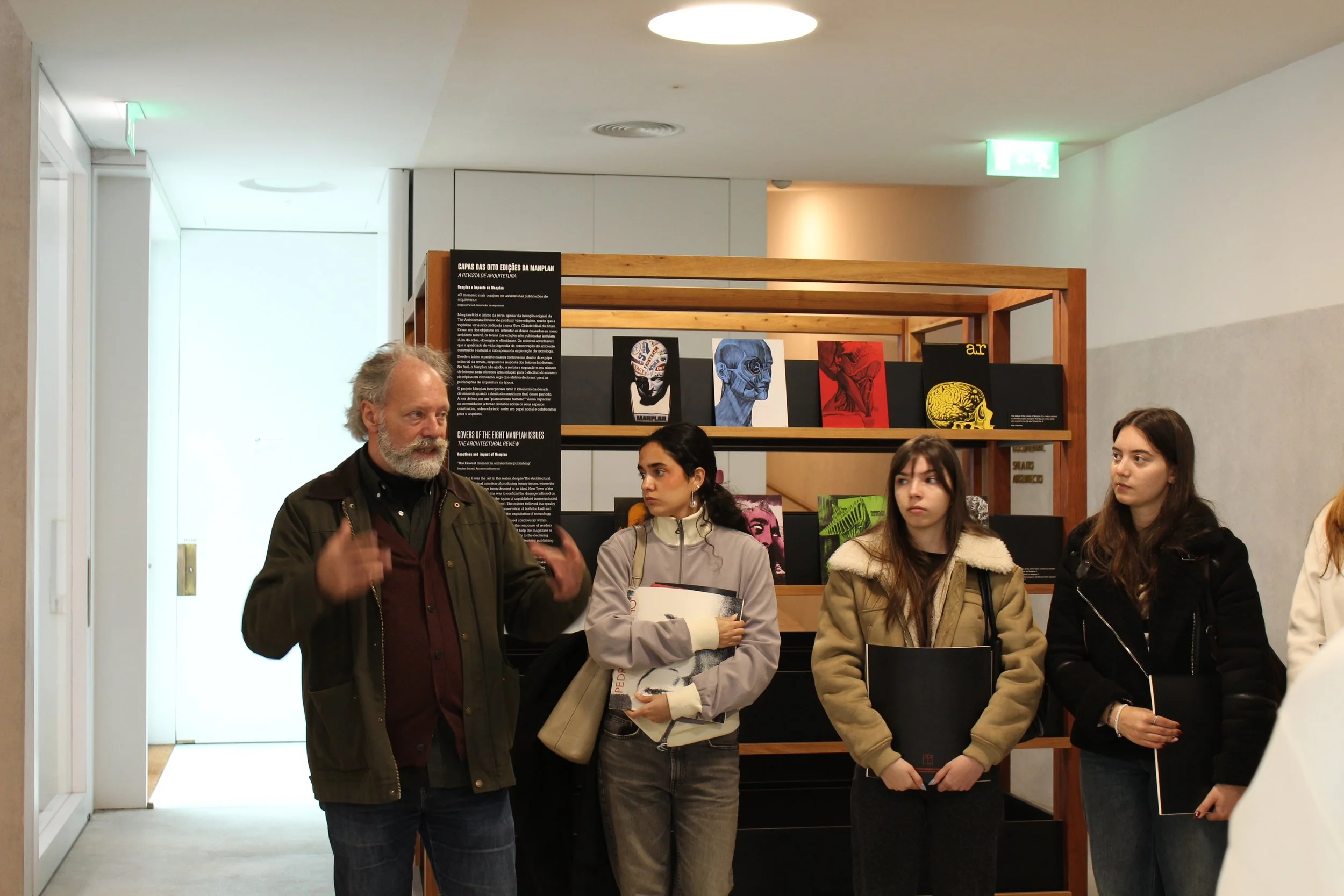
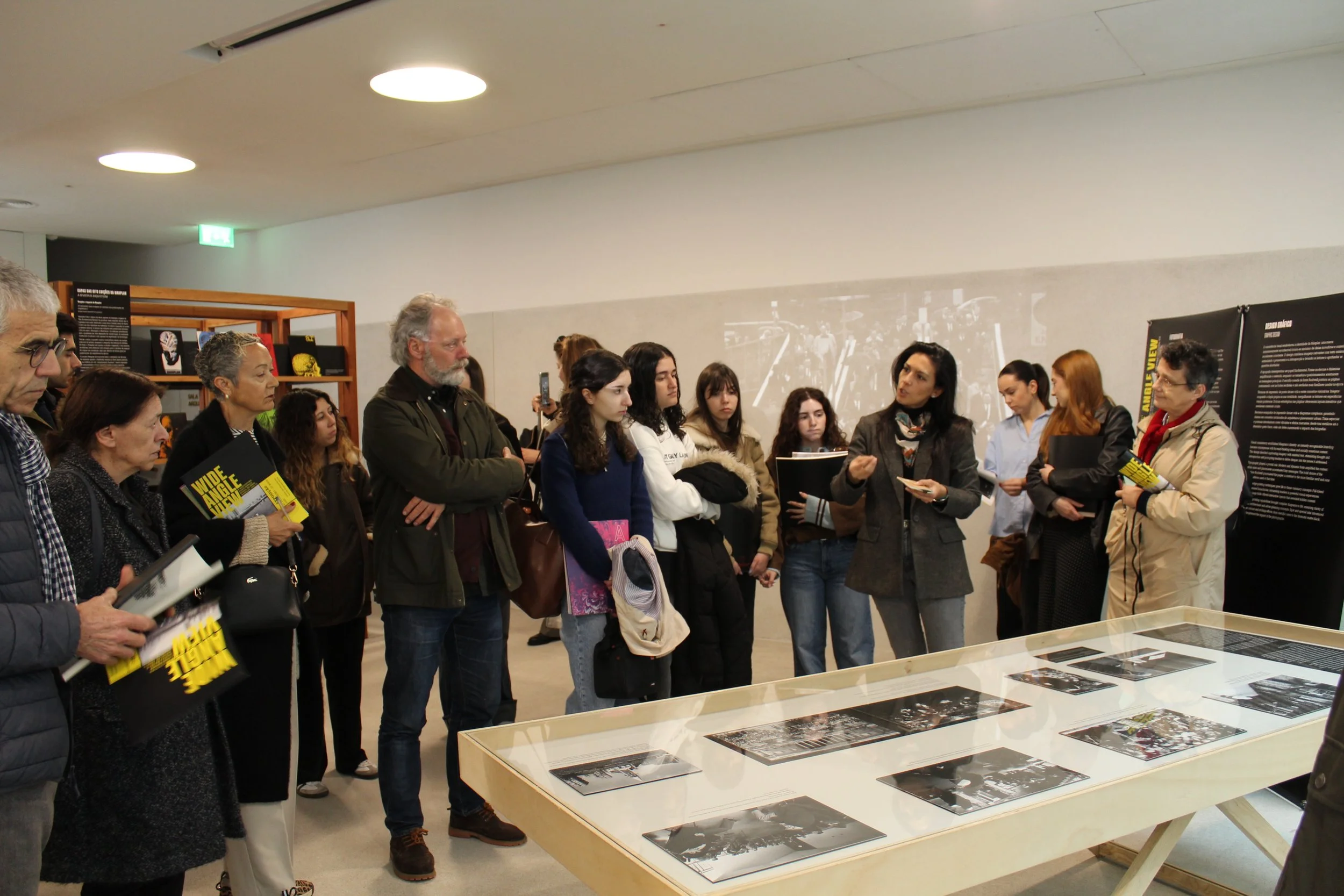
every effort we make, every road we decide to take,

brings us back to the starting point where desires are shattered,

with a fixed stare and a stifled cry,

we wait helplessly for answer to our questions,

no one listens to us and we continue stubbornly toward a quest for personal happiness,

we try to accumulate trophies to show off

rather than experiences that make us grow and improve.

An endless cycle and at the same time a movement

that cancels itself into itself,

does not exist, disappears.

The night ends, the day begins again.

Faced with endless possibilities, we stand still, we are overwhelmed by lite,

but we do not embrace it as it is without expecting anything,

we resist and nausea assails us, we are lost in an endless night.

Heartbeats become irregular, body temperature changes,

muscle tension also,

something we don’t know or don't want to name clouds our thoughts,

the mind commands us.

The day ends, the night begins again.

As we look at the sky, which always looks the same to us,

we notice that slowly the clouds disappear,

that what we see now, within a short time

we can no longer make out,

the sense of dizziness leaves us.

Now we are present and think therefore, did all this ever exist?

This is the beginning not the end.

SHORT BIOGRAPHY

Angelo Bonetti (b. 1976, Turin, Italy) is a visual artist who works with photography, mainly a self-taught photographer who over the years has pursued and developed his own language. Bonetti creates works that generate different contents, associations and meanings that come into conflict. Space becomes time and language becomes image. His works have a strong vision in the approach to life and its everyday life, a continuous interest in what surrounds him, deepening themes such as memory, time and the connections of his personal stories, questioning the conditions of appearance of images, representations and ideas in the context of the contemporary visual culture in which they normally work.

Website
https://www.angelo-bonetti.com

Instagram
https://www.instagram.com/_angelobonetti/


The black night calls my name


THE BLACK NIGHT CALLS MY NAME

BY ANNA GUSEVA


I was born in Russia in 1994. It was a turbulent period after the collapse of the USSR, known as the "wild nineties." Though I was a child, the chaos of that decade left a deep imprint on me.

I vividly recall stepping over bodies of drug addicts sprawled in stairwells, the crunch of discarded syringes underfoot, my grandma’s scary tales about rapists, sectarian symbols on neighbor’s windows. Crime shows ran nonstop on TV, and every unexpected doorbell sent me hiding, as if it foretold the dangers the screen depicted.

Paranoia, like a low and constant hum, shaped both my perception of the world and, inevitably, myself. But what if, in fearing aggressors so obsessively, I unwittingly absorbed their traits? As I confront my blind spots, I dread discovering a monster born of that era lurking within me.

Trying to identify areas of uncertainty within myself, I come across the universal mechanism of unpredictability: the external environment influences us in ways that are impossible to foresee.

SHORT BIOGRAPHY

Anna Guseva is a visual artist, born in Russia and based in France. Her practice explores the influence of the external environment on the individual. Anna often turns to performative practices, examining how the fragile human body experiences the brutality of the outside world pressures.

In 2024, Anna was shortlisted for the PhMuseum Women Photographers Grant, GUP Fresh Eye, and the Belfast Photo Festival. Her works have been exhibited at the Singapore Photo Festival and the Festival OFF Arles.

Website
https://anna-guseva.com

Instagram
https://www.instagram.com/annagsv/


CONTRAST Collective Exhibition


The CONTRAST Collective ExhibiTION

PT/ENG

The CONTRAST project has established itself as a pioneering platform in the world of contemporary photography, building bridges between art, architecture and design. As part of its initiatives, a video has been produced to promote the CONTRAST Collective Exhibition, with the aim of increasing the project's visibility and enabling the publication of diverse multimedia content. This step represents an important milestone in publicising the initiative globally and highlighting the work of young students, researchers and emerging artists.

The CONTRAST Collective Exhibition was developed to constitute a fundamental menu/operator in the project's communication programme, integrating the multidisciplinary network of artistic activities in order to communicate its presence to different contexts. A menu/operator whose multimedia content should act as a versatile digital space, supporting seminars and exhibitions at national and international level, while promoting digital accessibility and interaction through online video projections.

The aim is for the CONTRAST Collective Exhibition menu to evolve in its content and interaction and to play a crucial role in CONTRAST's greater communication and expansion, strengthening collaborations with institutions such as the Department of Architecture at the Lusófona University of Porto, the University of South Wales, as well as organisations in Barcelona, Zaragoza and other major cities.

 
EDUCATIONAL INSTITUTIONS AND RESEARCH CENTRES  

APOIOS 

O projeto foi seleccionado para financiamento no concurso de apoio a projectos criação e edição da DGARTES, através da Associação Cultural Cityscopio, com coordenação conjunta entre a ESMAD-uniMAD e a FBAUP – i2ADS, e liderada pela FAUP. 


Exposição Coletiva CONTRAST


ExposiçÃO COLETIVA na Plataforma CONTRAST

PT/ENG

O projeto CONTRAST afirma-se como uma plataforma pioneira no universo da fotografia contemporânea, estabelecendo pontes entre arte, arquitetura e design. Como parte das suas iniciativas, foi produzido um vídeo para promover a Exposição Coletiva CONTRAST, com o intuito de aumentar a visibilidade do projeto e possibilitar a publicação de conteúdos multimédia diversificados. Este passo representa um marco importante na divulgação global da iniciativa e no destaque do trabalho de jovens estudantes, investigadores e artistas emergentes.

A Exposição Coletiva CONTRAST foi desenvolvida visando constituir um menu/operador fundamental no programa de comunicação do projeto, integrando a rede multidisciplinar de atividades artísticas de forma a comunicar a sua presença a diferentes contextos. Um menu / operador cujos conteúdos multimédia devem atuar como um espaço digital versátil, apoiando seminários e exposições em âmbitos nacionais e internacionais, enquanto promove a acessibilidade digital e a interação por video-projeções ‘online’.

Pretende-se, desta forma, que o menu Exposição Coletiva CONTRAST possa evoluir nos seus conteúdos e interação e desempenhe um papel crucial para uma maior comunicação e expansão do CONTRAST, fortalecendo colaborações com instituições como o Departamento de Arquitetura da Universidade Lusófona do Porto, a University of South Wales, bem como entidades de Barcelona, Zaragoza e outras cidades de relevo.

 
EDUCATIONAL INSTITUTIONS AND RESEARCH CENTRES  

APOIOS 

O projeto foi seleccionado para financiamento no concurso de apoio a projectos criação e edição da DGARTES, através da Associação Cultural Cityscopio, com coordenação conjunta entre a ESMAD-uniMAD e a FBAUP – i2ADS, e liderada pela FAUP. 


Exposições Multimédia CONTRAST (EMC) na Plataforma CONTRAST


ExposiçÕES Multimédia CONTRAST (EMC) na Plataforma CONTRAST

PT/ENG

O projeto CONTRAST consolida-se como uma plataforma inovadora na fotografia contemporânea, conectando arte, arquitetura e design. Recentemente, foi criada uma versão de um operador para Exposições Multimédia CONTRAST (EMC) com conteúdos de vídeo diferenciado a partir do menu Exposição Coletiva Contrast, com vista a ampliar o alcance do projeto, permitindo a publicação multimédia de conteúdos diversos. Pretende-se continuar o desenvolvimento e potencialçidades deste operador que tem um potencial decisivo para a disseminação do projeto na totalidade e na promoção dos trabalhos de jovens estudantes, investigadores e artistas emergentes.

A versão do operador Exposições Multimédia CONTRAST (EMC) surge como uma iniciativa central no programa de disseminação do projeto, integrando a rede multidisciplinar de atividades artísticas e expandindo a sua presença em diferentes contextos. O EMC tem o potencial para atuar como um suporte dinâmico para seminários e exposições, nacionais e internacionais, promovendo a acessibilidade digital e a comunicação por meio da video-projeção online. Este formato cria um espaço virtual inclusivo, permitindo a visualização em tempo real das exposições, criando sinergias como e o potencial multimédia da plataforma Research Catalogue (RC).

Impacto e Disseminação

A versão do operado EMC pode desempenhar um papel estratégico na ampliação da visibilidade do CONTRAST, fomentando colaborações com instituições como o Departamento de Arquitetura da Universidade Lusófona do Porto e a University of South Wales, entre muitas outras, criando sinergias com a plataforma do Research Catalogue (RC). A implementação da versão do operador EMC foi acompanhada por um projeto-piloto com estudantes da Faculdade de Arquitetura da Universidade do Porto (FAUP), que exploraram o potencial da plataforma RC para enriquecer processos criativos e de investigação.

Sinergias e Estratégias

A versão do operado EMC tem o potencial para complementar atividades como mesas-redondas, conferências e workshops, permitindo a vídeo-exposição dos diversos conteúdos nos locais das atividades, criando um ciclo virtuoso no qual cada componente reforça o projeto na totalidade. A utilização de meios digitais, como vídeo e áudio ‘online’, maximiza o impacto das exposições em suporte físico e oferece novas perceções da produção artística.

Reconhecimento e Internacionalização

Nos últimos quatro anos, o CONTRAST conquistou destaque nacional e internacional, participando de eventos como a Conferência Internacional Imagens do Real Imaginado (ESMAD/IPP) e as conferências scopio Magazine Arquitetura, Arte e Imagem (FAUP). Iniciativas como a exposição no Centro Português de Fotografia e o lançamento da publicação na Casa Comum – Reitoria da U. Porto evidenciam o impacto do projeto.

Com parcerias estratégicas, como a colaboração entre a SCOPIO e o CONTRAST, o projeto fortalece o seu papel como catalisador de ideias no universo da fotografia, promovendo um diálogo interdisciplinar entre a academia e a sociedade.

Integração Estratégica e Potencial Multidimensional

A versão do operado EMC permite conectar diferentes vertentes do projeto CONTRAST, atuando como um ponto de convergência para conteúdos artísticos, pedagógicos e investigativos. Além disso, contribui para a formação de um arquivo vivo na plataforma CONTRAST, documentando práticas artísticas e fotográficas de forma contínua e inovadora.

A integração com o RC possibilita a criação de um espaço experimental para a disseminação de conteúdos, promovendo uma abordagem dinâmica e sustentável para a investigação e a prática artística.

A versão do operado EMC e seu desenvolvimento futuro vai permitir ir além da exposição de obras, funcionando como um suporte transversal para diversas iniciativas pedagógicas e artísticas, como:

  • Aulas Abertas: Integram o EMC para apresentar e discutir projetos fotográficos, promovendo debates entre academia e público externo. A video-projeção online destaca a dimensão visual e multimodal da investigação artística.

  • Seminários e Mesas-Redondas: Facilita a partilha de conteúdos multimédia que enriquecem discussões e ilustram práticas investigativas, garantindo acessibilidade a públicos diversificados.

  • Exposições em Diversos Locais: Instituições parceiras utilizam o EMC para expandir a visibilidade das obras, combinando a experiência presencial com o alcance global do ambiente digital.

 
EDUCATIONAL INSTITUTIONS AND RESEARCH CENTRES  

APOIOS 

O projeto foi seleccionado para financiamento no concurso de apoio a projectos criação e edição da DGARTES, através da Associação Cultural Cityscopio, com coordenação conjunta entre a ESMAD-uniMAD e a FBAUP – i2ADS, e liderada pela FAUP. 


Multimedia Exhibitions CONTRAST (EMC) on the CONTRAST Platform


Multimedia Exhibitions CONTRAST (EMC) on the CONTRAST Platform

PT/ENG

The CONTRAST project has established itself as an innovative platform for contemporary photography, connecting art, architecture and design. Recently, a version of the CONTRAST Multimedia Exhibition (EMC) operator was created with differentiated video content from the Contrast Collective Exhibition menu, with a view to extending the project's reach by allowing multimedia publication of diverse content. The aim is to continue the development and potential of this operator, which has decisive potential for disseminating the project as a whole and promoting the work of young students, researchers and emerging artists.

The version of the CONTRAST Multimedia Exhibitions (EMC) operator has emerged as a central initiative in the project's dissemination programme, integrating the multidisciplinary network of artistic activities and expanding its presence in different contexts. The EMC has the potential to act as a dynamic support for national and international seminars and exhibitions, promoting digital accessibility and communication through online video projection. This format creates an inclusive virtual space, allowing exhibitions to be viewed in real time, creating synergies with the multimedia potential of the Research Catalogue (RC) platform.

Impact and Dissemination

The EMC operator version can play a strategic role in expanding CONTRAST's visibility, fostering collaborations with institutions such as the Department of Architecture at the Lusófona University of Porto and the University of South Wales, among many others, creating synergies with the Research Catalogue (RC) platform. The implementation of the EMC operator version was accompanied by a pilot project with students from the Faculty of Architecture of the University of Porto (FAUP), who explored the potential of the RC platform to enrich creative and research processes.

Synergies and Strategies

The EMC version of the operation has the potential to complement activities such as round tables, conferences and workshops, allowing the video exhibition of the various contents at the venues of the activities, creating a virtuous cycle in which each component reinforces the project as a whole. The use of digital media, such as online video and audio, maximises the impact of physical exhibitions and offers new insights into artistic production.

Recognition and Internationalisation

Over the last four years, CONTRAST has achieved national and international recognition, taking part in events such as the International Conference Images of the Imagined Real (ESMAD/IPP) and the scopio Magazine Architecture, Art and Image conferences (FAUP). Initiatives such as the exhibition at the Portuguese Photography Centre and the launch of the publication at Casa Comum - Rectory of the University of Porto show the project's impact.

With strategic partnerships, such as the collaboration between SCOPIO and CONTRAST, the project strengthens its role as a catalyst for ideas in the world of photography, promoting an interdisciplinary dialogue between academia and society.

Support for Open Classes, Seminars, and Exhibitions

The version of the EMC operative makes it possible to connect different strands of the CONTRAST project, acting as a point of convergence for artistic, pedagogical and investigative content. It also contributes to the formation of a living archive on the CONTRAST platform, documenting artistic and photographic practices in a continuous and innovative way.

The integration with RC makes it possible to create an experimental space for the dissemination of content, promoting a dynamic and sustainable approach to artistic research and practice.

The version of the EMC operation and its future development will allow it to go beyond the exhibition of works, functioning as a transversal support for various pedagogical and artistic initiatives, such as:

  • Open Classes: EMC is used to present and discuss photographic projects, fostering debates between academia and the broader public. Online video projection enhances the visual and multimodal dimensions of artistic research.

  • Seminars and Roundtables: It facilitates the sharing of multimedia content that enriches discussions and illustrates research practices, ensuring accessibility for diverse audiences.

  • Exhibitions in Various Locations: Partner institutions use the EMC to broaden the visibility of works, combining the in-person experience with the global reach of the digital environment.

Strategic Integration and Multidimensional Potential

The EMC connects various aspects of the CONTRAST project, acting as a convergence point for artistic, pedagogical, and research content. Furthermore, it contributes to the formation of a living archive on the CONTRAST platform, documenting artistic and photographic practices continuously and innovatively.

The integration with the RC enables the creation of an experimental space for content dissemination, promoting a dynamic and sustainable approach to artistic research and practice.

EDUCATIONAL INSTITUTIONS AND RESEARCH CENTRES  

The project was selected for funding in the DGARTES creation and publishing project support competition, through the Cityscopio Cultural Association, with joint coordination between ESMAD-uniMAD and FBAUP - i2ADS, and led by FAUP.


Capturing Álvaro Siza´s Ocean Swimming Pool over time Pedro Leão Neto (FAUP) - Conference | SizaAtlas. Filling the gaps for World Heritage


Conference | SizaAtlas. Filling the gaps for World Heritage

Capturing Álvaro Siza´s Ocean Swimming Pool over time
Pedro Leão Neto (FAUP)

12th September 2024, Thursday, 9h00-18h00, Auditório Fernando Távora + videoconference

                                                                                                                                                                                                                              
A apresentação do artigo Capturing Álvaro Siza´s Ocean Swimming Pool over time por Pedro Leão Neto (FAUP) teve lugar no dia 12 de setembro - 15h10, 2024, na Faculdade de Arquitetura da Universidade do Porto. 

Ver notícia em:

https://sigarra.up.pt/faup/pt/noticias_geral.ver_noticia?p_nr=83982

Program

  • Opening

    9h00 | João Pedro Xavier (FAUP Dean)
    9h05 | Soraya Genin (Project Leader, ISCTE)

  • Session I - The project SizaAtlas

    09h10 | SizaAtlas project framework and methodology. The collaborative platform for inventorying and documenting Álvaro Siza's architectural works
    Soraya Genin (ISCTE, coord. T1-T2)

    09h30 | Methodology for the documentation and analysis of Álvaro Siza's Works in the World Heritage Tentative List
    Teresa Cunha Ferreira (FAUP, Co-Project Leader, coord. T3)

    09h50 | Recommendations for the World Heritage List Nomination 
    Mariana Correia (UPT, coord. T4)

  • Session II - World Heritage and Social Housing (Moderation - Teresa Cunha Ferreira)

    10h10 | The Tentative List for World Heritage: Ensemble of Álvaro Siza's Architecture Works in Portugal
    Ana Paula Amendoeira (ICOMOS-Portugal) - Keynote Speaker

    10h30 | Álvaro Siza's Malagueira and its heritage recognition
    Pedro Guilherme, Sofia Salema (UÉvora)

    10h40 | The Álvaro Siza's Malagueira and Le Corbusier's Frugès neighborhood. A comparison in the scope of the World Heritage List
    Soraya Genin, Alan Krassavtsev (ISCTE)

    10h50 | A reflection towards 20th Century Social Housing as World Heritage
    Uriel Perles Garcia, Telma Ribeiro, Mariana Correia (UPT)

    11h00 | Questions

    11h20 | Coffee-break (30")

  • Session III - World Heritage Serial Nominations (Moderation - Mariana Correia)

    11h50 | Álvaro Siza’s Architecture: A Modern Contextualism Legacy: Comparative Analysis of World Heritage Serial Nominations
    Teresa Cunha Ferreira, Pedro Murilo Freitas, Tiago Cruz, Mariana Correia, Soraya Genin (FAUP, UPT, ISCTE)

    12h00 | Bairro da Bouça
    Carlos Machado (FAUP)

    12h10 | Álvaro Siza and the Contemporary Heritage Values of University Architecture
    Rui Florentino, Bruno Andrade (UPT)

    12h20 | Questions

    12h40 | Lunch (1:30")

  • Session IV - Design principles in Álvaro Siza's architectural works (Moderation - Soraya Genin)

    14h30 | Creating roots: from Alvar Aalto to Álvaro Siza
    Eduardo Fernandes - Keynote Speaker (UMinho)

    14h50 | Iberian Parallels: Siza's ‘Place’ and Portela´s ‘Time’ in the Revisionist Processes
    Gilberto Duarte Carlos, Paulo Guerreiro, Alejandro Lopez (UPT)

    15h00 | Key Strategies in the Siza’s Plan for the reconstruction of Chiado
    Lorenzo Stefano Iannizzotto (ISCTE)

    15h10 | Capturing Álvaro Siza´s Ocean Swimming Pool over time
    Pedro Leão Neto (FAUP)

    15h20 | Continuity and Transformation: Álvaro Siza in Leça da Palmeira
    Pedro Pinto (ISCTE)

    15h30 | Questions

    15h50 | Coffee-break (30")

  • Session V - Inventory, Documentation and Conservation (Clara Vale)

    16h10 | Documentation, construction and digital tools - Biblioteca de Viana
    Tiago Cruz, Teresa Cunha Ferreira, Joaquim Teixeira, Rui Póvoas (FAUP)

    16h20 | The Technological Challenges of SizaAtlas: CIDOC-CRM and Arches as Standardization Tools for Heritage Data Management
    Luisa Domingues, Guido Cimadomo, Tomás Mesquita, Soraya Genin (ISCTE, UMalaga)

    16h30 | Álvaro Siza's works at risk facing the impact of climate change on coastal and river banks
    Yosra Maatallah, Soraya Genin (ISCTE)

    16h40 | Architectural Conservation at the Water’s Edge: Protecting 20th Century Heritage
    Telma Ribeiro, Susana Milão, Isabel Clara Neves, Ana Lima, Luis Paulo Pacheco (UPT)

    16h50 | Questions

  • Closing session

    17h10 | Soraya Genin (ISCTE), Teresa Cunha Ferreira (FAUP), Mariana Correia (UPT)


Les traces énigmatiques des autres


Les traces énigmatiques des autres

BY FIONA SEGADÃES DA SILVA


In «les traces énigmatiques des autres» a semi-contemplative approach is taken to maintain our conflicting relationship with the gradual destruction of the living things. This ongoing project, like a bad omen, emphasize our helplessness and uncertainty when it comes to the living world that we have dissociated from. An underlying tension among the images is created by impending catastrophe and palpable chaos, while silent phenomena form a wavering atmosphere. By captu- ring living landscapes, a deeper reflection on our vulnerability as individuals occurs. Could the photographic act channel the emotional tension of a vulnerable living body? We must develop the ability to sense a profound connection with the natural and organic world that surrounds us and perhaps images contribute to this intention. Everything is based on observations of decontextualized places that transports us to a dimension that is both tense and mysterious.

SHORT BIOGRAPHY

Fiona Segadães Da Silva (b.1995) is a photographer and an image book publisher. She currently lives and works in Le Havre (France). Her practice is built by a sensitive and tangible approach to the images. She is particularly interested in our ways of haunting bodies and spaces, our relationships with the living things and mental health. Her photographic work focuses on sensory perceptions and non-verbal projections. Freshly graduated with honors in 2022, since then her work was published in international group publications and part of some collective exhibitions.

Website
https://fionasegadaesdasilva.fr/

Instagram
https://www.instagram.com/segadaesdasilvafiona/


Intersection of photography and architecture: scopio Editions, Sophia Journal and photography projects in the book Another approach to the works of Álvaro Siza


Intersection of photography and architecture: scopio Editions, Sophia Journal and photography book Another approach to the works of Álvaro Siza

Lecture AT ETSAB - Barcelona School of Architecture - UPC | JUNE 17 | 10:00/12:00 - Time zone: Europe/Madrid - by Pedro Leão Neto (Faculty of ArCHITECTURE OF University of Porto - FAUP)

Mirar es proyectar. Los arquitectos y la fotografía - Degree in Architecture | ETSAB |EA LLOTJA - Intensive Day | June 2024

LECTURE VIDEO-CALL

Time zone: Europe/Madrid
Information for joining with Google Meet
Video call link: https://meet.google.com/ava-aqsm-wuv


Pedro Leão Neto (Porto, 1962) is an architect and a faculty member of the School of Architecture at the University of Porto (FAUP), where he is also the coordinator of the research group Architectur, Art and Image (AAI). Pedro holds an MA from the in architecture from the University of Porto (1997) and a PhD from the University of Manchester (2002). He has curated several exhibitions on architectural photography and international conferences, namely ‘Sophia Journal International Conference’, now in its ninth edition (2024 / 2025). Pedro is the Editor-in-Chief of Sophia Journal and coordinator of the scopio Editions, which is focused on documentary artistic photography related to architecture.

Cristina Gaston Guirao, PhD - Associate professor in Departament of Architectural Design - ETSAB - Barcelona School of Architecture - UPC, responsible for the program Mirar es proyectar. Los arquitectos y la fotografía - Degree in Architecture | ETSAB |EA LLOTJA - Intensive Day | June 2024 - will open the session. The lecture Intersection of photography and architecture: scopio Editions, Sophia Journal and photography book Another approach to the works of Álvaro Siza will be the responsibility of Pedro Leão Neto (Editor-in-Chief of the Sophia Journal), who will at the end open the floor for any questions concerning the scopio editorial project and Sophia Journal.

The aim of the lecture is to communicate the broader context of scopio Edition, which creates a series of publications in magazine and book format, namely its scopionewspaper collection and CONTRAST publications, as well as the academic journals on the U.Porto and its significant photographic archive online, providing information on architecture and the public spaces in Portugal. The work is developed with the support of the research group AAI – FAUP and imany projects have the partnership of Rectory of U. Porto Rectory, U.PORTO PRESS and Porto Town Hall, Department of Culture. The lecture will focus on scopio Editions editorial project, Sophia Journal publication and a selection of photography projects in the book Another approach to the works of Álvaro Siza, being followed by open questions from the public concerning the editorial projects and the work developed by research group AAI-FAUP.

Visit scopio website at http://www.scopionetwork.com/ for recent projects as well as scopio bookstore and Sophia Journal.

Mirar es proyectar. Los arquitectos y la fotografía

Grado en Arquitectura | ETSAB |EA LLOTJA

JORNADA INTENSIVA 17 de junio 2024

Program

9.45-10.00
Recepción en la Llotja en el porche del vestíbulo de entrada
10.15_11.30
Conferencia online por Pedro Leao Neto: Intersection of photography and architecture: scopio Editions, Sophia Journal and photography projects in book Another approach to the works of Álvaro Siza. (en Aula I2)

11.30-12-00 Pausa

12.00_14.30
Taller de cianotipia en Laboratorios de fotografía y de serigrafía.

14.30-15.30
Pausa-comida en Espai Olivera. Podéis traer vuestros tuppers. Nosotras ponemos el postre.

16.00-17.00
Masterclass por Martí Llorens: El arte de conservar. Una aproximación a los orígenes de la fotografía de Arquitectura en la Sala petita.

17.00-18.00
Exposición de fotolibros y cianotipias en la Biblioteca

Unlocking Architectural Discourse and Ideas: scopio Editorial Project

At its core, scopio Editions focuses on contemporary photography related to architecture, the urban landscape, and territories. The presentation will allow understanding the "why" and "how" of scopio, elucidating its nuclear role in stimulating discussions and nurturing ideas within the realm of architecture through the lens of photography.

The presentation intends to highlight the tangible impact of this editorial endeavour, manifesting in a remarkable series of publications in both magazine and book formats, namely its scopionewspaper collection and CONTRAST publications, as well as the academic journals on the U.Porto OJS platform—Sophia Journal —bridging the worlds of photography, architecture, and art.

This editorial project is closely affiliated with the Faculty of Architecture of the University of Porto (FAUP) and its Centre for Architecture and Urbanism Studies (CEAU) and it has played a pivotal role increating a network of researchers and initiatives around this universe of common interest as in the present forthcoming conference - Landscapes of Care: Public housing across multiple geographies - crossing theories and practices. 

Sophia Journal

Sophia Journal is an international academic, open access, peer-reviewed journal, published by the Centre for Studies in Architecture and Urbanism (CEAU) - Research group Architecture, Art and Image (AAI) at the Faculty of Architecture, University of Porto, Portugal (FAUP), in collaboration with the association Cityscopio and their publishing imprint scopio Editions.

Landscapes of Care: Public housing across multiple geographies: crossing theories and practices

Sophia Journal's third thematic, “Landscapes of Care”, addresses research, projects, experiences, and contemporary photographic and visual practices that focus on how architecture, understood in a broad sense, can help to heal the relationships between man and habitat, as well as the socio-environmental crisis that the planet is experiencing.

This issue, focusing on public housing, allows contributions to be centered on a dynamic reading of the city that is conditional and conditioned by housing typology. Combining architecture, public housing, habitat, and urban planning, we are convoking works that explore an interpretative narrative about housing and those who live in it, pilot projects with communities of practice capable of generating strategic visions about the possible future of city and territory, housing and the lives it (trans)forms, in this ontological relationship between the Man and house.

Another Approach on the Works of Álvaro Siza
Contemporary Documentary Photography on Portuguese Architecture

The book is based on the research work that has been carried out at FAUP since 2015 around Documentary Artistic Photography focused on Portuguese Architecture, namely the research work carried out by the author for his Post-Doctorate at the Faculty of Architecture of the University of Porto, ‘Mapping Documentary Artistic Photography: A Contemporary Look at Architecture in Porto (MFDA-ARP)’ (2018). Pedro Leão Neto's scientific advisors were Jorge Figueira, Associate Professor in the Department of Architecture at the Faculty of Science and Technology of the University of Coimbra between 2010 and 2017 and Visiting Professor in the PhD Programme in Architecture at the Faculty of Architecture of the University of Porto, who supervised the research work, together with José Maçãs de Carvalho, Assistant Professor in the Department of Architecture at the University of Coimbra and at the College of Arts. The reissue of the book (2022) helps to consolidate the research, as well as ensuring the continuity of this study and analysis, namely the particular study on the different perceptions and representations of a set of architectural buildings designed by the architect Álvaro Siza that are photographed by different photographers.

About the CONTRAST project

The Contrast project corresponds to the creation of a network of multidisciplinary artistic initiatives in Art, Architecture, Design and Photography that counts with the direct involvement of eleven institutions of higher education teachingphotography in various disciplinary and artistic areas.

The project has been selected for funding in the DGARTES contest to support projects of creation and edition, through theCultural Association Cityscopio, with joint coordination between ESMAD-ID+ and FBAUP – i2ADS, and led by FAUP. 

Research group 'Arquitectura, Arte e Imagem — AAI'  CEAU.FAUP
FAUP SIGARRA

SCOPIONETWORK WEBSITE
SOPHIA JOURNAL | AAI OJS WEBSITE

ABOUT SCOPIO EDITIONS

scopio Editions is an independent publisher closely affiliated with the Faculty of Architecture of the University of Porto (FAUP) and its Research and Development Centre for Architecture and Urban Studies (CEAU). The scope of interest for scopio Editions broadly encompasses Architecture, Art, and Image (AAI), with a particular focus on Documentary and Artistic Photography related to Architecture, the City, and Territory.

scopio Editions operates with a dynamic structure, featuring both periodic and non-periodic publications. Its primary objective is to disseminate various works and authors who engage with or investigate the AAI field through a critical, exploratory, and innovative approach. The central emphasis is on Photography associated with Architecture, the City, and Territory.


Fill line


Fill line

BY KATYA YANOVA


It's said that the universe always makes a sound, but we cannot hear it because we are born in it.

I was born in the year when my country ceased to exist and became another country. Just as my dad taught our dog to bark his last name syllable by syllable, so did my country learn to be called a different name and live in a new way. I was simply learning to live in the place where I was born. 
These days I think more and more about what my parents and teachers put into defining me as "good" or "bad." How much of "me" was in a snowflake costume at a New Year's Eve party in the kindergarten or at the church service with my grandmother. How much "me" was at school assembly in a brown dress with a white apron, how much was at the seasonal potato harvest down in the country, how much was at the family holiday with the chimes announcing the beginning of a new year, how much "me" are there in each step of the bright green entrance hall of our five-story condo? 
More often I think about what are the actor of my statements and the true agents of intentions? Thoughts are dependent on a system of linguistic, cultural and social rules. To feel means to manifest true experiences and unconsciously transmit meanings. Who is the author of signs, symbols, codes, precise structures, templates?  Just a flickering portrait of the motives and reasons accumulated by memory and consciousness to do one way and not the other. Perhaps I am only a part of a collective formed by time, where it is no longer possible to define the boundaries of personal contribution and highlight one's own "I".

SHORT BIOGRAPHY

The key themes of my artistic practice are related to issues of agency, problems of communication and the human impact of traumatic events. I work with long-term photographic projects, combining with installation form, sculpture, performative video and sound. I am interested in the image of the contemporary person experiencing emotional instability, transitional states between stages of personal and social development. Using and rethinking my lived experience, exploring the elements of my personal archive, as if being an indicator, I emphasize the problems and crises of my generation.

Website
www.yanovakatya.com

Instagram
https://www.instagram.com/nichaykat/