
Fotografia ©Egídio Santos/ SR-NRT
Opening of the exhibition “Wide-Angle View
Architecture as Social Space in the Manplan Series 1969–70” brings together architects, researchers and students at the Order of Architects
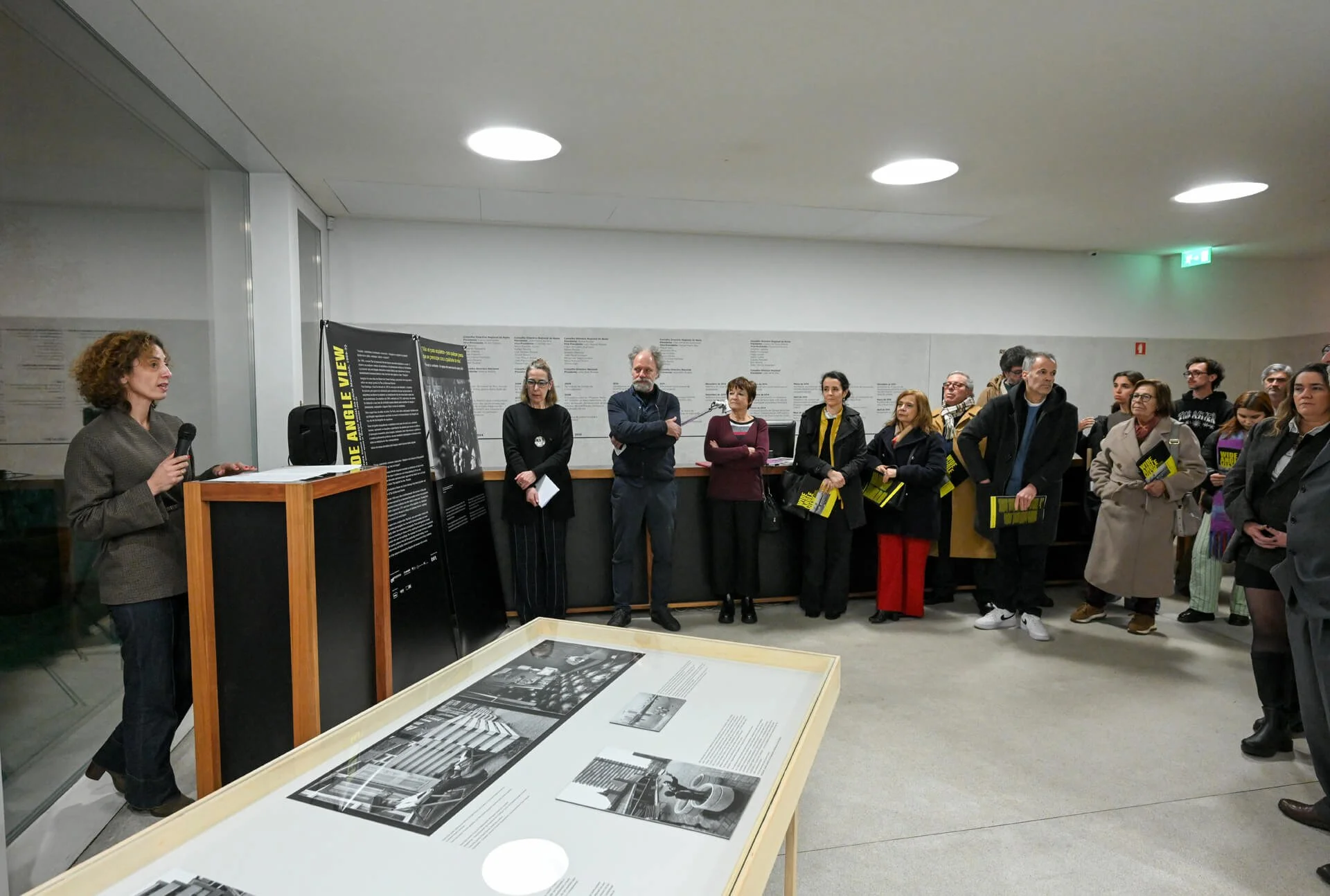
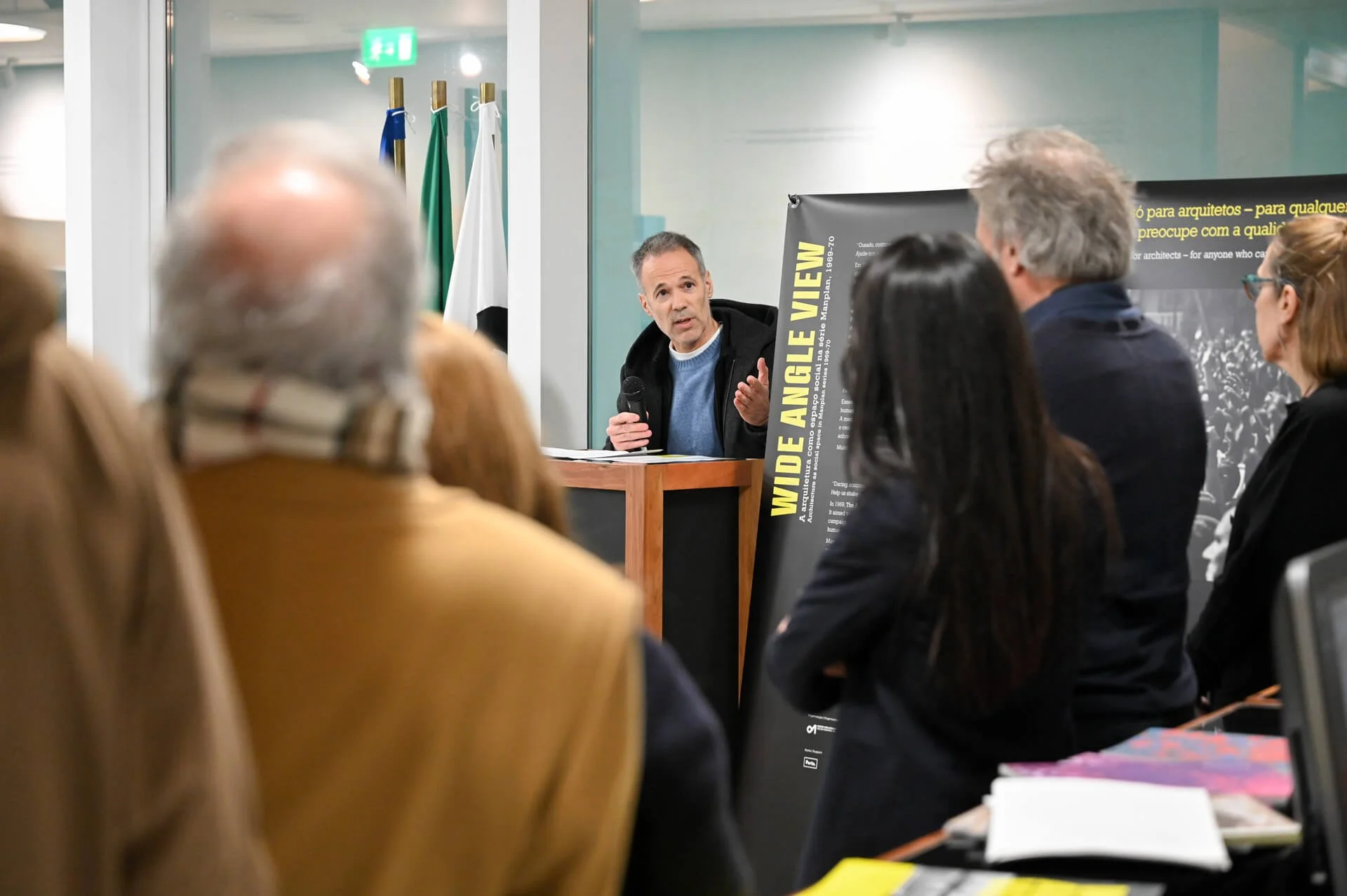
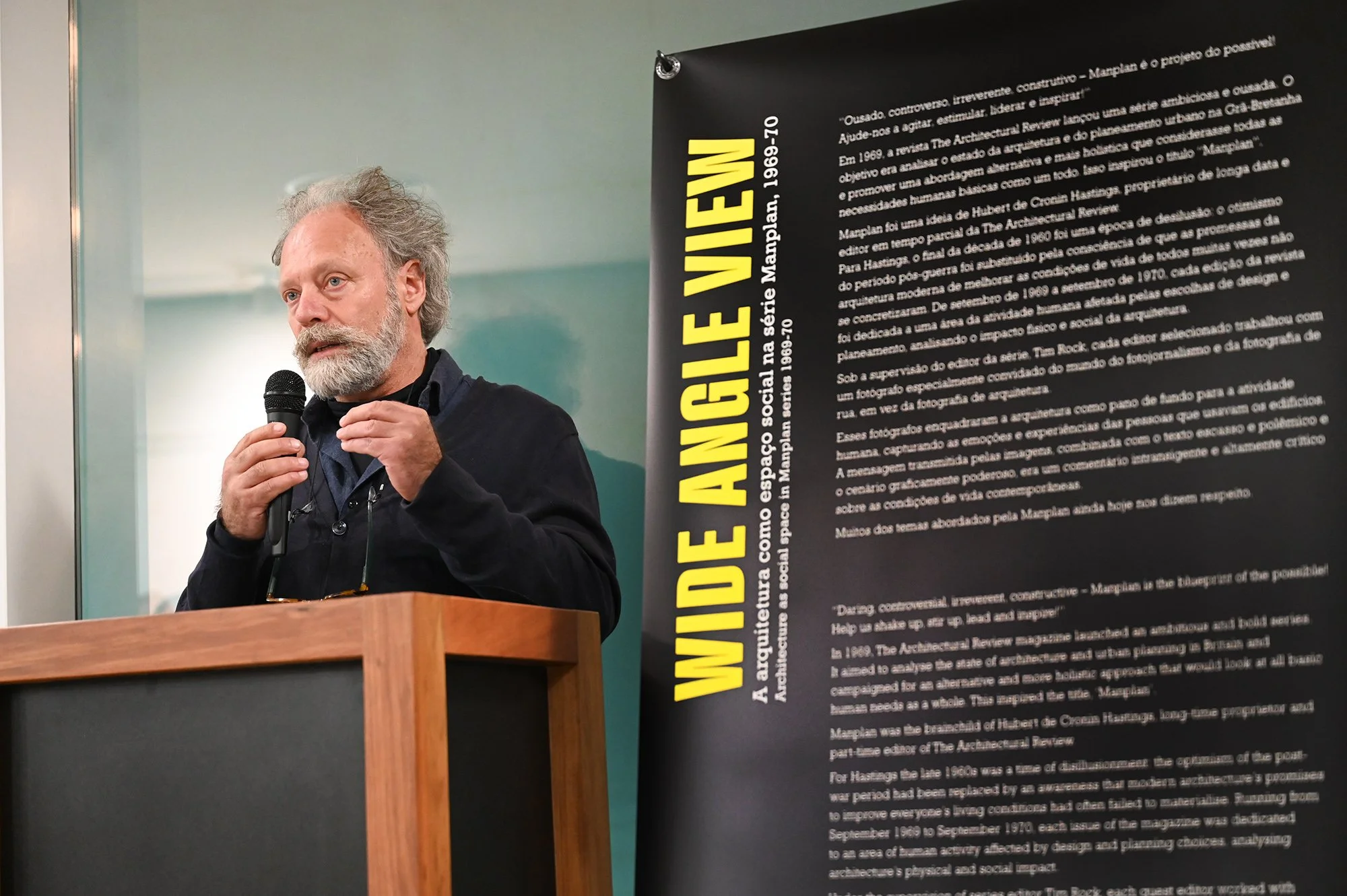
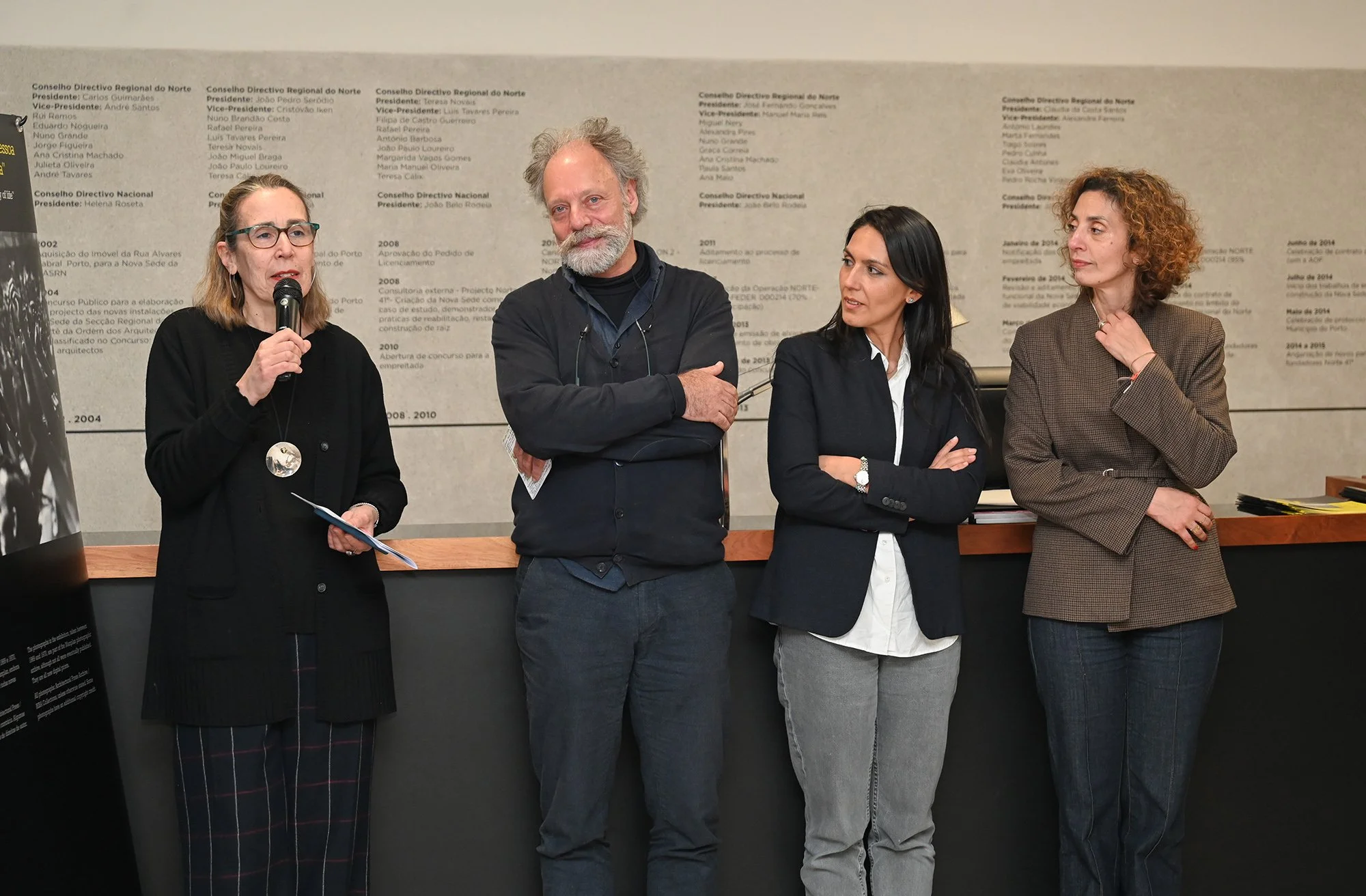
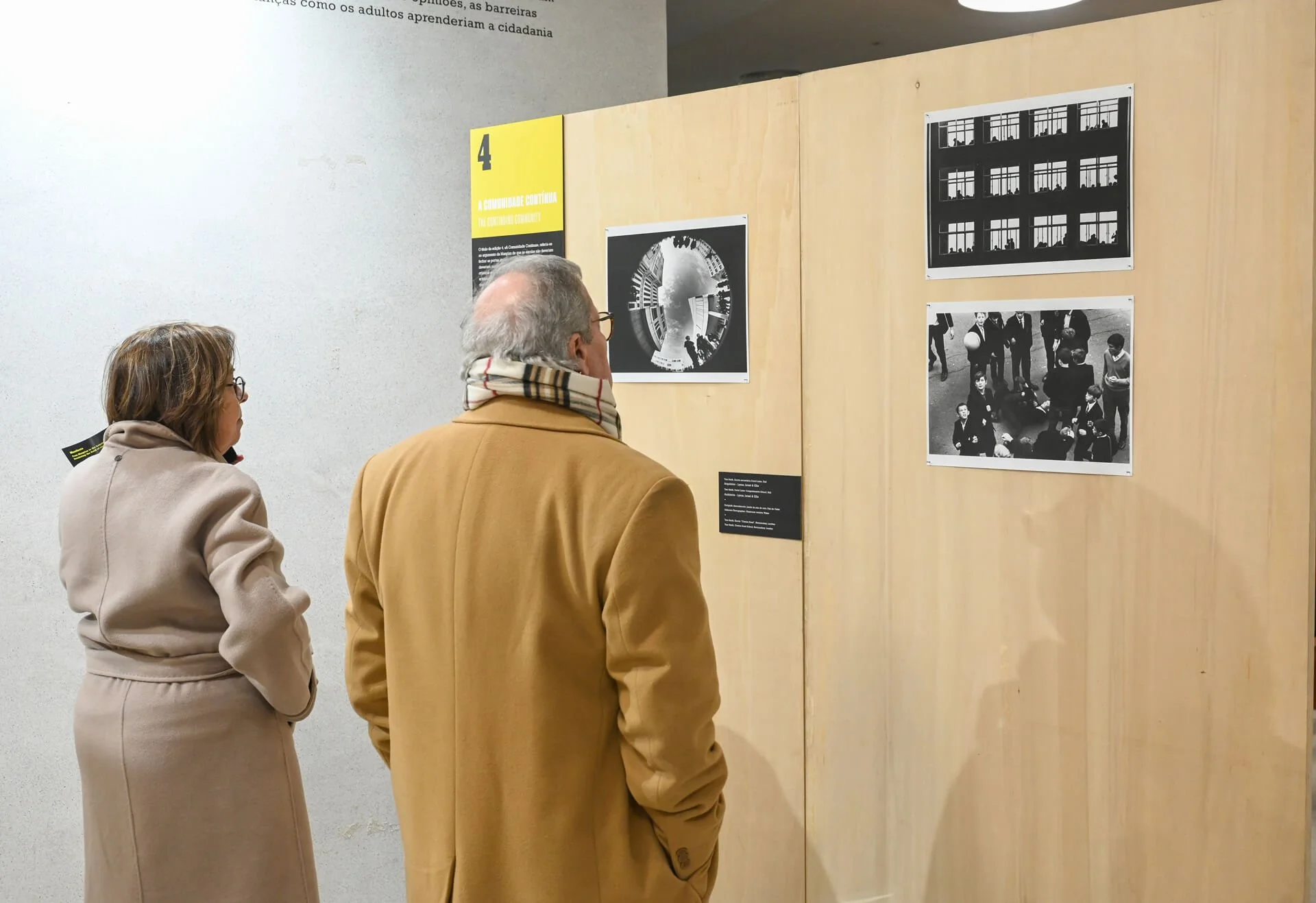
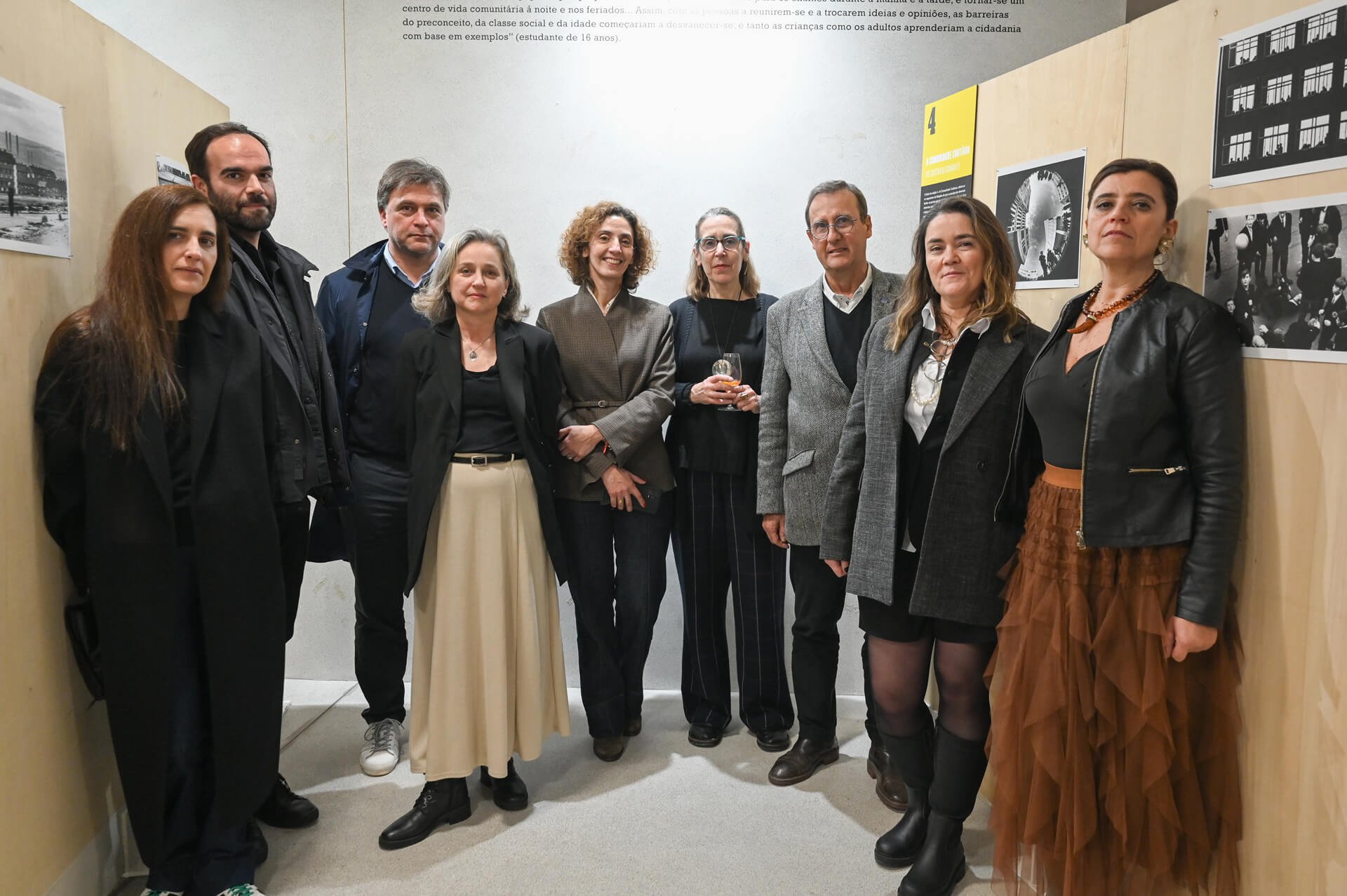
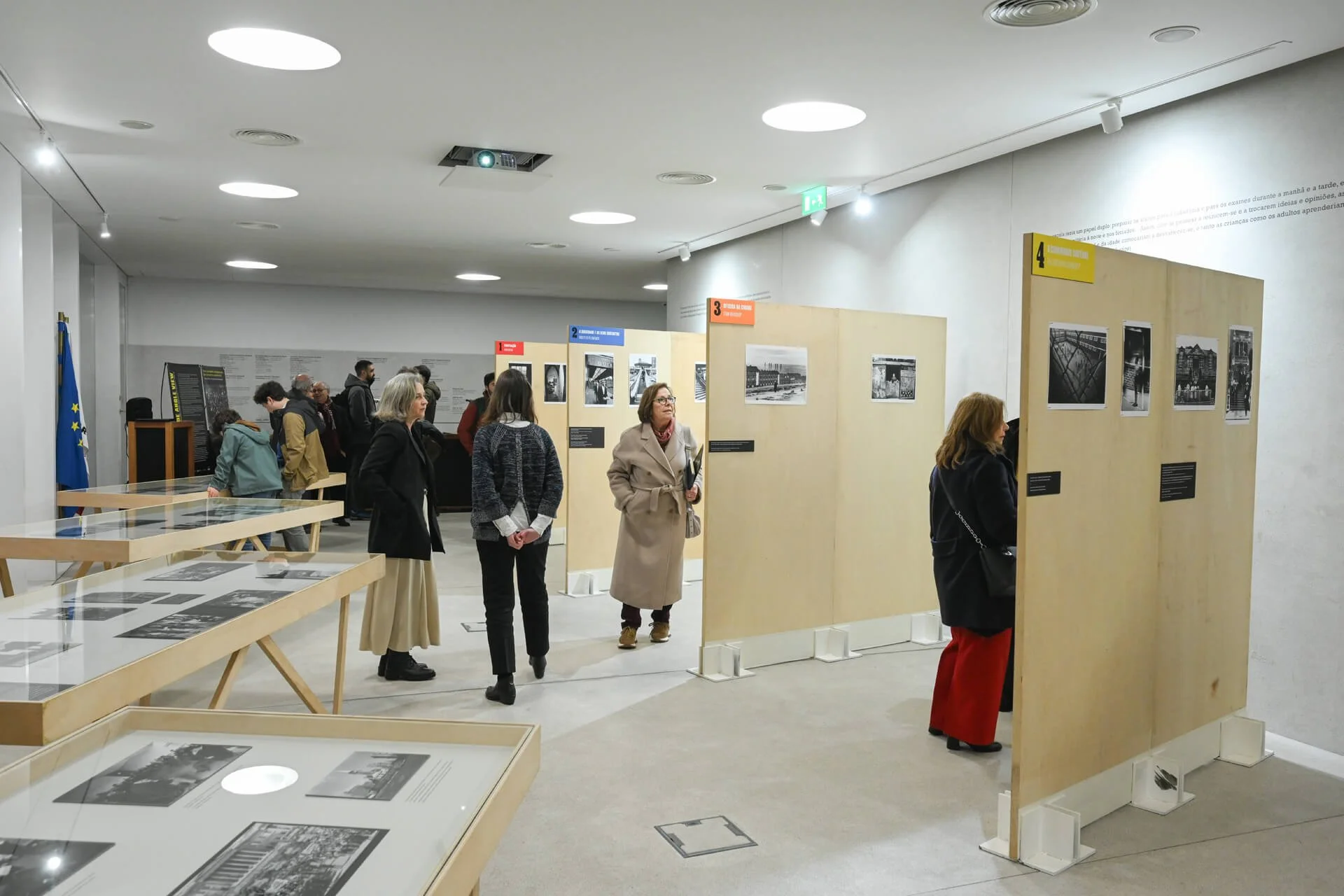
The opening of the exhibition Wide-Angle View: Architecture as Social Space in the Manplan Series 1969–70, which took place on February 27th at the headquarters of the Northern Regional Section of the Order of Architects (OASRN), brought together a large and diverse audience, confirming the interest that the initiative has been generating in the academic, professional and cultural community.
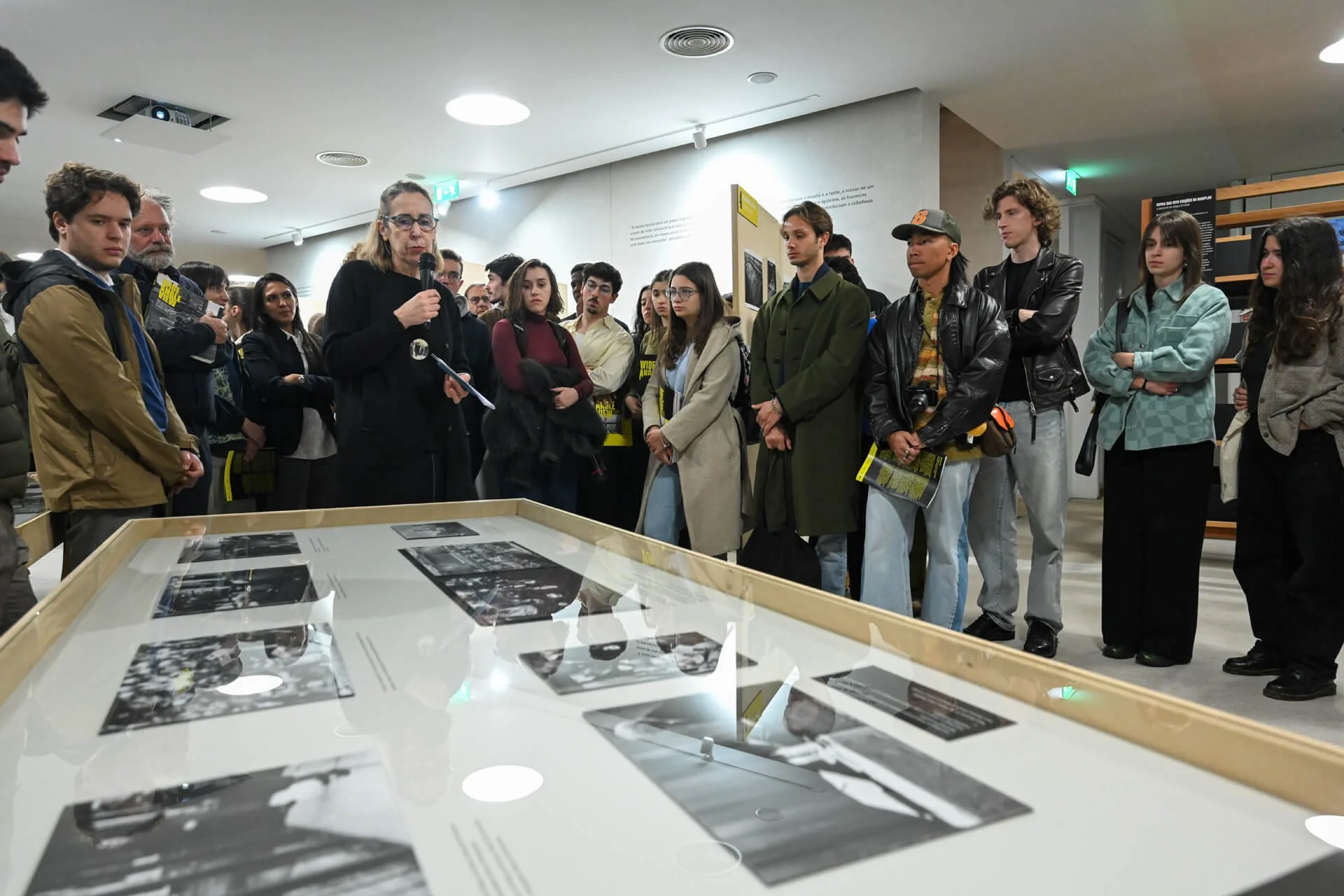
Among architects, researchers, institutional partners and the general public, the strong presence of students stood out. They followed attentively the different moments of the opening session and, in particular, the guided tour led by Valeria Carullo, Curator of Photography at the Royal Institute of British Architects (RIBA) and responsible for the exhibition’s curatorial framework. This moment became one of the highlights of the inauguration, generating a dynamic and engaged dialogue with students, who actively participated by raising questions and discussing the critical issues explored in the Manplan series, while gaining direct insight into RIBA’s curatorial approach and collections.
The exhibition results from an international collaboration led by RIBA, which curated the exhibition and brought forward its collections, in close partnership with Porto-based institutions, including the Northern Regional Section of the Order of Architects, the Cityscopio Cultural Association, and CENP/FAUP — Nuno Portas Center for Studies, through the Architecture, Art and Image (AAI) research group and the Sophia Journal project. This collaboration highlights the central role of RIBA in fostering international dialogue, while strengthening connections with local academic and cultural institutions, creating a platform that bridges research, curatorial practice and public engagement.
Originally produced between 1969 and 1970 by The Architectural Review, the Manplan series is here revisited through RIBA’s curatorial lens, drawing on the richness of its collections to reframe the material for contemporary audiences. By foregrounding photography as a critical medium and placing people — rather than buildings — at the centre of the narrative, the exhibition reflects RIBA’s ongoing commitment to expanding architectural discourse and making its collections accessible and relevant to wider audiences through international partnerships such as this one in Porto.
In this sense, the concept of wide-angle view emerges not only as a technical resource of photography, but as a critical device and an ethical stance towards architecture. Broadening the field of vision means recognizing that each spatial decision has concrete consequences for ways of living, quality of life, and the future possibilities of cities. In a context marked by a profound housing crisis and increasing processes of urban fragmentation, this critical perspective proves particularly relevant—and urgent.
The exhibition also takes on special significance in the context of architectural education and, in particular, in the role of photography in the curricula of architecture schools, as is the case at the Faculty of Architecture of the University of Porto (FAUP). More than a simple recording instrument, photography is understood here as a tool for thought, capable of analyzing, questioning, and reinterpreting visible realities. The image thus becomes a space for investigation that crosses disciplinary boundaries and allows us to understand—and potentially transform—reality.
More than an exercise in historical revisitation, Wide-Angle View proposes itself as an active device for interpreting the present. In this sense, it also establishes a direct dialogue with the open call and international conference of the Sophia Journal, scheduled for September of this year, dedicated to the theme “Landscapes of Repair | The Invisible City: Manplan and Contemporary Forms of Repair,” deepening the critical issues raised by the exhibition.
The exhibition will remain on display at the headquarters of the Association of Architects – Northern Regional Section until May, accompanied by a parallel program that will include new guided tours, debates, and roundtables dedicated to the different themes raised by the exhibition. These initiatives will seek to extend the reflection begun at the opening and broaden the debate on the role of architecture, image, and the city in contemporary society.
MANIFESTO
From Manplan to the housing crisis: broadening the field of vision
Architecture has never been neutral. It has never been merely form, technique, or style. It is a field of forces where social conflicts, political choices, and worldviews are inscribed. The Manplan series (1969–1970) made this condition explicit at a time when the promises of modernism were in crisis and urban reality was inevitably exposing the flaws of an incomplete social project. Fifty years later, this critical lucidity has not lost its relevance—it has become urgent.
Today, faced with a global housing crisis, the financialization of territory, increasing exclusion, and the fragmentation of cities, it is important to recover and update Manplan's radical gesture: to look at architecture from the perspective of life, and not the other way around. To place people at the center of architectural representation and thought. To recognize that every spatial decision produces real effects on bodies, relationships, inequalities, and possibilities for the future. “Wide-Angle View: Architecture as social space in the Manplan series 1969–70” SR-NRT, a groundbreaking exhibition in Portugal that revisits the influential Manplan series, asserts itself within this territory of critical continuity.
Not as a nostalgic exhibition, but as a device for interpreting the present. The archive here is not a closed space, but an active field of investigation, capable of illuminating contemporary tensions. Manplan's images—raw, intimate, unsettling—continue to challenge us because they reveal a persistent truth: the city is lived before it is designed, and housing is a right before it is a product.
The wide-angle lens that gives the exhibition its title is more than a technical resource. It is an ethical and political stance. Expanding the field of vision means rejecting simplistic readings of urban reality, rejecting quick fixes for structural problems, and confronting the discipline with the social consequences of its own actions. It means accepting that architecture actively participates in the production of inequality, but also that it can—and should—be an instrument of reparation.
Between Manplan and the present lies a line of continuity: the understanding of architecture as an inevitably political practice. The housing crisis is not an accident, but the result of accumulated choices—economic models, legislation, planning, and disciplinary culture. Given this, it is not enough to design more buildings; it is necessary to rethink ways of living, property regimes, forms of cooperation, and the urban imaginaries that sustain the contemporary city.
Wide-Angle View calls upon architects, students, researchers, and citizens to take a stand. To look at the archive not as a formal repertoire, but as critical memory. To recognize in photography not only a means of representation, but a form of thought. To understand that every image is a stance—and that all architecture communicates, even when it intends to silence its effects.
This manifesto affirms that Manplan's relevance lies precisely in his refusal of indifference. In his ability to expose discomfort, to make visible the flaws of the system, and to insist that quality of life is a collective issue. Today, as then, architecture only makes sense if it is conceived from concrete life, its fragilities, and its urgencies.
Expanding one's field of vision is, therefore, a commitment to the present. An invitation to critical action. A demand for disciplinary responsibility. Between archive and present, between image and project, between architecture and society, “Wide-Angle View: Architecture as social space in the Manplan series 1969–70” | SR-NRT argues that there is no habitable future without an attentive, informed, and profoundly human look at the city we build.
Pedro Leão Neto
Maria Neto
More information coming soon on the SR-NRT, CNEP - FAUP and CCA channels.