Sophia Journal Announces the Programme for the 11th International Conference — Landscapes of Repair


Sophia Journal Announces the Programme for the 11th International Conference — Landscapes of Repair

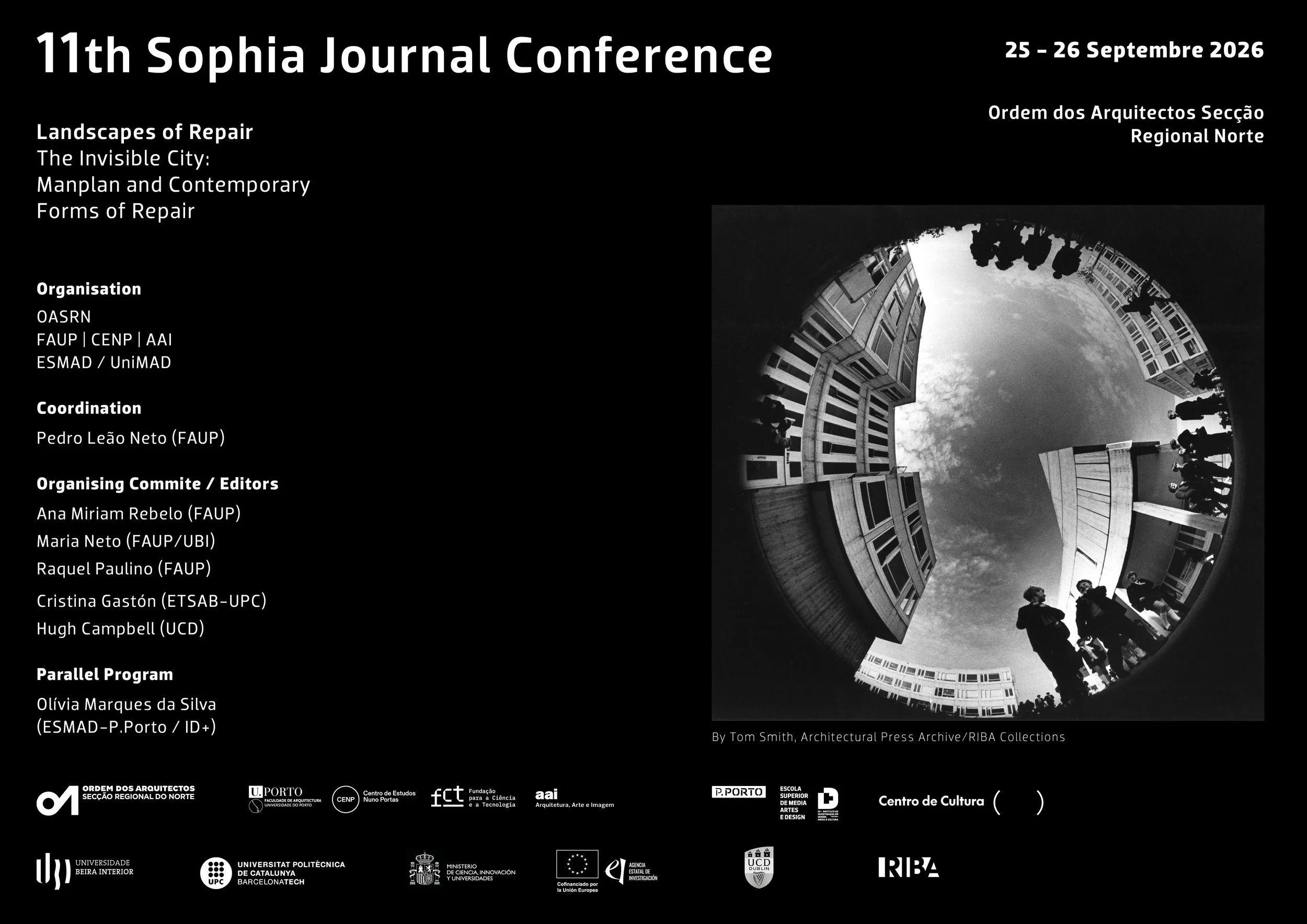
The Invisible City: Manplan and Contemporary Forms of Repair
Portuguese Architects’ Association — Northern Regional Section (OASRN) | 25–26 September 2026 

PT/ENG

ORGANISATION

Portuguese Architects’ Association — Northern Regional Section (OASRN)

Faculty of Architecture, University of Porto (FAUP) | CENP — Nuno Portas Centre for Architectural Studies

Culture Centre, Technical University of Porto — UTP / FMAD / ID+

COORDINATION

Pedro Leão Neto — FAUP

GUEST EDITORS

Cristina Gastón — ETSAB–UPC

Hugh Campbell — University College Dublin

EDITORS

Ana Miriam Rebelo — FAUP

Maria Neto — FAUP

Raquel Paulino — FAUP

PARALLEL PROGRAMME

Olívia Marques da Silva — Culture Centre, Technical University of Porto — UTP / FMAD / ID+

Jorge Sobrado — Councillor for Culture and Heritage, Porto City Council

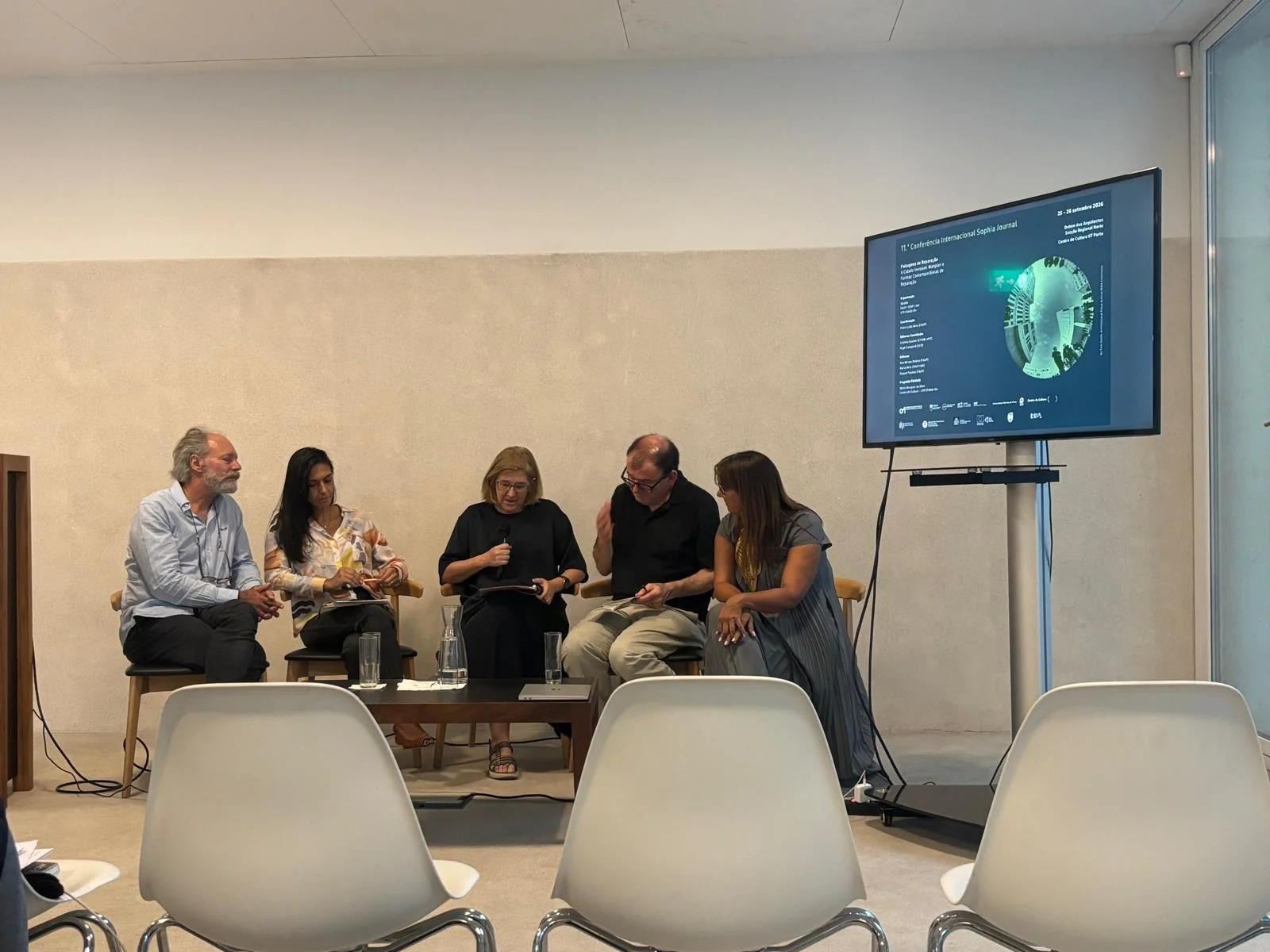
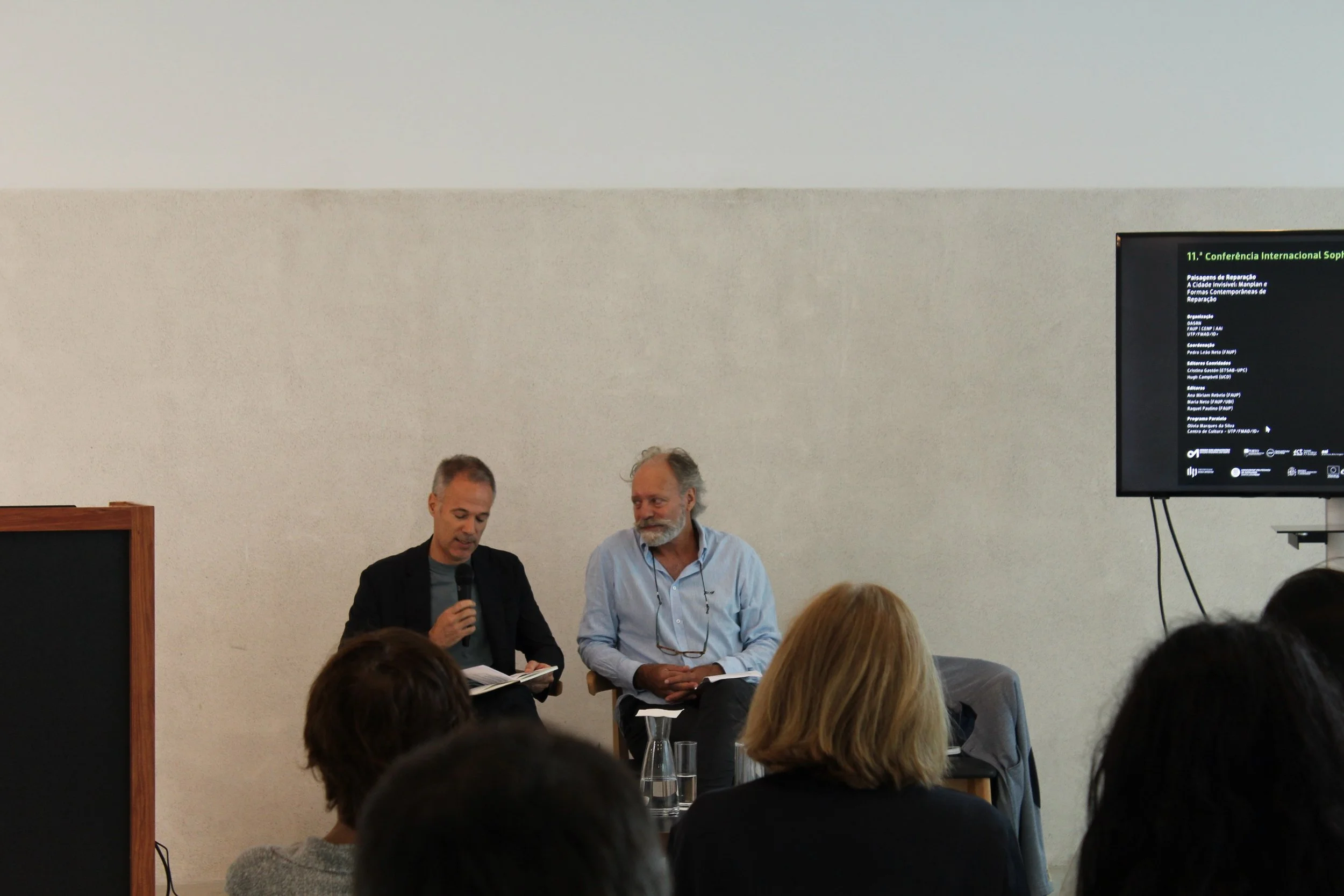
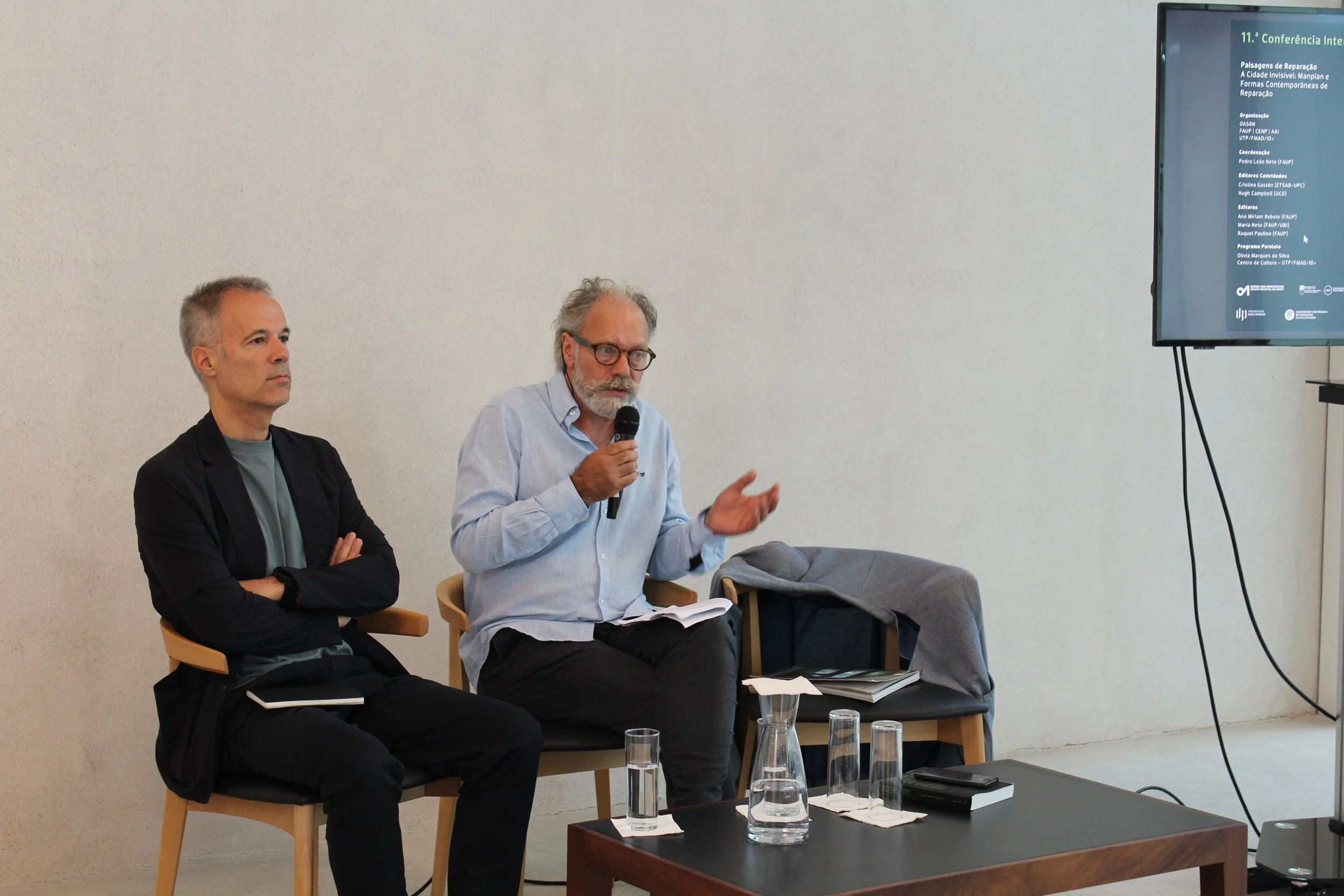
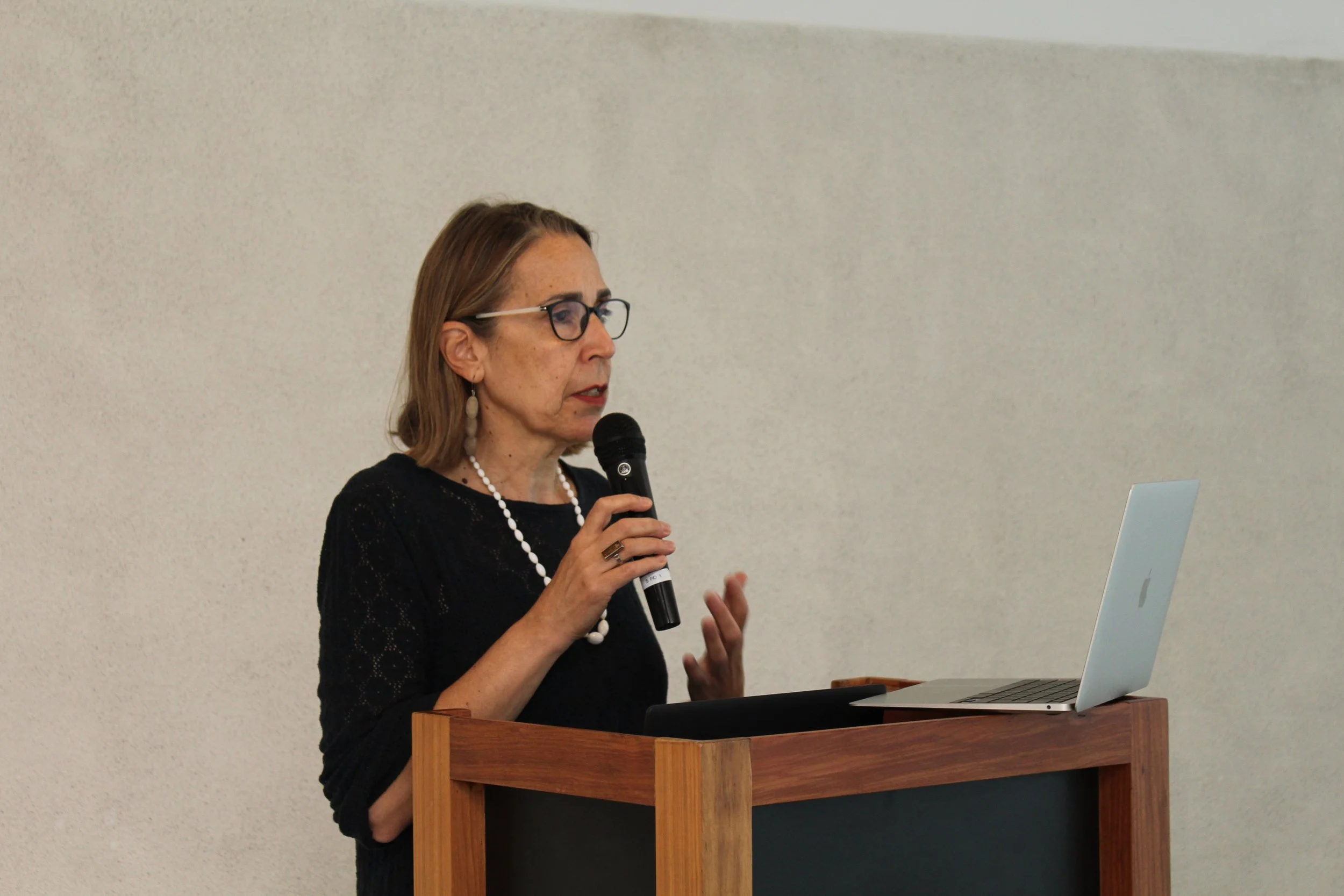
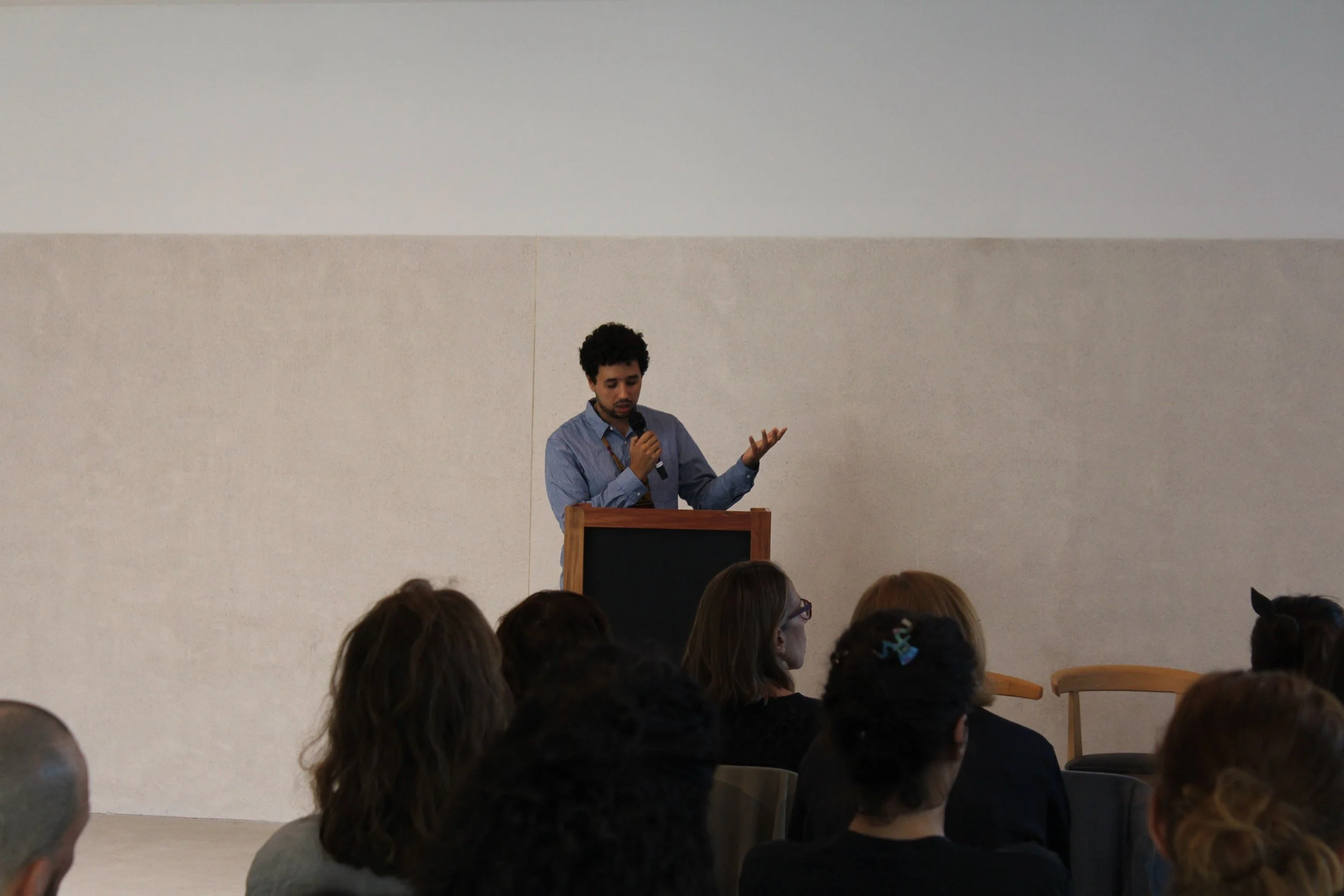
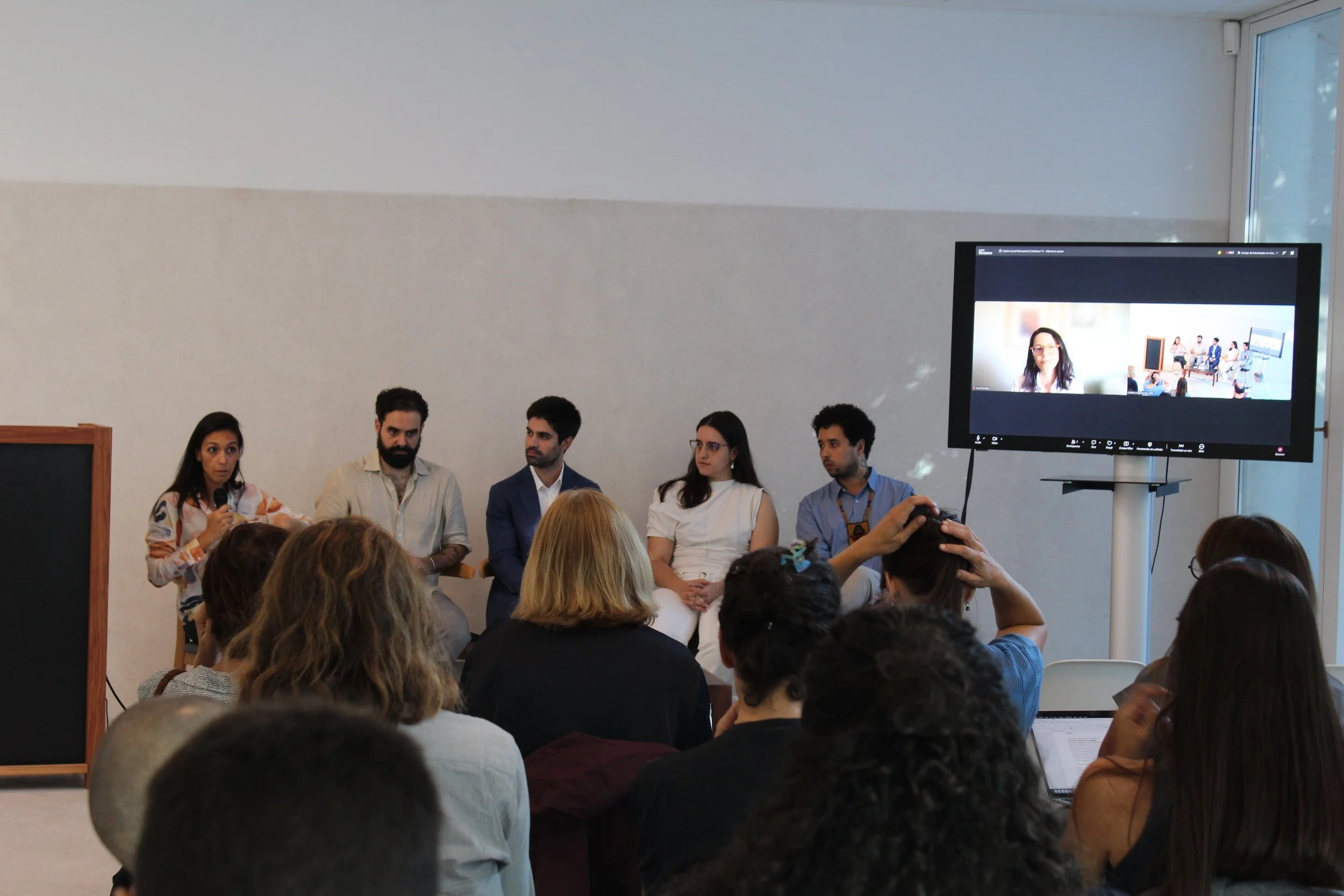
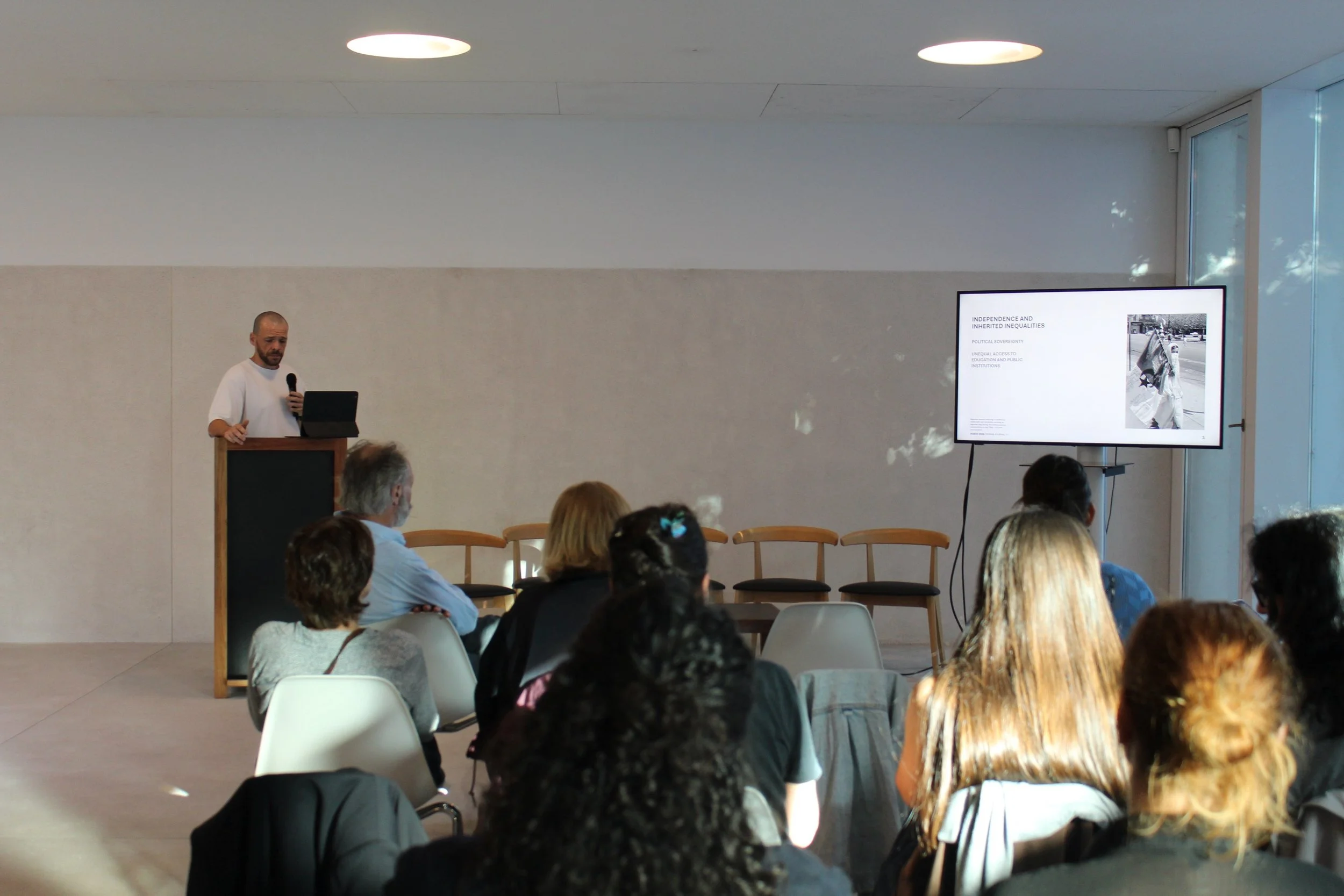
The 11th Sophia Journal International Conference — Landscapes of Repair: The Invisible City: Manplan and Contemporary Forms of Repair will take place in Porto on 25 and 26 September 2026, with an in-person programme and online streaming.

On 25 September, the scientific programme will be held at the Portuguese Architects’ Association — Northern Regional Section (OASRN). On 26 September, the parallel programme will take place at the Culture Centre, Technical University of Porto — UTP, followed in the afternoon by a visit to Quinta da Conceição, in Matosinhos.

Across the two days, the conference will bring together researchers, architects, photographers, artists, editors and other professionals to explore the relationships between architecture, image, the city and contemporary forms of repair.

Part of the fourth thematic cycle of Sophia Journal, the conference proposes a broad understanding of repair. Rather than being understood solely as a technical intervention on buildings, infrastructures or landscapes, repair is approached as an ethical, social, cultural, ecological and imaginative practice, capable of recognising vulnerabilities, bringing often overlooked conditions into view, and renewing relationships between people, places and institutions.

The conference takes as its starting point the critical legacy of Manplan, the series published by The Architectural Review between 1969 and 1970. By confronting the promises of architecture and planning with the realities of everyday life, Manplan shifted the focus of architectural representation away from the isolated building and towards human experience and the social, political and economic systems that shape the conditions of inhabitation.

More than fifty years later, this perspective remains particularly relevant in the face of urban inequalities, housing precarity, deteriorating infrastructures, environmental pressures, the invisibility of maintenance work and other, sometimes less apparent, forms of collective wear and exhaustion.

Making the Invisible City Visible

The Invisible City does not refer here to an absent territory, but rather to a set of experiences, relationships, practices and tensions that tend to remain outside dominant regimes of visibility: ordinary uses of space, informal forms of adaptation, threatened memories, urban voids and interstices, material traces and networks of care that sustain collective life.

Making these realities visible also requires us to reflect on the forms of representation themselves: who produces the images, who is represented, through which languages and framings, and with what consequences.

It is in this sense that photography, film, critical cartography and the visual essay are understood by Sophia Journal not simply as means of documentation, but as instruments of research and knowledge production. They can reveal inequalities and transformations, follow processes of deterioration or abandonment, bring different temporalities into relation and, at the same time, contribute to imagining other forms of care, repair and transformation.

The conference brings together research papers and visual essays that explore these questions through case studies situated in different cities, landscapes, buildings and communities.

From the Legacy of Manplan to Contemporary Practices of Repair

The 11th International Conference continues the programme Wide-Angle View: Architecture as Social Space in the Manplan Series 1969–70, developed at OASRN throughout 2026.

The Wide-Angle View exhibition, which opened on 27 February, revisited the influential photographic series Manplan and was accompanied, between March and May, by a programme of guided visits, public conversations, educational activities and round tables that sought to bring the critical memory of this editorial experiment into dialogue with contemporary questions surrounding housing, the city, public space and representation.

The conference does not bring this process to a close. On the contrary, it extends it, bringing the legacy of Manplan into dialogue with contemporary practices of visual research, representation and intervention, while asking how looking, documenting and making visible may themselves constitute a first form of repair.

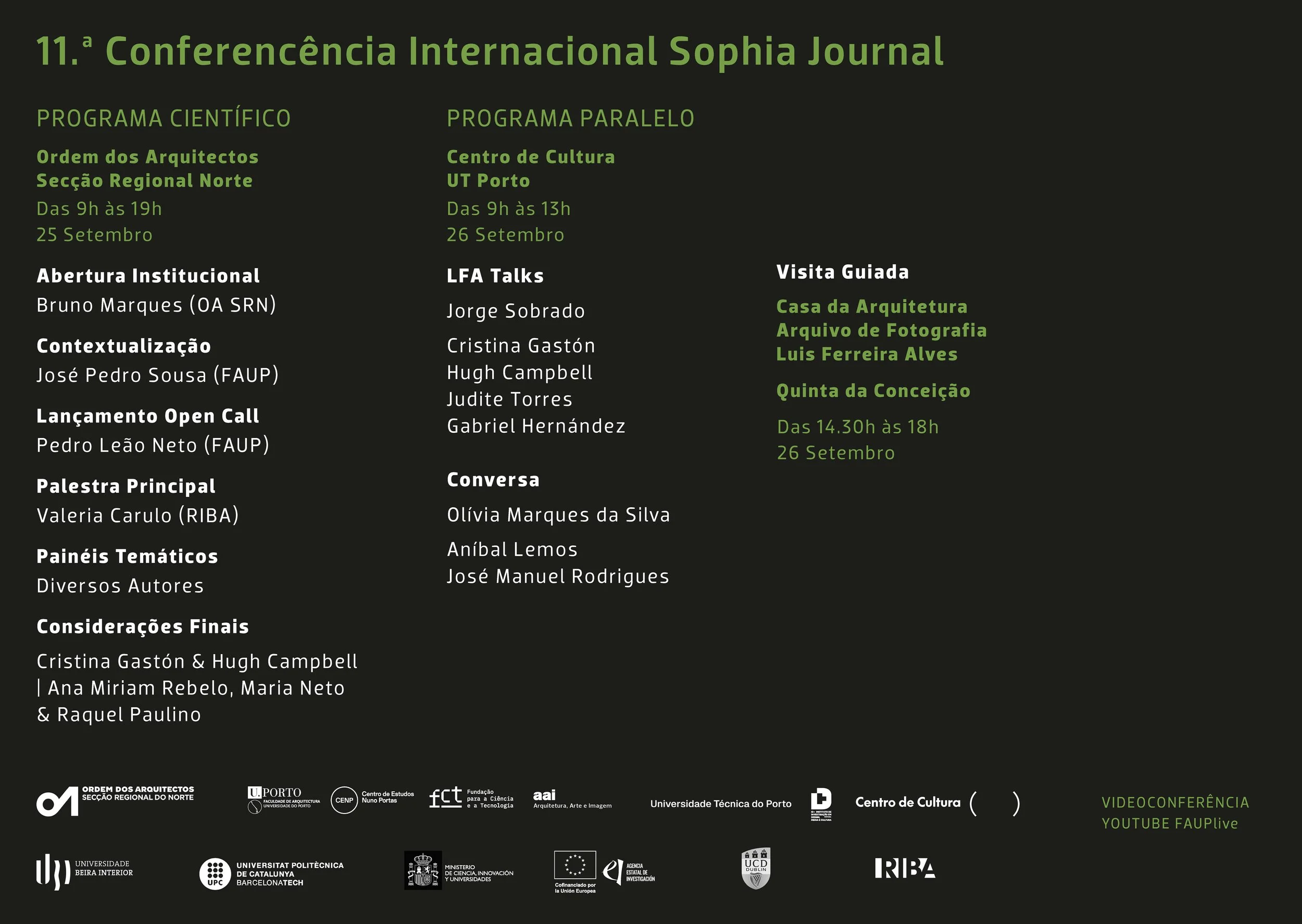
25 September — Scientific Programme

The first day forms the scientific core of the conference and will take place in the auditorium of the Portuguese Architects’ Association — Northern Regional Section.

Following the institutional opening by the Portuguese Architects’ Association — Northern Regional Section, José Pedro Sousa, representing FAUP, will give a brief introduction to the Sophia Journal cycle at FAUP. Pedro Leão Neto will then officially launch the call for Sophia Journal Vol. 12 — Learning Repair: Situated Pedagogies, Civic Landscapes and Visual Practices, thus carrying forward the reflection initiated through Landscapes of Repair.

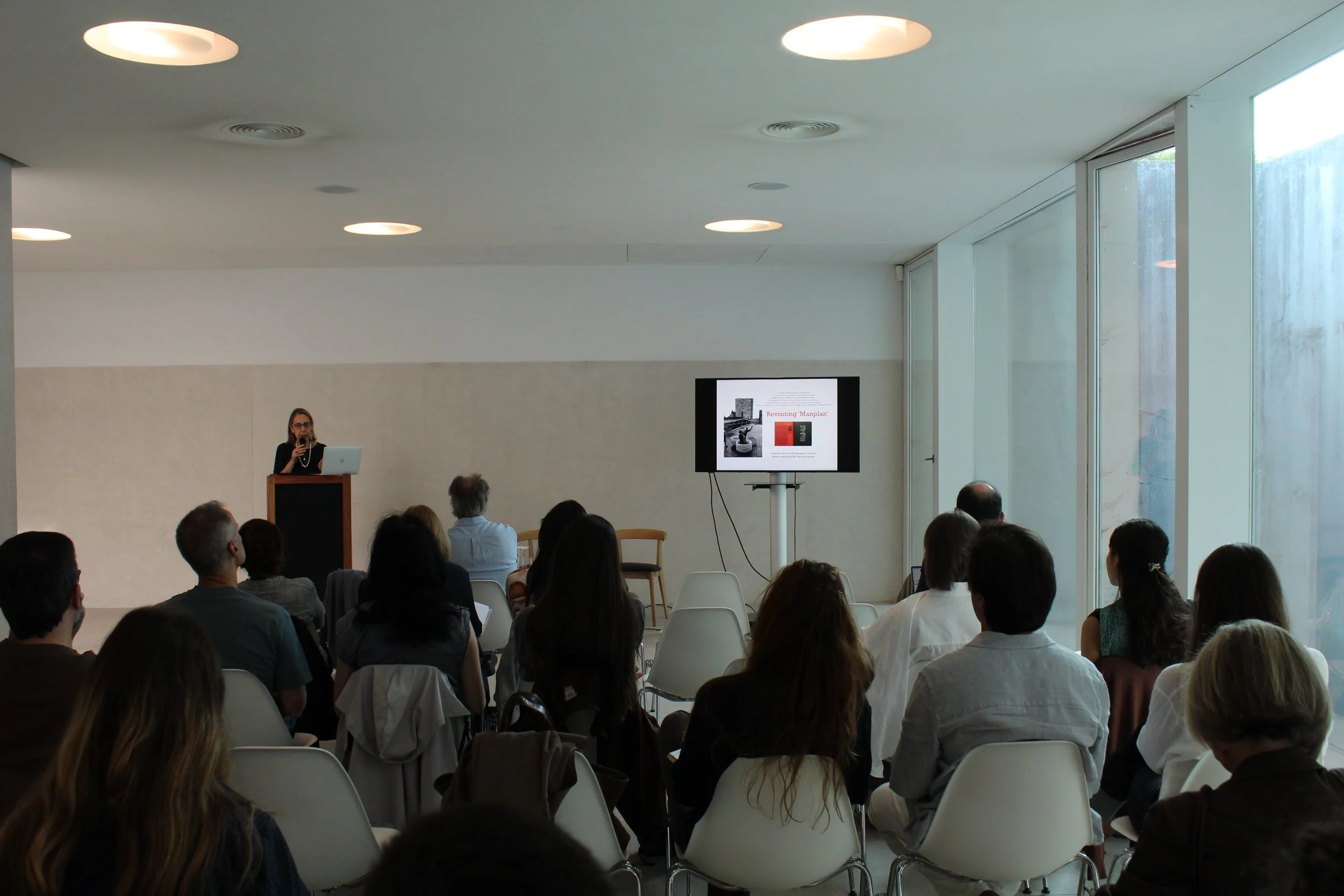
This will be followed by a keynote lecture by Valeria Carullo, Curator of Photography at the Royal Institute of British Architects — RIBA, focusing on the Manplan archive, the politics of visibility and the public responsibility of architectural representation.

Valeria Carullo’s participation continues the collaboration developed through Wide-Angle View, whose Porto exhibition emerged from a dialogue with the curatorial research previously undertaken at the RIBA.

Throughout the day, four thematic panels will bring together research papers and visual essays addressing memory and archives, heritage and reuse, critical cartographies, and practices of care, maintenance and repair.

Programme — 25 September 2026

09:15 — Reception and Registration

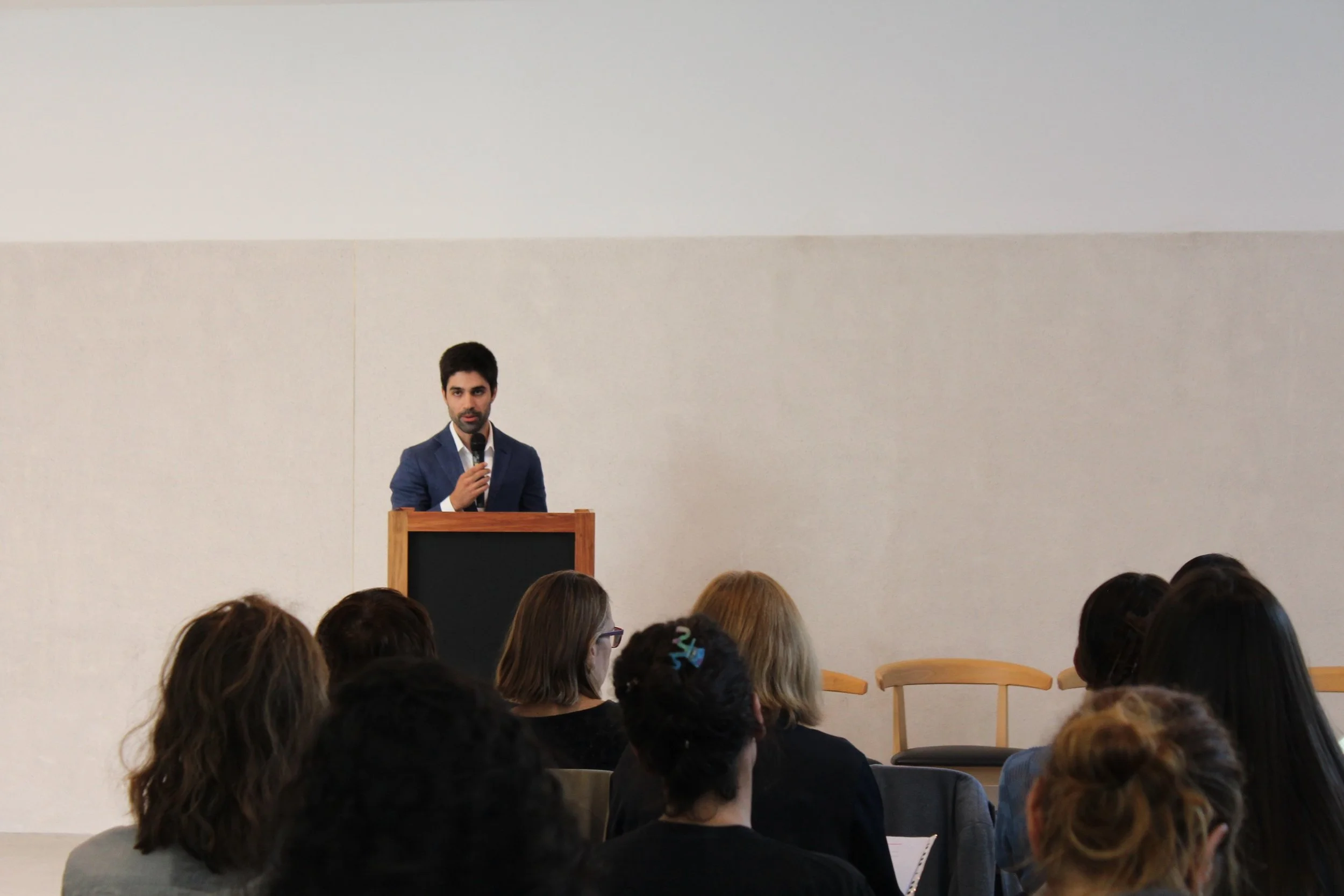
09:30–09:40 — Institutional Opening

Bruno Marques

President of the Northern Regional Board of the Portuguese Architects’ Association

09:40–09:50 — Introduction to the Sophia Journal Cycle at FAUP

José Pedro Sousa

representing FAUP

09:50–10:00 — Official Launch of the Call for Sophia Journal Vol. 12

Learning Repair: Situated Pedagogies, Civic Landscapes and Visual Practices

Pedro Leão Neto

representing CENP

10:00–10:45 — KEYNOTE

Valeria Carullo

Revisiting Manplan: Archive, Visibility and Public Responsibility

10:45–11:05 — Coffee Break

11:05–12:45 — PANEL 1

Making the Invisible City Visible: Memory, Image and the Politics of Representation

Guiding question

What can images make visible that conventional architectural representation leaves unseen — and when can visibility itself become a form of repair?

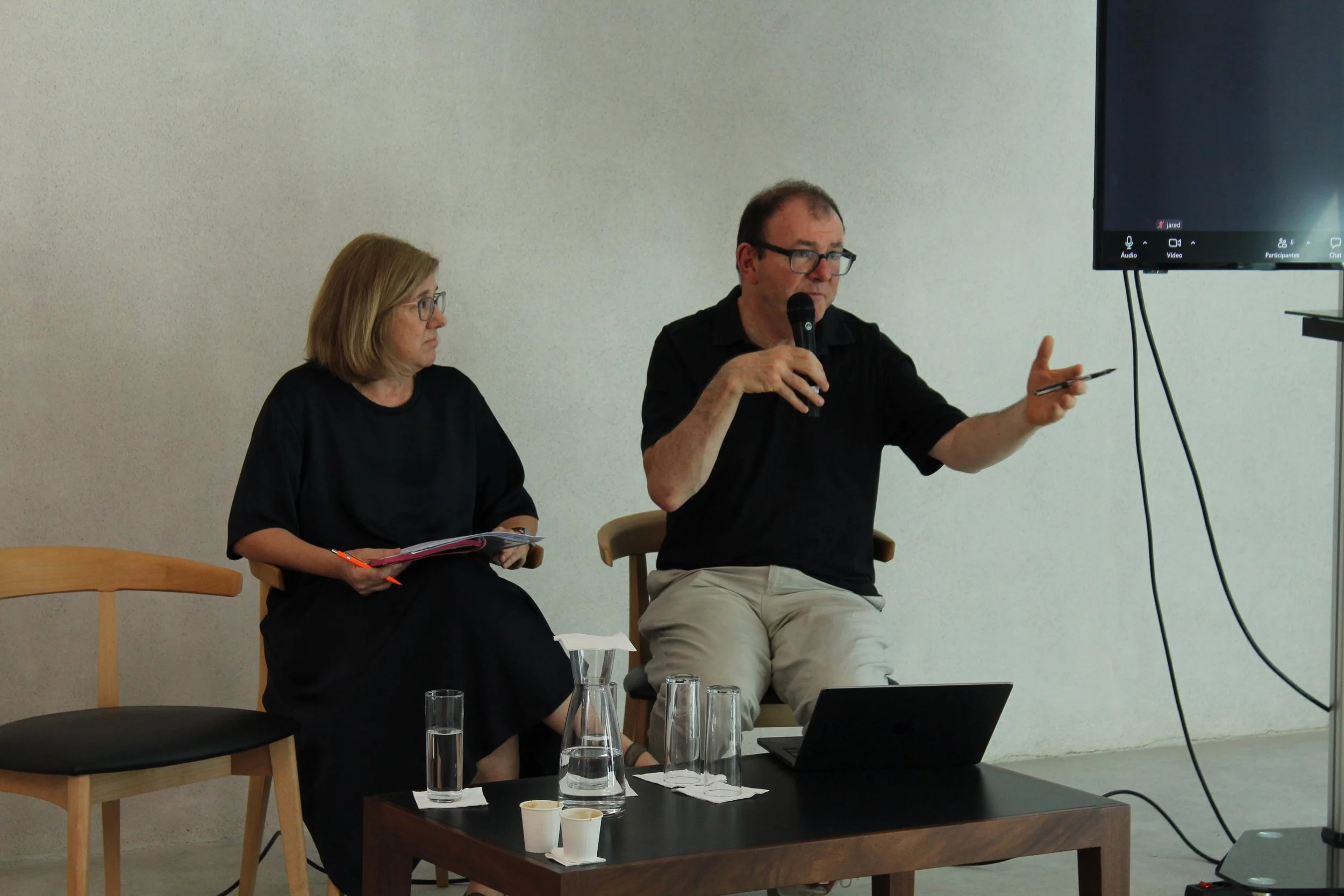
Chairs: Hugh Campbell & Cristina Gastón

Papers

Sunyoung Park

Photosculpture as a Form of Care and Repair: Re-materialising the Invisible City after Manplan

Ljubica Miric

Remembering the Future City: From Imagination to the Urban Condition

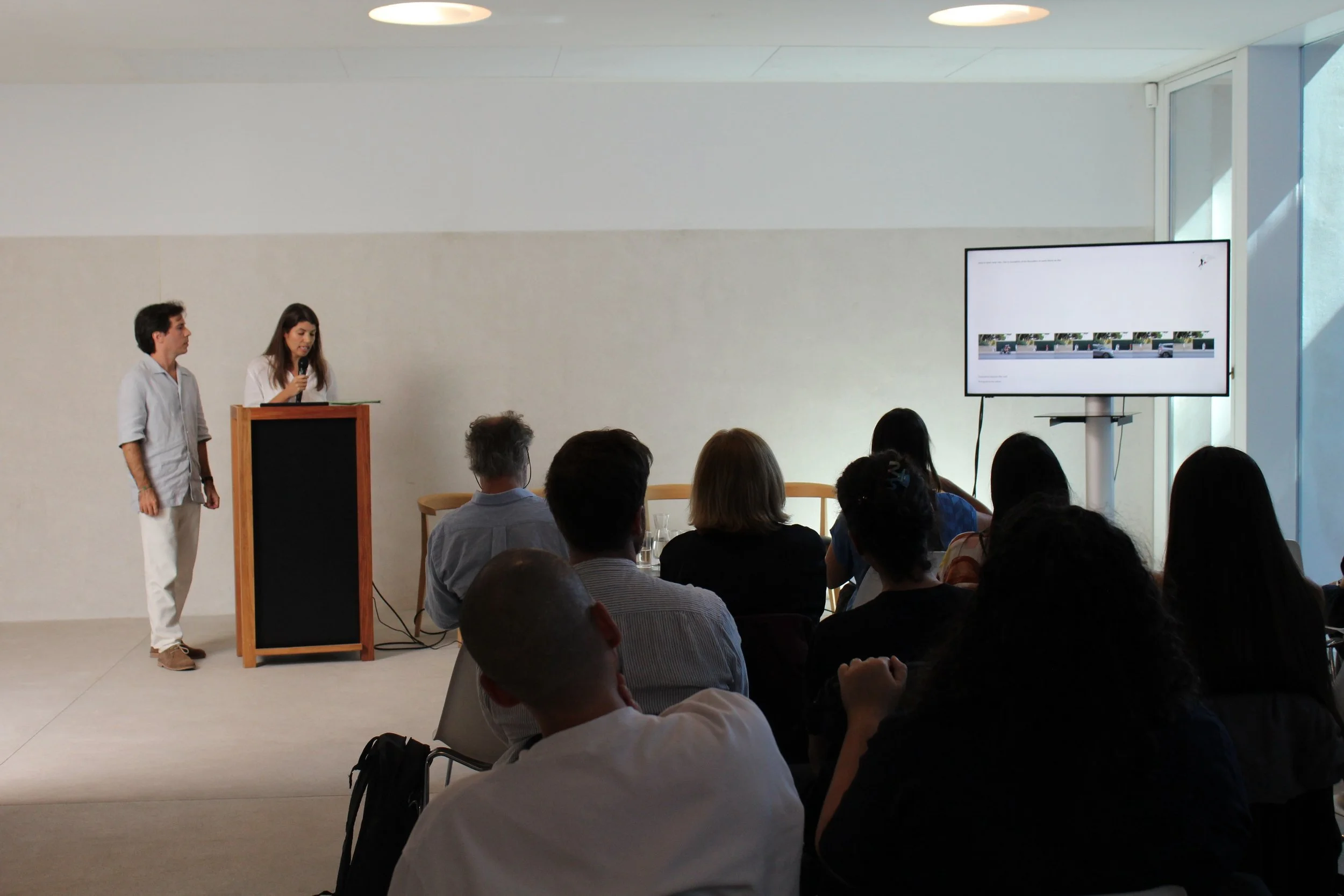
Jared Fantasia & João Soares

Lessons from the Ground: An Architectural Essay on Robert Smithson and the Reclamation of the Post-Industrial Landscape

Visual Essay

Aislinn McCarthy & Evelyn ÅgrenA Visual Account of Home as a Situated Place of Resistance

Adrian Aleson & Fernanda del Villar[Re]Building a Wall

Discussion

12:45–13:45 — Lunch Break

13:45–15:15 — PANEL 2

Repairing the Built: Heritage, Memory and Practices of Re-inscription

Guiding question

How can architecture intervene in what remains without erasing the histories, memories and absences through which the built environment has acquired meaning?

Chair: Ana Miriam Rebelo

Papers

Ana Sofia Pinto & João Pedro Bragança

Back to What Never Was: The Re-inscription of the Monastery of Santa Maria do Mar

Andrea Crudeli

Adaptive Reuse as Critical Repair: The Case of Massimo Carmassi in Pisa

Ana João Costa e Silva

Preserve the Pozzuoli Cathedral: Between Safeguarding the Remaining and Perpetuating the Vanished

Visual Essay

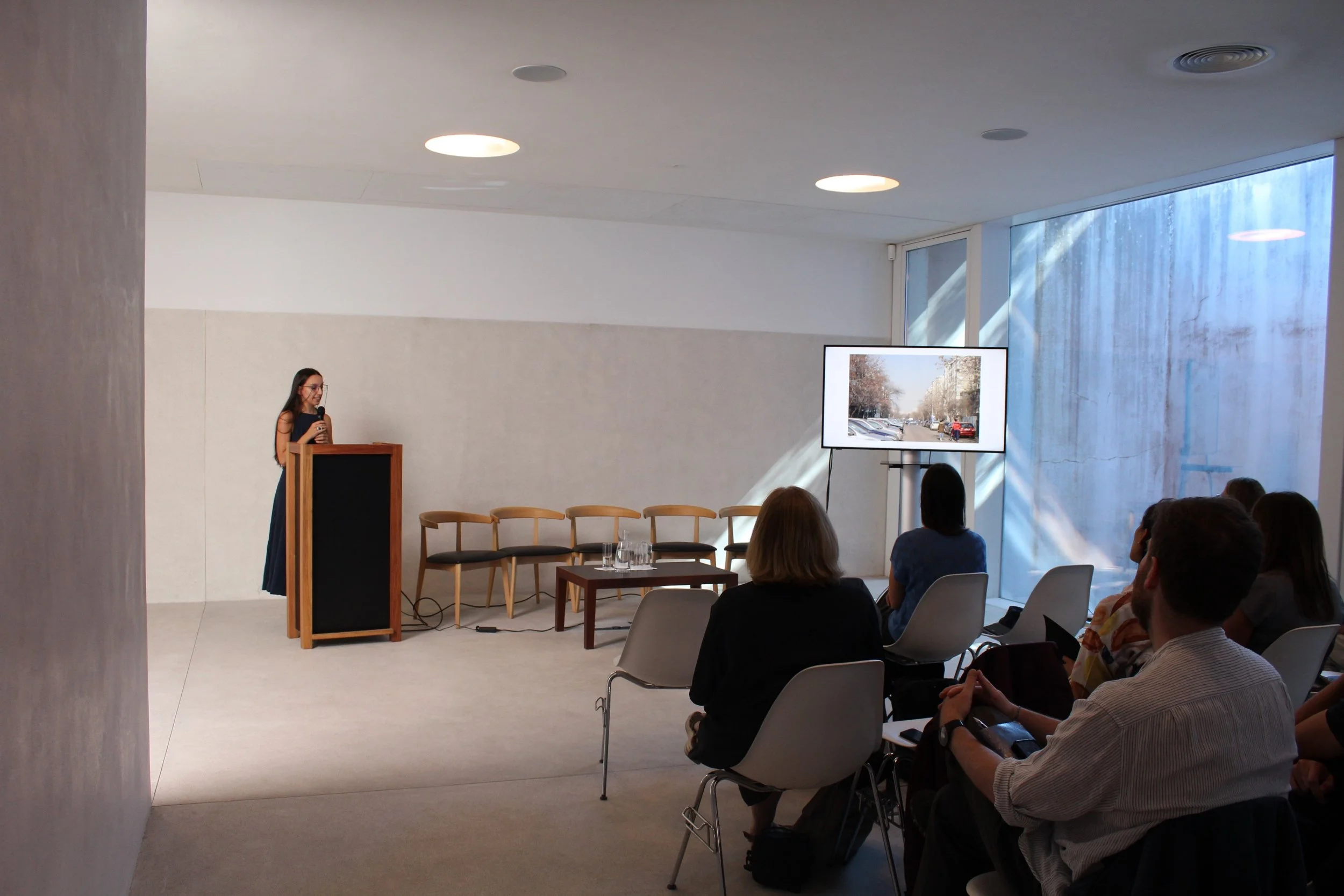
Diana Nichita

Visibility as Repair: Reading Bucharest’s Hidden Layer

Discussion

15:15–15:30 — Coffee Break

15:30–17:10 — PANEL 3

Critical Cartographies: Peripheries, Ordinary Spaces and Hybrid Territories

Guiding question

How can alternative forms of mapping and visual inquiry make peripheral, informal and ordinary territories legible without reducing the complexity of the lives, practices and systems that produce them?

Chair: Maria Neto

Papers

Paulo Moreira

Counter-Mapping as Reparative Practice: Introducing 3D Voice and the Politics of Spatial Representation in Stjwetla, Johannesburg

Francisca Machado & Eduardo Fernandes

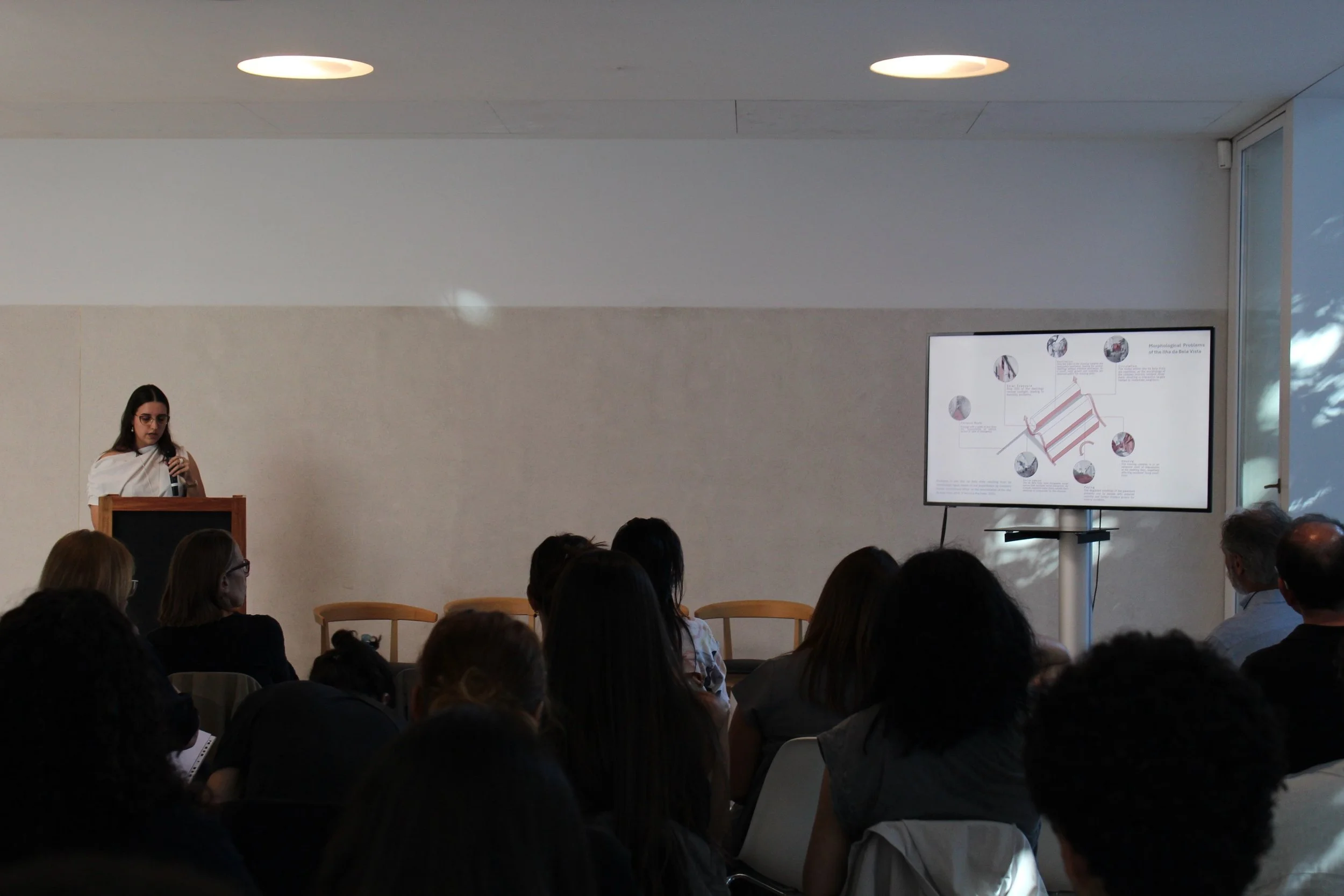
Repairing with Memory: Informal Practices and the Rehabilitation of the Ilha da Bela Vista

Francisco Côrte

Food and Leisure: Visual Practices for Mending the City/Countryside Relationship

Visual Essays

Ana Brandão & João Cunha Borges

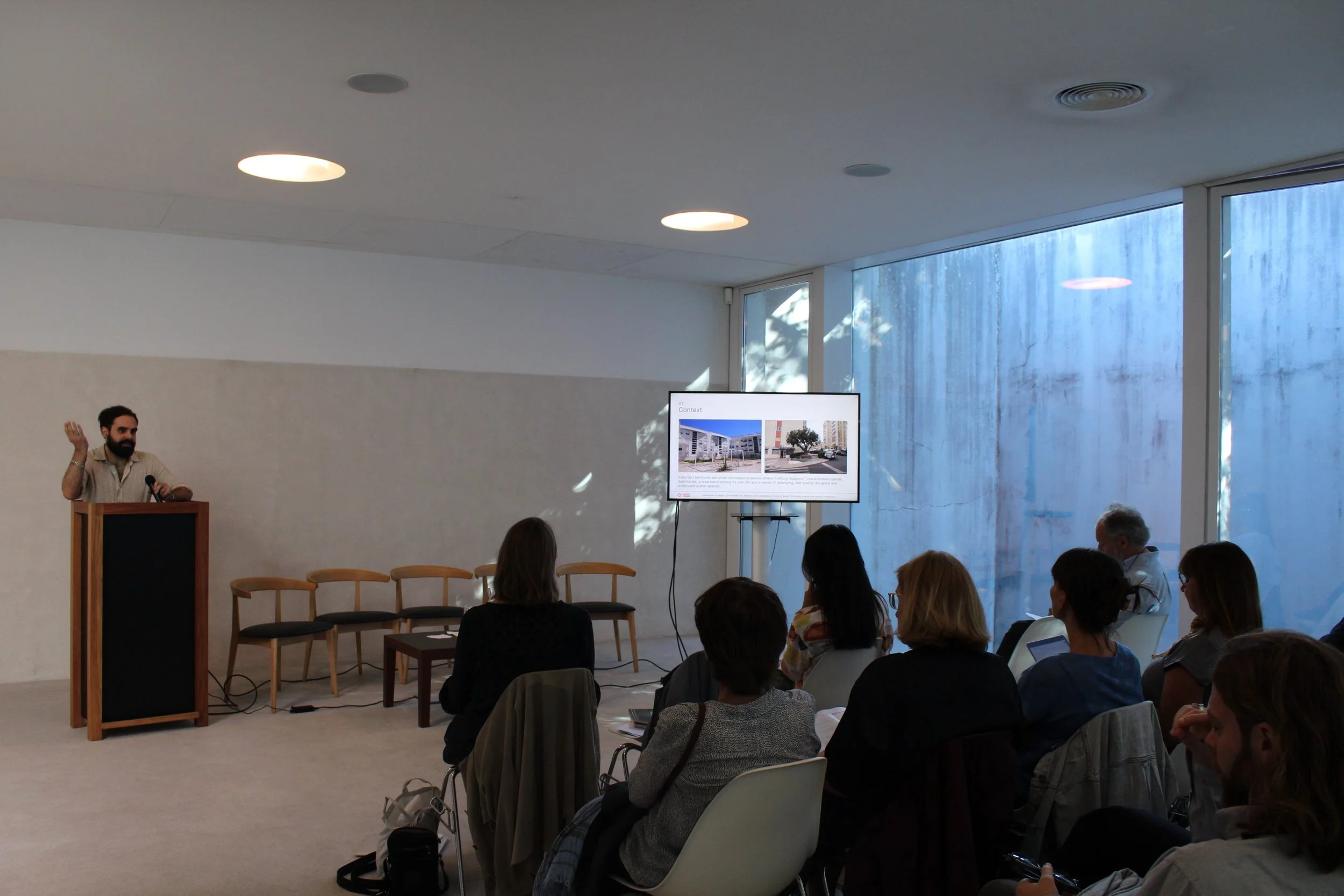
Mapping Ordinary Public Spaces: A Visual Investigation of Lisbon’s Suburbs

Tomita da Silva

Layers in Motion: Visualizing Hybrid Landscapes on Porto Metropolitan Area’s Northern Seaboard

Discussion

17:10–17:20 — Short Break

17:20–18:45 — PANEL 4

Reparative Practices: Care, Cohabitation and Possible Futures

Guiding question

What does it mean to practise repair — not as the restoration of a previous condition, but as the creation of new relations of care, recognition, cohabitation and possibility?

Chair: Raquel Paulino

Papers

Mounira Zennia

“Public Use” – Strategies of Repair in Cameron Rowland’s Amt 45 i

Filipe Lourenço

Architecture as Identity Repair: Visibility, Practice, and Post-Independence Algeria (1962–1979)

António Olivera

Speculative Repair and Urban Dysfunction: A Wittgensteinian Reading of the Contemporary City through Lisbon

Visual Essay

Anna Positano / Corpi Idrici / Gaia Cambiaggi

Underground Habitats and Post-Industrial Ecosystems

Discussion

18:45–19:00 — Closing Remarks and Final Synthesis

Cristina Gastón & Hugh Campbell

Guest Editors

Ana Miriam Rebelo, Maria Neto & Raquel Paulino

Editors

26 September — Parallel Programme: From Research to the Public and Editorial Realm

On the second day, the conference, held in the auditorium of the Culture Centre, Technical University of Porto — UTP, opens up to a more editorial, professional and public dimension, extending the scientific discussions through two encounters dedicated to photography, architecture, publishing and the construction of cultural legacies.

The morning begins with LFA Talks — Publishing an Award, Extending a Legacy, dedicated to the publication LFA Award: A Contemporary Look at Architecture and to the ways in which an international photography award can move beyond the competitive moment to generate an archive, publishing projects, critical debate and cultural continuity.

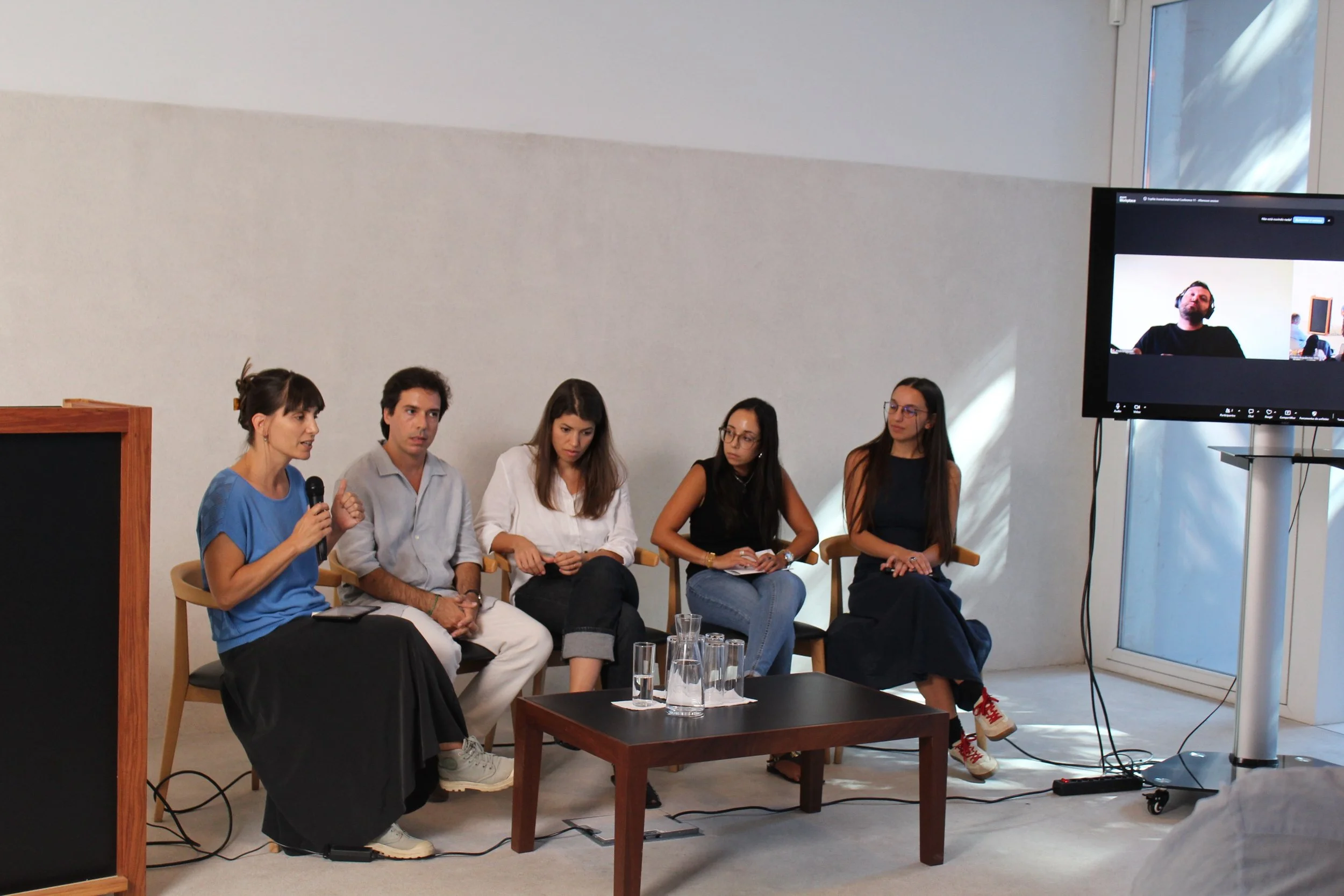
Moderated by Jorge Sobrado, the conversation will bring together Hugh Campbell, Cristina Gastón, Judit Torres and Gabriel Hernández.

This will be followed by A City for Everyone | Seeing Photography, with Aníbal Lemos and José Manuel Rodrigues, in a conversation devoted to the relationships between photography, architecture, society and the human experience of the city, with Olívia Marques da Silva proposed as moderator.

Programme — 26 September 2026

09:30–09:35 — Opening of the Parallel Programme

Olívia Marques da Silva

Culture Centre, Technical University of Porto — UTP / FMAD / ID+

A brief introduction to the programme for the conference’s second day and its relationship to the public, editorial and cultural dimensions of Landscapes of Repair.

09:35–09:45 — LFA Award 2026–27 | Presentation of the 2nd Edition

Pedro Leão Neto

Presentation of the 2nd edition of the Luis Ferreira Alves Photography Award — A Contemporary Look at Architecture, whose Open Call officially launched on 25 September 2026, introducing the award’s international framework and objectives, the new cycle of submissions, and the associated programme of prizes, exhibition, publication and dissemination.

09:45–11:10 — LFA Talks — Publishing an Award, Extending a Legacy

Moderator: Jorge Sobrado

Guests:

Hugh Campbell

Cristina Gastón

Judit Torres

Gabriel Hernández

11:10–11:30 — Coffee Break

11:30–13:00 — A City for Everyone | Seeing Photography

Aníbal Lemos and José Manuel Rodrigues

Proposed moderator: Olívia Marques da Silva

13:00–14:30 — Lunch Break

From the Conference to the Territory — Visit to Quinta da Conceição

During the afternoon, the conference moves from the Culture Centre to Quinta da Conceição, in Matosinhos, shifting the discussion from theoretical and visual reflection towards a situated observation of the territory.

14:30 — Departure for Quinta da Conceição

15:00–17:30 — Study Visit — Quinta da Conceição | From Heritage Object to Civic Landscape: Architecture, Use, Maintenance and Repair

17:30 — Closing of the Conference on Site

The visit proposes an understanding of Quinta da Conceição not simply as a heritage ensemble, but as a living civic landscape, where historic heritage, modern architecture, public space, vegetation, water, everyday uses and processes of maintenance continually intersect.

By concluding in the field, the conference establishes a direct relationship between critical visibility and experience, while also anticipating some of the questions that will structure the next thematic cycle of Sophia Journal: how might we learn to repair through attentiveness to place, visual research, situated pedagogies and a collective responsibility towards the spaces we inhabit?

Sophia Journal: Research, Image and International Debate

Sophia Journal has increasingly established itself as an international forum for research and critical debate at the intersections between architecture, photography, film and other visual practices.

Its international conferences reinforce this dimension, creating opportunities for encounters between researchers, architects, artists, photographers, students and professionals from different geographical and disciplinary contexts, in a dialogue closely connected to the journal’s academic and editorial programme.

The abstracts of the contributions presented at the conference will be brought together in an e-book of abstracts, which will also include the conference programme and will be made freely available through the Sophia Journal OJS platform.

Subsequently, the contributions considered most relevant, developed and expanded as full research papers or visual essays and subject to the appropriate editorial and peer-review processes, will be published in:

Sophia Journal — Volume 11, No. 1

Landscapes of Repair: The Invisible City: Manplan and Contemporary Forms of Repair

Through this 11th International Conference, Sophia Journal seeks to create a space in which critical memory, visual research and design imagination can converge around an increasingly urgent question: how can we recognise what needs to be repaired, and how might architecture and images contribute to new forms of attention, care and collective responsibility?

For further information:

info.sophiajournal@arq.up.pt


Sophia Journal Vol. 11 anuncia conferência internacional na OASRN em torno de Paisagens de Reparação


Sophia Journal Vol. 11 anuncia conferência internacional na OASRN em torno de Paisagens de Reparação

A Cidade Invisível: Manplan e Formas Contemporâneas de Reparação
Ordem dos Arquitectos – Secção Regional Norte (OASRN) |25-26 SETEMBRO 2026
 

PT/ENG

ORGANIZAÇÃO
Ordem dos Arquitectos — Secção Regional Norte (OASRN)
Faculdade de Arquitectura da Universidade do Porto (FAUP) | CENP — Centro de Estudos Nuno Portas
Centro de Cultura, Universidade Técnica do Porto — UTP / FMAD / ID+

COORDENAÇÃO
Pedro Leão Neto — FAUP

EDITORES CONVIDADOS
Cristina Gastón — ETSAB–UPC
Hugh Campbell — University College Dublin

EDITORAS
Ana Miriam Rebelo — FAUP
Maria Neto — FAUP
Raquel Paulino — FAUP

PROGRAMA PARALELO
Olívia Marques da Silva — Centro de Cultura, Universidade Técnica do Porto — UTP / FMAD / ID+

Jorge Sobrado - Vereador da Cultura e do Património da Câmara Municipal do Porto

A 11.ª Conferência Internacional Sophia Journal — Paisagens de Reparação: A Cidade Invisível: Manplan e Formas Contemporâneas de Reparação realiza-se nos dias 25 e 26 de setembro de 2026, no Porto, com um programa presencial e com transmissão online.

No dia 25 de setembro, o programa científico terá lugar na Ordem dos Arquitectos — Secção Regional Norte (OASRN). No dia 26 de setembro, o programa paralelo decorrerá no Centro de Cultura, Universidade Técnica do Porto — UTP, seguindo-se, durante a tarde, uma visita à Quinta da Conceição, em Matosinhos.

Ao longo dos dois dias, a conferência reunirá investigadores, arquitetos, fotógrafos, artistas, editores e outros profissionais em torno das relações entre arquitetura, imagem, cidade e formas contemporâneas de reparação.

Integrada no quarto ciclo temático da Sophia Journal, a conferência propõe uma compreensão alargada da reparação. Mais do que uma intervenção técnica sobre edifícios, infraestruturas ou paisagens, esta é entendida como uma prática simultaneamente ética, social, cultural, ecológica e imaginativa, capaz de reconhecer vulnerabilidades, tornar visíveis situações frequentemente negligenciadas e reativar relações entre pessoas, lugares e instituições.

A conferência toma como ponto de partida o legado crítico de Manplan, a série publicada por The Architectural Review entre 1969 e 1970. Ao confrontar as promessas da arquitetura e do planeamento com as condições concretas da vida quotidiana, Manplan deslocou o centro da representação arquitetónica do edifício isolado para a experiência humana e para os sistemas sociais, políticos e económicos que condicionam o habitar.

Mais de cinquenta anos depois, este olhar permanece particularmente atual perante as desigualdades urbanas, a precariedade habitacional, a deterioração das infraestruturas, as pressões ambientais, a invisibilidade do trabalho de manutenção e outras formas, por vezes menos evidentes, de desgaste coletivo.

Tornar visível a cidade invisível

A Cidade Invisível não designa aqui um território ausente, mas antes um conjunto de experiências, relações, práticas e tensões que tendem a permanecer fora dos regimes dominantes de visibilidade: os usos ordinários do espaço, as formas informais de adaptação, as memórias ameaçadas, os vazios e interstícios urbanos, os vestígios materiais e as redes de cuidado que sustentam a vida coletiva.

Tornar estas realidades visíveis implica também refletir sobre as próprias formas de representação: quem produz as imagens, quem é representado, através de que linguagens e enquadramentos e com que consequências.

É neste sentido que a fotografia, o filme, a cartografia crítica e o ensaio visual são entendidos pela Sophia Journal não apenas enquanto meios de documentação, mas enquanto instrumentos de investigação e produção de conhecimento. Estes podem revelar desigualdades e transformações, acompanhar processos de desgaste ou abandono, relacionar diferentes temporalidades e, simultaneamente, contribuir para imaginar outras formas de cuidado, reparação e transformação.

A conferência reúne artigos e ensaios visuais que exploram estas questões através de casos de estudo situados em diferentes cidades, paisagens, edifícios e comunidades.

Do legado de Manplan às práticas contemporâneas de reparação

A 11.ª Conferência Internacional dá continuidade ao programa Wide-Angle View: A Arquitetura como Espaço Social na Série Manplan 1969–70, desenvolvido na OASRN ao longo de 2026.

A exposição Wide-Angle View, inaugurada a 27 de fevereiro, revisitou a influente série fotográfica Manplan e foi acompanhada, entre março e maio, por um programa de visitas, conversas públicas, ações educativas e mesas-redondas que procuraram colocar a memória crítica desta experiência editorial em diálogo com questões contemporâneas relacionadas com a habitação, a cidade, o espaço público e a representação.

A conferência não encerra esse processo. Pelo contrário, amplia-o, aproximando o legado de Manplan de práticas contemporâneas de investigação visual, representação e intervenção e interrogando de que modo olhar, documentar e tornar visível pode constituir já uma primeira forma de reparação.

25 de setembro — Programa científico

O primeiro dia concentra o núcleo científico da conferência e terá lugar no auditório da . Ordem dos Arquitectos — Secção Regional Norte.

Depois da abertura institucional pela Ordem dos Arquitectos — Secção Regional Norte, José Pedro Sousa em representação da FAUP fará uma breve introdução ao Ciclo Sophia Journal na FAUP e, em seguida, Pedro Leão Neto apresentará oficialmente a chamada para a Sophia Journal Vol. 12 — Learning Repair: Situated Pedagogies, Civic Landscapes and Visual Practices, dando assim continuidade à reflexão iniciada em Landscapes of Repair.

Segue-se a keynote de Valeria Carullo, curadora de fotografia do Royal Institute of British Architects — RIBA, com uma intervenção centrada no arquivo Manplan, nas políticas de visibilidade e na responsabilidade pública da representação arquitetónica.

A participação de Valeria Carullo prolonga a colaboração desenvolvida no âmbito de Wide-Angle View, cuja exposição no Porto resultou de um diálogo com a investigação curatorial anteriormente realizada no RIBA.

Ao longo do dia terão lugar quatro painéis temáticos, articulando artigos científicos e ensaios visuais em torno da memória e do arquivo, do património e da reutilização, das cartografias críticas e das práticas de cuidado, manutenção e reparação.

Programa — 25 de setembro de 2026

09h15 — Receção e Registo

09h30–09h40 — Abertura Institucional

Bruno Marques

Presidente do Conselho Diretivo Regional do Norte da Ordem dos Arquitectos

09h40–09h50 — Introdução ao Ciclo Sophia Journal na FAUP

José Pedro Sousa

em representação da FAUP

09h50–10h00 — Lançamento Oficial da Chamada para o Sophia Journal Vol. 12

Learning Repair: Situated Pedagogies, Civic Landscapes and Visual Practices

Pedro Leão Neto

em representação do CENP

10h00–10h45 — CONFERÊNCIA PRINCIPAL | KEYNOTE

Valeria Carullo

Revisiting Manplan: Archive, Visibility and Public Responsibility


10h45–11h05 — Pausa para Café


11h05–12h45 — PAINEL 1

Tornar Visível a Cidade Invisível: Memória, Imagem e Políticas da Representação

Pergunta orientadora

O que podem as imagens tornar visível que a representação arquitetónica convencional deixa por ver — e em que circunstâncias pode a própria visibilidade tornar-se uma forma de reparação?

Moderação: Hugh Campbell & Cristina Gastón

Comunicações

Sunyoung Park

Photosculpture as a Form of Care and Repair: Re-materialising the Invisible City after Manplan

Ljubica Miric

Remembering the Future City: From Imagination to the Urban Condition

Jared Fantasia & João Soares

Lessons from the Ground: An Architectural Essay on Robert Smithson and the Reclamation of the Post-Industrial Landscape

Ensaio Visual

Aislinn McCarthy & Evelyn Ågren

A Visual Account of Home as a Situated Place of Resistance

Adrian Aleson & Fernanda del Villar

[Re]Building a Wall

Discussão


12h45–13h45 — Pausa para Almoço


13h45–15h15 — PAINEL 2

Reparar o Construído: Património, Memória e Práticas de Reinscrição

Pergunta orientadora

Como pode a arquitetura intervir sobre aquilo que permanece sem apagar as histórias, memórias e ausências através das quais o ambiente construído adquiriu significado?

Moderação: Ana Miriam Rebelo

Comunicações

Ana Sofia Pinto & João Pedro Bragança

Back to What Never Was: The Re-inscription of the Monastery of Santa Maria do Mar

Andrea Crudeli

Adaptive Reuse as Critical Repair: The Case of Massimo Carmassi in Pisa

Ana João Costa e Silva

Preserve the Pozzuoli Cathedral: Between Safeguarding the Remaining and Perpetuating the Vanished

Ensaio Visual

Diana Nichita

Visibility as Repair: Reading Bucharest’s Hidden Layer

Discussão


15h15–15h30 — Pausa para Café


15h30–17h10 — PAINEL 3

Cartografias Críticas: Periferias, Espaços Comuns e Territórios Híbridos

Pergunta orientadora

Como podem formas alternativas de cartografia e investigação visual tornar legíveis territórios periféricos, informais e comuns sem reduzir a complexidade das vidas, práticas e sistemas que os produzem?

Moderação: Maria Neto

Comunicações

Paulo Moreira

Counter-Mapping as Reparative Practice: Introducing 3D Voice and the Politics of Spatial Representation in Stjwetla, Johannesburg

Francisca Machado & Eduardo Fernandes

Repairing with Memory: Informal Practices and the Rehabilitation of the Ilha da Bela Vista

Francisco Côrte

Food and Leisure: Visual Practices for Mending the City/Countryside Relationship

Ensaios Visuais

Ana Brandão & João Cunha Borges

Mapping Ordinary Public Spaces: A Visual Investigation of Lisbon’s Suburbs

Tomita da Silva

Layers in Motion: Visualizing Hybrid Landscapes on Porto Metropolitan Area’s Northern Seaboard

Discussão


17h10–17h20 — Breve Intervalo


17h20–18h45 — PAINEL 4

Práticas Reparadoras: Cuidado, Coabitação e Futuros Possíveis

Pergunta orientadora

O que significa praticar a reparação — não como restabelecimento de uma condição anterior, mas como criação de novas relações de cuidado, reconhecimento, coabitação e possibilidade?

Moderação: Raquel Paulino

Comunicações

Mounira Zennia

“Public Use” – Strategies of Repair in Cameron Rowland’s Amt 45 i

Filipe Lourenço

Architecture as Identity Repair: Visibility, Practice, and Post-Independence Algeria (1962–1979)

António Olivera

Speculative Repair and Urban Dysfunction: A Wittgensteinian Reading of the Contemporary City through Lisbon

Ensaio Visual

Anna Positano / Corpi Idrici / Gaia Cambiaggi

Underground Habitats and Post-Industrial Ecosystems

Discussão


18h45–19h00 — Considerações Finais e Síntese

Cristina Gastón & Hugh Campbell

Editores Convidados

Ana Miriam Rebelo, Maria Neto & Raquel Paulino

Editoras

26 de setembro — Programa paralelo: Da investigação à dimensão pública e editorial

No segundo dia, a conferência que terá lugar no auditório do Centro de Cultura, Universidade Técnica do Porto — UTP abre-se a uma dimensão mais editorial, profissional e pública, prolongando os temas científicos através de dois encontros dedicados à fotografia, à arquitetura, à publicação e à construção de legados culturais.

A manhã começa com a sessão LFA Talks — Publicar um Prémio, prolongar um legado, dedicada à publicação LFA Award: A Contemporary Look at Architecture e à forma como um prémio internacional de fotografia pode ultrapassar o momento competitivo, gerando arquivo, edição, debate crítico e continuidade cultural.

Moderada por Jorge Sobrado, a conversa contará com Hugh Campbell, Cristina Gastón, Judit Torres e Gabriel Hernández

Segue-se Cidade de Todos | Ver Fotografia, com Aníbal Lemos e José Manuel Rodrigues, numa conversa dedicada às relações entre fotografia, arquitetura, sociedade e experiência humana da cidade, com moderação proposta de Olívia Marques da Silva.

Programa — 26 de setembro de 2026

09h30–09h35 — Abertura do Programa Paralelo

Olívia Marques da Silva
Centro de Cultura, Universidade Técnica do Porto — UTP / FMAD / ID+

Breve enquadramento do programa do segundo dia da conferência e da sua articulação com as dimensões pública, editorial e cultural de Paisagens de Reparação.

09h35–09h45 — LFA Award 2026–27 | Apresentação da 2.ª edição

Pedro Leão Neto

Apresentação da 2.ª edição do Luis Ferreira Alves Photography Award — Um Olhar Contemporâneo sobre a Arquitetura, cuja Open Call abriu oficialmente a 25 de setembro de 2026, dando a conhecer o enquadramento internacional do prémio, os seus objetivos, o novo ciclo de candidaturas e o programa associado de prémios, exposição, publicação e divulgação.

09h45–11h10 — LFA Talks — Publicar um Prémio, prolongar um legado

Moderação: Jorge Sobrado

Convidados:
Hugh Campbell
Cristina Gastón
Judit Torres
Gabriel Hernández

11h10–11h30 — Pausa para café

11h30–13h00Cidade de Todos | Ver Fotografia

Aníbal Lemos e José Manuel Rodrigues

Moderação proposta: Olívia Marques da Silva

13h00–14h30 — Pausa para almoço

Da conferência para o território — visita à Quinta da Conceição

Durante a tarde, a conferência desloca-se do Centro de Cultura para a Quinta da Conceição, em Matosinhos, propondo uma passagem da discussão teórica e visual para a observação situada do território.

14h30 — Partida para a Quinta da Conceição

15h00–17h30Visita de estudo — Quinta da Conceição | Do objeto patrimonial à paisagem cívica: arquitetura, uso, manutenção e reparação

17h30 — Encerramento da conferência no local

A visita propõe uma leitura da Quinta da Conceição não apenas enquanto conjunto patrimonial, mas como uma paisagem cívica viva, onde património histórico, arquitetura moderna, espaço público, vegetação, água, usos quotidianos e processos de manutenção se cruzam continuamente.

Ao terminar no terreno, a conferência estabelece uma relação direta entre visibilidade crítica e experiência, antecipando simultaneamente algumas das questões que irão estruturar o próximo ciclo da Sophia Journal: como aprender a reparar através da atenção aos lugares, da investigação visual, de pedagogias situadas e de uma responsabilidade coletiva perante os espaços que habitamos.

Sophia Journal: investigação, imagem e debate internacional

A Sophia Journal tem vindo a afirmar-se como um fórum internacional dedicado à investigação e ao debate crítico nas interseções entre arquitetura, fotografia, cinema e outras práticas visuais.

As suas conferências internacionais reforçam esta dimensão, criando oportunidades de encontro entre investigadores, arquitetos, artistas, fotógrafos, estudantes e profissionais de diferentes contextos geográficos e disciplinares, num diálogo estreitamente articulado com a publicação científica e editorial da revista.

Os resumos das comunicações apresentadas na conferência serão reunidos num e-book de abstracts, que incluirá igualmente o programa e ficará disponível gratuitamente através da plataforma OJS da Sophia Journal.

Posteriormente, as contribuições consideradas mais relevantes, desenvolvidas e aprofundadas na forma de artigos científicos ou ensaios visuais completos e sujeitas aos correspondentes processos editoriais e de revisão por pares, integrarão a edição:

Sophia Journal — Volume 11, No. 1
Landscapes of Repair: The Invisible City: Manplan and Contemporary Forms of Repair

Com esta 11.ª Conferência Internacional, Sophia Journal procura, assim, criar um espaço onde memória crítica, investigação visual e imaginação projetual possam convergir em torno de uma questão cada vez mais urgente: como reconhecer aquilo que precisa de ser reparado e como construir, através da arquitetura e das imagens, novas formas de atenção, cuidado e responsabilidade coletiva.

Para mais informações:

info.sophiajournal@arq.up.pt


Sophia Journal Vol. 11 Announces International Conference at OASRN on Landscapes of Repair


Sophia Journal Vol. 11 Announces International Conference at OASRN on Landscapes of Repair

Order of Architects – Northern Regional Section (OASRN) | September 25-26, 2026

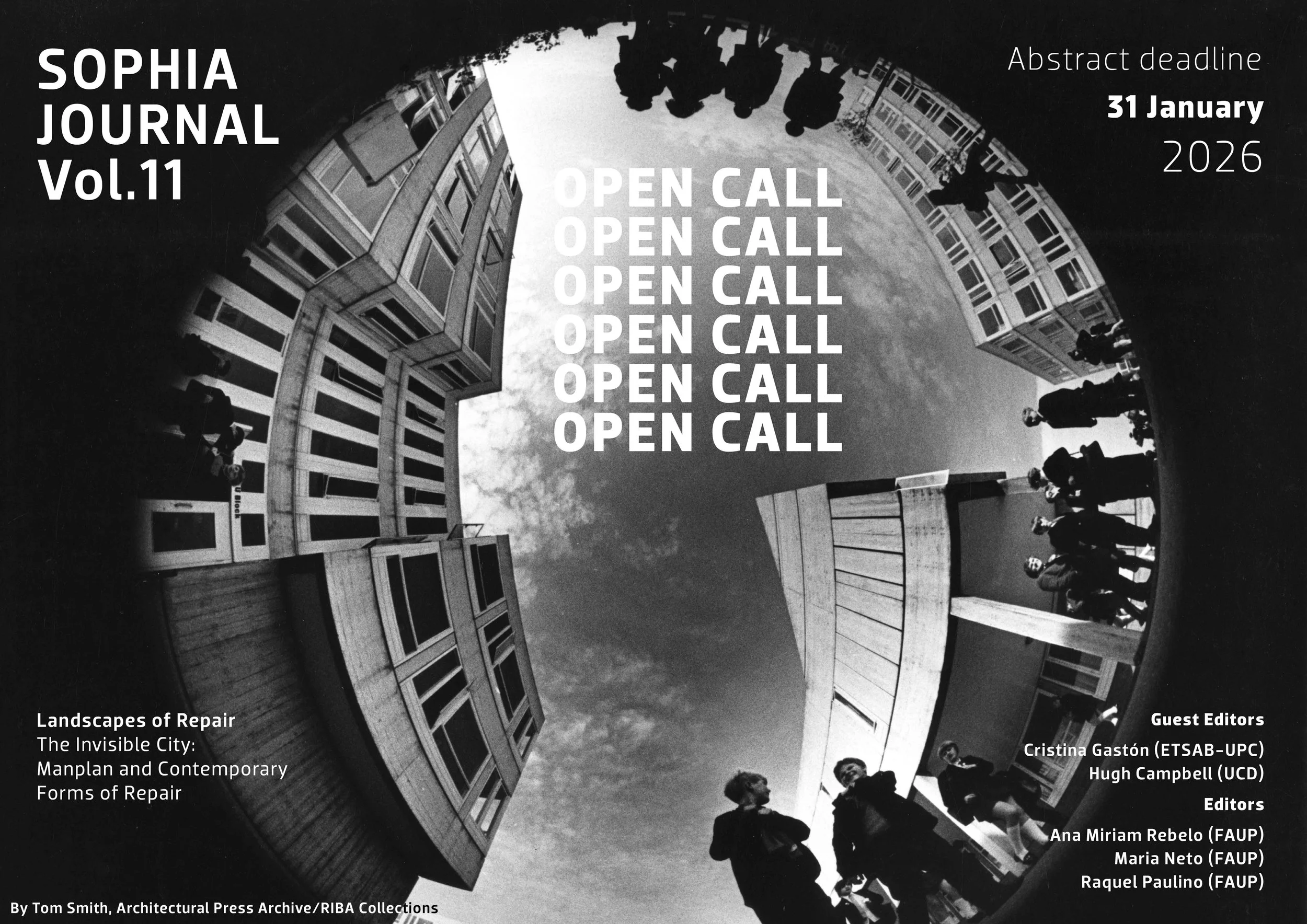
Abstract deadline: 31 JANUARY 2026

PT/ENG

ORGANIZATION

OASRN

FAUP | CENP | AAI

UTP / FMAD / ID+

COORDINATION

Pedro Leão Neto (FAUP)

ORGANIZING COMMITTEE / EDITORS

Ana Miriam Rebelo (FAUP)

Maria Neto (FAUP/UBI)

Raquel Paulino (FAUP)

Cristina Gastón (ETSAB-UPC) - Guest Editor

Hugh Campbell (UCD) - Guest Editor

Parallel Program

Olívia Marques da Silva (Centro de Cultura, Universidade Técnica do Porto — UTP / FMAD / ID+)

The international conference Sophia Journal Vol. 11 — Landscapes of Repair. The Invisible City: Manplan and Contemporary Forms of Repair will take place in September 2026 at the Order of Architects – Northern Regional Section, on September 25th (morning and afternoon) and September 26th (morning).

Part of the fourth thematic cycle of the Sophia Journal, dedicated to Landscapes of Repair, the conference proposes a broad reflection on the role of photography, cinema, and other visual practices in the critical reading of contemporary cities and territories. The event will continue the work developed by the Sophia Journal as an editorial and scientific platform dedicated to the relationship between architecture, art, and image, especially how visual media can contribute to the research, documentation, and transformation of built space.

This initiative also continues and reinforces the success of the parallel program and events already held within the framework of the exhibition Wide-Angle View: Architecture as Social Space in the Manplan Series 1969–70, consolidating the partnership between FAUP, through the Nuno Portas Studies Center, in particular the Architecture, Art and Image research group and the Sophia Journal editorial and scientific project, and the Order of Architects – Northern Regional Section.

The Wide-Angle View exhibition, inaugurated at OASRN on February 27th, revisited the influential photographic series Manplan — originally published by The Architectural Review magazine between 1969 and 1970 — which sought to critically analyze the role of architecture in social organization and contemporary living conditions. The exhibition's parallel program, held between March 12th and May 29th, 2026, included guided tours, public talks, educational activities, and the HABITAR roundtable series. Between Project and Life: Promoting a dialogue between the critical memory of Manplan and the current challenges of the city and housing.

The Sophia Journal Vol. 11 conference delves deeper into this framework, using the Manplan series as a starting point to revisit a question that remains urgent: how can architecture, planning, and visual practices make visible the social, political, ecological, and material pressures that shape the contemporary city? More than fifty years later, Manplan's legacy continues to challenge architecture by denouncing the mismatch between project intentions and lived reality, placing people, ways of living, and urban conditions at the center of the image.

Under the title "The Invisible City: Manplan and Contemporary Forms of Reparation," the conference will explore how photography, film, and visual essays can reveal inequalities, systemic failures, processes of urban decay, and possibilities for transformation. In the current context, marked by the climate crisis, social precarity, deteriorating infrastructure, and less visible forms of collective exhaustion, reparation emerges as a task that is simultaneously ethical, material, ecological, and imaginative.

Sophia Journal has established itself as an international forum for debate around architecture, photography, film, and visual practices. The 7th Sophia Journal International Conference, dedicated to Landscapes of Care, was held in 2022 at the Fernando Távora Auditorium, FAUP, with a program focused on the dialogue between architecture, art, and image. The launch of Sophia Journal Vol. 8, hosted by OASRN, also reinforced the importance of the journal as a meeting place for students, researchers, professionals, and international editors, highlighting the role of photography and film in valuing places, processes, and architectural and landscape heritage.

The Sophia Journal Vol. 11 No. 1 edition features Cristina Gastón (ETSAB-UPC) and Hugh Campbell (University College Dublin) as guest editors, and Ana Miriam Rebelo, Maria Neto, and Raquel Paulino (FAUP) as editors.

The conference will also include Valeria Carullo as a keynote speaker, continuing the collaboration developed within the Wide-Angle View project. A photography curator at the Royal Institute of British Architects (RIBA), Valeria Carullo accompanied the exhibition's opening at OASRN with a guided tour, reinforcing the connection between the presentation in Porto and the curatorial research.

With this new conference, Sophia Journal proposes a space for debate on the urgent need to repair a fragmented planet, questioning the contemporary city from its visible and invisible layers. Between critical memory, visual investigation, and design imagination, Landscapes of Repair invites authors, researchers, architects, artists, and image professionals to consider new forms of witnessing, attention, and coexistence.

For any queries:

Please contact our Editors at info.sophiajournal@arq.up.pt


Sophia Journal Vol. 11 anuncia conferência internacional na OASRN em torno de Paisagens de Reparação


Sophia Journal Vol. 11 anuncia conferência internacional na OASRN em torno de Paisagens de Reparação

Ordem dos Arquitectos – Secção Regional Norte (OASRN) |25-26 SETEMBRO 2026 

PT/ENG

ORGANIZAÇÃO
OASRN
FAUP | CENP | AAI
UTP / FMAD / ID+

COORDENAÇÃO
Pedro Leão Neto (FAUP)

COMISSÃO ORGANIZADORA / EDITORES
Ana Miriam Rebelo (FAUP)
Maria Neto (FAUP/UBI)
Raquel Paulino (FAUP)

Cristina Gastón (ETSAB-UPC) - Guest Editor
Hugh Campbell (UCD) - Guest Editor

Programa Paralelo
Olívia Marques da Silva (Centro de Cultura, Universidade Técnica do Porto — UTP / FMAD / ID+)

A conferência internacional Sophia Journal Vol. 11 — Paisagens de Reparação. A Cidade Invisível: Manplan e Formas Contemporâneas de Reparação terá lugar em setembro de 2026, na Ordem dos Arquitectos — Secção Regional Norte, decorrendo no dia 25 de setembro, de manhã e de tarde, e no dia 26 de setembro, durante a manhã.

Integrada no quarto ciclo temático da Sophia Journal, dedicado às Paisagens de Reparação, a conferência propõe uma reflexão alargada sobre o papel da fotografia, do cinema e de outras práticas visuais na leitura crítica das cidades e territórios contemporâneos. O encontro dará continuidade ao trabalho desenvolvido pela Sophia Journal enquanto plataforma editorial e científica dedicada à relação entre arquitetura, arte e imagem, em particular à forma como os meios visuais podem contribuir para a investigação, documentação e transformação do espaço construído.

Esta iniciativa dá também continuidade e reforça o sucesso do programa paralelo e dos eventos já realizados no âmbito da exposição Wide-Angle View: A Arquitetura como Espaço Social na Série Manplan 1969–70, consolidando a parceria entre a FAUP, através do Centro de Estudos Nuno Portas, em particular do grupo de investigação Arquitetura, Arte e Imagem e do projeto editorial e científico Sophia Journal, e a Ordem dos Arquitectos — Secção Regional Norte.

A exposição Wide-Angle View, inaugurada na OASRN no dia 27 de fevereiro, revisitou a influente série fotográfica Manplan — publicada originalmente pela revista The Architectural Review entre 1969 e 1970 —, que procurou analisar criticamente o papel da arquitetura na organização social e nas condições de vida contemporâneas. O programa paralelo da exposição, realizado entre 12 de março e 29 de maio de 2026, integrou visitas guiadas, conversas públicas, ações educativas e o ciclo de mesas-redondas HABITAR. Entre o projeto e a vida, promovendo um diálogo entre a memória crítica da Manplan e os desafios atuais da cidade e da habitação.

A conferência Sophia Journal Vol. 11 aprofunda este enquadramento, partindo da série Manplan para revisitar uma questão que permanece urgente: de que modo podem a arquitetura, o planeamento e as práticas visuais tornar visíveis as pressões sociais, políticas, ecológicas e materiais que moldam a cidade contemporânea? Mais de cinquenta anos depois, o legado da Manplan continua a interpelar a arquitetura, ao denunciar o desfasamento entre as intenções do projeto e a realidade vivida, colocando as pessoas, os modos de habitar e as condições urbanas no centro da imagem.

Sob o título A Cidade Invisível: Manplan e Formas Contemporâneas de Reparação, a conferência procurará discutir como a fotografia, o filme e os ensaios visuais podem revelar desigualdades, falhas sistémicas, processos de desgaste urbano e possibilidades de transformação. No contexto atual, marcado pela crise climática, pela precariedade social, pela deterioração de infraestruturas e por formas menos visíveis de exaustão coletiva, a reparação surge como uma tarefa simultaneamente ética, material, ecológica e imaginativa.

A Sophia Journal tem vindo a afirmar-se como um fórum internacional de debate em torno da arquitetura, da fotografia, do cinema e das práticas visuais. A 7.ª Conferência Internacional Sophia Journal, dedicada a Landscapes of Care, realizou-se em 2022 no Auditório Fernando Távora, na FAUP, com um programa centrado no diálogo entre arquitetura, arte e imagem. Também o lançamento da Sophia Journal Vol. 8, acolhido pela OASRN, reforçou a importância da revista como espaço de encontro entre estudantes, investigadores, profissionais e editores internacionais, sublinhando o papel da fotografia e do filme na valorização dos lugares, dos processos e do património arquitetónico e paisagístico.

A edição Sophia Journal Vol. 11 No. 1 conta com Cristina Gastón — ETSAB-UPC — e Hugh Campbell — University College Dublin — como editores convidados, e com Ana Miriam RebeloMaria Neto e Raquel Paulino, da FAUP, como editoras.

A conferência contará ainda com a participação de Valeria Carullo como keynote speaker, dando continuidade à colaboração desenvolvida no âmbito do projeto Wide-Angle View. Curadora de fotografia no Royal Institute of British Architects — RIBA, Valeria Carullo acompanhou a inauguração da exposição na OASRN com uma visita guiada, reforçando a ligação entre a apresentação no Porto e a investigação curatorial que esteve na base da exposição realizada no RIBA, em 2023. A sua presença na conferência permitirá prolongar criticamente este diálogo em torno da série Manplan, da fotografia de arquitetura e do papel das práticas visuais na leitura social do espaço construído.

Com esta nova conferência, a Sophia Journal propõe um espaço de debate sobre a necessidade urgente de reparar um planeta fragmentado, interrogando a cidade contemporânea a partir das suas camadas visíveis e invisíveis. Entre memória crítica, investigação visual e imaginação projetual, Paisagens de Reparação convida autores, investigadores, arquitetos, artistas e profissionais da imagem a pensar novas formas de testemunho, atenção e coexistência.

Para qualquer dúvida:

Contactar os Editores através de info.sophiajournal@arq.up.pt


Chamada - Paisagens de Reparação - A Cidade Invisível: Manplan e Formas Contemporâneas de Reparação


CHAMADA PARA SUBMISSÕES SOPHIA Journal Vol. 11

Paisagens de Reparação - A Cidade Invisível: Manplan e Formas Contemporâneas de Reparação

Prazo limite: 31 JANEIRO de 2026 

Editores Convidados: Cristina Gastón (ETSAB-UPC), Hugh Campbell (UCD)

Editores: Ana Miriam Rebelo (FAUP), Maria Neto (FAUP), Raquel Paulino (FAUP)

PT/ENG

Prazo limite: 31 de janeiro de 2026
Os autores seleccionados serão notificados até 28 de fevereiro de 2026
Prazo de entrega dos manuscritos (Conferência): 1 de Maio de 2026 
Conferência Internacional (dtbc): 26 junho 2026

Prazo de entrega dos manuscritos (Revista): 1 de outubro de 2026 
Data de publicação (tbc): até dezembro de 2026

Quarto ciclo temático, Paisagens de Reparação

Sophia Journal está a receber submissões para o seu quarto ciclo temático, Paisagens de Reparação, que incentiva uma abordagem humanista à transformação urbana que transcenda considerações puramente económicas. Ao explorar os impactantes campos da fotografia, do cinema e de diversas práticas visuais, procuramos destacar os seus significativos contributos para o discurso em torno da produção arquitetónica e espacial. O nosso objetivo é chamar a atenção para a necessidade urgente de reparar o nosso planeta fragmentado. Ao fazê-lo, procuramos abordar e conectar a multiplicidade de desafios que as cidades e territórios contemporâneos de todo o mundo enfrentam. Estes meios visuais não só documentam, como também se envolvem criticamente com as diversas e complexas questões do nosso tempo, oferecendo perspetivas únicas sobre as crises urbanas e ambientais. Através desta lente, esperamos fomentar uma compreensão mais profunda e inspirar formas reparadoras de coexistência.

Estrutura da Cidade Invisível: Manplan e Formas Contemporâneas de Reparação

Mais de cinquenta anos após o lançamento da série Manplan pela Architectural Review (1969-70), muitas das questões que levantou continuam a ser extremamente relevantes. Criada num período de profunda desilusão com os fracassos da modernidade arquitetónica do pós-guerra, a Manplan tinha como objetivo expor o fosso entre as intenções do projeto e a realidade vivida. Ela desafiou os arquitetos, os planeadores e o público a confrontar as consequências sociais e políticas da tomada de decisões espaciais desta forma. O seu programa era ousado, controverso, construtivo e enraizado na crença de que a arquitetura deve ser responsável perante as necessidades humanas básicas. A fotografia e as práticas visuais podem atuar como ferramentas poderosas para revelar falhas sistémicas, desigualdades e possibilidades de mudança.

Na sua estratégia visual radicalmente centrada no ser humano, a Manplan abandonou as convenções da fotografia arquitetónica imaculada, substituindo-as por imagens granuladas e imersivas extraídas do fotojornalismo. Estas fotografias não se centraram apenas nos edifícios, mas nas pessoas e na forma como habitavam e viviam nos espaços urbanos, tornando-as os principais sujeitos das imagens.

A série fotográfica Manplan revelou um forte sentido de proximidade com a cidade. Uma necessidade de tornar visível o que antes parecia invisível, comunicando a desconexão entre os ideais de planeamento e as condições de vida, e destacando as consequências sociais da negligência urbana. Muitas destas preocupações ressoam fortemente hoje, numa época marcada pela crise climática, pela precariedade social, pela deterioração das infraestruturas e por uma tecnosfera acelerada que pesa sobre as cidades tanto a nível material como simbólico.

Manplan e as Paisagens da Reparação

Dentro do ciclo mais amplo das Paisagens da Reparação, a Sophia Journal Vol. 11 No. 1 baseia-se neste legado, perguntando:

Como podem as práticas visuais e espaciais confrontar mais uma vez as pressões invisíveis que moldam as cidades contemporâneas e como podem contribuir para actos de reparação — materiais, sociais, ecológicos — capazes de aliviar o seu peso?

Tal como a série de 1969-70 captou a Grã-Bretanha num momento de fragilidade social e de transição política, questionamos como é que as práticas visuais contemporâneas podem revelar as fracturas, os fardos e as possibilidades que definem a “cidade invisível” do Antropoceno.

Com a tecnosfera agora estimada em aproximadamente 30 biliões de toneladas — uma massa agregada que rivaliza com a biosfera — os ambientes urbanos estão sobrecarregados não só por betão, aço e emissões de carbono, mas também por intensidades menos visíveis: inércia administrativa, exaustão social, perda ecológica e formas afetivas de deslocação. A reparação, neste contexto, torna-se uma tarefa ética e imaginativa, que exige novas formas de testemunho, atenção e representação.

Call for Papers e Ensaios Visuais

Nesta chamada para artigos e ensaios visuais para o Sophia Journal Vol. 11 No. 1, convidamos submissões que revisitem, expandam ou desafiem o espírito crítico do Manplan, explorando como as práticas visuais e espaciais — particularmente através da lente da fotografia, do cinema e da arquitetura — podem atuar como instrumentos de cuidado, exposição e reparação. Os contributos podem examinar territórios instáveis, revisitar criticamente arquivos urbanos ou propor ações que procurem reparar as cicatrizes impercetíveis das cidades e paisagens contemporâneas.

Os tópicos incluem, mas não se limitam a:

• Revisitando Manplan: releituras contemporâneas da série e a sua relevância para os problemas urbanos atuais

• Visualizar a cidade invisível: estratégias fotográficas e fílmicas para tornar visíveis formas de negligência social, ecológica ou infraestrutural

• Paisagens do cuidado: práticas de manutenção, reparação, coabitação e supervisão socioecológica

• A política da representação: como a produção de imagens molda a compreensão pública das injustiças urbanas e as possibilidades de mudança

• Peso e leveza urbanos: respostas aos fardos materiais e imateriais da tecnosfera

• Coabitação humana e mais-que-humana: narrativas visuais de interdependência, vulnerabilidade e espaços e interações de resiliência

• Arquiteturas espectrais: captar as atmosferas, ausências e ruínas da vida urbana contemporânea

• Reparação especulativa: propostas criativas que confrontam as disfunções contemporâneas e perspetivam um futuro alternativo

• Narrativas visuais e espaciais: perspetivando a reparação ecológica e social em contextos urbanos e rurais

• Estruturas críticas: narrativas visuais críticas que abordam diversos problemas em diferentes culturas e disciplinas
 

Sobre Sophia Journal

Sophia Journal é uma revista académica de acesso aberto com arbitragem científica, publicada pelo Centro de Estudos em Arquitectura e Urbanismo (CEAU) - Grupo de investigação Arquitectura, Arte e Imagem (AAI) da Faculdade de Arquitectura da Universidade do Porto (FAUP), em colaboração com a associação Cityscopio e a sua chancela  editorial scopio Editions.
Criada em 2016, a Sophia Journal publica artigos teóricos e ensaios visuais que investigam e pensam criticamente as intersecções entre a imagem e a arquitectura. Entendemos ambos os termos em sentido lato: a imagem da fotografia, pintura, desenho, cinema, video, televisão, novos media; a arquitectura enquanto paisagem, território, cidade, espacialidade e ambiente construído.

Para qualquer dúvida:

Contactar os Editores através de info.sophiajournal@arq.up.pt


OPEN CALL - Landscapes of Repair - The Invisible City: Manplan and Contemporary Forms of Repair


OPEN CALL SOPHIA JOURNAL VOL. 11

Landscapes of Repair - The Invisible City: Manplan and Contemporary Forms of Repair

Abstract deadline: 31 JANUARY 2026

Guest Editors: Cristina Gastón (ETSAB-UPC), Hugh Campbell (UCD)

Editors: Ana Miriam Rebelo (FAUP), Maria Neto (FAUP), Raquel Paulino (FAUP)

PT/ENG

Abstract deadline: 31 January 2026

Selected authors will be notified by the 28 of February 2026
Manuscript deadline (Conference): 1 May 2026

Conference (dtbc): 26 June 2026

Manuscript deadline (Journal): 1 October 2026
Publication date (tbc): by December 2026

Fourth thematic cycle, Landscapes of Repair
Sophia Journal is currently accepting submissions for its fourth thematic cycle, Landscapes of Repair, encouraging a humanist approach to urban transformation that transcends purely economic considerations. By exploring the impactful realms of photography, film, and various visual practices, we aim to highlight their significant contributions to the discourse surrounding architectural and spatial production. Our goal is to draw urgent attention to the necessity of repairing our fractured planet. In doing so, we seek to address and connect the multitude of challenges that contemporary cities and territories across the world are facing. These visual mediums not only document but also critically engage with the diverse and complex issues of our time, offering unique perspectives on urban and environmental crises. Through this lens, we hope to foster deeper understanding and inspire reparative forms of coexistence.

Framework of The Invisible City: Manplan and Contemporary Forms of Repair

More than fifty years after The Architectural Review launched the Manplan series (1969–70), many of the questions it posed remain urgently relevant. Created during a time of profound disillusionment with the failures of post-war architectural modernity, Manplan aimed to expose the gap between design intentions and lived reality. It challenged architects, planners, and the public to confront the social and political consequences of spatial decision-making in this way. Its programme was daring, controversial, constructive and rooted in the belief that architecture must be accountable to basic human needs. Photography and visual practices can act as potent tools for revealing systemic failures, inequalities, and possibilities for change.

In its radically human-centred visual strategy, Manplan abandoned the conventions of pristine architectural photography, replacing them with grainy, immersive images drawn from photojournalism. These photographs did not just focus on the buildings, but on the people and how they inhabited and lived in city spaces, making them the main subjects of the pictures.

The Manplan photography series revealed a powerful sense of proximity to the city. A necessity to make visible what had seemed invisible before, communicating the disconnection between planning ideals and lived conditions, and highlighting the social consequences of urban neglect. Many of these worries echo powerfully today, in a moment marked by climate crisis, social precarity, infrastructural decay, and an accelerating technosphere that weighs upon cities both materially and symbolically.

Manplan and the Landscapes of Repair

Within the broader Landscapes of Repair cycle, Sophia Journal Vol. 11 No. 1 builds on this legacy by asking:
How can visual and spatial practices once again confront the invisible pressures shaping contemporary cities, and how might they contribute to acts of repair—material, social, ecological—capable of lightening their weight?

Just as the 1969–70 series captured Britain at a moment of social fragility and political transition, we ask how contemporary visual practices can reveal the fractures, burdens, and possibilities that define the “invisible city” of the Anthropocene.

With the technosphere now estimated at approximately 30 trillion tonnes—an aggregate mass that rivals the biosphere—urban environments are weighed down not only by concrete, steel, and carbon emissions but also by less visible intensities: administrative inertia, social exhaustion, ecological loss, and affective forms of displacement. Repair, in this context, becomes an ethical and imaginative task, one that calls for new forms of witnessing, attention, and representation.

Call for Papers and Visual Essays

In this call for papers and visual essays for Sophia Journal Vol. 11 No. 1, we invite submissions that revisit, expand, or challenge the critical spirit of Manplan by exploring how visual and spatial practices - particularly through the lenses of photography, film, and architecture - can act as instruments of care, exposure, and repair. Contributions may examine unstable territories, critically revisit urban archives, or propose actions that seek to repair the imperceptible scars of contemporary cities and landscapes.

Topics include, but are not limited to:

  • Revisiting Manplan: contemporary re-readings of the series and its relevance to contemporary city problems

  • Visualising the invisible city: photographic and filmic strategies for making visible social, ecological, or infrastructural forms of neglect

  • Landscapes of care: practices of maintenance, repair, cohabitation, and socio-ecological oversight

  • The politics of representation: how image-making shapes public understanding of urban unfairnesses and possibilities for change

  • Urban weight and urban lightness: responses to the material and immaterial burdens of the technosphere

  • Human and more-than-human cohabitation: visual narratives of interdependence, vulnerability, and resilience spaces and interactions

  • Spectral architectures: capturing the atmospheres, absences and ruins of contemporary urban life

  • Speculative repair: creative proposals that confront contemporary dysfunctions and envision an alternative future

  • Visual and spatial narratives: envisioning ecological and social repair in urban and rural contexts

  • Critical frameworks: critical visual narratives addressing diverse problems across cultures and disciplines

We welcome submissions from scholars, artists, architects, practitioners, activists, and transdisciplinary researchers who explore these questions through theoretical essays, visual essays, documentary projects, experimental formats, or hybrid research practices.

Towards a Reparative Visual Praxis

By revisiting Manplan's ethos—its attention to lived reality, its refusal of aesthetic sanitisation, and its commitment to social critique—this issue seeks to explore how contemporary visual practices can once again operate as catalysts for public reflection and collective responsibility. In an era when cities grow heavier—materially, symbolically, and ecologically—we ask how image-making can help lighten them: by exposing the unseen, attending to the overlooked, and participating in acts of repair.

We look forward to receiving contributions that illuminate, interrogate, or reimagine the landscapes of care shaping today's and tomorrow's cities.

About Sophia Journal

We are an academic, peer-reviewed journal, published by the Centre for Studies in Architecture and Urbanism (CEAU) / research group Architecture, Art and Image (AAI) at the Faculty of Architecture, University of Porto, Portugal. Created in 2016, Sophia Journal publishes theoretical articles and visual essays that investigate and think critically the intersections between the image and architecture. We understand both terms in a wide sense: the image of photography, painting, drawing, cinema, video, T.V., new media; and architecture as landscape, territory, city, spatiality, built environment.

For any queries:

Please contact our Editors at info.sophiajournal@arq.up.pt


Multimedia Exhibitions CONTRAST (EMC) on the CONTRAST Platform


Multimedia Exhibitions CONTRAST (EMC) on the CONTRAST Platform

PT/ENG

The CONTRAST project has established itself as an innovative platform for contemporary photography, connecting art, architecture and design. Recently, a version of the CONTRAST Multimedia Exhibition (EMC) operator was created with differentiated video content from the Contrast Collective Exhibition menu, with a view to extending the project's reach by allowing multimedia publication of diverse content. The aim is to continue the development and potential of this operator, which has decisive potential for disseminating the project as a whole and promoting the work of young students, researchers and emerging artists.

The version of the CONTRAST Multimedia Exhibitions (EMC) operator has emerged as a central initiative in the project's dissemination programme, integrating the multidisciplinary network of artistic activities and expanding its presence in different contexts. The EMC has the potential to act as a dynamic support for national and international seminars and exhibitions, promoting digital accessibility and communication through online video projection. This format creates an inclusive virtual space, allowing exhibitions to be viewed in real time, creating synergies with the multimedia potential of the Research Catalogue (RC) platform.

Impact and Dissemination

The EMC operator version can play a strategic role in expanding CONTRAST's visibility, fostering collaborations with institutions such as the Department of Architecture at the Lusófona University of Porto and the University of South Wales, among many others, creating synergies with the Research Catalogue (RC) platform. The implementation of the EMC operator version was accompanied by a pilot project with students from the Faculty of Architecture of the University of Porto (FAUP), who explored the potential of the RC platform to enrich creative and research processes.

Synergies and Strategies

The EMC version of the operation has the potential to complement activities such as round tables, conferences and workshops, allowing the video exhibition of the various contents at the venues of the activities, creating a virtuous cycle in which each component reinforces the project as a whole. The use of digital media, such as online video and audio, maximises the impact of physical exhibitions and offers new insights into artistic production.

Recognition and Internationalisation

Over the last four years, CONTRAST has achieved national and international recognition, taking part in events such as the International Conference Images of the Imagined Real (ESMAD/IPP) and the scopio Magazine Architecture, Art and Image conferences (FAUP). Initiatives such as the exhibition at the Portuguese Photography Centre and the launch of the publication at Casa Comum - Rectory of the University of Porto show the project's impact.

With strategic partnerships, such as the collaboration between SCOPIO and CONTRAST, the project strengthens its role as a catalyst for ideas in the world of photography, promoting an interdisciplinary dialogue between academia and society.

Support for Open Classes, Seminars, and Exhibitions

The version of the EMC operative makes it possible to connect different strands of the CONTRAST project, acting as a point of convergence for artistic, pedagogical and investigative content. It also contributes to the formation of a living archive on the CONTRAST platform, documenting artistic and photographic practices in a continuous and innovative way.

The integration with RC makes it possible to create an experimental space for the dissemination of content, promoting a dynamic and sustainable approach to artistic research and practice.

The version of the EMC operation and its future development will allow it to go beyond the exhibition of works, functioning as a transversal support for various pedagogical and artistic initiatives, such as:

  • Open Classes: EMC is used to present and discuss photographic projects, fostering debates between academia and the broader public. Online video projection enhances the visual and multimodal dimensions of artistic research.

  • Seminars and Roundtables: It facilitates the sharing of multimedia content that enriches discussions and illustrates research practices, ensuring accessibility for diverse audiences.

  • Exhibitions in Various Locations: Partner institutions use the EMC to broaden the visibility of works, combining the in-person experience with the global reach of the digital environment.

Strategic Integration and Multidimensional Potential

The EMC connects various aspects of the CONTRAST project, acting as a convergence point for artistic, pedagogical, and research content. Furthermore, it contributes to the formation of a living archive on the CONTRAST platform, documenting artistic and photographic practices continuously and innovatively.

The integration with the RC enables the creation of an experimental space for content dissemination, promoting a dynamic and sustainable approach to artistic research and practice.

EDUCATIONAL INSTITUTIONS AND RESEARCH CENTRES  

The project was selected for funding in the DGARTES creation and publishing project support competition, through the Cityscopio Cultural Association, with joint coordination between ESMAD-uniMAD and FBAUP - i2ADS, and led by FAUP.


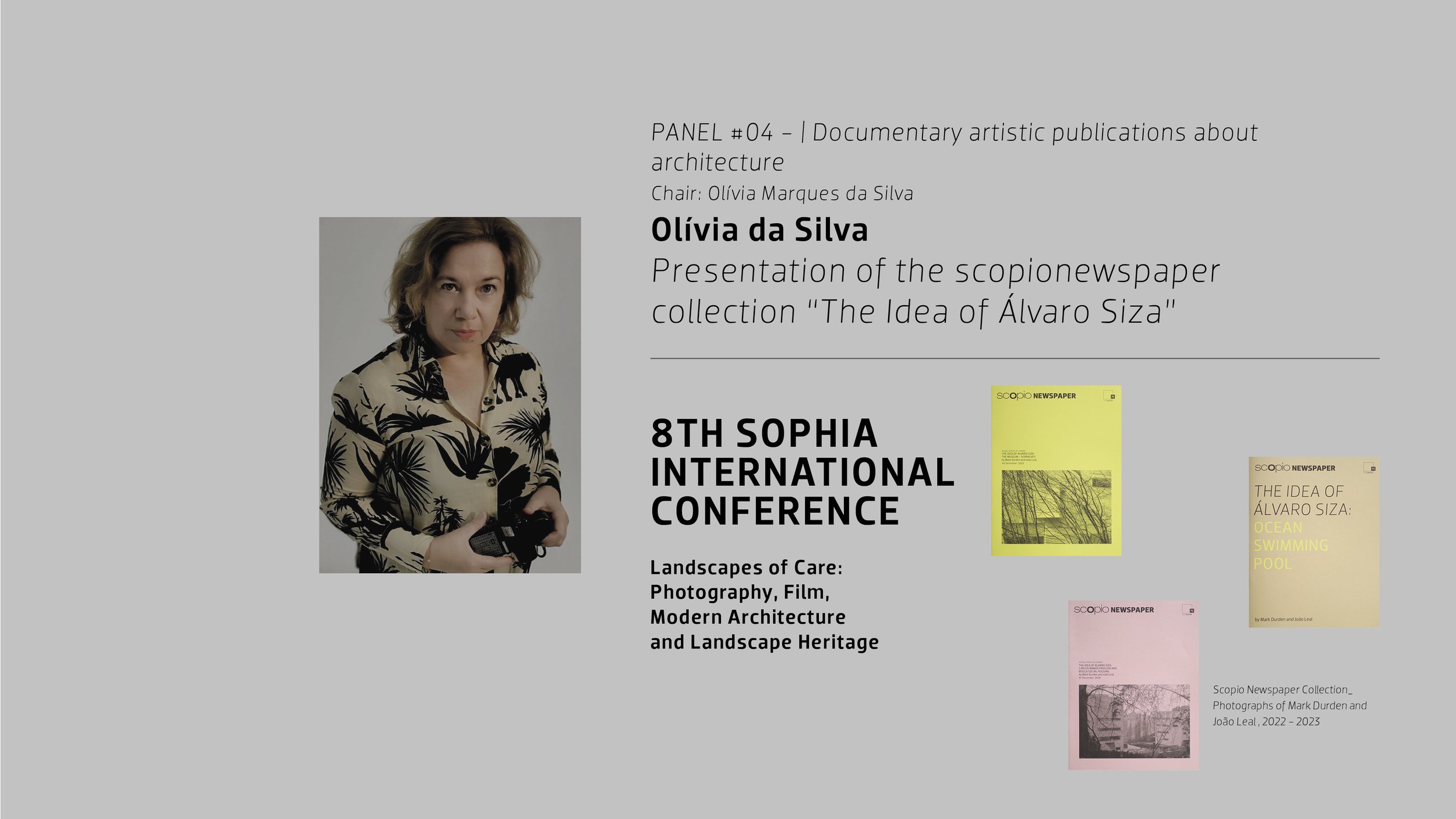
Panel and Round-table Moderator #04 | Documentary artistic publications about architecture - Olívia Marques da Silva


Panel and RouNd-table Moderator
#04 |
Documentary artistic publications about architecture - Olívia Marques da Silva

8th Sophia Journal International Conference
Landscapes of care: photography, film, modern architecture and landscape heritage

PANEL #04| Chair: Olívia Marques da Silva

10h20 - 10h50 | Invited speaker - Nuno Grande
Presentation of the book 'Another Approach on the Works of Álvaro Siza'

10h50 - 11h20 | Moderator - Olívia Marques da Silva
Presentation of the scopionewspaper collection 'The Idea of Álvaro Siza'

11h20 - 11h30 | Interval

11h30 - 13h30 | Chair / moderator - Olívia Marques da Silva
Opening the discussion focused on documentary artistic publications about architecture
Invited speakers
- Paulo Catrica
- Rita Castro Neves

16h45 - 17h15 | Roundtable discussion

8TH SOPHIA JOURNAL INTERNATIONAL CONFERENCE

Organized by: Hugh Campbell, Igea Troiani, João Leal, Mark Durden, Olívia Marques da Silva, Pedro Leão Neto, Rikke Munck Petersen, Teresa Ferreira

On September 15th and 16th, at the Faculty of Architecture of the University of Porto (FAUP), another edition of our Sophia Journal International conference took place, continuing the successful annual cycle of international forums dedicated to the critical exploration of the intersections between image and architecture.

Landscapes of care: photography, film, modern architecture and landscape heritage invited theoretical and field work where architectural photography and film-making are descriptive, analytical and interpretive, communicating original perceptions and new understandings of modern architecture and landscapes. Photography and film projects that will allow us to show how modern buildings and landscapes have responded to and reflect the local conditions of their production and importance.  Projects which critique and expand our understanding of what constitutes modern architecture and landscape, in terms of its language, locations, functions, creators, patrons and public.

Photography and film work that can allow us to see the social dimension of architecture and landscape, to understand architecture as Alvar Aalto did, “as a great synthetic process of combining thousands of definite human functions” to contribute to a greater understanding of modern architecture’s and landscape’s potential for a more ecological and sustainable balance and interplay between architecture and nature.

The Conference, on the 15th of September, will be presenting the selection of the best theoretical papers and visual essays submitted to our Call. Being organised in 3 panels, it will constitute a live forum for debating photography, film, modern architecture and landscape heritage, among other stimulating issues central to discuss what we have proposed in our Call.

Program and Book of abstracts

CONFERENCE VIDEO VIA YOUTUBE @FAUP

+ info

8th SOPHIA INTERNATIONAL CONFERENCE WEBSITE
Research group 'Arquitectura, Arte e Imagem — AAI'  CEAU.FAUP

SCOPIO Network

FAUP SIGARRA


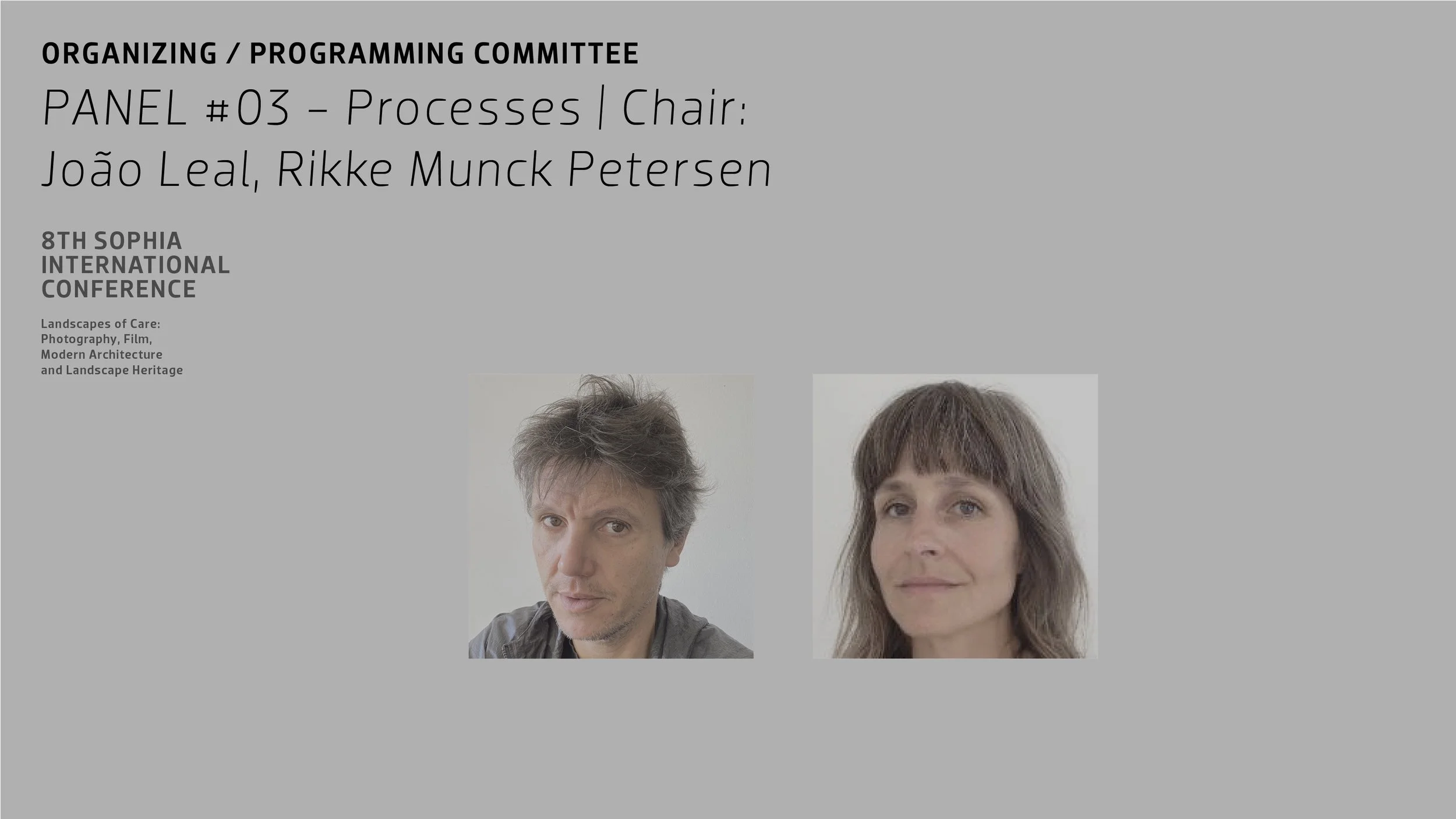
Panel and Round-tables Moderators #03 | Processes | João Leal - Rikke Munck


Panel and RouNd-table Moderators
#03 | PROCESSES |
JOÃO LEAL - RIKKE MUNCK PETERSEN

8th Sophia Journal International Conference
Landscapes of care: photography, film, modern architecture and landscape heritage

PANEL #03| Chair: João Leal, Rikke Munck Petersen
14h45 - 15h00 | Presentation 9: Ciro Miguel
Ektachrome Color: White buildings, Red Dust

15h15 - 15h30 | Presentation 10: Corné Strootman
Filmmaking as a tool for landscape architecture: Analysing and mediating the spatial impact of agricultural techniques

15h30 - 16h00 | Interval

16h15 - 16h30 | Presentation 11: Millicent Gunner  [Visual Essays]
Walking the Table : Caring-with landscape

16h30 - 16h45 | Presentation 12: Tonia Carless [Visual Essays]
Unsettling in Norrlands

16h45 - 17h15 | Roundtable discussion

8TH SOPHIA JOURNAL INTERNATIONAL CONFERENCE

Organized by: Hugh Campbell, Igea Troiani, João Leal, Mark Durden, Olívia Marques da Silva, Pedro Leão Neto, Rikke Munck Petersen, Teresa Ferreira

On September 15th and 16th, at the Faculty of Architecture of the University of Porto (FAUP), another edition of our Sophia Journal International conference took place, continuing the successful annual cycle of international forums dedicated to the critical exploration of the intersections between image and architecture.

Landscapes of care: photography, film, modern architecture and landscape heritage invited theoretical and field work where architectural photography and film-making are descriptive, analytical and interpretive, communicating original perceptions and new understandings of modern architecture and landscapes. Photography and film projects that will allow us to show how modern buildings and landscapes have responded to and reflect the local conditions of their production and importance.  Projects which critique and expand our understanding of what constitutes modern architecture and landscape, in terms of its language, locations, functions, creators, patrons and public.

Photography and film work that can allow us to see the social dimension of architecture and landscape, to understand architecture as Alvar Aalto did, “as a great synthetic process of combining thousands of definite human functions” to contribute to a greater understanding of modern architecture’s and landscape’s potential for a more ecological and sustainable balance and interplay between architecture and nature.

The Conference, on the 15th of September, will be presenting the selection of the best theoretical papers and visual essays submitted to our Call. Being organised in 3 panels, it will constitute a live forum for debating photography, film, modern architecture and landscape heritage, among other stimulating issues central to discuss what we have proposed in our Call.

Program and Book of abstracts

CONFERENCE VIDEO VIA YOUTUBE @FAUP

+ info

8th SOPHIA INTERNATIONAL CONFERENCE WEBSITE
Research group 'Arquitectura, Arte e Imagem — AAI'  CEAU.FAUP

SCOPIO Network

FAUP SIGARRA


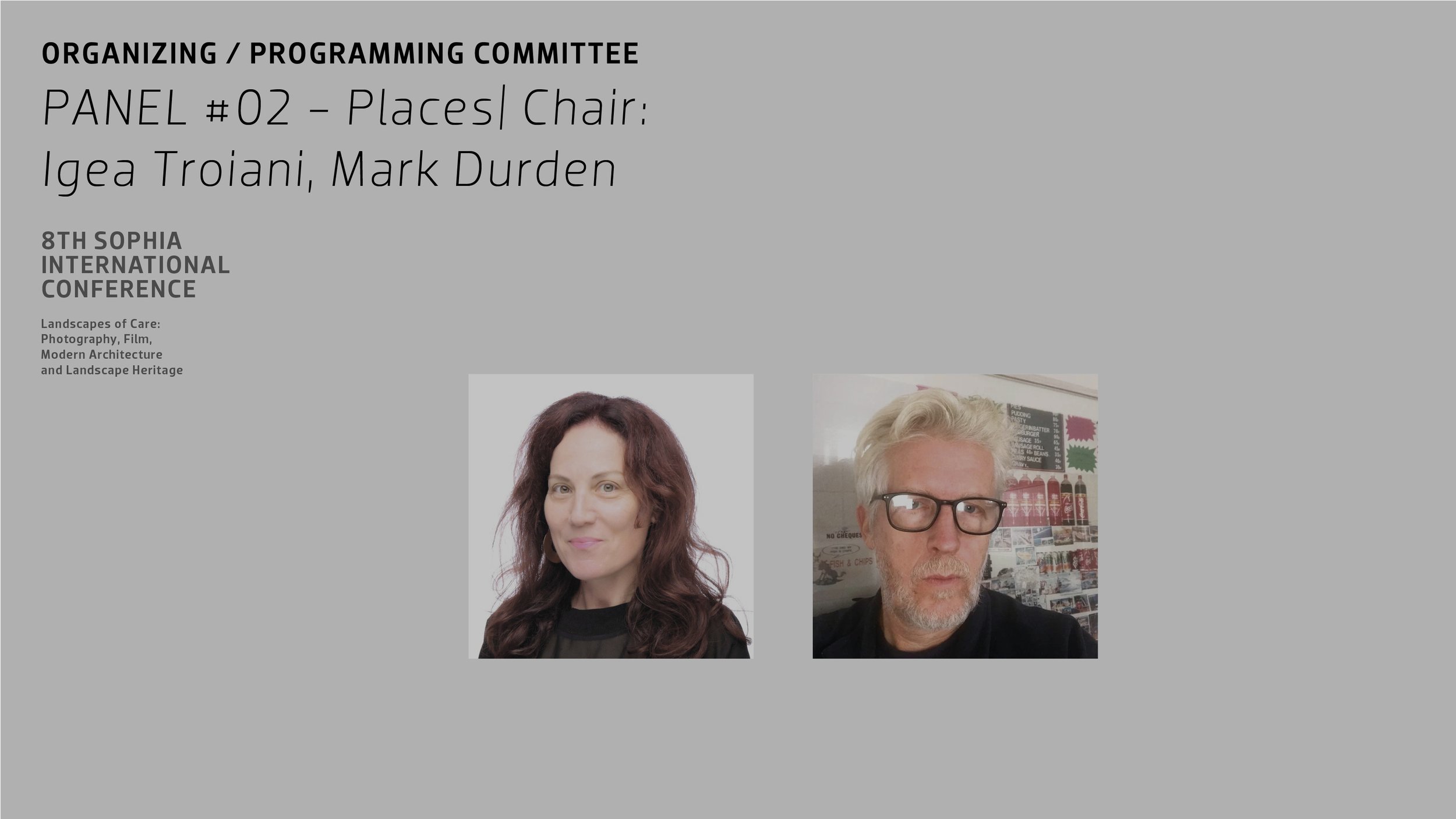
Panel and Round-table Moderators #02 | Places | Igea Troiani - Mark Durden


Panel and RouNd-table Moderators
#02 | PLACES |
Igea Troiani - Mark Durden

8th Sophia Journal International Conference
Landscapes of care: photography, film, modern architecture and landscape heritage

PANEL #02 | Chair: Igea Troiani, Mark Durden
12h15 - 12h30 | Presentation 5: Richard Williams
São Paulo's Minhocão on Film

12h30 - 12h45 | Presentation 6: Sotiria Alexiadou / Vassilis Colonas
Unclaiming the natural waterfront landscape: Thessaloniki's manmade east waterfront

12h45 - 13h00 Presentation 7: Lars Rolfsted Mortensen  [Visual Essays]
The Infrastructural Sublime Marvel, apprehension, and environmental awareness in the encounter of dams

13h00- 14h00 | Lunch Break

14h00 - 14h15 | Presentation 8: Joao Gadelho Novais Tavares
Foz Velha. The creation of an image of permanencies and transformations

14h15 - 14h45 Roundtable discussion

8TH SOPHIA JOURNAL INTERNATIONAL CONFERENCE

Organized by: Hugh Campbell, Igea Troiani, João Leal, Mark Durden, Olívia Marques da Silva, Pedro Leão Neto, Rikke Munck Petersen, Teresa Ferreira

On September 15th and 16th, at the Faculty of Architecture of the University of Porto (FAUP), another edition of our Sophia Journal International conference took place, continuing the successful annual cycle of international forums dedicated to the critical exploration of the intersections between image and architecture.

Landscapes of care: photography, film, modern architecture and landscape heritage invited theoretical and field work where architectural photography and film-making are descriptive, analytical and interpretive, communicating original perceptions and new understandings of modern architecture and landscapes. Photography and film projects that will allow us to show how modern buildings and landscapes have responded to and reflect the local conditions of their production and importance.  Projects which critique and expand our understanding of what constitutes modern architecture and landscape, in terms of its language, locations, functions, creators, patrons and public.

Photography and film work that can allow us to see the social dimension of architecture and landscape, to understand architecture as Alvar Aalto did, “as a great synthetic process of combining thousands of definite human functions” to contribute to a greater understanding of modern architecture’s and landscape’s potential for a more ecological and sustainable balance and interplay between architecture and nature.

The Conference, on the 15th of September, will be presenting the selection of the best theoretical papers and visual essays submitted to our Call. Being organised in 3 panels, it will constitute a live forum for debating photography, film, modern architecture and landscape heritage, among other stimulating issues central to discuss what we have proposed in our Call.

Program and Book of abstracts

CONFERENCE VIDEO VIA YOUTUBE @FAUP

+ info

8th SOPHIA INTERNATIONAL CONFERENCE WEBSITE
Research group 'Arquitectura, Arte e Imagem — AAI'  CEAU.FAUP

SCOPIO Network

FAUP SIGARRA


Panel and Roudtables Moderators #1 | Types | Hugh Campbell - Teresa Ferreira


Panel and RouNd-table Moderators
#01 | Types | Hugh Campbell - Teresa Ferreira

8th Sophia Journal International Conference
Landscapes of care: photography, film, modern architecture and landscape heritage

PANEL #01 | Chair: Hugh Campbell, Teresa Ferreira

10h00 - 10h15 | Presentation 1 | Birgit Schilke Hammer/Leonie Bunte
Changing the Image: Photographic Investigations on the Anonymous Modern, West Germany 1970-1989

10h15 - 10h30 | Presentation 2: Giulio Galasso / Natalia Voroshilova (Visual Essays)
Oases in the grid: The gardens of postwar Milanese middle-class housing

10h30 - 11h00 | Interval

11h00 - 11h15 | Presentation 3: Jasna Galjer
Ways of seeing architecture and landscape in the voids of presence. The case of a health resort on the Adriatic coast of Croatia

11h15 - 11h30 | Presentation 4: Julia Maria Bezerra de Mello
Other Interpretations on Tower H

11h30 - 12h00 | Roundtable discussion

8TH SOPHIA JOURNAL INTERNATIONAL CONFERENCE

Organized by: Hugh Campbell, Igea Troiani, João Leal, Mark Durden, Olívia Marques da Silva, Pedro Leão Neto, Rikke Munck Petersen, Teresa Ferreira

On September 15th and 16th, at the Faculty of Architecture of the University of Porto (FAUP), another edition of our Sophia Journal International conference took place, continuing the successful annual cycle of international forums dedicated to the critical exploration of the intersections between image and architecture.

Landscapes of care: photography, film, modern architecture and landscape heritage invited theoretical and field work where architectural photography and film-making are descriptive, analytical and interpretive, communicating original perceptions and new understandings of modern architecture and landscapes. Photography and film projects that will allow us to show how modern buildings and landscapes have responded to and reflect the local conditions of their production and importance.  Projects which critique and expand our understanding of what constitutes modern architecture and landscape, in terms of its language, locations, functions, creators, patrons and public.

Photography and film work that can allow us to see the social dimension of architecture and landscape, to understand architecture as Alvar Aalto did, “as a great synthetic process of combining thousands of definite human functions” to contribute to a greater understanding of modern architecture’s and landscape’s potential for a more ecological and sustainable balance and interplay between architecture and nature.

The Conference, on the 15th of September, will be presenting the selection of the best theoretical papers and visual essays submitted to our Call. Being organised in 3 panels, it will constitute a live forum for debating photography, film, modern architecture and landscape heritage, among other stimulating issues central to discuss what we have proposed in our Call.

Program and Book of abstracts

CONFERENCE VIDEO VIA YOUTUBE @FAUP

+ info

8th SOPHIA INTERNATIONAL CONFERENCE WEBSITE
Research group 'Arquitectura, Arte e Imagem — AAI'  CEAU.FAUP

SCOPIO Network

FAUP SIGARRA


CHAMADA ABERTA | Landscapes of Care. Public housing across multiple geographies: crossing theories and practices


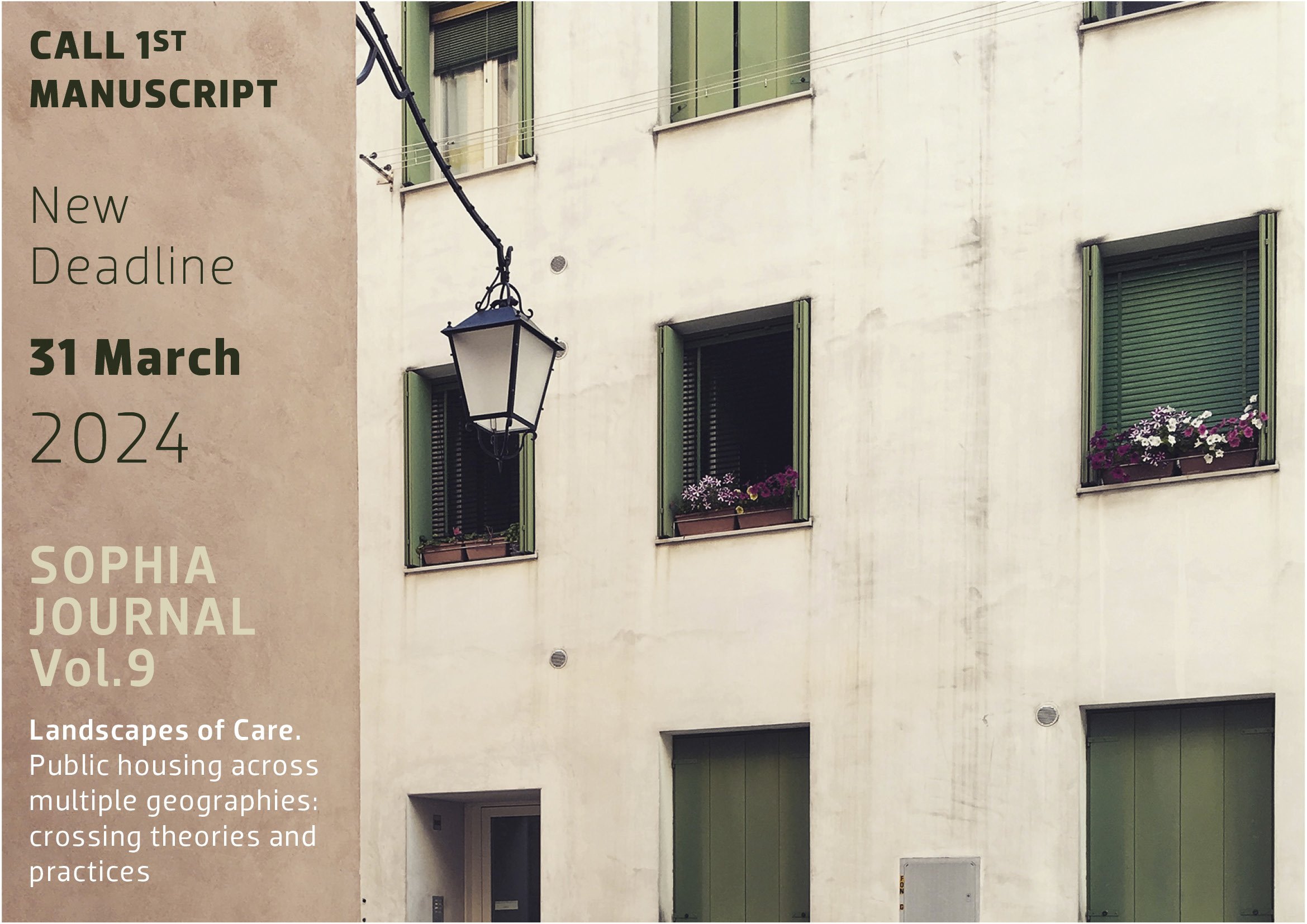
The Campo di Marte, La Giudecca, Venice, 2018. IACP (Istituto Autonomo Case Popolari, 1983). Courtesy: Jorge Marum


CHAMADA 1º MANUSCRITO - NOVO PRAZO DE ENTREGA - 31 março

Landscapes of Care. Public housing across multiple geographies: crossing theories and practices

Editores: Maria Neto (UBI-FAUP), Paz Nuñez Martí (UAH-ETSAM)
Editores Convidados: Igea Troiani (LSBU), Joan Mac Donald (U. Chile), Jorge Tárrago Mingo (ETSAUN)
Open Call Video Presentation

PT/ENG
A Revista Sophia está atualmente a aceitar o 1º manuscrito / artigo completo para o seu terceiro ciclo temático "Landscapes of Care" centrado na produção de habitação de promoção pública “Public housing across multiple geographies: crossing theories and practices”.

Prazo de entrega do 1º manuscrito: 31 de março de 2024
Prazo para o 2º manuscrito: 1 de setembro de 2024

Prazo para apresentação na conferência: 10 de setembro de 2024
Conferência Internacional (dtbc): 15 e 16 de setembro de 2024

Prazo para o 3º Manuscrito (Revista): 5 de outubro de 2024
Data de publicação (tbc): até dezembro de 2024


O terceiro ciclo temático de Sophia Journal "Landscapes of Care", aborda investigações, projectos, experiências e práticas fotográficas e visuais contemporâneas que se preocupam sobre o modo como a arquitectura, entendida num sentido amplo, pode ajudar a curar as relações entre o homem e habitat, bem como a crise sócio-ambiental que o planeta vive.

O conceito de Landscapes of Care tem sido cada vez mais adoptado em diversas áreas do conhecimento, desde a geografia da saúde até às artes e arquitectura, transposta aqui como a acção do estado social no sector da habitação, que gera uma relação de cuidado entre o estado e sociedade, enquadrada nos direitos económicos, sociais e culturais. Neste call interessam-nos investigações e práticas visuais que nos ajudem a compreender e documentar procedimentos (formas de atuar?) fora das narrativas dominantes, que promovam o direito à habitação, mas também o direito à cidade, convocando a cidade e o território como organismos vivos e inclusivos, reconhecendo a importância dos recursos públicos e das respostas sociais, os processos participativos e a co-responsabilização, para a promoção de uma sustentabilidade global.

Este número ao focar-se na produção de habitação de promoção pública, permite centrar as contribuições numa leitura dinâmica da cidade condicionante e condicionada pela tipologia habitacional. Associando arquitectura, habitação de cariz público, habitat e planeamento urbano convocam-se trabalhos que explorem uma narrativa interpretativa sobre a habitação e quem nela habita, projectos piloto de intervenções em comunidades-de-estudo, capazes de gerar visões estratégicas sobre o possível futuro da cidade e do território, da habitação e das vidas que (trans)forma, nesta relação ontológica entre a casa e o Homem.

A habitação de promoção pública deveria ser um exemplo de práticas inovadoras quer de projecto quer de desenvolvimento urbano e territorial, no entanto a maioria das intervenções realizadas através de políticas de habitação ou de acções específicas e isoladas sobre habitação pública, não são suficientemente conhecidas e/ou disseminadas quer pelas autoridades quer por parte dos técnicos e investigadores, não chegando a produzir conhecimento alargado e debate. O nosso objectivo é dar a conhecer estas práticas que cruzam teoria e acção, e explorar de que modo a fotografia, os levantamentos, testemunhos e os documentários podem ser utilizados como instrumentos significativos de investigação nas dimensões socioeconómica, política, histórica, técnica e ecológica da habitação social, da cidade e do território, desvelando boas práticas e modelos a estudar. Lançando um olhar crítico sobre o fazer cidade a partir do seu programa dominante - a habitação - pretendemos também estabelecer relações de continuidade e/ou ruptura, alinhamentos e/ ou desfasamentos entre habitação e pensamento urbanístico, sociopolítico e arquitectónico quer no quadro nacional como no internacional.

Nesta convocatória de artigos e ensaios visuais para este número da revista Sophia Journal Vol. 9 | Landscapes of Care. Social housing across multiple geographies: crossing theories and practices convidamos os autores a submeterem trabalhos teóricos, registo de experiências em programas de habitação social, e ensaios visuais sobre iniciativas ou programas piloto em habitação pública, onde a fotografia, o registo gráfico, o testemunho e o documentário estão presentes de forma significativa. Projetos descritivos, analíticos e interpretativos, capazes de oferecer uma percepção única e um novo entendimento sobre a habitação, os seus moradores e a cidade, bem como a sua capacidade de responder e reflectir as condições locais e ser elemento de coesão socio-territorial. Projectos que são territórios críticos capazes de expandir a nossa compreensão sobre a arquitectura e paisagem social, em termos da sua linguagem, localização, moradores e vizinhança.

Interessam-nos também trabalhos fotográficos e cinematográficos que nos permitam reconhecer a dimensão social da arquitectura e da paisagem e compreender a arquitectura como fez Alvar Aalto, “as a great synthetic process of combining thousands of definite human functions” juntamente com o enfoque de Donna Haraway na interacção humana e não humana - novas “naturecultures” capazes de contribuir para uma maior compreensão do potencial da arquitectura e da paisagem do social para um equilíbrio e uma interacção mais ecológica e sustentável entre a arquitectura e a natureza.

Instruções para a apresentação de propostas
Para apresentar a sua proposta, envie um resumo de 500 palavras (incluindo referências e um máximo de cinco imagens) e uma breve biografia de cada autor (até 70 palavras cada) até 1 de dezembro de 2023. A submissão de resumos é feita através da nossa plataforma OJS, registando-se e submetendo em: https://www.up.pt/revistas/index.php/sophia/index

Os autores seleccionados serão notificados até ao dia 11 de janeiro de 2024 e deverão entregar um artigo completo (entre 3000 e 6000 palavras) ou um ensaio visual (comprimento entre 6 e 8 páginas, mais texto entre 500 e 1000 palavras) até ao dia 11 de março de 2024.

Note-se que todos os artigos teóricos serão sujeitos a revisão por pares. As outras modalidades de submissões que publicamos (ensaios visuais, entrevistas e recensões críticas) não estão sujeitas a revisão por pares.

A aceitação de um resumo em qualquer uma destas modalidades não garante a publicação.

BIOGRAPHIES

IGEA TROIANI
Igea Troiani (PhD) is a Professor of Architecture and Head of Division for Architecture at London South Bank University (LSBU). She is an architect and filmmaker with almost 30 years-experience of working in a university, architecture practice and universities gained in the UK (London, Oxford and Plymouth), China (Suzhou), Germany (Münster) and Australia (Brisbane and Melbourne). Her three key areas of research are 1) the social production of architecture; 2) architecture and media (focusing on publishing and filmmaking) and 3) architectural labour, neoliberalism and sustainable ecologies. She studies architecture from transdisciplinary perspectives to determine the conditions in which architecture is, and architects are, socially, culturally and economically produced. Her books include The Politics of Making (2017/2007); Transdisciplinary Urbanism and Culture (2017); Architecture Filmmaking (2019); Visual Research Methods in Architecture (2021); and Spaces of Tolerance (2021), and Work-life Balance in Architecture (in press).

JOAN MAC DONALD
Joan MacDonald is an architect and expert in housing and urban planning, especially in vulnerable contexts. She was the first architect to head the Housing Department at the UC School of Architecture and the first woman to assume the position of Undersecretary of the Ministry of Housing and Urban Planning (1990-94). Throughout her career, she has fulfilled different urban and housing management leadership roles. Among them, she was a consultant for the Sustainable Development and Human Settlements Division of ECLAC, and between 2000 and 2014, she directed the Latin American Service, African and Asian Popular Housing (SELAVIP). From there, she promoted the execution of more than 500 housing and neighborhood improvement projects for poor urban communities in the developing world.

JORGE TÁRRAGO MINGO
Jorge Tárrago Mingo. Registered Architect. PhD. University of Navarra (2005). He is a Professor of Architecture and collaborates in research and editorial initiatives. He is Director of RA, Revista de Arquitectura. He has published articles in ARQ, Future Anterior, Bauwelt, Rita, PPA, Revista 180, Arquitetura rivista, ZARCH, and he is a regular reviewer for some others. He is author, co-author or editor of several books and book chapters, the most recent being Aguinaga, Echaide, Sobrini. Escuela Técnica Superior de Arquitectura (Pamplona, 2020), awarded at the XV BEAU, and the chapter 'A Certain Praise for Drawings' in Approaching Architecture. Three Fields, One Discipline (New York & Oxon, 2023). In 2015 he co-chaired the internacional conference Inter: Photography and Architecture (2016) and the four volumes with the proceedings that were awarded at the XIV BEAU. He founded alcolea+tárrago in 2005. His work has been awarded in more than 20 national and international competitions, published in many magazines and books, and has received several architecture prizes for built work.

MARIA NETO
Maria Neto is an architect, invited assistant professor at DECA-UBI, and researcher at CEAU-FAUP and ICHaB-ETSAM. PhD in Architecture (EA-UAH+ICHaB-ETSAM, 2022) with an individual research scholarship from FTC, worthy of nomination for the Prémio Extraordinário UAH, holds post-graduation in Development of Human Settlements in the Third World (ICHaB/ETSAM) and professional practice in Humanitarian Shelter Coordination (IFRC/UNCHR/Oxford Brookes University). She has collaborated with the UNHCR and the BRC supporting refugees in Kenya and the UK. She was the recipient of the Távora Award, a guest speaker representing Portugal at the 17th International Exhibition of Architecture from the Venice Biennale and selected for the anthology of the Lisbon University Triennial Award. In addition to teaching at DECA-UBI and practicing in her architectural studio with architect Jorge Marum, she has collaborated with IHRU on the program “Da Habitação ao Habitat” within the framework of the New Generation of Housing Policies.

PAZ NUNEZ MARTI
Paz Núñez-Martí (Madrid, 1971) PhD in Architecture (Univ. Politécnica Madrid, 1998); Technical Specialist in Heritage Recovery and Rehabilitation (Univ. Politécnica Madrid, 2000) and Technical Specialist in Development Cooperation (Univ. Politécnica Madrid, 2005). PhD in Architecture (Univ. Politecnica Madrid, 2016) and currently Phd from the Escuela Técnica Superior de Arquitectura, Univ. Alcalá (2002-act). She coordinates the area of Habitat and Territory of the Research Group applied to development cooperation COOPUAH. She has been Technical Advisor to the Madrid City Council for the shanty town settlement of Cañada Real (2015-2019) and currently conducts applied research on spatial justice, urbanism and citizenship from various civic platforms with political impact in the city of Madrid.

SOPHIA JOURNAL | AAI OJS WEBSITE - OPEN CALL
Research group 'Arquitectura, Arte e Imagem — AAI'  CEAU.FAUP

FAUP SIGARRA


OPEN CALL | Landscapes of Care. Public housing across multiple geographies: crossing theories and practices


The Campo di Marte, La Giudecca, Venice, 2018. IACP (Istituto Autonomo Case Popolari, 1983). Courtesy: Jorge Marum

CALL 1st MANUSCRIPT - NEW DEADLINE - 31 MARCH

Landscapes of Care. Public housing across multiple geographies: crossing theories and practices

Editors: Maria Neto (UBI-FAUP), Paz Nuñez Martí (UAH-ETSAM)
Guest Editors: Igea Troiani (LSBU), Joan Mac Donald (U. Chile), Jorge Tárrago Mingo (ETSAUN)
Open Call Video Presentation

PT/ENG

Sophia Journal is currently accepting 1st Manuscripts for its third thematic cycle “Landscapes of Care” focused on “Public housing across multiple geographies: crossing theories and practices”

1st Manuscript deadline: 31 of March 2024
2st Manuscript deadline: 1 of September 2024

Deadline for Conference Presentation: 10 of September 2024
International Conference (dtbc): 15 and 16 of September 2024

3rd Manuscript deadline (Journal): 5 of October 2024
Publication date (tbc): by December 2024


Sophia Journal's third thematic, “Landscapes of Care”, addresses research, projects, experiences, and contemporary photographic and visual practices that focus on how architecture, understood in a broad sense, can help to heal the relationships between man and habitat, as well as the socio-environmental crisis that the planet is experiencing.

The concept of “Landscapes of Care” has increasingly been adopted by diverse areas of study, from health geography to the arts and architecture, transposed here as the action of the social state in the housing sector, which generates a relationship of care between the state and society, framed by economic, social, and cultural rights. In this call, we are interested in investigations and visual narratives that help us understand and document practices outside the dominant narratives, which promote the right to housing but also the right to the city, calling on the city and the territory as living and inclusive organisms, recognizing the importance of public resources and social responses, participatory processes, and co- responsibility, for global sustainability.

This issue, focusing on public housing, allows contributions to be centered on a dynamic reading of the city that is conditional and conditioned by housing typology. Combining architecture, public housing, habitat, and urban planning, we are convoking works that explore an interpretative narrative about housing and those who live in it, pilot projects with communities of practice capable of generating strategic visions about the possible future of city and territory, housing and the lives it (trans)forms, in this ontological relationship between the Man and house.

Public housing should be an example of innovative practices, whether in design or urban and territorial development. However, most interventions carried out through housing policies or specific and isolated actions on public housing need to be sufficiently known and disseminated by authorities, technicians, and researchers to produce broad knowledge and debate. Our objective is to make known and amplify these practices that intertwine theory and action and explore how photography, surveys, testimonies, and documentaries can be used as significant research instruments in the socio-economic, political, historical, technical, and ecological dimensions of social housing, the city and the territory, revealing good practices and models to study. Launching a critical look at city-making from its dominant program - housing - we also intend to establish relationships of continuity and/or rupture, alignments, and/or gaps between housing and urban, socio-political, and architectural thought nationally and internationally.

In this call for articles and visual essays for this issue of Sophia Journal Vol. 9 | Landscapes of Care. Social housing across multiple geographies: Crossing theories and practices, we invite authors to submit theoretical work, records of experiences in social housing programs, and visual essays on initiatives or pilot programs in public housing, where photography, graphic recording, testimony, and the documentary are present in a significant way and allow adding a differentiating layer for its understanding and recording. Descriptive, analytical, and interpretative projects offer a unique perception and new knowledge about housing, its residents, and the city, and its ability to respond to and reflect local conditions and be an element of socio-territorial cohesion. Projects that are critical territories capable of expanding our understanding of architecture and social landscape in terms of their language, location, residents, and neighborhood.

We are also interested in photography and film work that allows us to acknowledge the social and political dimension of architecture and landscape and understand architecture as Alvar Aalto did, “as a great synthetic process of combining thousands of definite human functions,” together with Donna Haraway’s focus on human and non-human interaction - new “nature cultures” capable of contributing to a greater understanding of the potential of architecture and landscape for a more ecological and sustainable balance and interaction between architecture and nature.

Submission instructions

To submit your proposal, please send a 500-word abstract (including references and a maximum of five images) and a short bio for each author (up to 70 words each) by the 1st of December, 2023. Submission of abstracts is done through our OJS platform by registering and submitting at: https://www.up.pt/revistas/index.php/sophia/index   Selected authors will be notified by the 11 of January 2024 and will be expected to deliver a full paper (between 3000 to 6000 words) or a visual essay (length between 6 to 8 pages, plus text between 500 to 1000 words) by the 11 of March 2024.   Please note that all theoretical papers will be subject to peer review. The other modalities of submissions we publish (visual essays, interviews, and critical reviews) are not subjected to peer review.    
                                                                                        

Acceptance of an abstract in any of these modalities does not guarantee publication.

BIOGRAPHIES

IGEA TROIANI
Igea Troiani (PhD) is a Professor of Architecture and Head of Division for Architecture at London South Bank University (LSBU). She is an architect and filmmaker with almost 30 years-experience of working in a university, architecture practice and universities gained in the UK (London, Oxford and Plymouth), China (Suzhou), Germany (Münster) and Australia (Brisbane and Melbourne). Her three key areas of research are 1) the social production of architecture; 2) architecture and media (focusing on publishing and filmmaking) and 3) architectural labour, neoliberalism and sustainable ecologies. She studies architecture from transdisciplinary perspectives to determine the conditions in which architecture is, and architects are, socially, culturally and economically produced. Her books include The Politics of Making (2017/2007); Transdisciplinary Urbanism and Culture (2017); Architecture Filmmaking (2019); Visual Research Methods in Architecture (2021); and Spaces of Tolerance (2021), and Work-life Balance in Architecture (in press).

JOAN MAC DONALD
Joan MacDonald is an architect and expert in housing and urban planning, especially in vulnerable contexts. She was the first architect to head the Housing Department at the UC School of Architecture and the first woman to assume the position of Undersecretary of the Ministry of Housing and Urban Planning (1990-94). Throughout her career, she has fulfilled different urban and housing management leadership roles. Among them, she was a consultant for the Sustainable Development and Human Settlements Division of ECLAC, and between 2000 and 2014, she directed the Latin American Service, African and Asian Popular Housing (SELAVIP). From there, she promoted the execution of more than 500 housing and neighborhood improvement projects for poor urban communities in the developing world.

JORGE TÁRRAGO MINGO
Jorge Tárrago Mingo. Registered Architect. PhD. University of Navarra (2005). He is a Professor of Architecture and collaborates in research and editorial initiatives. He is Director of RA, Revista de Arquitectura. He has published articles in ARQ, Future Anterior, Bauwelt, Rita, PPA, Revista 180, Arquitetura rivista, ZARCH, and he is a regular reviewer for some others. He is author, co-author or editor of several books and book chapters, the most recent being Aguinaga, Echaide, Sobrini. Escuela Técnica Superior de Arquitectura (Pamplona, 2020), awarded at the XV BEAU, and the chapter 'A Certain Praise for Drawings' in Approaching Architecture. Three Fields, One Discipline (New York & Oxon, 2023). In 2015 he co-chaired the internacional conference Inter: Photography and Architecture (2016) and the four volumes with the proceedings that were awarded at the XIV BEAU. He founded alcolea+tárrago in 2005. His work has been awarded in more than 20 national and international competitions, published in many magazines and books, and has received several architecture prizes for built work.  

MARIA NETO
Maria Neto is an architect, invited assistant professor at DECA-UBI, and researcher at CEAU-FAUP and ICHaB-ETSAM. PhD in Architecture (EA-UAH+ICHaB-ETSAM, 2022) with an individual research scholarship from FTC, worthy of nomination for the Prémio Extraordinário UAH, holds post-graduation in Development of Human Settlements in the Third World (ICHaB/ETSAM) and professional practice in Humanitarian Shelter Coordination (IFRC/UNCHR/Oxford Brookes University). She has collaborated with the UNHCR and the BRC supporting refugees in Kenya and the UK. She was the recipient of the Távora Award, a guest speaker representing Portugal at the 17th International Exhibition of Architecture from the Venice Biennale and selected for the anthology of the Lisbon University Triennial Award. In addition to teaching at DECA-UBI and practicing in her architectural studio with architect Jorge Marum, she has collaborated with IHRU on the program “Da Habitação ao Habitat” within the framework of the New Generation of Housing Policies.

PAZ NUNEZ MARTI
Paz Núñez-Martí (Madrid, 1971) PhD in Architecture (Univ. Politécnica Madrid, 1998); Technical Specialist in Heritage Recovery and Rehabilitation (Univ. Politécnica Madrid, 2000) and Technical Specialist in Development Cooperation (Univ. Politécnica Madrid, 2005). PhD in Architecture (Univ. Politecnica Madrid, 2016) and currently Phd from the Escuela Técnica Superior de Arquitectura, Univ. Alcalá (2002-act). She coordinates the area of Habitat and Territory of the Research Group applied to development cooperation COOPUAH. She has been Technical Advisor to the Madrid City Council for the shanty town settlement of Cañada Real (2015-2019) and currently conducts applied research on spatial justice, urbanism and citizenship from various civic platforms with political impact in the city of Madrid.


8ª CONFERÊNCIA INTERNACIONAL DE SOPHIA JOURNAL - FAUP | SEPT 2023


8ª CONFERÊNCIA INTERNACIONAL DE SOPHIA JOURNAL

Landscapes of care: photography, film, modern architecture and landscape heritage

Organização: Hugh Campbell, Igea Troiani, João Leal, Mark Durden, Olívia Marques da Silva, Pedro Leão Neto, Rikke Munck Petersen, Teresa Ferreira

PT/ENG

Nos dias 15 e 16 de setembro, na Faculdade de Arquitetura da Universidade do Porto (FAUP), realizou-se mais uma edição da nossa conferência internacional Sophia Journal, dando continuidade ao ciclo anual bem-sucedido de fóruns internacionais dedicados à exploração crítica das interseções entre a imagem e a arquitetura.

Tendo como motivo de interesse as práticas fotográficas e visuais contemporâneas que exploram como a arquitetura, no seu sentido mais amplo, pode contribuir para a cura de um planeta em crise, a 8ª Conferência Internacional do Sophia Journal: "Landscapes of Care: Photography, Film, Modern Architecture, and Landscape Heritage" centrou-se tanto na reflexão teórica como no trabalho de campo. A conferência analisou de que forma a fotografia e a produção cinematográfica podem servir como ferramentas descritivas, analíticas e interpretativas, transmitindo perspectivas originais e novas visões sobre a arquitetura moderna e o património paisagístico.

O evento compreendeu um programa que combinou sessões ao vivo e videoconferências, transmitidas online, permitindo assim a participação de uma maior audiência. O programa apresentou uma variedade de atividades ricas e diversas, incluindo:

·       Três mesas-redondas, cada uma dedicada a um tópico específico (Types, Places e Processes), onde as discussões giraram em torno da fotografia, cinema, arquitetura moderna e patrimônio paisagístico, com apresentações de artigos e ensaios visuais enviados.

·       Uma exposição de fotografia intitulada "The Idea of Álvaro Siza"

·       Uma discussão em painel/mesa-redonda com autores convidados sobre o tema "Documentary Artistic Publications About Architecture,", com a apresentação de quatro publicações, nomeadamente "Another Approach to the Works of Álvaro Siza" by Pedro Leão Neto e a coleção scopionewspaper "The Idea of Álvaro Siza" by Mark Durden and João Leal.

·       Chamada Aberta (Open Call) Sophia Journal, Vol. 9, "Landscapes of Care. Public housing across multiple geographies: Crossing theories and practices". 

A conferência emergiu como uma plataforma dinâmica capaz de abordar questões significativas centralizadas na discussão da fotografia e do cinema, permitindo-nos compreender a dimensão social da arquitetura. O evento incentivou a compreensão da arquitetura, como Alvar Aalto preconizou, como "a great synthetic process of combining thousands of definite human functions." Acreditamos que esta perspectiva contribui para um entendimento mais profundo do potencial do equilíbrio ecológico e sustentável entre arquitetura e natureza na arquitetura moderna e paisagística.

Organizado pelo Centro de Estudos em Arquitetura e Urbanismo, sediado na Faculdade de Arquitetura da Universidade do Porto (CEAU/FAUP), em colaboração com a University College Dublin (UCD), London South Bank University (LSBU), University of Copenhagen (UCPH), Newport – University of South Wales (USW/eCDR), e a School of Media Arts and Design (P.PORTO/ESMAD), a 8ª Conferência Internacional Sophia Journal marcou a continuação de uma série de conferências intimamente alinhadas com a revista científica com revisão por pares Sophia Journal que publica artigos teóricos e ensaios visuais que investigam e pensam criticamente as intersecções entre a imagem e a arquitectura.

Estamos muito satisfeitos com o sucesso da 8ª Conferência Internacional do Sophia Journal, que ocorreu quer online quer presencialmente na nossa magnífica Cidade e Escola de Arquitetura do Porto, projetada por Álvaro Siza. O evento provou ser não apenas um fórum importante para fomentar a reflexão e o debate nos campos da Arquitetura, Arte e Imagem, mas também uma plataforma significativa para criar um ambiente amigável que facilitou trocas construtivas de ideias e networking entre investigadores e colegas de diversos países. Além disso, os participantes tiveram a oportunidade de conhecer através uma experiência pessoal alguns dos edifício icónicos de Álvaro Siza, como as Piscinas das Marés de Leça de Palmeira e o Pavilhão Carlos Ramos da Faculdade de Arquitetura da Universidade do Porto. A Exposição da conferência "The Idea of Álvaro Siza" foi inaugurada com uma recepção de Vinho do Porto, cortesia da Niepoort e Vieira de Castro, que contou com a presença do Vice-Reitor para a Investigação e Inovação da U. Porto, Prof. Doutor Pedro Rodrigues.

Queremos expressar a nossa gratidão a todos os participantes desta 8ª Conferência Internacional Sophia Journal, que tem sido uma parte integral da nossa comunidade acadêmica já há mais de oito anos. A conferência tem desempenhado um papel significativo para a criação de uma rede internacional focada na interseção entre Fotografia e Arquitetura. A comissão organizadora está muito satisfeita por ter conseguido realizar esta conferência com sucesso, tanto virtualmente quanto presencialmente, e esperamos que todos os participantes tenham desfrutado o melhor possível da sua estadia na nossa magnifica cidade do Porto.

+ info

8th SOPHIA INTERNATIONAL CONFERENCE WEBSITE
Research group 'Arquitectura, Arte e Imagem — AAI'  CEAU.FAUP

SCOPIO Network

FAUP SIGARRA


8th SOPHIA JOURNAL INTERNATIONAL CONFERENCE - FAUP | SEPT 2023


8th SOPHIA JOURNAL INTERNATIONAL CONFERENCE

Landscapes of care: photography, film, modern architecture and landscape heritage

Organized by: Hugh Campbell, Igea Troiani, João Leal, Mark Durden, Olívia Marques da Silva, Pedro Leão Neto, Rikke Munck Petersen, Teresa Ferreira

PT/ENG

On September 15th and 16th, at the Faculty of Architecture of the University of Porto (FAUP), another edition of our Sophia Journal International conference took place, continuing the successful annual cycle of international forums dedicated to the critical exploration of the intersections between image and architecture.

Focusing on contemporary photographic and visual practices that explore how architecture, in its broadest sense, can contribute to healing a planet in crisis, the 8th Sophia Journal International Conference: "Landscapes of Care: Photography, Film, Modern Architecture, and Landscape Heritage" centered on both theoretical and fieldwork. The conference examined how architectural photography and filmmaking serve as descriptive, analytical, and interpretive tools, conveying original perspectives and fresh insights into modern architecture and landscape heritage.

The event comprised a program that combined live and video-conferencing sessions, which were broadcast online and allowed a large audience to participate. The program featured a rich and diverse set of activities, including:

  • Three roundtables, each dedicated to a specific topic (Types, Places, and Processes), where discussions revolved around photography, film, modern architecture, and landscape heritage, with presentations of submitted articles and visual essays.

  • A photography exhibition titled " The Idea of Álvaro Siza"

  • A panel/roundtable discussion with invited speakers on the topic of "Documentary Artistic Publications About Architecture," featuring the presentation of four scopio Editions publications, namely "Another Approach to the Works of Álvaro Siza" by Pedro Leão Neto and the "scopionewspaper" collection "The Idea of Álvaro Siza" by Mark Durden and João Leal.

  • Launching the new call of Sophia Journal, Vol. 9, "Landscapes of Care. Public housing across multiple geographies: Crossing theories and practices". 

The conference emerged as a dynamic platform for addressing thought-provoking issues central to the discussion of photography and film, enabling us to view the social dimension of architecture. It encouraged us to perceive architecture, as Alvar Aalto did, as "a great synthetic process of combining thousands of definite human functions." This perspective contributes to a deeper understanding of the potential for a more ecological and sustainable balance between architecture and nature within modern architecture and landscape.

Organized by the Center for Studies in Architecture and Urbanism, based at the Faculty of Architecture of the University of Porto (CEAU/FAUP), in collaboration with University College Dublin (UCD), London South Bank University (LSBU), University of Copenhagen (UCPH), Newport – University of South Wales (USW/eCDR), and the School of Media Arts and Design (P.PORTO/ESMAD), the 8th Sophia Journal International Conference marked the continuation of a series of conferences closely aligned with Sophia's peer-reviewed publication. Sophia supports and disseminates scientific research by publishing theoretical articles and visual essays that critically explore the intersections between image and architecture.

We are delighted with the success of the 8th Sophia Journal International Conference, which took place both online and in person at our magnificent City and School of Architecture in Porto, designed by Álvaro Siza. The event proved to be not only an important forum for fostering reflection and debate within the realms of architecture, art, and imagery, but also a significant platform for creating a congenial atmosphere that facilitated constructive exchanges of ideas and networking among researchers and colleagues from various countries. Additionally, attendees had the opportunity to experience in person some of Álvaro Siza's iconic buildings, such as the Tidal Pools of Leça de Palmeira and the Faculty of Architecture of the University of Porto's Carlos Ramos Pavilion. The exhibition exhibition integrated in the conference opened with a Port Wine reception, courtesy of Niepoort and Vieira de Castro, which all attended, having had the presence of Vice-Rector for Research and Innovation of U. Porto Pedro Rodrigues, marking the inauguration of the exhibition "The Idea of Álvaro Siza".

We extend our gratitude to all participants in this 8th Sophia Journal International Conference, which has been an integral part of our academic community for over eight years. It has played a significant role in establishing an international network focused on the intersection of Photography and Architecture. The organizing committee is thrilled to have successfully hosted this conference, both virtually and in person, and we hope that all attendees enjoyed their time in our beautiful city of Porto.

+ info

8th SOPHIA INTERNATIONAL CONFERENCE WEBSITE
Research group 'Arquitectura, Arte e Imagem — AAI'  CEAU.FAUP

SCOPIO Network

FAUP SIGARRA


8th SOPHIA JOURNAL INTERNATIONAL CONFERENCE: Exhibition The Idea of Álvaro Siza by Mark Durden and João Leal


Exhibition The Idea of Álvaro Siza by Mark Durden and João Leal

INTEGRATED PROGRAM TO 8th SOPHIA JOURNAL INTERNATIONAL CONFERENCE

CONFERENCE WEBSITE
REGISTRATION

INTEGRATED PROGRAM TO CONFERENCE: Exhibition The Idea of Álvaro Siza by Mark Durden and João Leal

The exhibition shows the photographic work developed around two of Siza´s paradigmatic buildings, which are the Carlos Ramos Pavilion and the Faculty of Architecture of Porto, resulting in the publication of the the first of the three volumes of the collection 'scopionewspaper journal The Idea of Álvaro Siza.

About The Idea of Álvaro Siza

The Idea of Álvaro Siza is a photographic project that has its origins in the work developed by Mark Durden and João Leal in response to Siza's architecture since 2017.

The project involving a selection of architectural buildings designed by Álvaro Siza has been supported from the outset by the research group Architecture, Arte and Image - CEAU | AAI – and has given rise to the editorial | graphic design project scopionewspaper journal The Idea of Álvaro Siza with the seal of scopio Editions, being also supported by the University of South Wales.

The Idea of Álvaro Siza understands architecture as both subject and artistic matter exploring a visual strategy that moves away from traditional mainstream architectural photography. It expands the comprehension of architecture, investigating photography’s ability as a unique form of expression, capable of creating a visual narrative that moves between the real and the poetic. The photography series of this project allow viewers to sense both the magical experience that Siza’s architectural spaces produce for us and how light and nature interplay within those spaces and how Siza’s spatial forms relate with the context, offering a deeper understanding of the architect’s oeuvre.

The project is now expanding to include works by other architects. In 2023, in addition to the publication “Ocean Swimming Pool”, two more will be launched focused on the work of Carlos Scarpa and Aldo Rossi, namely “Brion Memorial” and “Aldo Rossi: San Cataldo Cemetry”.

About the curatorial work of the Exhibition The Idea of Álvaro Siza in Pavilion Carlos Ramos

It was sought to explore a site-oriented approach to the exhibition The Idea of Álvaro Siza in the Pavilion Carlos Ramos taking advantage of the building´s unique architectural characteristics in terms of natural light, rich relations between interior and exterior spaces and the white boards of many walls ready to be pinned with students work.

The objective was to communicate and exhibit the work in a more alternative way, as well as related to the project concept itself, withstanding from common strategies and challenge the viewer's relationship to the work exhibited, exploring the “architectural promenade” concept and trying to break any sequential monotony and barriers between the work and the public.

DATE
15th and 16th of September 2023

PLACE

The Conference will be held in person and online at FAUP - Auditorium Fernando Távora - and the Exhibition will be at Carlos Ramos Pavilion - 19h00 | Pavilhão Carlos Ramos

Opening and visit to the Exhibition 'The Idea of Álvaro Siza'
Port Wine reception | Ocean Swimming Pool Launch - scopionewspaper journal collection


Sophia Journal Volume 7, No. 1 - Landscapes of Care: the emergency of landscapes of care in extreme territories


SOPHIA journal 3RD CYCLE: Landscapes of Care

the emergency of landscapes of care in extreme territories

Issue description

Sophia’s third cycle main theme is “Landscapes of Care” with an overall interest around contemporary photography on how architecture can help a broken planet. It intends to understand how the photographic/imagery universe can be explored as a meaningful instrument of research about the multifaceted complex socioeconomic, political, historical, technical and ecological dimensions of architecture, city and territory that testify, question or emerge from relationships of care.

The concept “landscapes of care” has increasingly been adopted by diverse areas of study coming from health geography to the arts and architecture. Taking this notion to the universe of architecture we would like to understand architecture, city and territory as living and inclusive organisms, constituted by multifaceted landscapes with complex social and organisational spatialities which embody the difference and the other, the strange, the unfamiliar, the indigenous, the human and the non-human.

The 7th number of Sophia (the first number within the third cycle) the emergency of landscapes of care in extreme territories focuses on diverse territories like: the desert; the icy- lands; within unstable boundaries, e.g. between land-water; inhabited by native communities; territories that dramatically alter their configuration due to heavy weather conditions and scarce resources or whose natural resources are violently explored and violated. These territories hold vital information about patterns of resistance, flexibility, transformation and metamorphosis, enlightening the problems of vulnerability and resistance in the unforeseen future while opening up new perspectives of design, including new ways of poetically inhabiting the world as a place of encounter between species (following Haraway’s motto “staying with the trouble” and Guattari’s demand: “We need new social and aesthetic practices, new practices of the Self in relation to the other, to the foreign, the stranger”), protecting the ecosystems and understanding architecture more than the distribution of spaces as the distribution of the sensible.

ISSN 2183-8976 [Print] 2183-9468 [Online]

ISBN 978-989-53640-1-5
Volume 7, Issue 1 | Publication year: 2022

© The Authors. Published by scopio Editions. Licensed under a Creative Commons Attribution-NonCommercial-NoDerivatives 4.0 International License.

DOI: https://doi.org/10.24840/2183-8976_2022-0007_0001

Sophia Journal | Print ISSN: 2183-8976 Online ISSN: 2183-9468 DOI: 10.24840/2183-8976 is based at the Center for Studies in Architecture and Urbanism (CEAU) - Research group Architecture, Art and Image (AAI),  Faculty of Architecture, University of Porto, Portugal (FAUP) and is supported by national funds from the Portuguese Foundation for Science and Technology (FCT), I.P., through grant award no. UIDB/00145/2020.

Sophia Journal is an open access journal, allowing for immediate and free access to all content. Except where otherwise noted, content on this site is licensed under a Creative Commons Attribution Non-Commercial-NoDerivatives 4.0 International license.

© website Sophia Journal/ scopio Editions

 
Source: https://www.up.pt/revistas/index.php/sophi...

8th SOPHIA JOURNAL INTERNATIONAL CONFERENCE - LANDSCAPES OF CARE: PHOTOGRAPHY, FILM, MODERN, ARCHITECTURE AND LANDSCAPE HERITAGE


8th SOPHIA JOURNAL INTERNATIONAL CONFERENCE

Landscapes of care: photography, film, modern architecture and landscape heritage

Organized by: Hugh Campbell, Igea Troiani, João Leal, Mark Durden, Olívia Marques da Silva, Pedro Leão Neto, Rikke Munck Petersen, Teresa Ferreira

PT/ENG

CONFERENCE WEBSITE
REGISTRATION

The 8th Sophia Journal International Conference will present a live and videoconference program organised by CEAU / FAUP and the event will be broadcasted live online, encompassing a rich and diverse program around: (i) roundtables for each panel concerning a focused topic coming from Sophia´s comprehensive call; (ii) presentation of articles and visual essays submitted; (iii) Photography exhibition: The Idea of Álvaro Siza.

This International Conference integrates the thematic cycle “Landscapes of Care”, addressing contemporary photographic and visual practices that focus on how architecture understood in a wide sense can help to heal a broken planet. The concept of “Landscapes of Care” has increasingly been adopted by diverse areas of study, from health geography to the arts, architecture and heritage preservation. It is used here in order to understand and document modern architecture, building, city and territory as living and inclusive organisms, as well as heritage resources for global sustainability. 

Modern architecture is a ‘heritage at risk’ as it belongs to a recent past that has not yet been sufficiently recognised by the authorities, scholars and general public. Our aim is to explore the ways in which photography and film can be used as meaningful instruments of research into the socioeconomic, political, historical, technical and ecological dimensions of modern architecture, city and territory.


Landscapes of care: photography, film, modern architecture and landscape heritage invited theoretical and field work where architectural photography and filmmaking are descriptive, analytical and interpretive, communicating original perceptions and new understandings of modern architecture and landscapes. Photography and film projects that will allow us to show how modern buildings and landscapes have responded to and reflect the local conditions of their production and importance.  Projects which critique and expand our understanding of what constitutes modern architecture and landscape, in terms of its language, locations, functions, creators, patrons and publics.

Photography and film work that can allow us to see the social dimension of architecture and landscape, to understand architecture as Alvar Aalto did, “as a great synthetic process of combining thousands of definite human functions” to contribute to a greater understanding of modern architecture’s and landscape’s potential for a more ecological and sustainable balance and interplay between architecture and nature.

DATE
15th and 16th of September 2023

PLACE
The Conference will be held in person at FAUP - Auditório Fernando Távora - on the 15th of September and the Exhibition will take place at Carlos Ramos Pavilion on the 15th.

CONFERENCE LIVE STREAMING VIA ZOOM
Zoom link: https://videoconfcolibri.zoom.us/j/91965794170?pwd=TUZIWUlIdHlWQkxhRE5URU9vTWxZZz09

Meeting ID: 919 6579 4170

Password: 410878

+ info

8th SOPHIA INTERNATIONAL CONFERENCE WEBSITE
Research group 'Arquitectura, Arte e Imagem — AAI'  CEAU.FAUP

SCOPIO Network

FAUP SIGARRA


8ª CONFERÊNCIA INTERNACIONAL DE SOPHIA JOURNAL - LANDSCAPES OF CARE: PHOTOGRAPHY, FILM, MODERN, ARCHITECTURE AND LANDSCAPE HERITAGE


8ª CONFERÊNCIA INTERNACIONAL DE SOPHIA JOURNAL

Landscapes of care: photography, film, modern architecture and landscape heritage

Organização: Hugh Campbell, Igea Troiani, João Leal, Mark Durden, Olívia Marques da Silva, Pedro Leão Neto, Rikke Munck Petersen, Teresa Ferreira

PT/ENG

WEBSITE CONFERÊNCIA
REGISTO
A 8ª Conferência Internacional de Sophia Journal apresentará um programa presencial bem como por videoconferência em directo organizado pelo CEAU / FAUP, englobando um programa rico e diversificado em torno de: (i) mesas redondas para cada painel sobre um tema focado proveniente da chamada abrangente da Sophia; (ii) apresentação dos artigos e enaios visuais submetidos; (iii) Exposição de fotografia: The Idea of Álvaro Siza.

Esta Conferência Internacional integra o ciclo temático “Landscapes of Care”, abordando práticas fotográficas e visuais contemporâneas que se preocupam sobre o modo como a arquitectura, entendida num sentido amplo, pode ajudar a curar as relações entre o homem e a natureza, bem como a crise sócio-ambiental em que o planeta vive. 

O conceito de Landscapes of Care tem sido cada vez mais adoptado em diversas áreas do conhecimento, desde a geografia da saúde até às artes e arquitectura, assim como na preservação do património. Neste call interessam-nos práticas visuais que nos ajudem a compreender e documentar a arquitectura moderna e a sua construção e reabilitação, como também a percecionar a cidade e o território como organismos vivos e inclusivos e a reconhecer a importância dos recursos patrimoniais para a sustentabilidade global. 

A arquitectura moderna é um "património em risco", pois pertence a um passado recente que ainda não foi suficientemente reconhecido quer pelas autoridades quer por parte de muitos investigadores e do público em geral. O nosso objectivo é explorar de que modo a fotografia e o filme podem ser utilizados como instrumentos significativos de investigação nas dimensões socioeconómica, política, histórica, técnica e ecológica da arquitectura moderna, da cidade e do território.

Landscapes of care: photography, film, modern architecture and landscape heritage convidou a submissão de trabalhos teóricos e ensaios visuais sobre arquitetura moderna onde a fotografia e o filme estão presentes de forma significativa.  Projetos descritivos, analíticos e interpretativos, capazes de oferecer uma percepção única e um novo entendimento sobre a arquitectura do moderno, bem como esta foi muitas vezes capaz de responder e reflectir as condições locais da sua produção.  Projectos que são territórios críticos capazes de expandir a nossa compreensão sobre a arquitectura e paisagem do moderno, em termos da sua linguagem, localizações, funções, criadores, patronos e públicos.

Interessou-nos trabalhos fotográficos e cinematográficos que permitissem reconhecer a dimensão social da arquitectura e da paisagem e compreender a arquitectura como fez Alvar Aalto, “as a great synthetic process of combining thousands of definite human functions” juntamente com o enfoque de Donna Haraway na interacção humana e não humana - novas "naturecultures" capazes de contribuir para uma maior compreensão do potencial da arquitectura e da paisagem do moderno para um equilíbrio e uma interacção mais ecológica e sustentável entre a arquitectura e a natureza. 

DATA
15 e 16 de Setembro de 2023

LUGAR
A Conferência terá lugar na FAUP (Auditório Fernando Távora) nos dias 15 e 16 de Setembro presencialmente e online.

CONFERENCE LIVE STREAMING VIA ZOOM
Zoom link: https://videoconfcolibri.zoom.us/j/91965794170?pwd=TUZIWUlIdHlWQkxhRE5URU9vTWxZZz09

Meeting ID: 919 6579 4170

Password: 410878

+ info

8th SOPHIA INTERNATIONAL CONFERENCE WEBSITE
Research group 'Arquitectura, Arte e Imagem — AAI'  CEAU.FAUP

SCOPIO Network

FAUP SIGARRA


Conferência Internacional | 7th Sophia Journal Landscapes of Care: the emergence of landscapes of care in unstable territories


Conferência Internacional | 7th Sophia Journal

Landscapes of Care: the emergence of landscapes of care in unstable territories

28 de setembro de 2022, 4.ª feira, 15h00-19h00, Auditório Fernando Távora

29 de setembro de 2022, 5.ª feira, 9h30-20h00, videoconferência

A conferência internacional integrada no programa da 7.ª edição de Sophia Journal . 'Landscapes of Care: the emergence of landscapes of care in unstable territories' dá continuidade ao ciclo de fóruns internacionais relacionados com o tema e tópicos de cada edição de Sophia Journal.

A conferência é organizada pelo grupo de investigação Arquitectura, Arte e Imagem do Centro de Estudos de Arquitetura e Urbanismo CEAU/FAUP em conjunto com outras instituições.

Estes fóruns internacionais têm como objetivo promover uma ampla reflexão e debate sobre o universo da Arquitetura, Arte e Imagem, explorando diversas temáticas transversais aos mundos da fotografia e da arquitetura, refletindo sobre o potencial da imagem, com especial incidência pela fotografia, como instrumento de ideação e investigação, bem como um meio capaz de atravessar fronteiras e deslocar limites entre diferentes áreas disciplinares.

Programa


4.ª feira, 28 de setembro

Auditório Fernando Távora

15h00 - 15h20

Subir e Sumir (2021)

Mariana Caló e Francisco Queimadela

15h20 - 16h00

Forest Mind (2021)

Ursula Biemann

16h00 - 16h30

Intervalo

16h30 - 17h00

Sweat (2020)

Elsa Brès

17h00 - 17h45

Salarium (2017)

Sasha Litvinsteva in collaboration with Daniel Mann

17h45 - 18h45

Mesa redonda com Pedro Bandeira, Sara Castelo Branco e Jorge Leandro Rosa


5.ª feira, 29 de setembro

videoconferência

[ID: 890 0933 1832 | Password: 400033]

09h30 - 10h00

Abertura

Diretor da FAUP - João Pedro Xavier

Pedro Leão Neto

Andreia Alves de Oliveira

Susana Ventura

10h00 - 11h00

Keynote Speaker

Armin Linke

11h00 - 11h15

Intervalo


Painel I

Moderação: Andreia Alves de Oliveira

11h15 - 11h45

Noemi Quagliati

Beyond the Whiteness: Environmental Concerns in the Photo-Cine Aesthetics of Carrara Marble

Quarries

11h45 - 12h15

Inês Vieira Rodrigues

Reshaping the Island: architectures of extraction

12h15 - 12h40

Francesca Zanotto

Unexpected Landscapes. Wastelands as ‘buffer zones’ for the future

12h45 - 13h15

Esther Scholtes

Reframing the Far North

Landscapes of Care in Borealis and Hyperborea

13h15 - 14h30

Pausa para almoço

14h30 - 15h30

Keynote Speakers

Marco Ferrari & Elisa Pasqual


Painel II

Moderação: Susana Ventura

15h30 - 16h00

Alan McFetridge, Antoinette Johnson, Emma Mcloughin

Songs of the Dead

16h00 - 16h30

Bruna Di Palma, Mario Ferrara

Collision course: Bagnare crumbling without one?

16h30 - 17h00

Gili Merin

Six Stones and a Plinth: Astiruan Hórreos as Cultural Landscape

17h00 - 17h30

Intervalo

17h30 - 18h00

Rafael Manhães, Gabriel Weber

Systems of Care:

Cambodian cisterns: networking water, public space, and community

18h00 - 18h30

Andreia Alves de Oliveira

How to Care: Photography and Witnessing in the Era of Climate Change

18h30 - 19h30

Keynote Speaker

Elsa Brès


EXECUTIVE COMMITEE
Pedro Leão Neto (FAUP)
Susana Ventura (FAUP / CEAU)
Andreia Alves de Oliveira (Photographer, PhD)

PROGRAMMING
Susana Ventura
Andreia Alves de Oliveira

INVITED ARTISTS | KEYNOTE SPEAKERS

Armin Linke
Elsa Brès
Elisa Pasqual
Marco Ferrari

ORGANIZATION AND PRODUCTION
Diana Senra
Sara Lino

COMMUNICATION
FAUP / CEAU and Sophia Journal / scopio Editions 

Mais informações em: 

Sophia Journal

Grupo de investigação 'Arquitectura, Arte e Imagem — AAI  CEAU.FAUP

SCOPIO Network


A sessão vai ser proferida em inglês, sem tradução.

Programa sujeito a alterações (sem aviso prévio)