
By Gabriel Poças | Centro de Cultura U.T. Porto
LFA Talks — Publishing an Award, Extending a Legacy: Photography, Architecture and the Cultural Life of an Award
Integrated into the parallel programme of the 11th Sophia Journal International Conference, the LFA Talks brought together different voices around architectural photography, publishing and the possibilities of transforming an international award into a wider cultural platform.
Luis Ferreira Alves International Photography Competition | A Contemporary Look at Architecture 2026
On 26 September, the 11th Sophia Journal International Conference — Landscapes of Repair: The Invisible City — Manplan and Contemporary Forms of Repair moved to the Culture Centre of the Technical University of Porto — UTP for its parallel programme, opening the conference beyond the more directly scientific discussions of the previous day towards publishing, the public circulation of images, and the construction of memory and legacy.
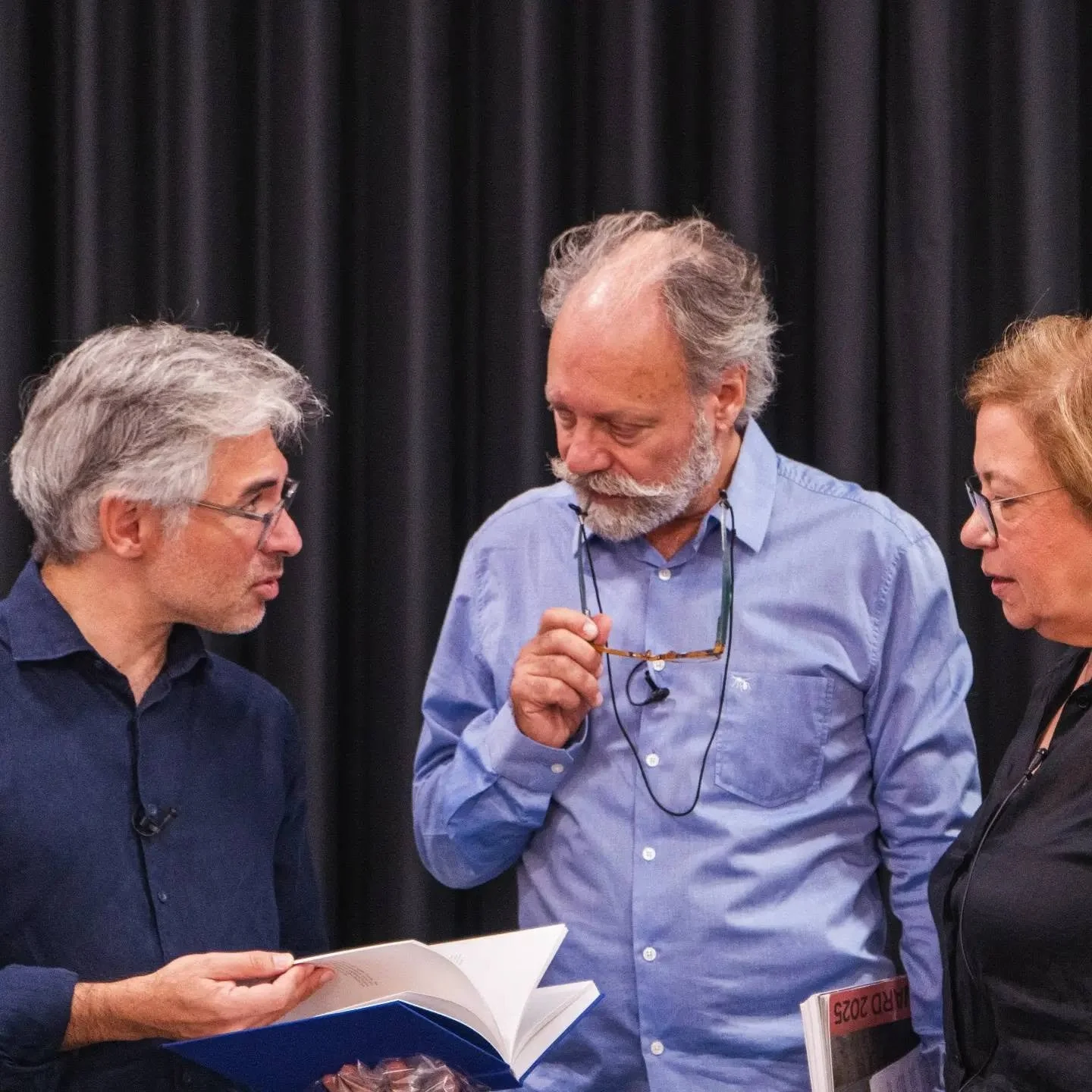
At the centre of the morning was a new session of LFA Talks — Publishing an Award, Extending a Legacy, developed around the first edition of the Luis Ferreira Alves International Photography Competition | A Contemporary Look at Architecture and the publication that emerged from it.
The session was preceded by a brief presentation of the Award's second edition by Pedro Leão Neto, who recalled that the project was created as a tribute to Luis Ferreira Alves, but was never intended to be solely retrospective. Its ambition is also to extend a particular culture of looking at architecture, encouraging photographers not simply to produce accomplished architectural images, but to construct coherent and authorial photographic series capable of proposing their own reading of a building, a group of works or a particular architectural condition.
The scale reached by the first edition — 1,495 submissions from 99 countries, leading to ten finalist series, prizes and mentions, an exhibition and a publication — provided an important background to the conversation. The second edition maintains this international dimension with a new jury composed of Paolo Rosselli, Valeria Carullo and João Pedro Serôdio, while also introducing the Portuguese Emerging Photography Award.
But the presentation also placed particular emphasis on something that extends beyond the competition itself: the network of people and institutions that makes such a project possible.
The Porto City Council and Cityscopio — Associação Cultural are the promoting bodies of the LFA Award, while its organisational structure brings together the promoting bodies with FAUP and Casa da Arquitectura. Around this core is a wider network of sponsors and strategic and institutional partners, including BPI / “la Caixa” Foundation, J. Soares Correia, CCDR-N, Metro do Porto, AMAG, panoramah!, the Portuguese Architects’ Association, the Marques da Silva Foundation Institute and the Serralves Foundation.
As Pedro Leão Neto underlined in his introduction, this collaborative dimension is fundamental: a legacy of this nature cannot be constructed through a single institution. DISCURSO_A5_DIA_26_V04_24_09_20… Instead, the Award is gradually taking shape through relationships between photography, architecture, research, publishing and different cultural institutions.
It was precisely from this broader understanding that Publishing an Award, Extending a Legacy developed.
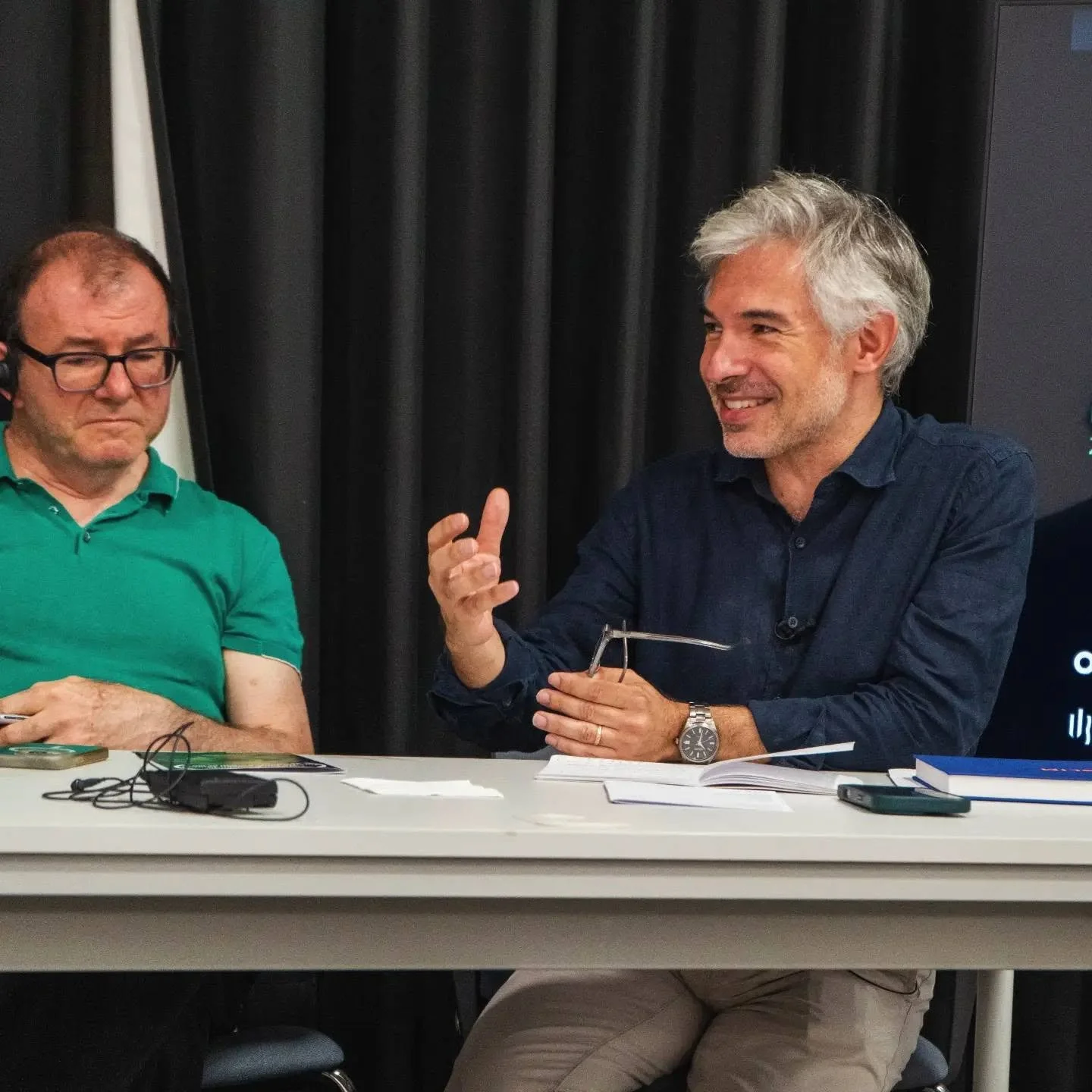
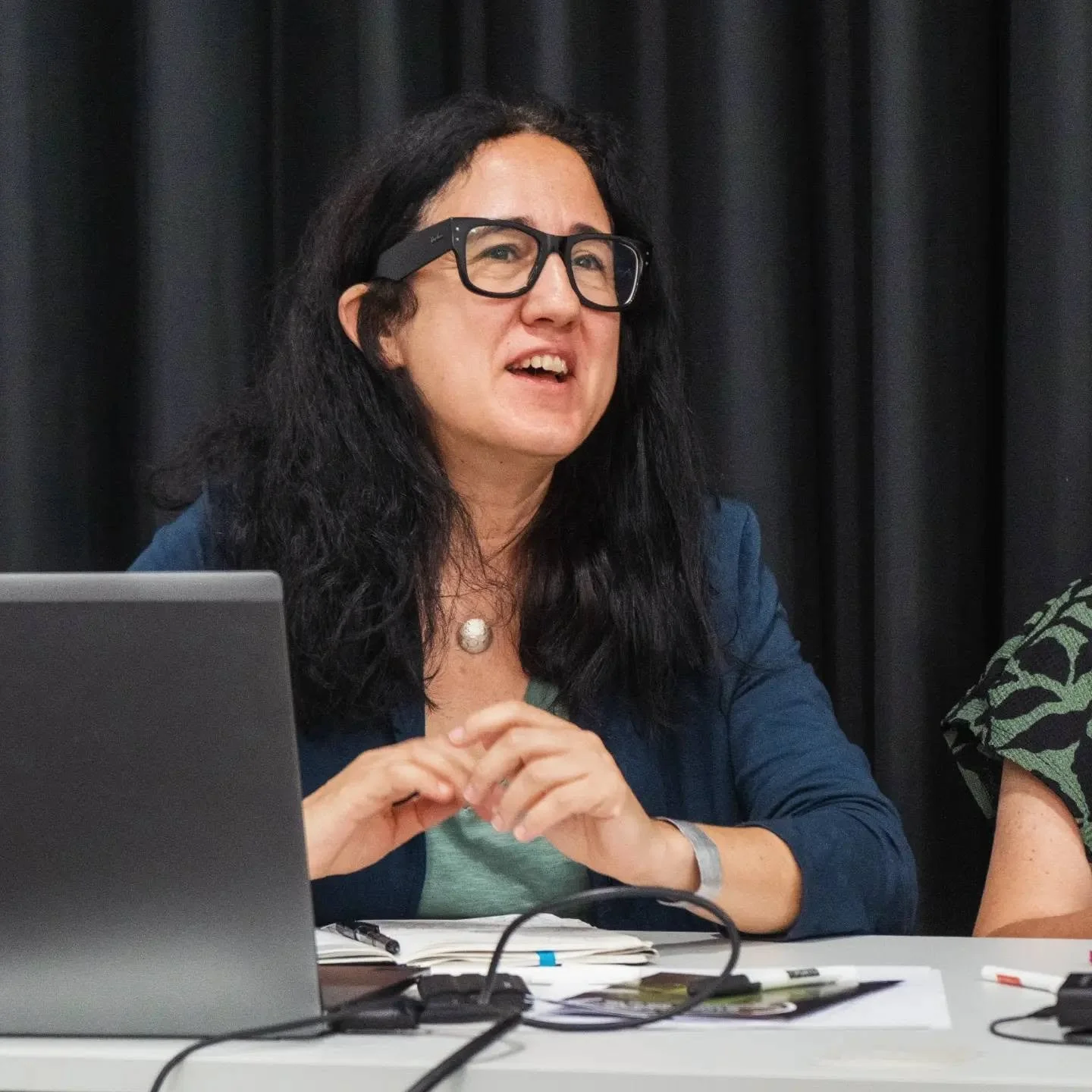
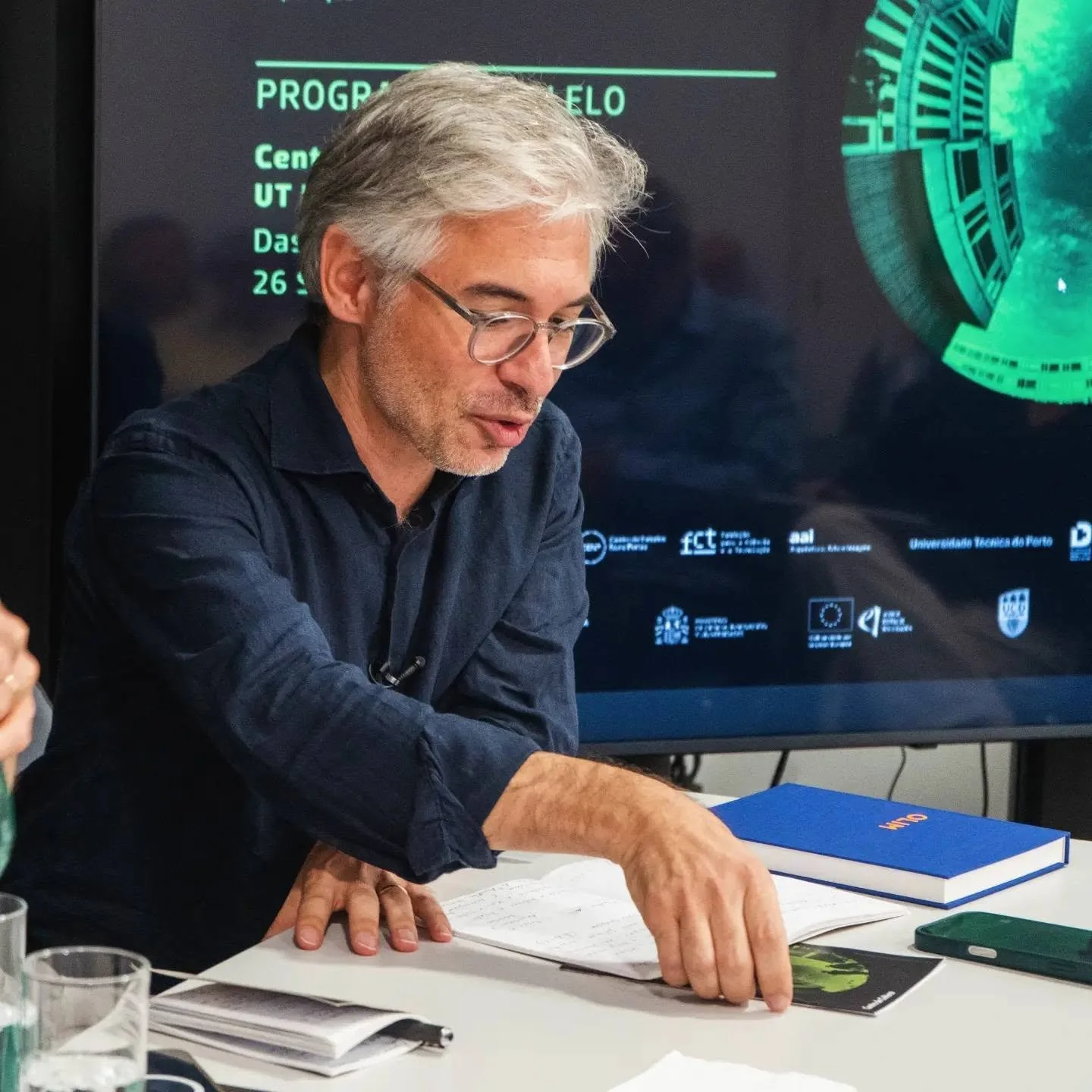
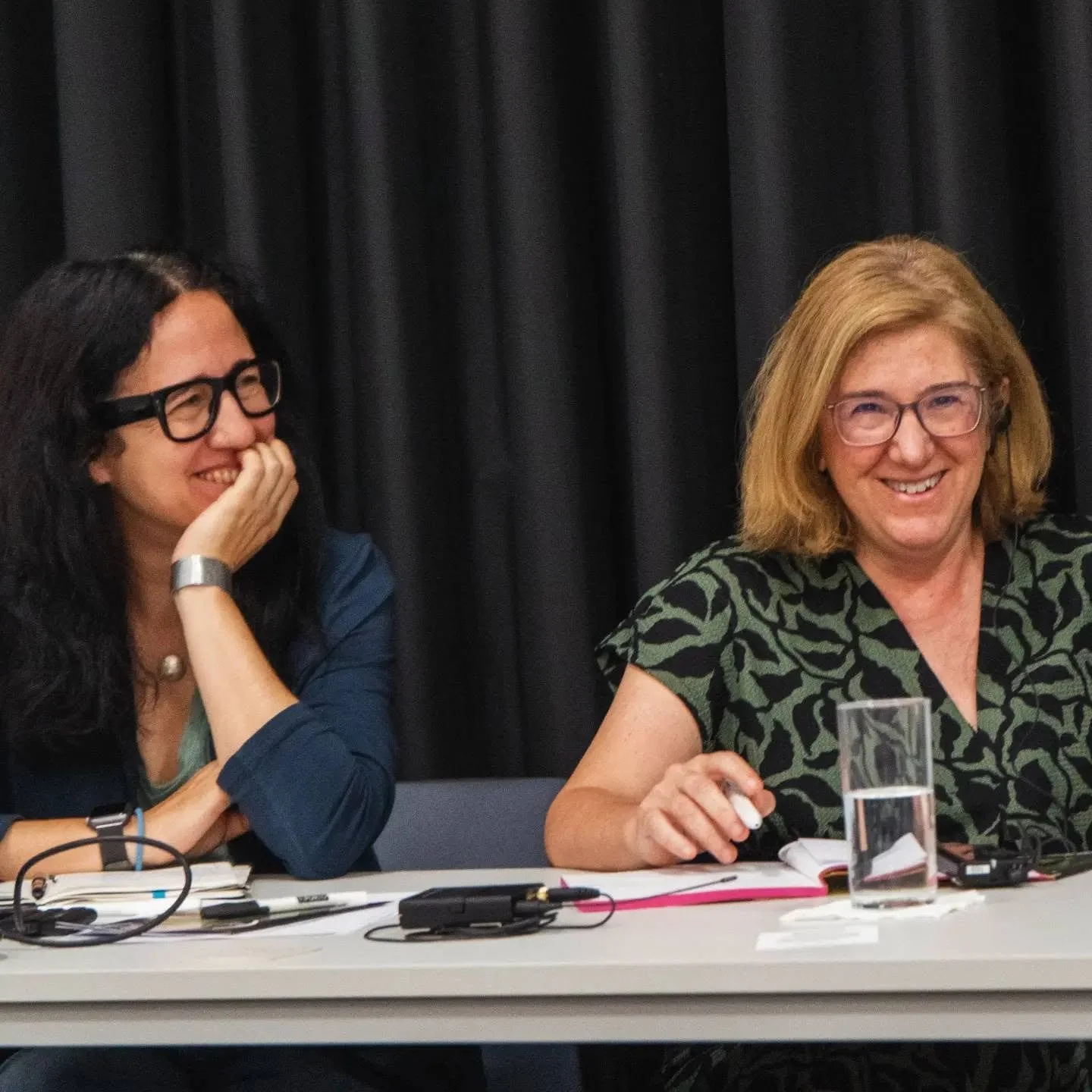
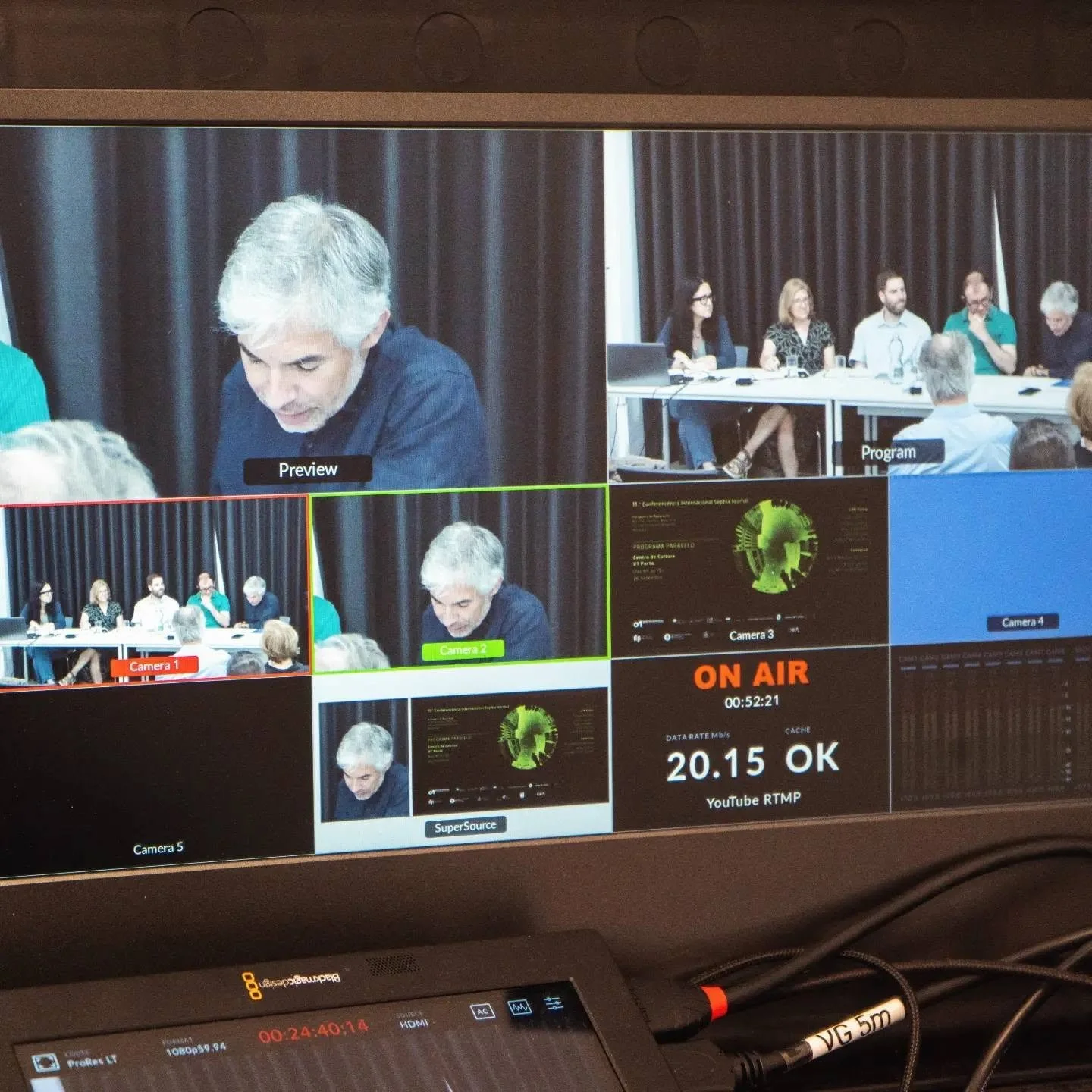
Moderated by Jorge Sobrado, Porto City Councillor for Culture and Heritage, the conversation brought together Hugh Campbell, Cristina Gastón, Judit Taberna Torres and Gabriel Hernández, whose different academic, editorial and critical experiences created a particularly rich combination of perspectives on photography, architecture and publishing. The intention from the outset was not to stage a succession of individual presentations, but to create a genuine conversation around the table.
Jorge Sobrado gave the session an energetic and engaging rhythm. Moving easily between humour and more demanding questions, he created an informal atmosphere in which the invited researchers and authors could feel at ease while being challenged to address sometimes difficult issues. His questions became starting points rather than endpoints, moving between individual participants and opening into wider exchanges around the table. The result was a lively conversation that also drew the audience into the questions being discussed.
Some apparently simple questions proved particularly productive. What kind of profile might best characterise an architectural photographer today? What distinguishes someone who photographs architecture from an author who uses photography to question architecture? And what happens when the photographer's interpretation no longer coincides with the image that architecture — or the architect — might wish to project?
From there, the discussion moved towards the autonomous and critical universe of photography. Architectural photography does not necessarily have to confirm architecture's own discourse. It can introduce distance, ambiguity and even discomfort. Precisely because photography constructs its own point of view, it can reveal uses, contradictions, social conditions and unexpected relationships that architectural representation may prefer to leave outside the frame. In this sense, photography can sometimes make both architecture and architects uneasy — but it is also through that independence that the medium can contribute most meaningfully to architectural culture.
This became one of the most interesting threads running through the conversation: photography not simply as a means of communicating architecture, but as a way of thinking architecture differently.
The LFA Award was discussed within precisely this expanded field. Rather than ending with the selection of winners, the project has progressively generated other forms through which photographs and ideas can circulate: the publication, exhibitions, podcasts, LFA Talks, archival work and other editorial and public initiatives. Together, these different components are beginning to constitute a cultural platform in which the competition is one moment within a longer process of research, discussion and dissemination.
The publication LFA Award: A Contemporary Look at Architecture was therefore an important point of departure for the conversation, but not its limit. The book raised the question of what happens to an award after the competitive moment has passed: how selected photographic works can remain active; how publishing can establish new relationships between them; and how an award can gradually generate an archive, critical debate, international circulation and cultural continuity.
This is also where the idea of extending a legacy acquired a wider meaning. The legacy of Luis Ferreira Alves is not understood only through the preservation and study of his photographic work, important as that is, but through the possibility of activating the questions it continues to raise and creating conditions for new photographers to develop independent ways of looking at architecture, the city and territory.
As Pedro Leão Neto suggested at the beginning of the session, there is a continuity between award, publication, archive and territory: different but interconnected ways of constructing, preserving and, above all, activating a legacy.
The morning continued with A City for Everyone | Seeing Photography, with photographers Aníbal Lemos and José Manuel Rodrigues, moderated by Olívia Marques da Silva. Complementing the questions raised during the LFA Talks, this second round-table turned more directly towards photography as a way of understanding human experience within architecture and the city.
Through the photographers' work and discussion, attention shifted from architecture as an autonomous object towards the ways people inhabit, appropriate and give meaning to spaces. Photography appeared once again as more than representation: as a means of approaching everyday life, memory and the relationships through which architecture becomes part of individual and collective experience.
Together, the two conversations gave the parallel programme its particular character. They approached photography from different positions but shared an underlying conviction: that photography can do more than describe architecture. It can question it, interpret it, bring other realities into view and create a space in which architecture can be discussed more openly and profoundly.
For the LFA Award, this may ultimately be one of the most important dimensions of the project: not simply recognising significant photographic work, but gradually creating a cultural platform through which architecture can be seen, questioned and discussed differently through photography.