


© Arquiteturas Film Festival
Ways of Seeing: Analog, Digital and the Photobook at Arquiteturas Film Festival
PT/ENG
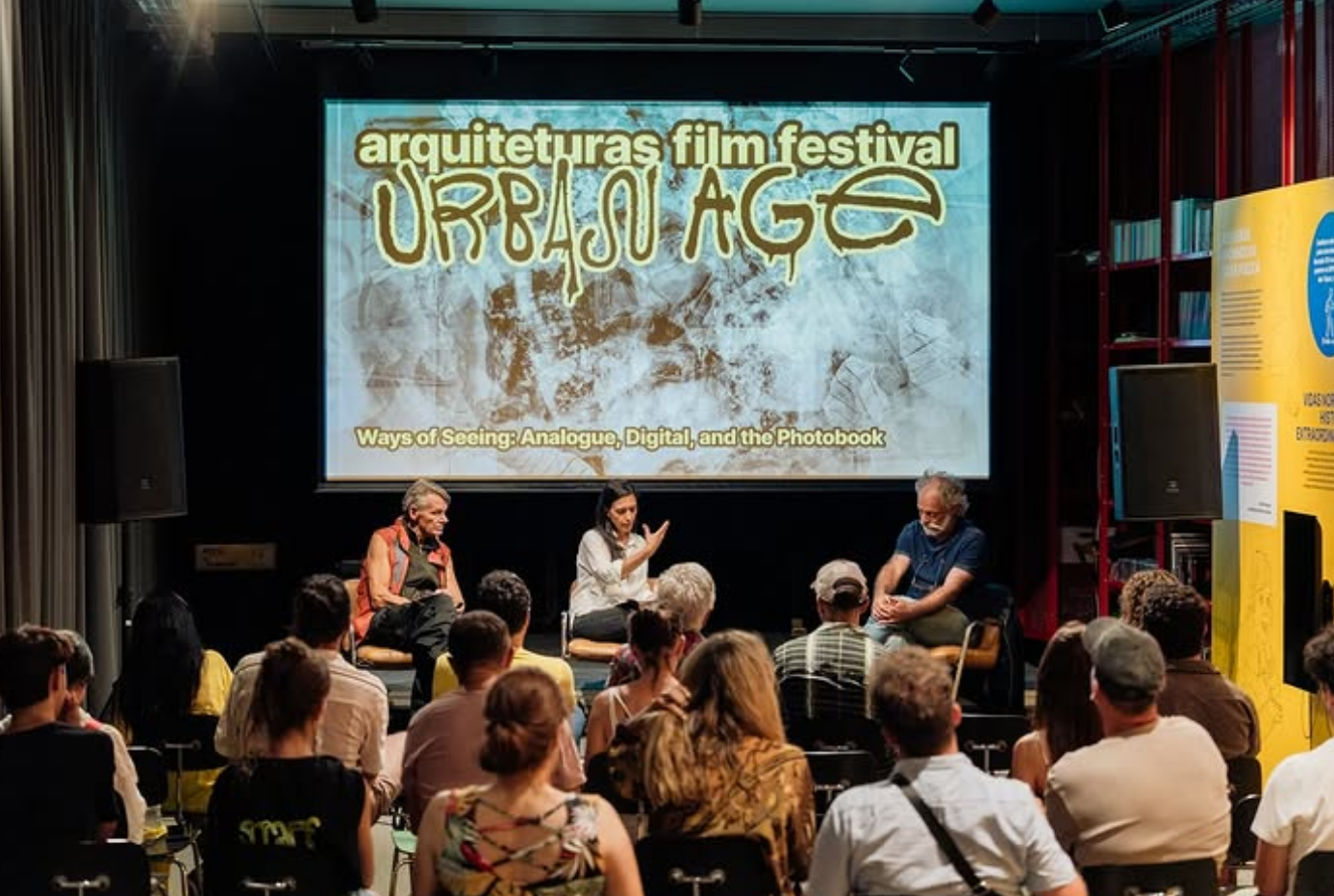
TOn 3 July 2026, Casa Comum hosted the session “Ways of Seeing: Analog, Digital and the Photobook”, with Leon Krige and Pedro Leão Neto, moderated by Maria Neto, as part of the Arquiteturas Film Festival in Porto. The bilingual session, held in Portuguese and English, brought together students from the workshop, colleagues, researchers, and participants from different disciplinary fields connected with art, photography, film, architecture and urban studies.
The session was opened by Paulo Moreira, Director of the Arquiteturas Film Festival, who welcomed the speakers and audience, underlining the importance of creating spaces for dialogue between architectural culture, visual practices and contemporary forms of image-making.
Moderated by Maria Neto, the conversation took as its starting point the idea of “ways of seeing”, reflecting on how photography shapes our understanding of architecture, the city and the world around us. The debate explored the relationship between analogue and digital photography, not as opposing positions, but as complementary modes of perception, production and circulation. Both media were discussed as distinct ways of recording and interpreting architecture and urban space, each with its own rhythms, material conditions and forms of attention.
Leon Krige, joining from Johannesburg, brought to the discussion his experience as an architect and photographer working in a city marked by intense transformation, social complexity and spatial fragmentation. His work, often developed at night and through direct engagement with the urban environment, opened up questions around walking, safety, risk, sensory perception and the act of photographing from within the lived city, rather than from the detached viewpoint of the plan.
Pedro Leão Neto, representing the research group Architecture, Art and Image — AAI/CEAU-FAUP and Cityscopio Cultural Association, framed photography as an instrument of thought and critical interpretation. Drawing on references such as John Berger, he emphasised that photography does not merely document buildings or urban spaces; it actively shapes how we understand them, remember them and relate to their social, cultural and spatial meanings. His intervention also addressed the role of editorial practice, visual research and the photobook in transforming photographic images into structured narratives.
A central theme of the debate was the contrast between the view from above and the experience of the city from the ground. Maria Neto framed this discussion through Michel de Certeau’s distinction between the city seen from the height of planning and the city lived through walking, gestures and everyday experience. This opened a wider reflection on how architectural education, urban conditions and social realities influence the way photographers see, move through and represent the city.
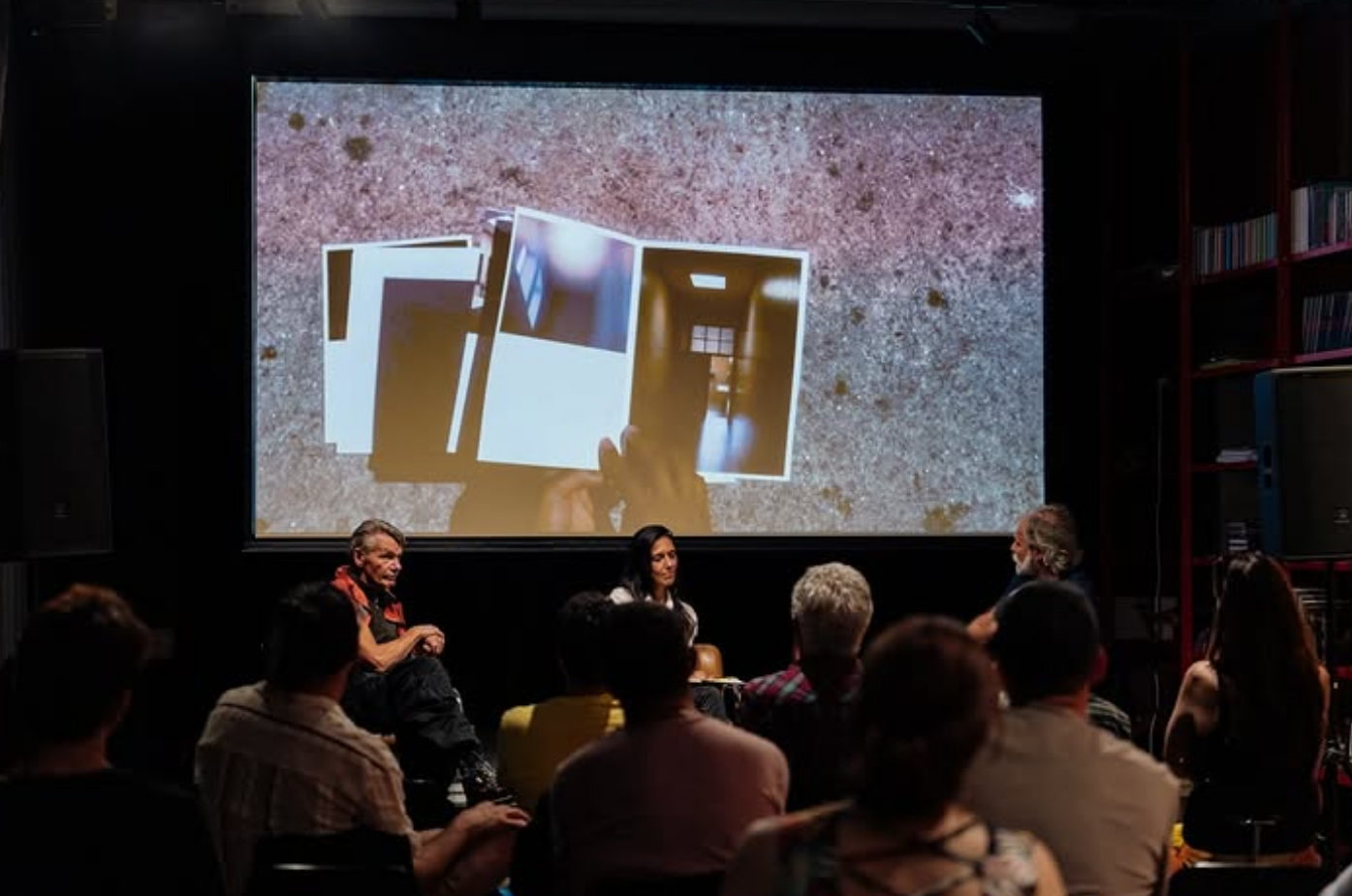
The discussion also considered the importance of the photobook as a tactile and narrative format. Rather than presenting images as isolated fragments, the photobook was approached as a space of sequencing, editing, rhythm and material encounter. In this sense, the book remains a privileged format for photographers, allowing images to be brought into relation with one another and transformed into coherent visual narratives.
The session generated strong interest among those present. The exchange between Leon Krige, Pedro Leão Neto and Maria Neto was lively and generous, moving between architecture, photography, urban experience, ethics, technology and publishing. The audience also actively participated, raising questions that expanded the discussion towards contemporary image saturation, artificial intelligence, privacy, and the continued relevance of slowly made photographs and carefully edited books.
By bringing together analogue and digital practices, architectural thinking and photographic narratives, “Ways of Seeing: Analog, Digital and the Photobook” offered a rich moment of reflection on how images continue to shape our perception of architecture and urban life. The session reaffirmed the importance of photography not only as a means of representation, but also as a critical tool for observing, questioning and reimagining the spaces we inhabit.
Language: English