FINAL-YEAR + ERASMUS STUDENTS AT U.PORTO: JOIN OUR TEAM!


AAI Research room - CENP | FAUP

FINAL-YEAR + ERASMUS STUDENTS AT U.PORTO: JOIN OUR TEAM!
CURRICULAR INTERNSHIPS 2026/2027

Publishing · Design · Visual Research · Photography · Communication · Culture

PT | EN

The Architecture, Art and Image Research Group — AAI / CENP / FAUP, in collaboration with Cityscopio – Cultural Association and scopio Editions, is offering opportunities during the 2026/2027 academic year for final-year and Erasmus students interested in undertaking a curricular internship within active editorial, scientific and cultural projects.

We are looking for curious, responsible and creative students from different areas of the University of Porto — Architecture, Fine Arts, Communication Design, Photography, Multimedia, Humanities, Communication, Social Sciences, Engineering and other related fields — who are interested in bringing their own knowledge and skills into projects that connect research, publishing, culture, image and society.

We are not necessarily looking for someone who already has experience in everything we do. What matters most is an affinity with the projects, a willingness to learn, a critical approach and an interest in working collaboratively and across disciplines.

Each internship will be developed according to the student’s profile, skills and interests, and may focus primarily on one of the four projects presented below.

FOUR PROJECTS CURRENTLY IN DEVELOPMENT

The proposed internships form part of a new phase of continuity, consolidation and development of four initiatives that we aim to strengthen through closer collaboration with different structures within the University of Porto, including its Faculties, research centres, Rectorate, U.Porto Alumni, U.Porto Press and Casa Comum, according to the specific nature of each project.

1. U.Porto Alumni Little Books

An editorial collection dedicated to celebrating and giving visibility to the work, trajectories and communities of the University of Porto.

The project is entering a new phase, with the aim of consolidating its identity and creating a genuinely transversal model capable of engaging different Faculties and academic fields across U.Porto.

An internship in this area may be particularly suited to students of Communication Design, Editorial Design, Fine Arts, Communication, Photography or Multimedia.

Possible areas of work include:

  • development and refinement of the collection’s visual identity;

  • branding and identity systems;

  • editorial design and typography;

  • creation and refinement of templates;

  • relationships between text and image;

  • research into papers, materials, printing techniques and binding;

  • prototyping of new volumes;

  • integration of print, PDF and ePUB formats;

  • digital communication and social media;

  • organisation and optimisation of editorial workflows;

  • development of an Identity and Procedures Manual.

The intention is for U.Porto Press progressively to assume the role of principal publisher of the collection, while scopio Editions remains an editorial partner, contributing the design and publishing experience already developed through the project.

This is therefore an opportunity to take part not simply in the production of a single book, but in the development of an editorial system capable of representing the University of Porto across different disciplines and Faculties.

2. scopio Architecture, Art and Image

scopio Architecture, Art and Image is an international open-access, peer-reviewed academic publication devoted to the relationships between Architecture, Art and Image.

The publication brings together academic articles, visual essays and artistic research, understanding photography, film and other visual practices not simply as forms of documentation, but also as critical research tools.

Possible areas of collaboration include:

  • editorial design;

  • image processing and organisation;

  • preparation of material for publication;

  • support for editorial workflows;

  • communication of international calls;

  • creation of digital content;

  • support for the OJS platform;

  • communication through academic and social networks;

  • research into references, authors and projects;

  • preparation of content associated with exhibitions, conferences or public presentations;

  • support for the national and international dissemination of the journal.

In 2026/2027, the publication enters a new phase of consolidation, including the development of Volume 3, (dis)placement, addressing contemporary questions such as housing, migration, territory, memory, gentrification, borders, resilience and spatial justice.

3. Sophia Journal + Sophia Books

Sophia Journal is an international open-access, peer-reviewed academic journal developed within the framework of AAI / CENP / FAUP, focusing on research at the intersection of architecture, photography, film, image, visual culture, urban studies and artistic practice.

The journal is distinguished by the way it brings together theoretical articles and visual essays, recognising the image as a means of producing knowledge in its own right.

Possible areas of work include:

  • support for academic and editorial processes;

  • organisation of articles and visual essays;

  • preparation and revision of content;

  • communication with authors and editors;

  • support for the OJS platform;

  • organisation of metadata and references;

  • preparation of communication materials;

  • international dissemination;

  • support for Sophia conferences;

  • development of website and social media content;

  • organisation and enhancement of the journal’s editorial archive.

Alongside this, a new publishing proposal is currently being developed: Sophia Books: Critical Companions to Image, Architecture and Visual Research.

The proposal is to transform completed thematic cycles of Sophia Journal into compact volumes of critical synthesis, creating a new book series published by U.Porto Press, with scientific and editorial coordination by Sophia Journal / AAI / CENP / FAUP.

This new strand may offer particularly interesting opportunities for students interested in:

  • publishing and editorial culture;

  • research;

  • book design;

  • organisation and structuring of knowledge;

  • academic communication;

  • internationalisation;

  • digital and print publishing.

The intention is to begin with a pilot volume, allowing the editorial, graphic, production and dissemination model to be tested before the collection is expanded.

4. LFA Talks

LFA Talks is a platform for critical reflection associated with the Luis Ferreira Alves International Photography Award, devoted to the relationships between photography, architecture, memory, heritage and contemporary visual culture.

The project develops through two complementary formats:

LFA Talks — public conversations, lectures, debates and round-table discussions;

LFA Talks Podcast — editorial conversations and interviews with photographers, architects, researchers, curators, jury members and award-winning authors.

The project is developed in collaboration with a range of partners, including FAUP, the Marques da Silva Foundation Institute and Casa Comum, alongside other cultural institutions connected to the LFA Award.

Possible areas of collaboration include:

  • background research on guests and themes;

  • support for episode production;

  • development of interview outlines and scripts;

  • photography and video;

  • audio and video editing;

  • design and communication;

  • social media content;

  • preparation of news items and editorial material;

  • archive organisation;

  • support for the production of events and public conversations;

  • national and international dissemination.

Themes include:

  • the legacy and work of Luis Ferreira Alves;

  • photography and architecture;

  • the photographic series as narrative;

  • memory, light, materiality and spatial experience;

  • heritage;

  • photography in teaching and research;

  • artificial intelligence and new image cultures;

  • the future of architectural photography.

HOW DOES THE INTERNSHIP WORK?

There is no single fixed model.

After reviewing each candidate’s CV, portfolio and areas of interest, we will identify which project may provide the most appropriate context for the internship.

A first draft work plan will then be prepared and subsequently discussed with the student and adapted to:

  • their interests;

  • their skills;

  • the required duration of the internship;

  • the curricular requirements of their Faculty or home institution;

  • the specific needs of the selected project.

Our aim is for each student to participate in a real process of research, publishing, design, production or communication, gradually taking on responsibilities and developing greater autonomy.

WHO ARE WE LOOKING FOR?

Final-year Bachelor’s or Master’s students, as well as Erasmus students, from U.Porto or, where appropriate, other higher education institutions.

We particularly value:

  • an interest in publishing and cultural projects;

  • an interest in Architecture, Art, Image, Photography or Visual Culture;

  • an interest in editorial design, branding and communication;

  • strong writing and information-organisation skills;

  • familiarity with Adobe InDesign, Photoshop, Illustrator, Premiere or equivalent software;

  • knowledge of photography, video, sound or digital production;

  • an interest in research and academic communication;

  • the ability to work both independently and collaboratively;

  • critical thinking;

  • organisational skills and reliability in meeting deadlines;

  • initiative and a willingness to learn.

You do not need to have all of these skills.
What matters most is a clear relationship between your profile and one of the available projects.

WHAT DO WE OFFER?

  • integration into an interdisciplinary environment combining research, publishing and cultural production;

  • participation in active projects with academic, cultural and international dimensions;

  • contact with researchers, authors, photographers, architects, designers, editors and institutions;

  • supervision and guidance throughout the internship;

  • the opportunity to develop work with tangible outcomes for your portfolio;

  • practical experience of editorial and research processes;

  • the possibility of contributing to conferences, publications, podcasts, exhibitions or other initiatives, depending on the project;

  • access to a working space within the AAI / FAUP context, whenever required and available;

  • an internship certificate or formal statement of participation, according to the applicable framework.

CONDITIONS

The internships offered within this framework are currently unpaid curricular internships.

As part of the future institutional development of these projects, we intend to discuss with the different organisations involved — including Faculties, research centres, the Rectorate and U.Porto Press — the possibility of creating more structured ways of integrating final-year students into these programmes and, whenever appropriate funding mechanisms become available, of considering forms of financial support for their participation.

This should, however, be understood as a future possibility rather than a condition or guarantee attached to the internships currently being offered.

APPLICATIONS

If you would like to join our team, please send:

  • your CV;

  • your portfolio, where applicable;

  • a short introduction indicating:

    • your course and year of study;

    • the type and duration of internship required;

    • your availability;

    • which of the four projects particularly interests you;

    • which areas you would most like to develop during the internship.

Contact:
info.aai@arq.up.pt

AAI — Architecture, Art and Image
CENP / Faculty of Architecture, University of Porto

in collaboration with

Cityscopio – Cultural Association
scopio Editions
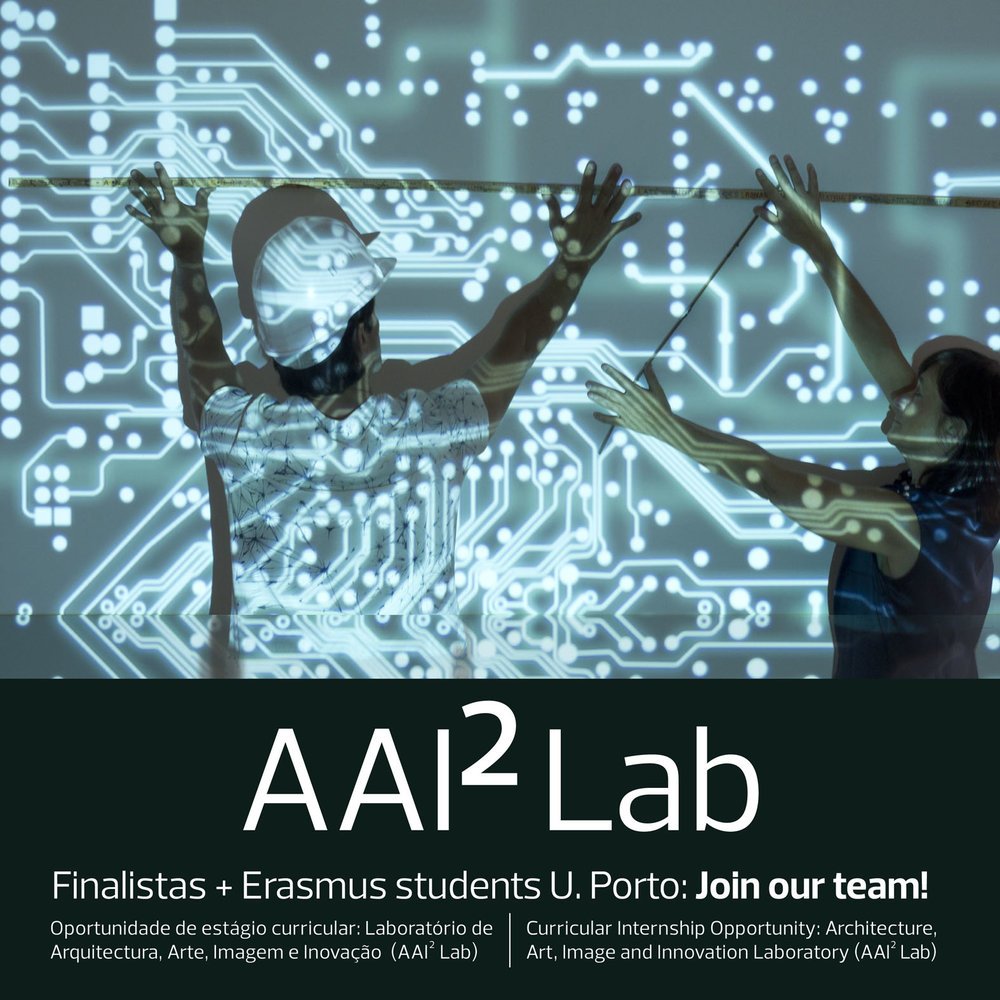
2026/2027 — RESEARCH, PUBLISH, CREATE AND COMMUNICATE THROUGH REAL PROJECTS.


FINALISTAS + ESTUDANTES ERASMUS U.PORTO: JUNTA-TE À NOSSA EQUIPA!


AAI Research room - CENP | FAUP

FINALISTAS + ESTUDANTES ERASMUS U.PORTO: JUNTA-TE À NOSSA EQUIPA!

ESTÁGIOS CURRICULARES 2026/2027

Edição · Design · Investigação Visual · Fotografia · Comunicação · Cultura


PT | EN

O Grupo de Investigação Arquitetura, Arte e Imagem — AAI / CENP / FAUP, em articulação com a Cityscopio – Associação Cultural e a scopio Editions, abre a possibilidade de acolher, durante o ano letivo de 2026/2027, estudantes finalistas e estudantes Erasmus interessados em desenvolver um estágio curricular integrado em projetos editoriais, científicos e culturais concretos.

Procuramos estudantes curiosos, responsáveis e criativos, provenientes de diferentes áreas da Universidade do Porto — Arquitetura, Artes, Design de Comunicação, Fotografia, Multimédia, Humanidades, Comunicação, Ciências Sociais, Engenharia ou outras áreas afins — interessados em cruzar os seus conhecimentos com projetos que articulam investigação, edição, cultura, imagem e sociedade.

Não procuramos necessariamente alguém com experiência em tudo aquilo que fazemos. Procuramos sobretudo afinidade com os projetos, vontade de aprender, capacidade crítica e interesse em trabalhar de forma colaborativa e interdisciplinar.

Cada proposta de estágio será construída em função do perfil, competências e interesses do estudante, podendo concentrar-se principalmente num dos projetos abaixo apresentados.

QUATRO PROJETOS EM DESENVOLVIMENTO

Os estágios propostos inserem-se numa fase de continuidade, consolidação e reforço de quatro iniciativas que pretendemos desenvolver em maior articulação com diferentes estruturas da Universidade do Porto, incluindo Faculdades, centros de investigação, Reitoria, U.Porto Alumni, U.Porto Press e Casa Comum, de acordo com a natureza específica de cada projeto.

1. U.Porto Alumni Little Books

Uma coleção editorial dedicada à valorização de trabalhos, percursos e comunidades da Universidade do Porto.

O projeto pretende entrar numa nova fase, consolidando a sua identidade e criando um modelo verdadeiramente transversal às diferentes Faculdades e áreas científicas da U.Porto.

Um estágio nesta área poderá interessar particularmente a estudantes de Design de Comunicação, Design Editorial, Artes, Comunicação, Fotografia ou Multimédia.

Entre os trabalhos possíveis encontram-se:

  • desenvolvimento e refinamento da identidade gráfica da coleção;

  • branding e sistemas de identidade;

  • design editorial e tipografia;

  • criação e aperfeiçoamento de templates;

  • relação entre texto e imagem;

  • estudo de papéis, materiais, técnicas de impressão e encadernação;

  • prototipagem de novos volumes;

  • articulação entre publicação impressa, PDF e ePUB;

  • comunicação digital e redes sociais;

  • organização e otimização do fluxo editorial;

  • desenvolvimento de um Manual de Identidade e Procedimentos.

Pretende-se que a U.Porto Press possa assumir progressivamente o papel de editora principal da coleção, enquanto a scopio Editions se mantém como editora parceira, contribuindo com a experiência editorial e gráfica já desenvolvida.

Trata-se, portanto, de uma oportunidade para participar não apenas na produção de um livro, mas na construção de um sistema editorial capaz de representar transversalmente a Universidade do Porto.

2. scopio Architecture, Art and Image

scopio Architecture, Art and Image é uma publicação científica internacional de acesso aberto e com revisão por pares, dedicada às relações entre Arquitetura, Arte e Imagem.

A publicação acolhe artigos científicos, ensaios visuais e investigação artística, entendendo a fotografia, o filme e outras práticas visuais não apenas como formas de documentação, mas também como instrumentos críticos de investigação.

Possíveis áreas de colaboração:

  • design editorial;

  • tratamento e organização de imagens;

  • preparação de conteúdos para publicação;

  • apoio ao fluxo editorial;

  • comunicação de calls internacionais;

  • criação de conteúdos digitais;

  • apoio à plataforma OJS;

  • divulgação através de redes académicas e sociais;

  • investigação de referências e autores;

  • preparação de conteúdos associados a exposições, conferências ou apresentações públicas;

  • apoio à disseminação nacional e internacional da revista.

Para 2026/2027, a publicação entra numa nova fase de consolidação, incluindo o desenvolvimento do Volume 3, dedicado ao tema (dis)placement, abordando questões contemporâneas como habitação, migração, território, memória, gentrificação, fronteiras, resiliência e justiça espacial.

3. Sophia Journal + Sophia Books

Sophia Journal é uma revista científica internacional, de acesso aberto e com revisão por pares, desenvolvida no quadro do AAI / CENP / FAUP, dedicada à investigação no cruzamento entre arquitetura, fotografia, cinema, imagem, cultura visual, estudos urbanos e prática artística.

A revista distingue-se pela articulação entre artigos teóricos e ensaios visuais, reconhecendo a imagem como instrumento de produção de conhecimento.

O trabalho poderá envolver:

  • apoio ao processo editorial e científico;

  • organização de artigos e ensaios visuais;

  • preparação e revisão de conteúdos;

  • comunicação com autores e editores;

  • apoio à plataforma OJS;

  • organização de metadados e referências;

  • preparação de materiais de comunicação;

  • divulgação internacional;

  • apoio às conferências Sophia;

  • desenvolvimento de conteúdos para website e redes;

  • organização e valorização do arquivo editorial da revista.

Paralelamente, está em desenvolvimento uma nova proposta editorial: Sophia Books: Critical Companions to Image, Architecture and Visual Research.

A proposta consiste em transformar os ciclos temáticos concluídos da Sophia Journal em pequenos livros de síntese crítica, criando uma nova coleção a publicar pela U.Porto Press, com coordenação científica e editorial da Sophia Journal / AAI / CENP / FAUP.

Esta nova vertente poderá proporcionar oportunidades particularmente interessantes para estudantes interessados em:

  • edição e cultura editorial;

  • investigação;

  • design de livros;

  • organização e sistematização de conhecimento;

  • comunicação científica;

  • internacionalização;

  • edição digital e impressa.

O objetivo será começar com um volume-piloto, permitindo testar o modelo editorial, gráfico, produtivo e de disseminação antes da expansão da coleção.

4. LFA Talks

O LFA Talks é uma plataforma de reflexão crítica associada ao Prémio Internacional de Fotografia Luis Ferreira Alves, dedicada às relações entre fotografia, arquitetura, memória, património e cultura visual contemporânea.

O projeto desenvolve-se através de dois formatos complementares:

LFA Talks — conversas públicas, conferências, debates e mesas-redondas;

LFA Talks Podcast — entrevistas e conversas editoriais com fotógrafos, arquitetos, investigadores, curadores, membros dos júris e autores premiados.

O projeto é desenvolvido em articulação com diferentes parceiros, nomeadamente a FAUP, Fundação Instituto Marques da Silva e Casa Comum, entre outras instituições culturais associadas ao universo do Prémio LFA.

Possíveis áreas de colaboração:

  • investigação preparatória sobre convidados e temas;

  • apoio à produção dos episódios;

  • desenvolvimento de guiões;

  • fotografia e vídeo;

  • edição áudio e vídeo;

  • design e comunicação;

  • conteúdos para redes sociais;

  • preparação de notícias e materiais editoriais;

  • organização de arquivo;

  • apoio à produção de eventos e conversas públicas;

  • divulgação nacional e internacional.

Os temas abordados incluem, entre outros:

  • legado e obra de Luis Ferreira Alves;

  • fotografia e arquitetura;

  • série fotográfica e narrativa;

  • memória, luz, matéria e experiência;

  • património;

  • fotografia no ensino e investigação;

  • inteligência artificial e novas culturas da imagem;

  • futuro da fotografia de arquitetura.

COMO FUNCIONA O ESTÁGIO?

Não existe um modelo único.

Depois da análise do CV, portefólio e interesses do candidato, procuraremos identificar qual dos projetos poderá constituir o contexto mais adequado para o estágio.

A partir daí será preparado um primeiro draft de plano de trabalho, posteriormente discutido com o estudante e adaptado:

  • aos seus interesses;

  • às suas competências;

  • à duração prevista do estágio;

  • às exigências curriculares da respetiva Faculdade ou instituição de origem;

  • às necessidades concretas do projeto escolhido.

Pretende-se que o estudante participe num processo real de investigação, edição, design, produção ou comunicação, assumindo progressivamente responsabilidades e desenvolvendo autonomia.

QUEM PROCURAMOS?

Estudantes finalistas de Licenciatura ou Mestrado, bem como estudantes Erasmus, provenientes da U.Porto ou, quando adequado, de outras instituições de ensino superior.

São especialmente valorizados:

  • interesse pelo universo editorial e cultural;

  • interesse por Arquitetura, Arte, Imagem, Fotografia ou Cultura Visual;

  • interesse por design editorial, branding e comunicação;

  • capacidade de escrita e organização de informação;

  • conhecimentos de Adobe InDesign, Photoshop, Illustrator, Premiere ou aplicações equivalentes;

  • conhecimentos de fotografia, vídeo, som ou produção digital;

  • interesse por investigação e comunicação científica;

  • capacidade de trabalhar autonomamente e em equipa;

  • sentido crítico;

  • organização e cumprimento de prazos;

  • iniciativa e vontade de aprender.

Não é necessário reunir todas estas competências.
O mais importante será existir uma relação clara entre o perfil do candidato e um dos projetos disponíveis.

O QUE OFERECEMOS?

  • integração num contexto interdisciplinar de investigação, edição e produção cultural;

  • participação em projetos concretos com dimensão universitária, cultural e internacional;

  • contacto com investigadores, autores, fotógrafos, arquitetos, designers, editores e instituições;

  • acompanhamento e orientação do trabalho;

  • possibilidade de desenvolver um projeto de estágio com resultados concretos para portefólio;

  • experiência em processos editoriais e de investigação;

  • possibilidade de participação em conferências, publicações, podcasts, exposições ou outras iniciativas, de acordo com o projeto;

  • espaço de trabalho no contexto do AAI / FAUP, sempre que necessário e disponível;

  • certificado ou declaração de realização do estágio, de acordo com o enquadramento aplicável.

CONDIÇÕES

Os estágios desenvolvidos neste enquadramento são, atualmente, estágios curriculares não remunerados.

No contexto do desenvolvimento institucional destes projetos, pretende-se discutir futuramente com as diferentes entidades envolvidas — nomeadamente Faculdades, centros de investigação, Reitoria e U.Porto Press — a possibilidade de integrar de forma mais estruturada estudantes finalistas nos respetivos programas e, sempre que existam mecanismos de financiamento adequados, avaliar modalidades de apoio à sua participação.

Esta possibilidade deverá, contudo, ser entendida como uma perspetiva futura e não como uma condição ou garantia associada aos estágios atualmente propostos.

CANDIDATURAS

Se tens interesse em juntar-te à nossa equipa, envia:

  • CV;

  • portefólio, quando aplicável;

  • uma breve apresentação indicando:

    • o teu curso e ano;

    • o tipo e duração do estágio curricular;

    • a tua disponibilidade;

    • qual ou quais dos quatro projetos te interessam particularmente;

    • que áreas gostarias de desenvolver durante o estágio.

Contacto:
info.aai@arq.up.pt

AAI — Arquitetura, Arte e Imagem
CENP / Faculdade de Arquitetura da Universidade do Porto

em articulação com

Cityscopio – Associação Cultural
scopio Editions

2026/2027 — INVESTIGAR, EDITAR, CRIAR E COMUNICAR A PARTIR DE PROJETOS REAIS.


Call interno para Investigadores do CEAU com e / sem Doutoramento integrarem candidatura AAi2 Capacitation Lab como Key staff (Investigadores seniors) e Early Stage Researchers (ERS)


Call interno para Investigadores do CEAU com e / sem Doutoramento integrarem candidatura AAi2 Capacitation Lab como Key staff (Investigadores seniors) e Early Stage Researchers (ERS)

The AAI2Lab aims to reinforce research collaboration between Portugal, Spain and Sweden to strengthen the mobilizing potential of Architecture, Art and Image in order to identify and render visible new collective spaces of political action and urban intervention through an interdisciplinary research and pedagogical context with a significant component of Contemporary Photography that AAi2 Lab understands being Photography posited as a relevant artistic, critical and documentary research tool. combined with complementary research in Information Technology and Space Syntax.

The mission of AAi2Lab project is inspired by broad conceptions of creativity and innovation as inducing forces of social and institutional co-evolution, exploring the potential of photography and mapping combined with qualitative and quantitative approaches, for making imaginative questions on space appropriation, urban perception and socio-cultural diversity and address transversal problems within interdisciplinary debates on Architecture, City and Territory.

The project consists in reinforcing the activity of an international capacitation laboratory, the AAI2Lab, based in the Centre of Architecture and Urbanism Studies of Faculty of Architecture of Porto University (FAUP-CEAU) with the collaboration of 2 European leading institutions, challenging exchange of students, teachers, and researchers within the fields of Architecture, Art, Image, and Information Technology.

AAi2 Lab is crucial to create an interdisciplinary framework of actions and collaborations, which will give a significant answer to some of the Widening Partner research weaknesses and boost strategic capacities and research skills of FAUP and its I&D centre. This means, besides other things:

(1) Reinforcement of a more active collaboration between widening partner research groups, with other national and international partners;

(2) Strengthening of an overall ethos focused on research and action covering an inclusive interdisciplinary field on the subject of work and ways of life characteristic of several populations in the contemporaneity, being attentive to the relationship between the spaces of architecture, the city, the territory and its experiences;

(3) Integration of research from emerging new PhDs and post-graduates in AAi2 Lab implementing an interdisciplinary collaborative international platform for research and empirical studies;

(4) Stimulation of the innovation capacity of FAUP using cutting-edge technologies applied to urbanism, architecture, art and image;

(5) Stimulation of the dialogue of early stage researchers with other professionals, articulating academic training, professional practice and scientific research through the internationalization of collaboration and experience exchange through workshops, debates, conferences and other knowledge-sharing actions aimed at students of Architecture, Art and Image at national and international level;

(6) Reinforcement of the link research-teaching, with advanced ‘levels’ of knowledge being offered to early stage researchers, both from Master and Continuing Professional Development (CPD), through the AAi2 Lab E-Learning courses modules. These will increase the impact and income generation of the widening research partner;

(7) Internationalization of the on-going Visual Spaces of Change (VSC) project and Contemporary View of City Spaces and Architecture in Oporto: Documentaries and Artistic Photography Mapping (MFDA-ARP) as a vital strategy to disseminate the research developed and reinforcement of the Porto region and their knowledge centres;

(8) Stimulation and support the integration of new research projects focused on critical issues regarding informal settlements or marginalized areas in our cities, contributing to open the traditional understanding of the Architecture, City and Territory towards more inclusive and committed design.

AAi2Lab is grounded in the idea that valid scientific insight in society can be acquired by observing, analysing, and theorizing its visual manifestations (Pauwels, 2010) and that there is the need to use diverse visual media for researching, documenting and analysing socio-spatial issues by combining diverse images, photography and data visualization as meaningful research approaches in the study of how collective spaces are used, perceived and transformed through everyday appropriation. All this means, besides other things, combining artistic and documentary visual strategies with qualitative and quantitative analysis of collective spaces transformation. The potential of intertwining qualitative and quantitative analysis, as well as the artistic and documentary visual strategies, should inform, have as a result and anchor configurational methodologies and relational socio-spatial logics synthesised within collective spaces through collected information of socio-spatial appropriation and urban perception.

Thus, it wants to ensure the constant research and development of knowledge in the creation, experimentation, innovation and evolution of various artistic areas, with particular emphasis on experimentation and research of architectural culture and contemporary photography, mainly exploring the value of visual perception in the development of these themes. In this way, this laboratory aims to rearticulate the ethical and aesthetic dimensions of these disciplinary fields, by developing communication strategies and critical self-reflexive exercises, inserted in a broad cosmopolitan discussion on the redefinition of collective spaces. These are the places for appropriation by individuals on behalf of themselves or of larger agencies and groups mainly configured as local actions. In this process, global patterns emerge from space appropriation initiatives reflected in daily decisions. Local actions are successively done, undone and transformed as individuals adapt to what is locally optimal.

The mission of AAi2Lab is to activate the potential of young generations of students, researchers, architects and artists to intervene in their socio-spatial reality, exploring the use of image, namely Contemporary Photography, for observing, analysing and theorizing different dimensions of collective spaces based on visual research methods. The active cooperation between the various partner entities of the AAi2Lab aims to stimulate a multidisciplinary research dynamic, where photography among other investigation tools, is a significant visual instrument tool, around the many hybrids between the spaces of the commons, urban spaces of collective use and the public sphere, in a joint effort to understand how these social constructions can be mutually transformed, preserved or regenerated through concerted actions.

At AAi2Lab, the power of image is used to bridge objective and subjective aspects of observation, analysis, interpretation and expression of the multiple overlapping realities that configure collective spaces. Crossing borders and shifting boundaries across disciplines, this collaborative platform fosters synergies between different sensibilities and skills, in order to develop innovativeresearch-action practices capable of strengthening emerging spaces of participation and citizenship.
Contact informationAAI | Architecture, Art and Image
info.aai@arq.up.pt


Convocatória a projetos Twinning do Horizonte 2020
Os projetos Twinning visam reforçar significativamente uma área específica de investigação numa instituição reconhecida, criando uma ligação entre esta instituição e, no mínimo, duas instituições de investigação líderes em outros Estados Membros.O Twinning deverá contribuir para os seguintes objetivos: - Melhorar a capacidade C&T das instituições “ligadas”; - Elevar o perfil do pessoal de investigação, bem como da instituição envolvida.As propostas Twinning deverão definir claramente a estratégia científica para incrementar e estimular a excelência científica e a capacidade de inovação numa determinada área de investigação, melhorando, paralelamente, a qualidade científica dos parceiros envolvidos nas actividades do Twinning. Os proponentes deverão ainda justificar os eventuais contributos do projecto para a Estratégia de Especialização Inteligente nas regiões onde estão instalados. Os projetos Twinning deverão produzir um impacto significativo e mensurável na capacidade científica e inovadora das instituições iniciantes, através, por exemplo, do aumento em publicações com arbitragem cientifica e citações.


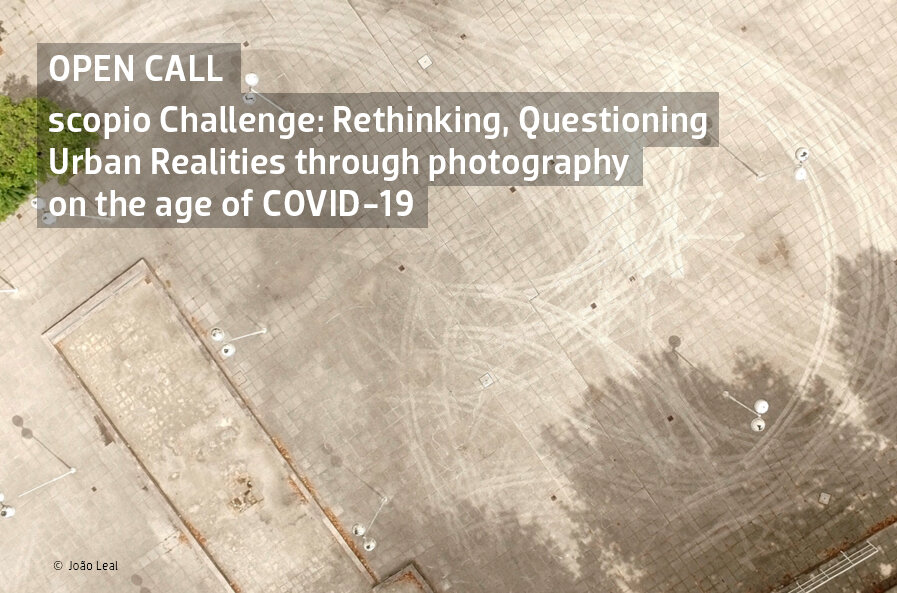
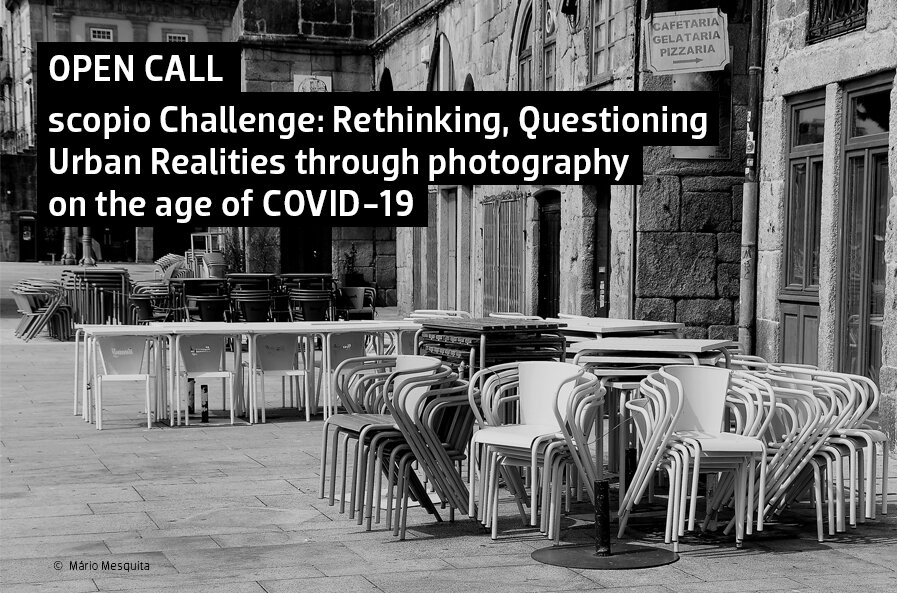
scopio Challenge – Repensar, Questionar Realidades Urbanas através da fotografia em tempos de COVID-19


scopio Challenge – Repensar, Questionar Realidades Urbanas através da fotografia em tempos de COVID-19

PT | EN

O desafio é o de criar uma narrativa visual tendo como base a sua experiência de vida diária neste momento difícil de isolamento e crise por causa da pandemia COVID-19.


É pedido um projeto de fotografia contemporânea documentando a experiência pessoal e emocional da vida sob as restrições impostas pela COVID-19, o que pode significar fotografar o espaço íntimo ou o ambiente urbano imediato e questionar, repensar esta nova realidade que estamos a viver confrontando o que está acontecendo e os sentimentos que esta situação cria em todos nós.

Uma narrativa visual que pode ter uma aura de melancolia, ou que pode ser desapaixonada e crua ou o seu contrário, comunicando uma forte dimensão romântica, mas acima de tudo que seja capaz de despertar em cada um de nós uma forte emoção ou sensação, ter um efeito intensamente subjetivo a partir de um detalhe, ou “acidente” que podemos encontrar a partir das suas imagens.  Recorrendo a A Câmara Clara de Roland Barthes, apelamos a uma narrativa visual onde certas imagens tenham o potencial de despertar em nós algo de muito forte, um punctum, como “(...) se a imagem lançasse o desejo para além daquilo que ela dá a ver.''[1] algo mais do que apenas o interesse geral de studium.

O objetivo é explorar e questionar a vida doméstica e as realidades urbanas de várias cidades e territórios neste difícil momento de isolamento devido às crises da COVID-19, permitindo que vários espaços domésticos, espaços urbanos, conjuntos de edifícios, espaços públicos e outras componentes urbanas sejam objeto de uma série de fotografia não convencional.

Uma narrativa visual que tem como base a capacidade e a vontade de comunicar com os outros, colocando-nos de novo em contacto simultaneamente com o nosso eu interior e com a vida que nos envolve. Uma série fotográfica capaz de comunicar a experiência emocional da vida, sob as restrições impostas pela COVID-19, explorando dispositivos de memória crítica e alegórica e os universos documental e ficcional, existindo a liberdade de adotar várias estratégias artísticas de forma a possibilitar diversos níveis de contaminação entre estes dois universos.

Call divulgada no ArtRabbit

Organização e contatos

·      scopio Challenge – Repensar, Questionar Realidades Urbanas através da fotografia em tempos de COVID-19 é uma iniciativa conjunta entre a Associação Cultural Cityscopio e um grupo de investigadores / docentes da FAUP e FBAUP, contando com apoio institucional da Reitoria da U. Porto.

Responsabilidade e iniciativa

·      Grupo de investigação de Arquitectura, Arte e Imagem (AAI / CEAU / FAUP)
·      Laboratório de Arquitectura, Arte, Imagem e Inovação (AAi2 Lab)
·      Associação Cultural Cityscopio

Organização coordenação

·      José Carneiro (FBAUP)
·      Maria Neto (FAUP)
·      Mário Mesquita (FAUP)
·      Pedro Leão Neto (FAUP)

Contactos

·      info@cityscopio.com
·      scopiochallenge@cityscopio.com
·      Arquitectura, Arte e Imagem (AAI)

SUBMISSÃO DE PROJETOS FOTOGRÁFICOS E PRAZOS

Prazos para submissão de projetos fotográficos:
Primeiro fase 31 de julho 2020 || Segunda fase 31 de dezembro 2020

A submissão deve consistir de uma pasta comprimida (tamanho máximo 10 MB) intitulada com o nome do participante (PRIMEIRONOME_ULTIMONOME.zip) com o seguinte conteúdo:

a. uma pasta com um mínimo de 5 e um máximo de 20 imagens em formato JPEG, com um máximo de 2000px no lado mais longo, gravar em formato para a web com qualidade reduzida a cerca de 30%;
b. o conjunto total de imagens não deve exceder os 10MB;
c. uma biografia curta para colocar na galeria (os textos devem estar traduzidos para português e inglês);
d. sinopse do projeto (os textos devem estar traduzidos para português e inglês).

Enviar trabalhos para o email: scopiochallenge@cityscopio.com 

Publicação

Os trabalhos aceites serão publicados na plataforma da scopio network, existindo depois a possibilidade de os autores serem contatados pela equipa editorial da scopio para publicar os seus projetos no scopio Newspaper com uma edição limitada em papel e online.

[1] Roland Barthes, A Câmara Clara: Nota sobre Fotografia. Rio Janeiro, Nova Fronteira, 2004. p. 89


scopio Challenge for photography on the age of COVID-19


scopio Challenge for photography on the age of COVID-19

PT | EN

The challenge is to create a visual narrative that is grounded on your daily life experience in this difficult moment of isolation because of the COVID-19 crises.

Our interest is a contemporary photography project documenting the personal and emotional experience of life under the restrictions imposed by COVID-19, which may mean photographing one’s intimate space or immediate urban surroundings and rethinking this new reality confronting what is happening and the feelings that this situation creates on all of us.

A visual narrative that can have an aura of melancholy, or which may be impassioned and raw or the other way-round, communicating a strong romantic dimension, but above all that is able to awaken a strong emotion or feeling in each of us, to have an intensely subjective effect simply from a detail, or “accident” that you can find in its images.  Using Roland Barthes’ Camera Lucida, we call for a visual narrative where certain images have the potential to arouse something very strong in us, a punctum; “(...) as if the image launched desire beyond what it permits us to see.”[1] Something more than just the general interest of studium.

The aim is to explore and question the domestic life and urban realities of several cities and territories in this difficult moment of isolation because of the COVID-19 crises, allowing several domestic spaces, urban spaces, building sets, public spaces and other urban components to be object of a non-conventional photography series.

A visual narrative that has as base the capacity and will to communicate with others, thus putting us back in touch simultaneously with our inner, hidden selves and with life surrounding us. A photography series that are able to communicating the emotional experience of life in domestic or / and urban space, under the restrictions imposed by COVID-19, exploring critical and allegorical memory devices and the documental and fictional universes, existing the freedom to adopt several artistic strategies in a way to make it possible several levels of contamination between these two universes.  

Call featured on ArtRabbit

Organisation and contacts

. scopio Challenge – Rethinking, Questioning Urban Realities through photography on the age of COVID-19 is a joint initiative of Cityscopio Cultural Association with researchers from FAUP and FBAUP, having the institutional support of U. Porto Rectorate.

Responsability and initiative

·      Architecture, Art and Image Research Group (AAI / CEAU / FAUP)
·      Architecture, Art, Image and Innovation Laboratory (AAi2 Lab)
·      Cityscopio Cultural Association

Organization coordination

·      José Carneiro (FBAUP)
·      Maria Neto (FAUP)
·      Mário Mesquita (FAUP)
·     Pedro Leão Neto (FAUP)

Contacts

·      info@cityscopio.com
·      scopiochallenge@cityscopio.com
·      Architecture, Art and Image (AAI)


ENTRIES SUBMISSION AND DEADLINES

Deadline for submission of photography projects:
First stage 31 July 2020 || Second stage 31 December 2020

The submission must consist of a zipped folder (max. size 10 MB) named with the name of the participant (FIRSTNAME_LASTNAME.zip) with the following content:

a. a folder with a minimum of 5 images and a maximum of 20 images in JPEG format with the longest side 2000px, saved for web with approximately reduced quality to 30%;
b. the total set of images should not exceed 10MB;
c. a short biography to place in the gallery (all texts must be translated in portuguese and english);
d. synopsis of the project (all texts must be translated in portuguese and english).

Send submission to email: scopiochallenge@cityscopio.com 

Publication

The accepted work will be published in scopio network and some of these submitted works may also be selected to publish in scopio Newspaper, with a limited edition in paper.

[1] Roland Barthes, A Câmara Clara: Nota sobre Fotografia. Rio Janeiro, Nova Fronteira, 2004. p. 89


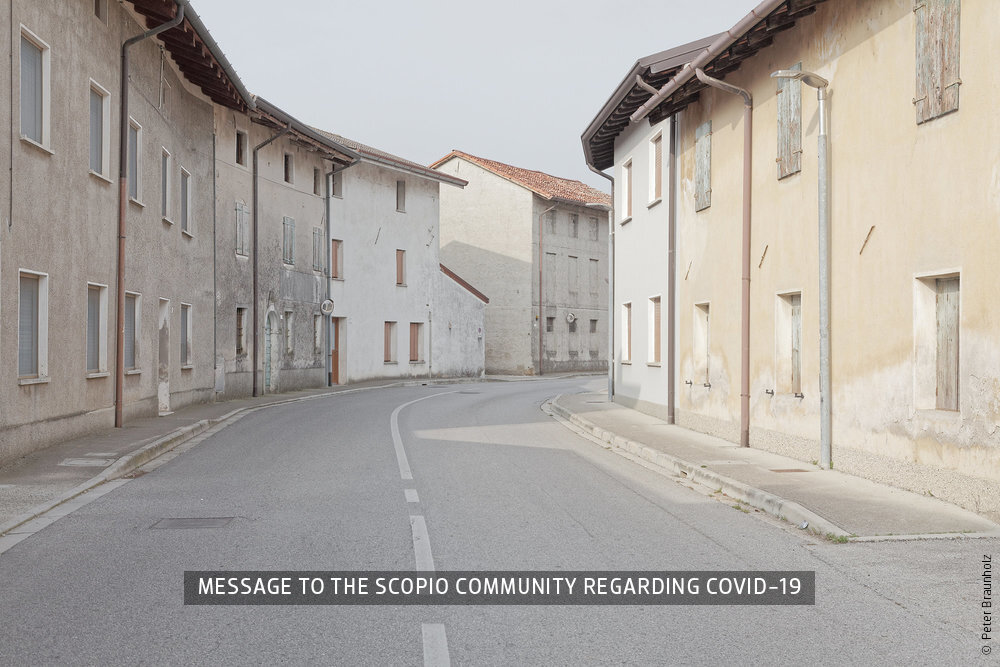
Mensagem à Comunidade scopio Relativamente ao COVID-19

 
MESSAGE COVID.jpg

Mensagem à Comunidade scopio
Relativamente ao COVID-19


Estimada Comunidade SCOPIO,

O COVID-19 afetou-nos a todos e a sua rápida propagação originou uma pandemia que mudou os nossos modos de vida e nos obrigou a adotar novos hábitos sociais e laborais. Estamos a entrar em contacto com todos vós para expressar a nossa preocupação coletiva por qualquer um de vós cuja saúde, ou a das vossas famílias e pessoas próximas, esteja a ser diretamente afetada por esta crise. A scopio está muito ligada à comunidade académica e relacionada com o universo da Arquitectura, Arte e Imagem – nomeadamente à Fotografia – e apercebemo-nos de que, para muitos de vós, o trabalho, a investigação e o ensino mudaram ou foram suspensos de forma abrupta. Gostaríamos de aproveitar esta oportunidade para vos informar que apesar deste contexto difícil que atravessamos, estamos empenhados em manter uma plataforma online activa e capaz de publicar tanto trabalhos finais editados de estudantes como séries fotográficas de autores que respondam aos nossos apelos para o intercâmbio de trabalhos e ideias através da Fotografia. Para tal, a scopio abriu uma chamada para séries fotográficas: scopio Challenge for photography on the age of COVID-19.

Estamos a convidar-vos a todos para participarem nesta chamada.
Por favor, continuem a cuidar de vós e de todos que vos rodeiam.
Estamos ansiosos pelos vossos trabalhos.

PT | EN


Message to the scopio Community Regarding COVID-19

 
MESSAGE COVID.jpg

Message to the scopio Community Regarding COVID-19

Dear SCOPIO Community,

COVID-19 has affected us all and its rapid spread has originated a pandemic that has changed our ways of living and made us adopt new social and working habits. We’re getting in touch with all of you to express our collective concern for any of you whose health or that of your families and loved ones is being directly affected by this crisis. scopio is very linked to the architecture and arts academic community as well as to photography, and we’ve realized that for many of us, work, research, and teaching has rapidly changed or in some cases, suspended. We would like to take this opportunity to let you know that through these difficult times and beyond, we are committed to maintaining an active website capable of publishing both selected final works of students and photographic series of authors that answer our calls, in order to disseminate both work and ideas in the photographic media. To this end, scopio has opened a new call for entries: scopio Challenge for photography on the age of COVID-19.

We are inviting you all to take part in this call.
Please continue to take care of yourselves and all those around you.
We’re looking forward for your works.

PT | EN