
BAIRRO DE RAMALDE
RHYTHMS OF THE ORDINARY Inhabiting Távora's
FCPA II - 2025 | 2026
Ana Margarida Calheiros, Diogo Cunha, Gonçalo Carqueja Coelho, João Ling E Nicole Amorim
Architecture is often documented as a finished, static object. But in this case the Bairro de Ramalde is not a silent monument; it is a mechanism for living. In this project, we step away from the monumental to focus on what Georges Perec called the ‘infra-ordinary’—the quiet, invisible gravity of everyday life.
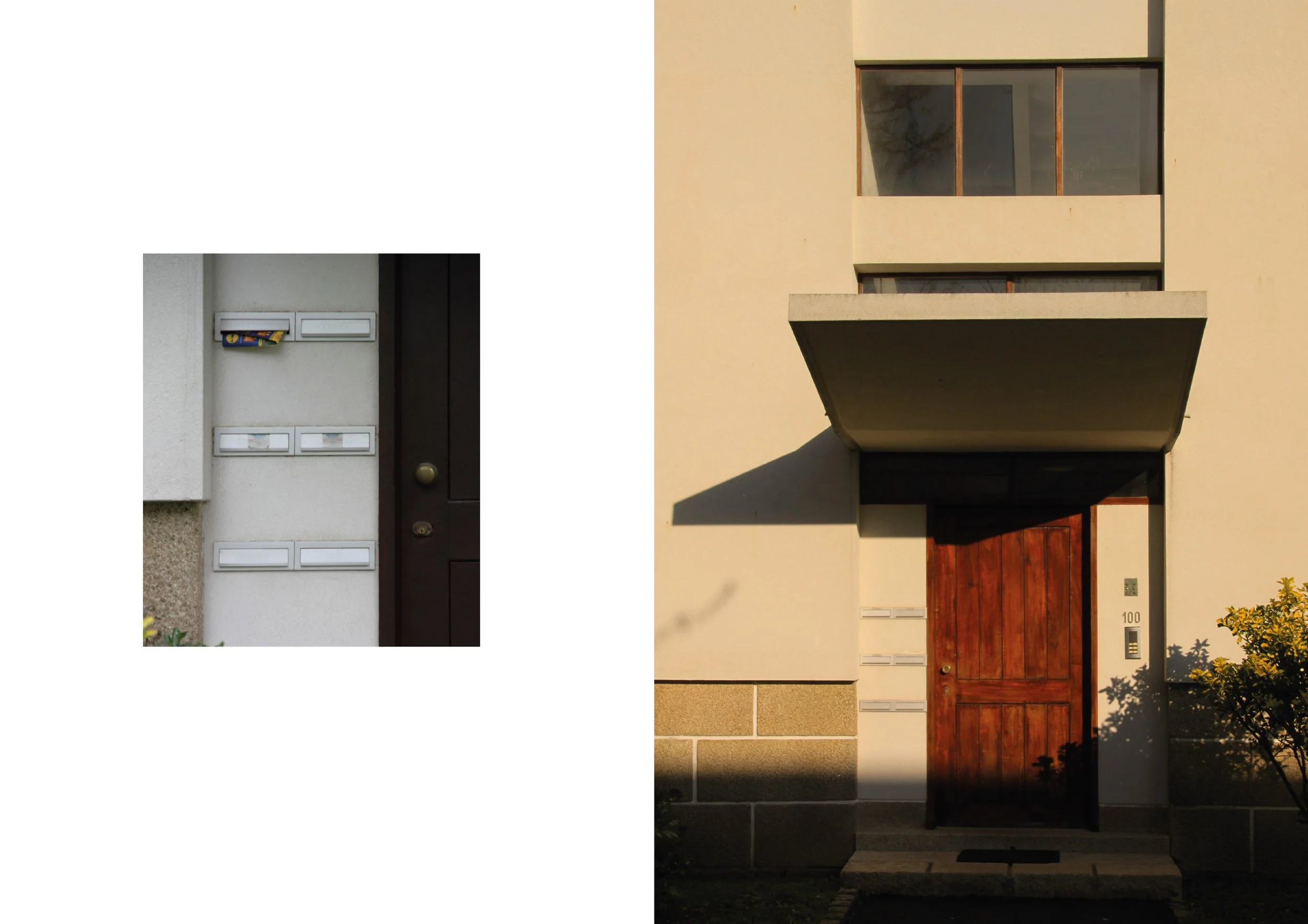
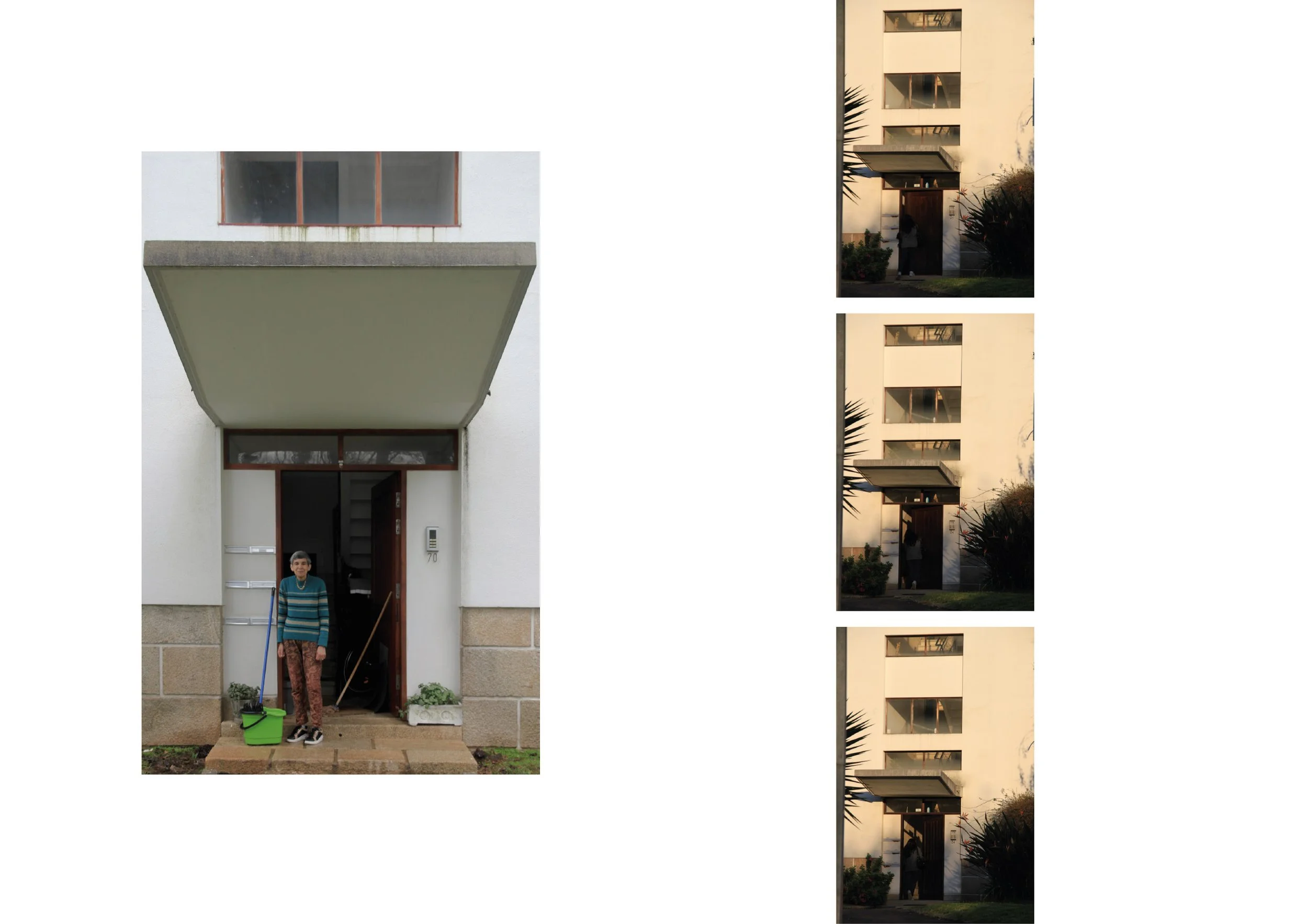
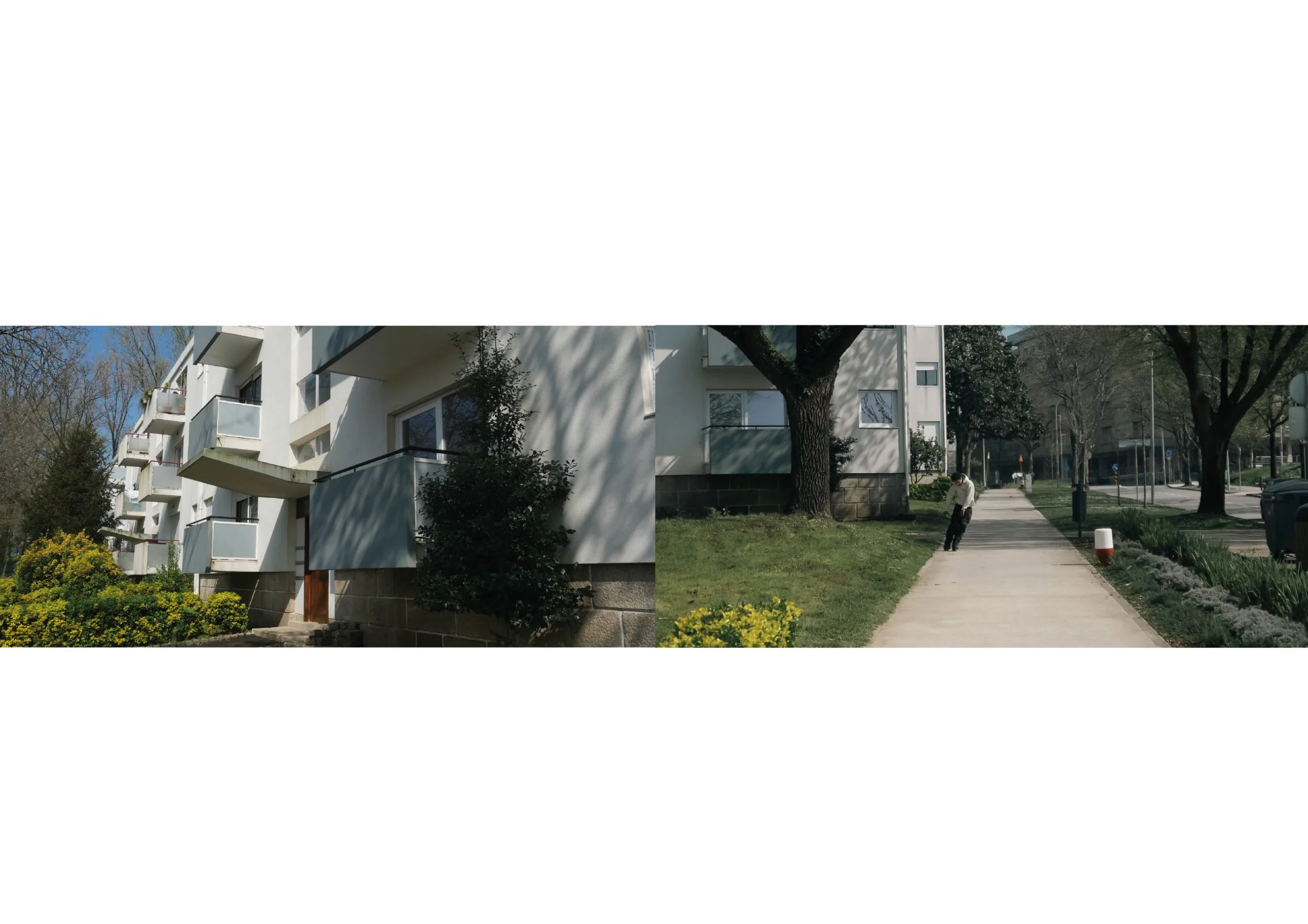
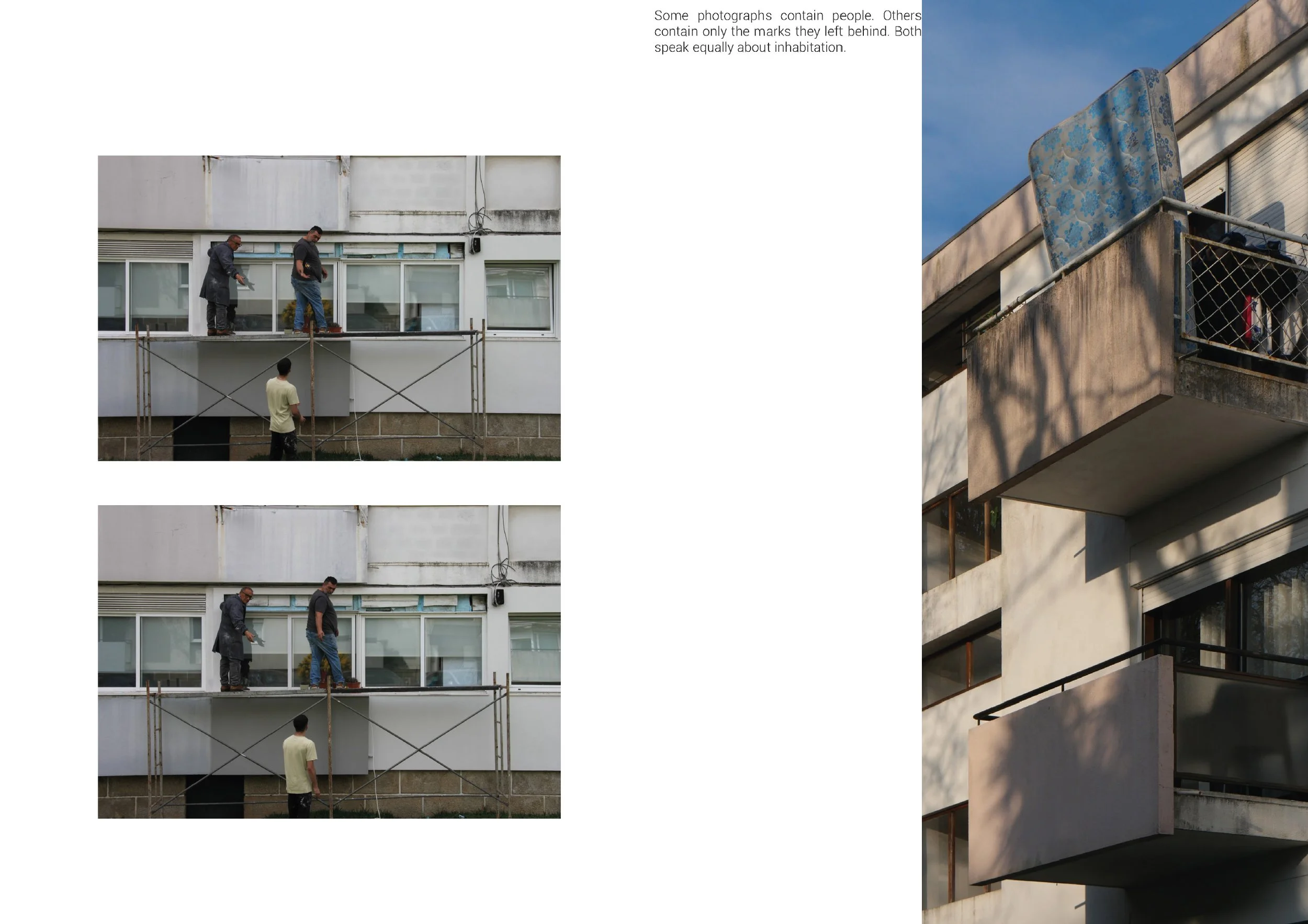
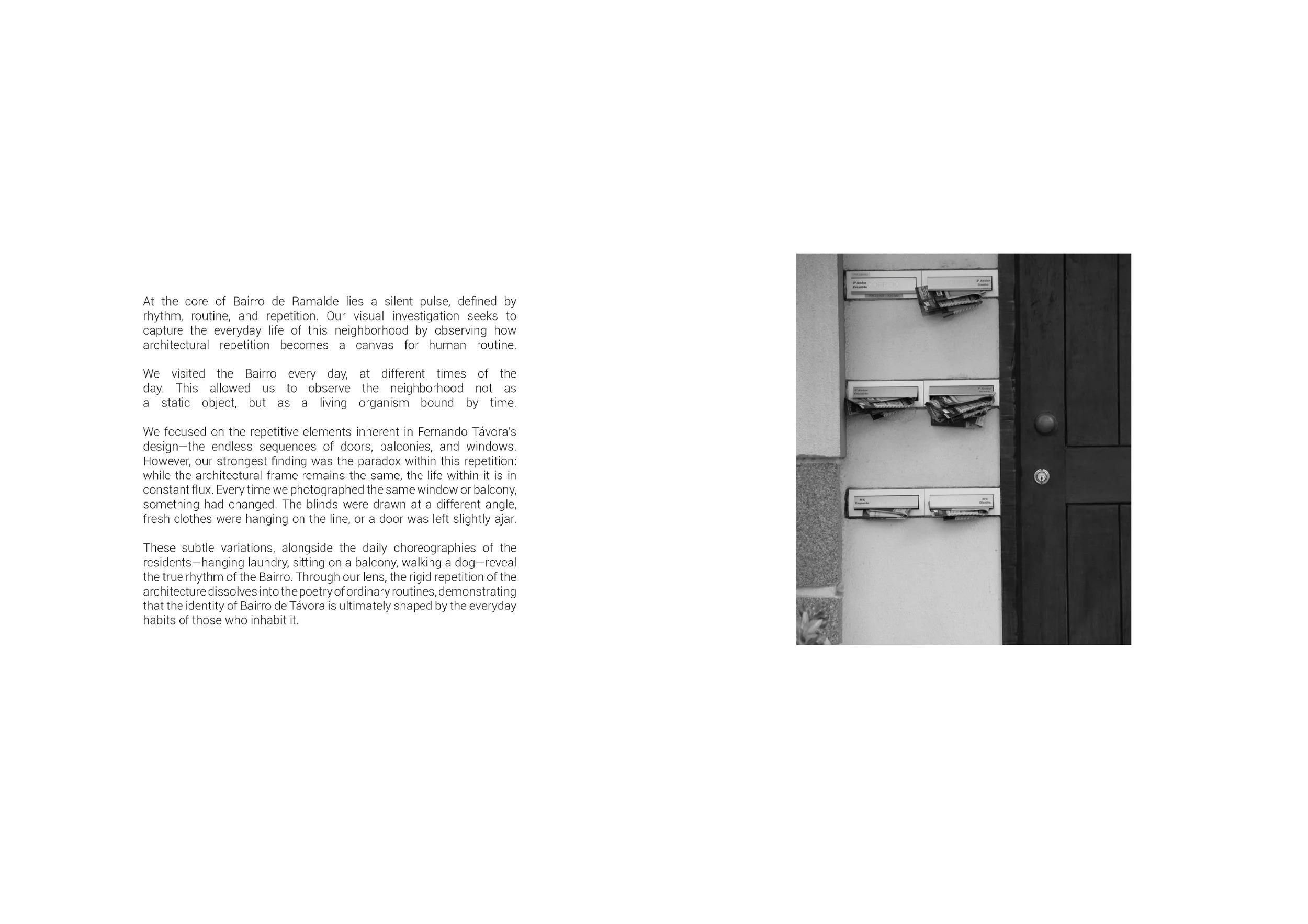
To capture this, we adopted a methodology of strict photographic taxonomy. By repeatedly isolating the neighborhood’s architectural vocabulary—the continuous grid of windows, the uniform balconies, the deep thresholds—we established a constant frame of reference.
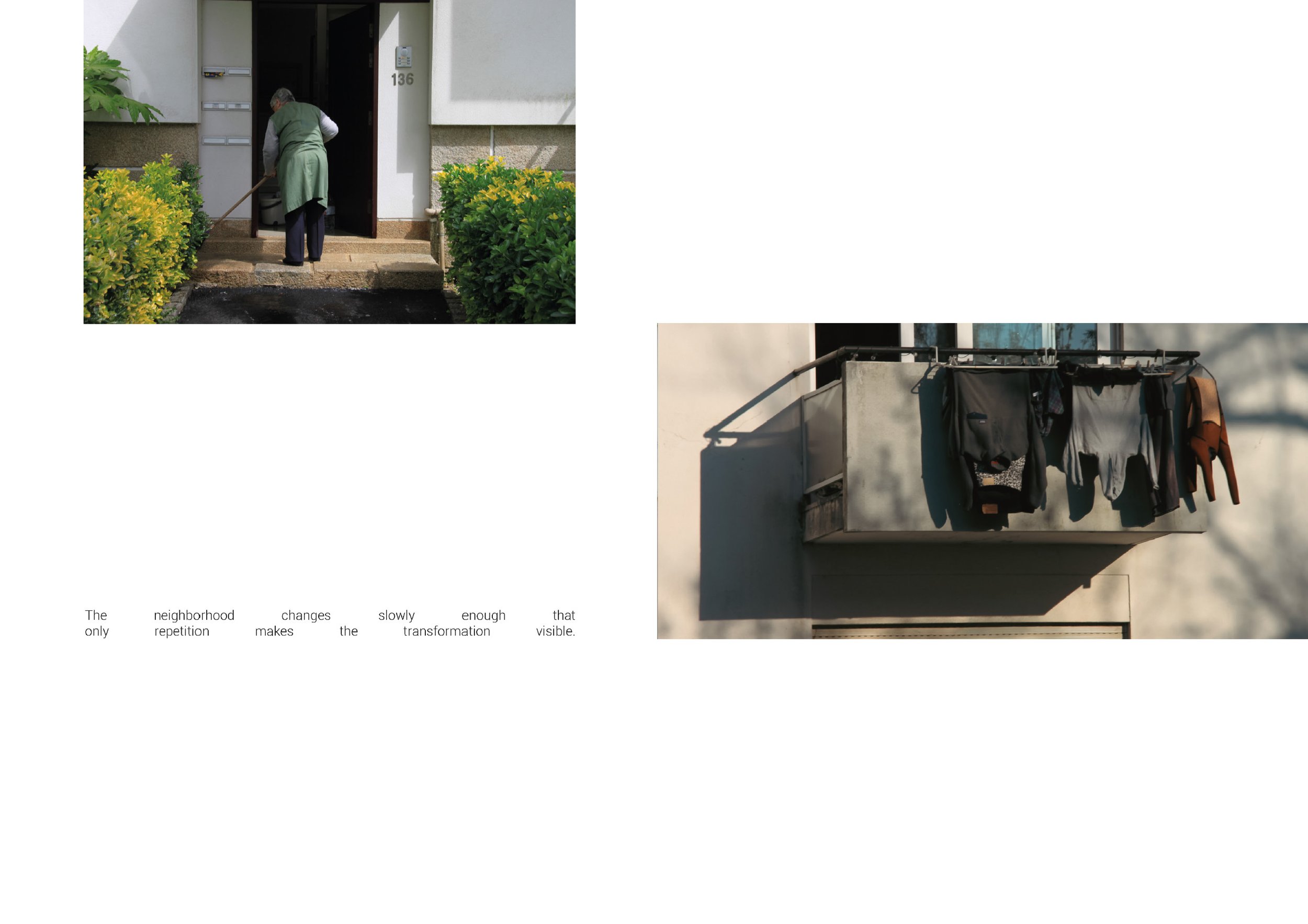
These elements, though formally similar, are never identical in time. A window remains the same, yet the curtains shift, the blinds open or close, clothes appear and disappear. Through this subtle variation, repetition becomes a register of life: a continuous negotiation between permanence and change.
The camera acts as a silent observer, documenting the architecture not as an aesthetic end, but as a framework for the life behind it.
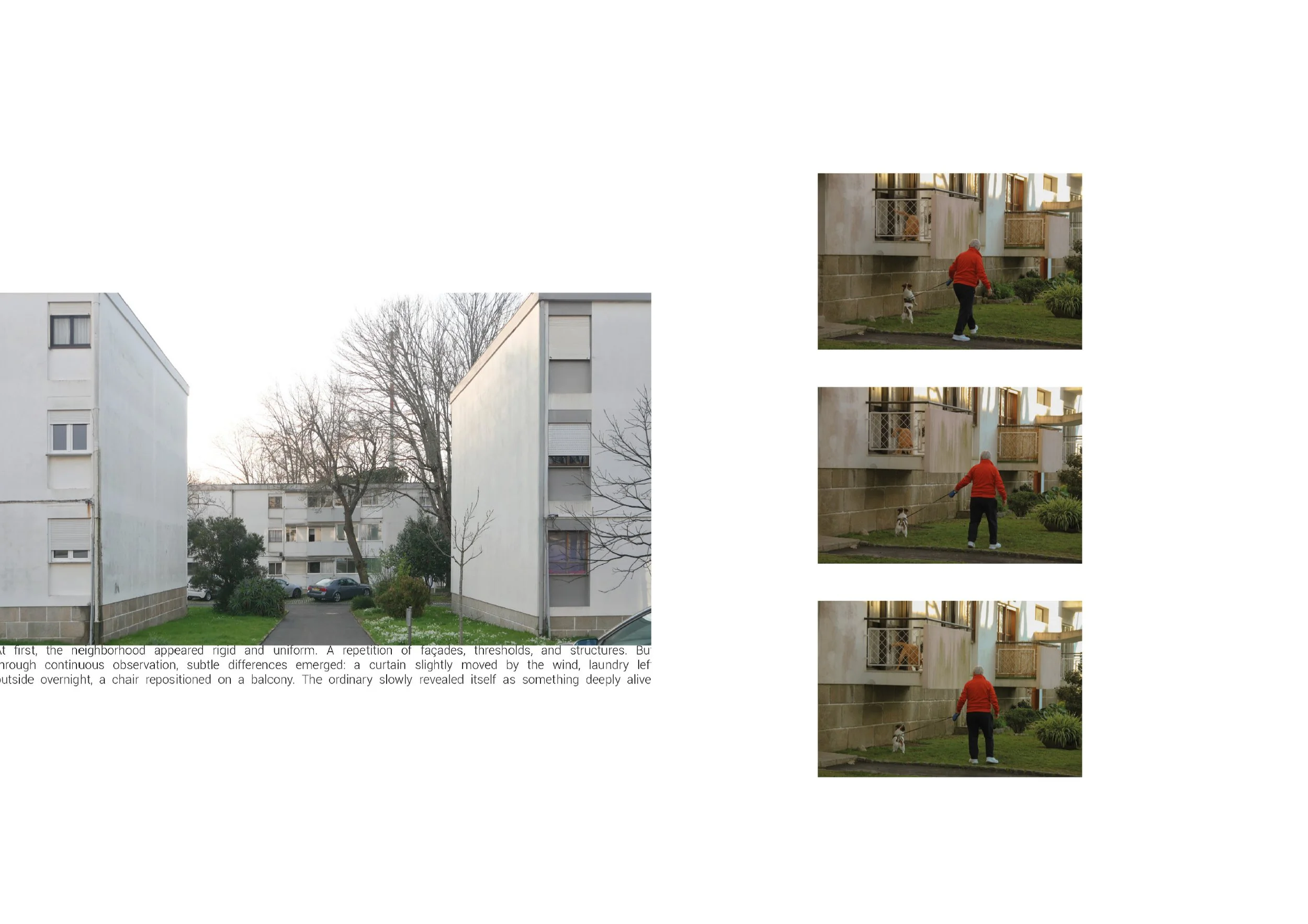
The inclusion of human activity further reinforces this reading. Gestures such as opening a door, hanging laundry, sitting on a balcony, or walking a dog are not isolated moments, but recurring acts that structure the rhythm of the bairro. These actions, embedded in space, transform architecture into a living system.
By focusing on details and returning to the same viewpoints, the project constructs an interpretive and temporal serial documentation. However, this taxonomy does not aim for classification alone; rather, it reveals how routine produces difference within sameness. The ordinary becomes poetic precisely because it is repeated, yet never identical.
Ultimately, this project serves as a visual rhythmanalysis of the Bairro. Through the repetition of our own observation, the rigid environment slowly dissolves into the background, revealing the organic, daily choreographies of the people who inhabit it. What remains is a portrait of the ordinary beauty of routine—a collection of small, necessary gestures that prove the true scale of architecture is always found in the rhythms of human life.
(…)